

Dance BA (Hons)
Subject and course type
- Dance, drama and music
- Undergraduate
Begin your dance career with the Dance BA (Hons) course at Kingston School of Art. This course capitalises on London's vibrant multicultural dance scene, enabling you to access well-known dance centres such as Sadler's Wells, the South Bank Centre, the Barbican and the Place.

You are reading:
Find your footing through a range of performance and dance styles
Ready to step into your future career in dance?
The Dance BA (Hons) course from Kingston University will enable you to hone your technique, gain valuable insight into the dance industry and specialise in either performance or choreography. So that you will be employment-ready on graduating.
Study a range of styles, including hip hop, dances of the African diaspora and contemporary dance, in Kingston University's RIBA award-winning Town House building. The building has six dance studios, all equipped to professional standards with fully sprung floors, mirrors and barres, and a performance studio theatre.
Learn from professional dance companies with guest workshops and in-house residencies. You'll benefit from being part of the creative community at Kingston School of Art, where our workshops and studios are open to all disciplines, enabling students and staff to work together and explore multi-disciplinary making.
Dance, drama and music at Kingston School of Art
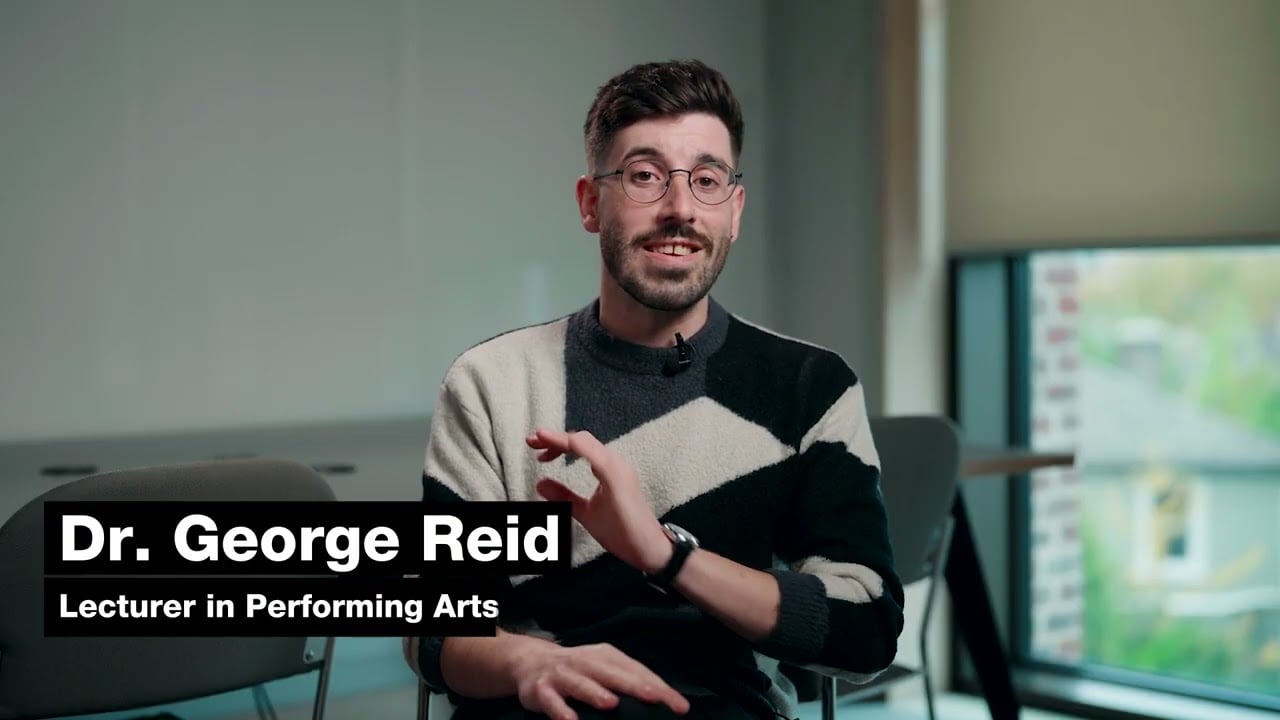
Develop your technique and learn the skills you need to launch your career. Hear from our staff and students about how they hone their craft.
I want to teach in the future and this course will help with my career, as it's given me the physical and mental ability to do so. My knowledge of the body and how it works is so much better than it was when I first started!


Why choose this course
If you want to study dance and performance practically, but also want an understanding of the dance industry past and present, this is the course for you. Whatever your dance experience and background is, this course enables you to experiment and explore your creative potential. You'll graduate prepared for a career in the dance or creative arts industries.
By studying a variety of topics, such as choreography, dance technique and performance, you'll develop your own dance identity. You’ll also gain insight into the dance industry, with a particular focus on teaching dance or event management.
Through a range of workshops and technique classes, you’ll practise a variety of dance and performance styles, such as:
- Hip hop
- African
- Classical Indian
- Contemporary and contact improvisation
The course is forward-thinking and embraces the diversity that makes the dance industry a vibrant and exciting place to work. It also provides opportunities to undertake a work placement, professional project or to collaborate across disciplines (such as with a composer or filmmaker).
Check out what we're up to on our Dance Instagram page.
Kingston University is ranked No.2 in London for Drama, Dance & Cinematics (The Times Good University Guide 2026).
The Art School Experience
As part of Kingston School of Art, students benefit from joining a creative community where we encourage collaborative working and critical practice.
Our workshops and labs are open to all disciplines, enabling students and staff to work together, share ideas and explore multi-disciplinary making.

Course content
By the time you graduate you'll have gained real-life experience of the dance industry, and developed skills for working in it. You will have completed projects that will help kick-start your career. You will do this through learning, making, performing, watching, and discussing dances in new ways, using eye-opening perspectives and developing your professional and employability skills.
As you progress, you will work on projects that draw together different strands of your learning. Across the three years of the course, you will have increasing independence in the design and delivery of these projects.
Year 1
Year 1 focuses on developing your skills, knowledge and understanding. You will be introduced to the dance industry and set a plan for what you need to do to support your career aspirations. You will develop your technical and performance skills in a range of dance styles and apply these to your choreographic work, dance technique and knowledge. You will also learn about the history of dance, anatomy and dance training.
Core modules
60 credits
This module offers students the opportunity to develop technical and performance skills in a range of diverse dance techniques which reflect the current global dance industry, and to acquire contextual knowledge of dance as a socially and culturally-produced practice.
Students will learn through intensive studio classes led by professionals in the field and interactive seminars. This mixed-mode delivery will enable students to enhance their fitness levels, expand their movement vocabulary, acquire the fundamentals of safe dance practice and engage with relevant case studies and themes within the cultural study of dance.
By integrating embodied knowledge of dance forms with active awareness of their socio-historical contexts, the module allows students to extend their technical and anatomical understanding of specific movement styles/techniques, while exploring how culture is practised through dance.
Students will develop a strong body of practice and techniques from a range of traditions. These will form a foundation for further development and study throughout the course. Students will be able to reflect on the language used in the dance sector and become equipped with the tools relevant for the discussion of the role of history and culture in the practice of different dance forms.
30 credits
This module is designed to develop students' knowledge and understanding of a diverse and inclusive range of fundamental choreograph tools, devices, structures and practices to enable them to create, and perform short choreographic works and start to envision their artistic voice. This module will draw from a diverse range of dance styles and directly encourage students to be adaptable and draw from a range of dance techniques within their practice. Students will be encouraged to use improvisation as a practice for risk taking and developing ideas and exploring a range of source material for performances, such as, visual art, current affairs and music. Reference will be made to the historical development of choreographic practice as well as current choreographic trends and draws on the work of practitioners to enable students to contextualise their work. Students will be encouraged to develop self-practice and independence through the exploration of frameworks analysing movement, reflective practice in the choreographic studio and models for self and peer feedback.
30 credits
This module will introduce students to Future Skills through engagement with Navigate. It will enable students to begin to develop your professional identity and global citizenship, by promoting their understanding of ethical issues and values, design thinking, and commercial awareness. These concepts and associated activities will support students to plan their own personal and professional development, as a means of developing their creative practice. This will be supported through active engagement with the Navigate programme, and through personal development planning (supported by Personal Tutors), which will enable students to reflect upon their Future Skills graduate attributes. It will also enable students to reflect on and begin to evidence their understanding of the skills students are developing holistically, through all the work students are creating as part of their course.
This module is designed to help students develop key knowledge and understanding of professional pathways within the dance sector. It will offer opportunities to engage with industry professionals and current practice through case studies to facilitate an in-depth understanding of the dance industry. Emphasis will be placed on recognising the roles of who might be stakeholders in the 21st century dance industry.
Year 2
Year 2, provides you with the opportunities to apply your skills, knowledge and understanding developed in year 1 to the development of projects. Alongside developing your dance technique you will have the opportunity to develop your teaching skills or gain an insight into producing and managing events completing group projects. You will also learn about theoretical frameworks that will help you develop your understanding of the dance industry today and have the opportunity to specialise in either choreography or Hip Hop and Urban performance practices.
Core modules
30 credits
This module provides students with the opportunity to further develop their technical and performance skills through engagement with learning, developing, refining and performance of dance techniques from contrasting styles (e.g. Hip Hop and contemporary dance styles). Students will learn through intensive practical classes led by professionals in the field, accompanied by seminars to support their ability to critically reflect on their development. There will be regular opportunities to present their work, experimenting with a variety of communication technologies and reaching multiple audiences.
30 credits
This module offers students key frameworks and embodied application to develop a comprehensive understanding of dance in an interconnected world, reflecting on the relationship between the local and global dimensions of current movement practices. This includes exploring and critically evaluating the possibilities and formats of dance in a rapidly changing world and engaging with topical issues that relate to historical, social, pollical and cultural contexts, such as the climate crisis, interculturalism, difference, migration and gentrification. The module supports the development of critical, analytical and embodied knowledge of a range of movement-based creative practices through classroom-based and practical workshops. For example, the application of dance to social contexts, site-specific and popular dance performance and the experimentation with urban and hybrid movement vocabularies. It also covers the role of dance in the context of activist and socio-political practices, and of the changing relationships between dance and its audiences through practice-based exploration and application.
30 credits
This module provides you with the opportunity to develop your creative practice as a dance artist developing technical, creative and performance skills through one of two electives: choreography or hip hop performance practices.
Through a combination of practical and theoretical learning this module develops necessary skills and knowledge to become critically aware, articulate and accomplished practitioners in a specialist area of dance practice. The module will enable you to develop an applied understanding of the significance of the aesthetic, kinaesthetic and creative foundations of choreographic practice or hip hop performance practices.
Emphasis within this module will be placed on the need for risk taking during the creative process and you will develop your practices through project-based learning to develop a range of artistic experiments applying your contextual knowledge to develop work for a range of settings. There will be opportunities you to collaborate with students across electives through projects that explore different performance outputs, for example, site-specific performance and screen dance.
30 credits
This module will develop your graduate attributes, and the Future Skills Explore Learning Outcomes are delivered in this module. It will enable you to build on prior learning, and to engage with personal development activities which will strengthen your professional identity and global citizenship and provide opportunities to expand your knowledge of the industrial and professional contexts for your practice. This will enable you to further develop your professional skills, including interdisciplinary collaboration, in preparation for your future employment, which will require you to be able to work with students from other disciplines.
You will critically evaluate your own personal development through reflection on your progress and goals, as a means of developing your creative practice to explore problems within and beyond your discipline. You will engage with personal development planning (supported by your Personal Tutor), enabling to evidence your understanding of the skills you are developing, through all the work you are creating as part of your course, in preparation for L6.
This module is an opportunity to explore teaching and producing skills that are transferable to multiple career paths. You will acquire skills in leading dance in a range of contexts, including teaching in community settings and producing events.
Optional Year
You have the option to take an additional year to study abroad.
Year 3
The focus of Year 3 is about preparing you for graduation and opportunities to work independently and lead your own projects. You will have the opportunity to undertake a placement or develop your own industry-based project, work as a member of a Dance Company with a choreographer and tailor the rest of your study to your own interests.
Core modules
30 credits
This is a practical module designed to take students through the process of making a dance production, from initial conception to final performance whilst also further developing and applying advanced levels of dance techniques and dance training. The focus of the module is to provide students with the experience of being in a dance company and of working closely within professional contexts of training, creating, refining and consolidating final production pieces suitable for professional performance environments. Students will apply ideas and creative problem-solving skills acquired through prior learning, in more diverse performance settings. Students will work in company environments with their choreographer both in scheduled learning time and during independent study hours to create, rehearse and produce full-scale dance-based productions. Students will work in companies led by a module tutor with choreographic experience. The companies will be set by timetabled classes.
30 credits
This module provides you with the opportunity to extend your dance training through exploration of advanced techniques for the physical training of a variety of employment opportunities in the dance industry. For example, performers, dance artists, choreographers and teachers.
You will explore current approaches to dance training through the study of dance techniques, anatomy, physiology, performance preparation and principles of dance training used within the dance science and education training sector. In teaching block one you will participate in dance technique classes and dance training labs to support your own training and development.
30 credits
This module provides you with the opportunity to develop and produce a dance project of your choice. It will enable you to develop leadership, communication and organisational skills whilst experimenting, innovating and producing an output that aligns to your interests by following one of three electives: choreography (live and screen), hip hop, or research and practice as research.
The module also enables you to draw on all aspects and disciplines explored throughout the course to support your emerging professional identity as a future leader and becoming an articulate and socially aware entrepreneur in the dance industry. This prepares you to seek work in the private commercial and public arts sectors as a choreographer, dancer, dance artist, teacher, producer or researcher.
15 credits
In this module you will apply your knowledge and understanding of the dance industry to support your preparation for graduation and beyond. You will extend your knowledge and understanding of a portfolio career, professional practices, and professional development alongside being encouraged to develop appropriate professional networks.
You will independently plan, carry out and critically evaluate an industry-focussed placement or project that engages with current industry standards and practices relevant to the sector with support of the module teaching team. This will prepare you for working in an aspect of the dance industry and support you with developing a multi-faceted professional identity as a performing arts professional.
You will critically evaluate your own development through reflection on your progress of planning and participating in an industry-focussed placement or project. You will document your reflection and critical evaluation in a portfolio referring to relevant industry context and practices. You will also create a professional profile that reflects your developing professional identity to support your progression to your chosen career path.
15 credits
This module gives you a dedicated opportunity to develop your Future Skills Graduate Attributes.
At the start of the module, you will be supported to self-assess your current skills profile. You will determine which attributes and skills you need to develop to support your career ambitions. In this process, you will be supported by a dedicated career coach, helping you explore a range of options that includes self-employment/freelancing, starting your own business, higher level study, and other professional graduate-level opportunities. Throughout the module, you will be given opportunities to engage with external mentors, to support reflection and to develop a professional network.
You will undertake a tailored series of activities and projects, aligned to your goals, from a menu of development options. This could include short courses, enrichment activities and experiential learning options such as micro-placements. You will also be able to reflect on activities outside the University that develop your graduate attributes, such as work or volunteering.

International students: direct application
Are you an international student? Have you decided Kingston is the place for you? If so, you can apply for this course directly, rather than having to go through UCAS.

Starting BA (Hons) Dance at Kingston University was daunting at first but I was quickly put at ease when welcomed by such friendly teachers and existing students! Everybody is so helpful and genuinely wants the best for you during your dance journey.
What career opportunities does this course offer?
Career options include performance, choreography, directing, community dance, teaching or producing and managing dance. Outside the performing arts, graduates work in production, event management, fitness instruction, media and teaching.
Future Skills
Our Future Skills programme is embedded within all our undergraduate courses and throughout the whole Kingston experience. These skills will help you to become a future-proof graduate by equipping you with the skills most valued by employers, such as problem-solving, digital competency and adaptability.
As you progress through your degree, you'll learn to navigate, explore and apply these graduate skills. You’ll also understand how to demonstrate and articulate to employers how these future skills give you the edge.

Teaching and assessment
Scheduled learning and teaching on this course includes timetabled activities including lectures, seminars and small group tutorials.
It may also include critiques, project work, studio practice and performance, digital labs, workshops, and placements.
Outside the scheduled learning and teaching hours, you will learn independently through self-study which will involve reading articles and books, working on projects, undertaking research, preparing for and completing your work for assessments. Some independent study work may need to be completed on-campus, as you may need to access campus-based facilities such as studios and labs.
Our academic support team here at Kingston University provides help in a range of areas.
When you arrive, we'll introduce you to your personal tutor. This is the member of academic staff who will provide academic guidance, be a support throughout your time at Kingston and show you how to make the best use of all the help and resources that we offer at Kingston University.
A course is made up of modules, and each module is worth a number of credits. You must pass a given number of credits in order to achieve the award you registered on, for example 360 credits for a typical undergraduate course or 180 credits for a typical postgraduate course. The number of credits you need for your award is detailed in the programme specification which you can access from the link at the bottom of this page.
One credit equates to 10 hours of study. Therefore 120 credits across a year (typical for an undergraduate course) would equate to 1,200 notional hours. These hours are split into scheduled and guided. On this course, the percentage of that time that will be scheduled learning and teaching activities is shown below for each year of study. The remainder is made up of guided independent study.
- Year 1: 27% scheduled learning and teaching
- Year 2: 23% scheduled learning and teaching
- Year 3: 22% scheduled learning and teaching
The exact balance between scheduled learning and teaching and guided independent study will be informed by the modules you take.
Your course will primarily be delivered in person. It may include delivery of some activities online, either in real time or recorded.
Types of assessment
- Year 1: Coursework 39%; practical 53%; exams 8%
- Year 2: Coursework 45%; practical 55%
- Year 3: Coursework 34%; practical 66%
Please note: the above breakdowns are a guide calculated on core modules only. If your course includes optional modules, this breakdown may change to reflect the modules chosen.
We aim to provide feedback on assessments within 20 working days.
Your individualised timetable is normally available to students within 48 hours of enrolment. Whilst we make every effort to ensure timetables are as student-friendly as possible, scheduled learning and teaching can take place on any day of the week between 9am and 6pm. For undergraduate students, Wednesday afternoons are normally reserved for sports and cultural activities, but there may be occasions when this is not possible. Timetables for part-time students will depend on the modules selected.
The balance between contact time and independent study helped bring the most out of me. There was enough time spent with the lectures to really push me to learn and develop. Then enough independent time to develop my own artistic identity.
Fees and funding
| Fee category | Annual Fee |
|---|---|
| Home (UK students) | £10,050* |
| International | |
| Year 1 (2027/28): | £To be confirmed |
| Year 2 (2028/29): | £To be confirmed |
| Year 3 (2029/30): | £To be confirmed |
The tuition fee you pay depends on whether you are assessed as a 'Home' (UK), 'Islands' or 'International' student.
For courses with Professional Placement, the fee for the placement year can be viewed in our Fees and Funding section. The placement fee published is for the relevant academic year stated in the table. This fee is subject to annual increases but will not increase by more than the fee caps as prescribed by the Office for Students or such other replacing body.
*For full-time programmes lasting more than one academic year, a tuition fee is payable for each academic year of the course.
Your annual tuition fee covers your first attempt at all modules required for that academic year. Any re-study or repeat of modules will incur additional charges, calculated according to the number of credits taken.
Home students (UK): Tuition fees are subject to inflation-linked increases in line with government policy. Updated fees will be confirmed in line with the maximum fee cap set by the Government or the Office for Students (OfS) for each academic year. This means your fee may increase for each academic year of study, but only up to the maximum amount permitted for that year.
Eligible UK students can apply to the Government for a tuition loan, which is paid direct to the University. This has a low interest-rate which is charged from the time the first part of the loan is paid to the University until you have repaid it.
International students: Full-time taught international student fees are subject to an annual increase, which is published in advance for the full duration of your programme.
| Fee category | Annual Fee |
|---|---|
| Home (UK students) | £9,790* |
| International | |
| Year 1 (2026/27): | £19,200 |
| Year 2 (2027/28): | £19,900 |
| Year 3 (2028/29): | £20,700 |
The tuition fee you pay depends on whether you are assessed as a 'Home' (UK), 'Islands' or 'International' student.
For courses with Professional Placement, the fee for the placement year can be viewed in our Fees and Funding section. The placement fee published is for the relevant academic year stated in the table. This fee is subject to annual increases but will not increase by more than the fee caps as prescribed by the Office for Students or such other replacing body.
*For full-time programmes lasting more than one academic year, a tuition fee is payable for each academic year of the course.
Your annual tuition fee covers your first attempt at all modules required for that academic year. Any re-study or repeat of modules will incur additional charges, calculated according to the number of credits taken.
Home students (UK): Tuition fees are subject to inflation-linked increases in line with government policy. Updated fees will be confirmed in line with the maximum fee cap set by the Government or the Office for Students (OfS) for each academic year. This means your fee may increase for each academic year of study, but only up to the maximum amount permitted for that year.
Eligible UK students can apply to the Government for a tuition loan, which is paid direct to the University. This has a low interest-rate which is charged from the time the first part of the loan is paid to the University until you have repaid it.
International students: Full-time taught international student fees are subject to an annual increase, which is published in advance for the full duration of your programme.
| Fee category | Annual Fee |
|---|---|
| Home (UK students) | £9,535* |
| International | |
| Year 1 (2025/26): | £18,500 |
| Year 2 (2026/27): | £19,200 |
| Year 3 (2027/28): | £19,900 |
The tuition fee you pay depends on whether you are assessed as a 'Home' (UK), 'Islands' or 'International' student. In 2025/26 the fees for this course are above.
For courses with Professional Placement, the fee for the placement year can be viewed in our Fees and Funding section. The placement fee published is for the relevant academic year stated in the table. This fee is subject to annual increases but will not increase by more than the fee caps as prescribed by the Office for Students or such other replacing body.
*For full-time programmes lasting more than one academic year, a tuition fee is payable for each academic year of the course. Your annual tuition fees cover your first attempt at all of the modules necessary to complete that academic year. A re-study of any modules will incur additional charges calculated by the number of credits. Home tuition fees may be subject to annual increases but will not increase by more than the fee caps as prescribed by the Office for Students or such other replacing body. Full-time taught International fees are subject to an annual increase and are published in advance for the full duration of the programme.
Eligible UK students can apply to the Government for a tuition loan, which is paid direct to the University. This has a low interest-rate which is charged from the time the first part of the loan is paid to the University until you have repaid it.
Additional course costs
Some courses may require additional costs beyond tuition fees. When planning your studies, you’ll want to consider tuition fees, living costs, and any extra costs that might relate to your area of study.
Your tuition fees include costs for teaching, assessment and university facilities. So your access to libraries, shared IT resources and various student support services are all covered. Accommodation and general living expenses are not covered by these fees.
Where applicable, additional expenses for your course may include:
Our libraries have an extensive collection of books and journals, as well as open-access computers and laptops available to rent. However, you may want to buy your own computer or personal copies of key textbooks. Textbooks may range from £50 to £250 per year. And a personal computer can range from £100 to £3,000 depending on your course requirements.
While most coursework is submitted online, some modules may require printed copies. You may want to allocate up to £100 per year for hard-copies of your coursework. It’s worth noting that 3D printing is never compulsory. So if you choose to use our 3D printers, you’ll need to pay for the material. This ranges from 3p per gram to 40p per gram.
Kingston University will pay for all compulsory field trips. Fees for optional trips can range from £30 to £350 per trip.
Your tuition fees don’t cover travel costs. To save on travel costs, you can use our intersite bus service. This route links the campuses and halls of residence with local train stations - Surbiton, Kingston upon Thames and Norbiton.
There may be costs for participating at external shows and exhibitions, such as travel costs, which will vary according to the location.
Scholarships and bursaries
For students interested in studying this course at Kingston, there are several opportunities to seek funding support.

Course changes and regulations
The information on this page reflects the currently intended course structure and module details. To improve your student experience and the quality of your degree, we may review and change the material information of this course. Find out more about course changes
Programme Specifications for the course are published ahead of each academic year.
Regulations governing this course can be found on our website.
What our students and graduates say
Since graduating, I have had many wonderful opportunities. I dance with contemporary company B-Hybrid Dance, and have the role of Company Intern for House of Jazz Company. I teach in primary schools for the London Ballet Company School and work at the Royal Academy of Dance as a Class and Information Assistant.
I was offered the opportunity to become a Producer of a London-based dance company. This role has allowed me to engage with young dancers between 11-19 and help them develop within the early stages of their dance journeys and careers.
Kingston is a great location as it isn't too busy like in central London but you still get the 'city life' feeling. There are so many things to do and everything is accessible. Outside studying, I take part in the KUDs dance society and am hoping to go to America to study in my third year, which is an amazing opportunity.


Key information
The scrolling banner below displays some key factual data about this course (including different course combinations or delivery modes of this course where relevant).