

Analytical Chemistry MSc
Why choose this course?
Boost your employability with this MSc in Analytical Chemistry.
You will build on your previous chemistry knowledge and continue to develop skills to prepare you for your career, including problem solving, organisation, data collation, review and synopsis.
You will study good measurement and scientific practice, and the evaluation and interpretation of data.
Your independent project can be an excellent selling point when looking for a job or promotion; you may be offered a placement within industry to carry it out.
Past projects have looked at dust sources at Hampton Court Palace, determination of Hexavalent Chromium, thermo-responsive polymers for water purification and radiochemical investigation of Uranium 232.
Analytical Chemistry MSc
| Mode | Duration | Attendance | Start date |
|---|---|---|---|
| Full time | 1 year | 2 days a week | September 2024 |
| Full time | 2 years including professional placement | 2 days a week plus placement year |
September 2024 January 2025 |
| Part time | 2 years | 1 day a week |
September 2024 January 2025 |
| Main location | Penrhyn Road |
Reasons to choose Kingston University
- You will gain the knowledge and key skills required for a career in analytical chemistry.
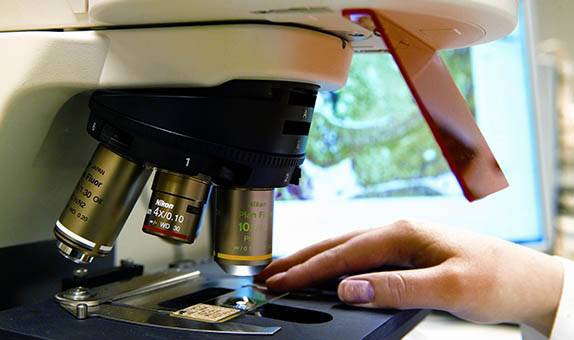
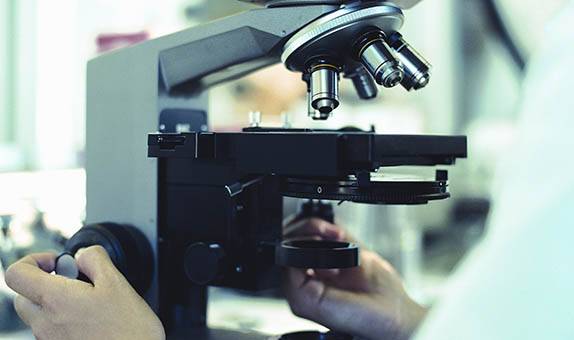
- Our modern laboratories are equipped with state-of-the-art instrumentation.
- Through an independent research project, you will be able to study an area of interest in greater depth.
What you will study
You will gain the key skills required in this specialised area of analytical chemistry, including good measurement and scientific practice, evaluation interpretation of data, and other professional and organisational skills. You will also study core analytical techniques and their applications. You may also be offered a placement within industry (depending on your results and project availability), where you will carry out your independent research project.
For a student to go on placement they are required to pass every module first time with no reassessments. It is the responsibility of individual students to find a suitable paid placement. Students will be supported by our dedicated placement team in securing this opportunity.
Modules
Core modules
Statistics and Quality Systems
30 credits
The module introduces students to the role of statistics and quality systems in modern analytical science. It demonstrates how a thorough understanding of statistical concepts, the analytical process and the quality systems and quality management paradigms collectively enable the consistent and reliable interpretation of analytical chemical data to support the economic requirements of a business organisation.
Molecular and Atomic Spectroscopy
30 credits
This module introduces the main spectroscopic techniques used in industry such as UV/Vis, FTIR, Mass Spectrometry, NMR, AES, AAS and X -Ray methods. The module later progresses to the more advanced designs and applications such as MS/MS, FTMS, TOF, sector and quadrupole mass analysers, 2D NMR, LCMS, MALDI, Atomic Fluorescence and ICPMS/AES.
Separation Science
30 credits
This module introduces students to the principles and theory of separation science and its application in the laboratory including solvent extraction, high performance liquid chromatography, gas/liquid chromatography, centrifugation, gel and capillary electrophoresis and hyphenated techniques.
Specialised Analytical Techniques
30 credits
This module will:
- introduce various specialised situations and techniques (e.g. clinical, environmental and materials science) in which the analyst will have to provide analytical solutions
- illustrate the solution of complex analytical problems using an integrated approach.
Project
60 credits
This module involves a research- or industry-based in-depth research project. You will develop your ability to critically evaluate your own work as well as the work of others, using analytical and laboratory skills.
On successful completion of the module, you will be able to:
- Prepare a realistic and coherent project proposal, formulate aims and objectives and plan your own time to achieve stated objectives.
- Critically evaluate the current literature.
- Carry out appropriate experiments in a safe manner (applying COSHH) and generate reliable, data suitably analysed, and apply appropriate statistical tests.
- Communicate the results of the project in a coherent report and in oral and visual manner.
Optional modules
Professional Placement
120 credits
The Professional Placement module is a core module if you're following a masters programme that incorporates an extended professional placement. It provides you with the opportunity to apply your knowledge and skills in an appropriate working environment, and develops and enhances key employability and subject specific skills in your chosen discipline. You may wish to use the placement experience as a platform for a major project or your future career.
It is your responsibility to find and secure a suitable placement opportunity; this should not normally involve more than two placements which must be completed over a minimum period of 10 months and within a maximum of 12 months. The placement must be approved by your Course Leader prior to commencement to ensure its suitability. You will have access to the standard placement preparation activities offered by the Student Engagement and Enhancement (SEE) group.
Read more about the postgraduate work placement scheme.
Please note
Optional modules only run if there is enough demand. If we have an insufficient number of students interested in an optional module, that module will not be offered for this course.
Entry requirements
Teaching and assessment
Staff teaching on this course
This course is delivered by the School of Life Sciences, Pharmacy and Chemistry.
The School of Life Sciences, Pharmacy and Chemistry offers an outstanding and diverse portfolio of undergraduate and postgraduate programmes in biological and biomedical sciences, chemistry, forensic science, pharmacy, pharmacological and pharmaceutical sciences, and sport science and nutrition.
We've invested heavily in the development of new facilities including laboratories for teaching and research to provide students with access to ultra-modern equipment in a wide range of teaching facilities.
Postgraduate students may run or assist in lab sessions and may also contribute to the teaching of seminars under the supervision of the module leader.








Course fees and funding
Additional costs
Depending on the programme of study, there may be extra costs that are not covered by tuition fees which students will need to consider when planning their studies. Tuition fees cover the cost of your teaching, assessment and operating University facilities such as the library, access to shared IT equipment and other support services. Accommodation and living costs are not included in our fees.
Where a course has additional expenses, we make every effort to highlight them. These may include optional field trips, materials (e.g. art, design, engineering), security checks such as DBS, uniforms, specialist clothing or professional memberships.
What our students say
Current research in this subject
Many of our staff in the Faculty are research active. This ensures they are in touch with the latest thinking and bring best practice to your studies.
Research includes the following themes:
- parasitology and microbiology
- haematology/immunology/cancer biology
- biomedical, pharmaceutical and instrumental analyses
- medicinal and pharmaceutical chemistry
- clinical pharmacy and advanced drug delivery
- nutrition/exercise and sports science.
How we work with industry partners
Our links with industry provide a practical base for our courses. They also help us to ensure your studies are kept up to date and relevant to the working environment.
If you choose to study this course, you will benefit from:
- real-world experience thanks to your MSc project, which you can undertake either:
- in industry – past students have undertaken project placements in the pharmaceutical industry, forensic labs, analytical consultancies, hospital labs and research labs – or
- as collaborative research with other laboratories;
- the latest views from visiting speakers – such as Vicki Barwick from LGC (an independent chemical analysis lab) and Stephen Paton from global pharmaceutical company Ely Lilley
- industry visits, such as to Cancer Research UK or the Clinical Trials Laboratories Service.
Where this course will take you
There is an increasing demand for qualified analytical chemists in a variety of industrial and public sector settings. Other relevant roles are in chemical/pharmaceutical companies, teaching, sales, marketing, management and PhD research.
Recent graduates have gone on to a range of roles, including:
- chemists in large and SME chemical/pharmaceutical companies
- teaching
- PhD research
- sales and marketing
- managerial positions.
Careers and recruitment advice
The Faculty has a specialist employability team. It provides friendly and high-quality careers and recruitment guidance, including advice and sessions on job-seeking skills such as CV preparation, application forms and interview techniques. Specific advice is also available for international students about the UK job market and employers' expectations and requirements.
The team runs employer events throughout the year, including job fairs, key speakers from industry and interviews on campus. These events give you the opportunity to hear from, and network with, employers in an informal setting.
Facilities
There is a wide range of facilities for practical work at our Penrhyn Road campus, where this course is based. You will have access to a modern environment with the latest equipment, including:
- the £9.8 million Eadweard Muybridge building with state-of the art laboratories, including labs dedicated to analytical chemistry;
- new work areas and dedicated laboratories for research;
- specialist equipment, such as:
- gas and liquid chromatography
- electron microscopy
- a range of spectrometers, including mass spectrometers, infrared spectrometers and nuclear magnetic resonance spectrometers
- nuclear science equipment
- thermal analysis
- x-ray diffractometers
- electrochemical analysis;
- computing laboratories and a team of IT technicians to offer assistance.
Dedicated graduate facilities
In addition, you can use the dedicated Graduate Centre on campus. This includes:
- additional IT facilities
- seminar rooms
- social spaces and a canteen
- a learning resource centre with specialist libraries.
Course changes and regulations
The information on this page reflects the currently intended course structure and module details. To improve your student experience and the quality of your degree, we may review and change the material information of this course. Course changes explained.
Programme Specifications for the course are published ahead of each academic year.
Regulations governing this course can be found on our website.