
Game Development (Programming) MSc
Why choose this course?
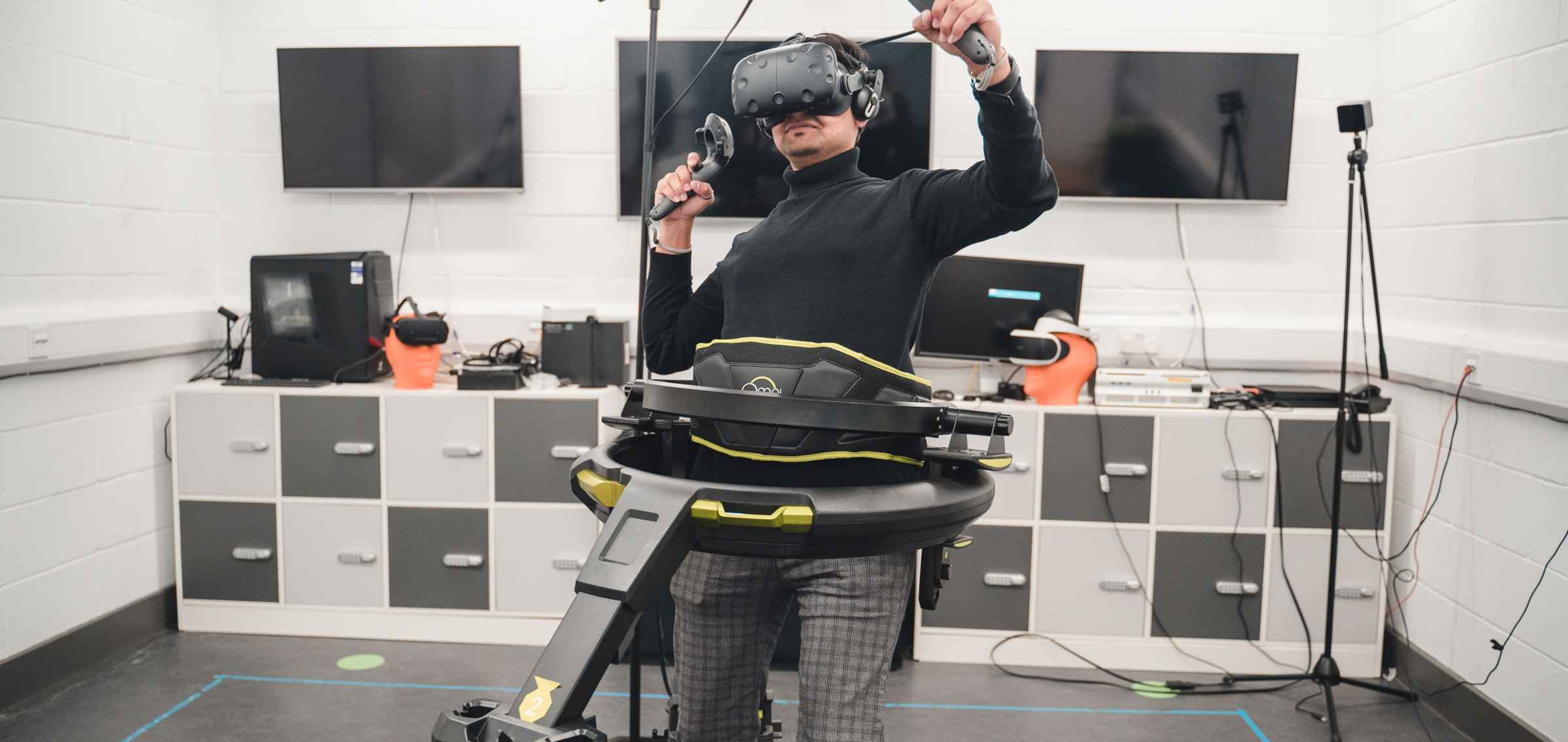
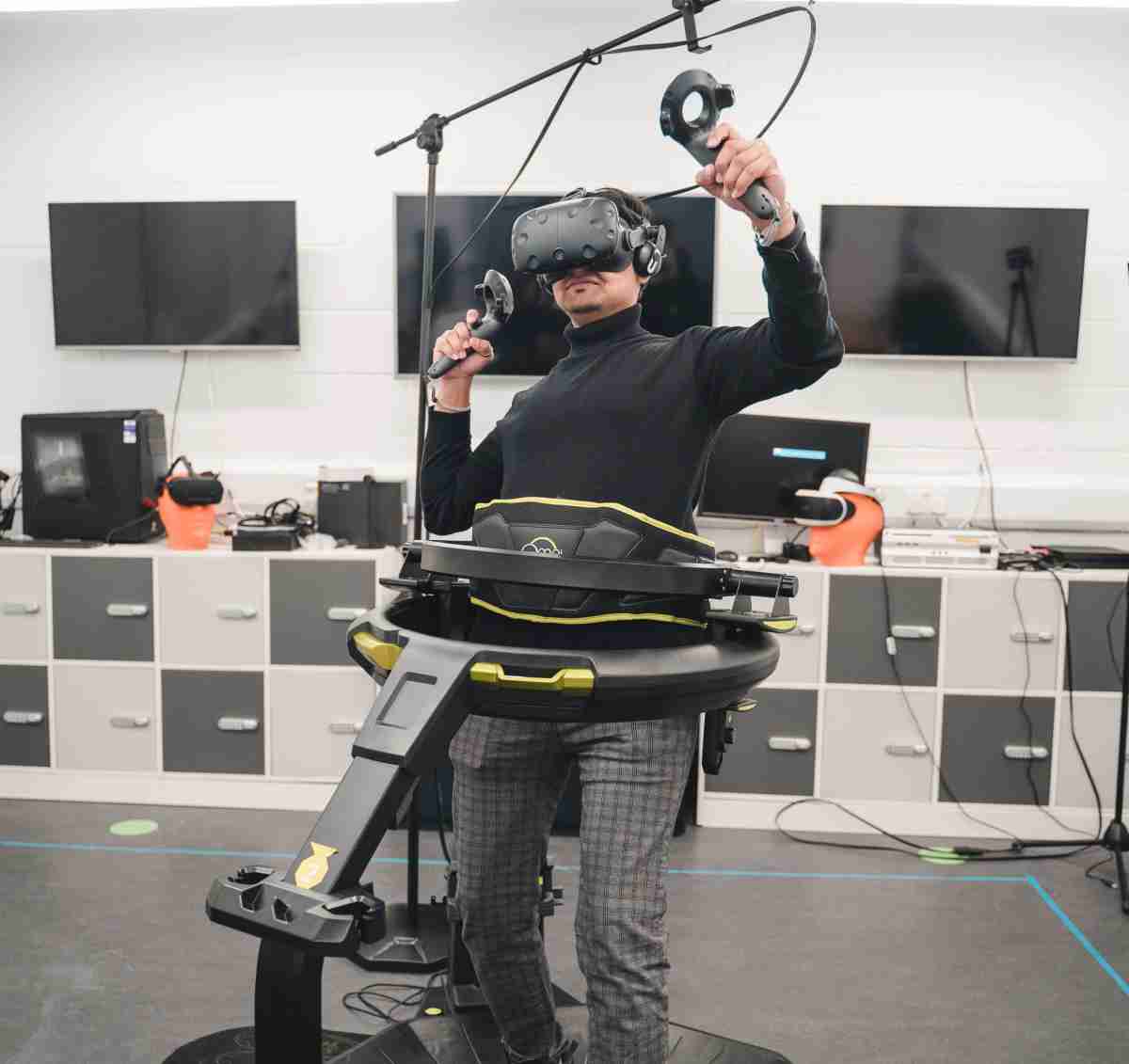
This course focuses on the programming skills necessary for the field of game development. You will create and develop computer games both alone and as part of a team. Excellent facilities include Sony PlayStation 5 developer kits and software such as Unity Pro, Unreal Engine 5 and Maya. You will also have access to our new Centre for Virtual and Augmented Reality. There is regular input from industry practitioners, particularly through the games inKUbator, and the chance to participate in Game Jams and Hackathons. With a professional presence, portfolio and a range of skills, you will be ready to impress potential employers.
- This course has been developed in consultation with our industry panel, and we are an educational partner of Sony Interactive Entertainment through PlayStation First. We are also an active member of TIGA, the games industry's representative body.
- This course has been designed to utilise the best digital media expertise and resources from across the University, and will prepare you for employment in the digital media industry, where teams of specialists work together to develop and author innovative digital media projects.
| Mode | Duration | Start date |
|---|---|---|
| Full time | 1 year |
September 2024 January 2025 |
| Full time | 2 years including professional placement |
September 2024 January 2025 |
| Part time | 2 years |
September 2024 January 2025 |
| Main location | Penrhyn Road and Kingston School of Art at Knights Park |
Reasons to choose Kingston University
- Kingston University is an active member of The Independent Game Developers' Association (TIGA) and has been developed in consultation with industry.
- Kingston is an educational partner of Sony Interactive Entertainment through PlayStation First. You will learn to develop games for PlayStation 5.
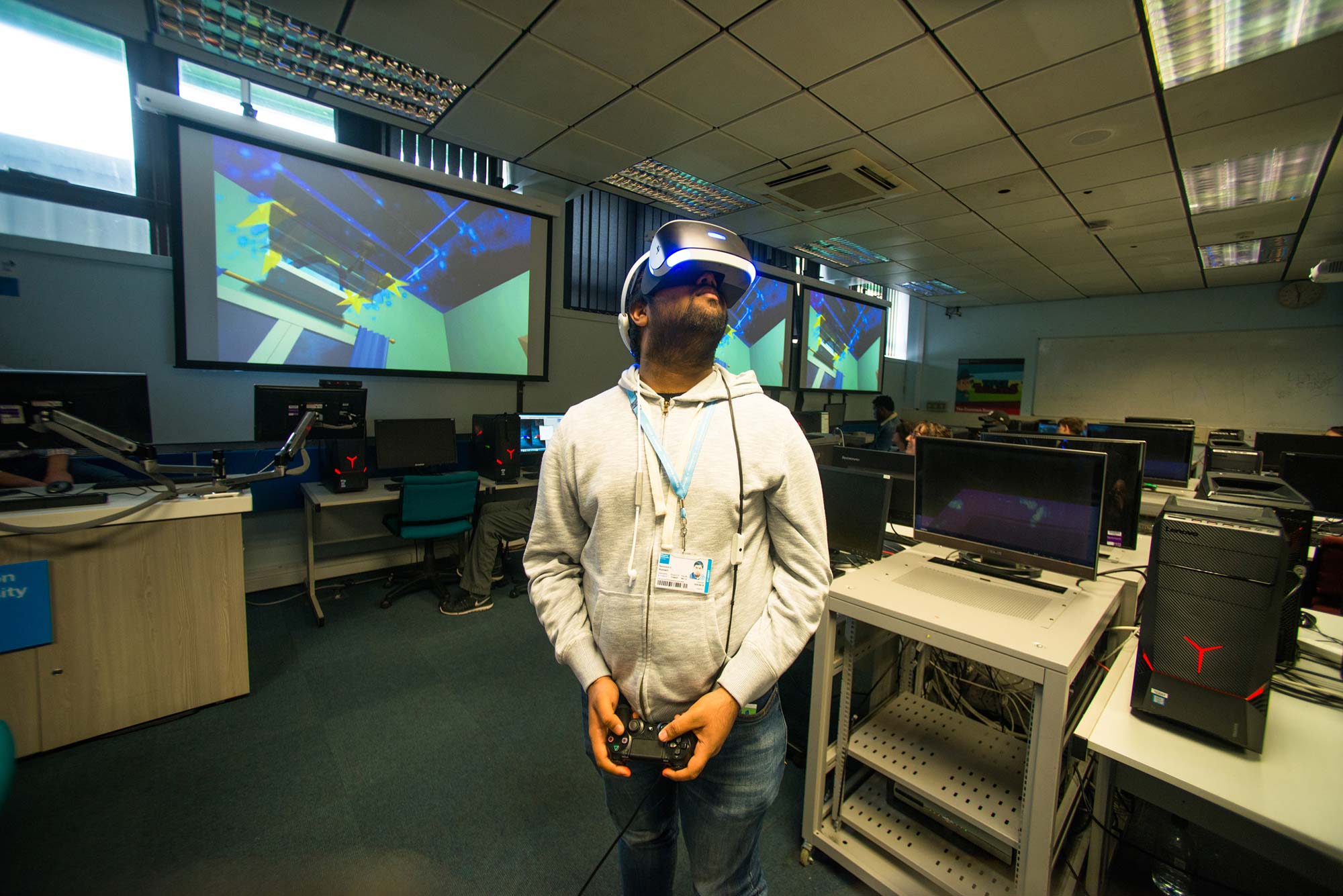
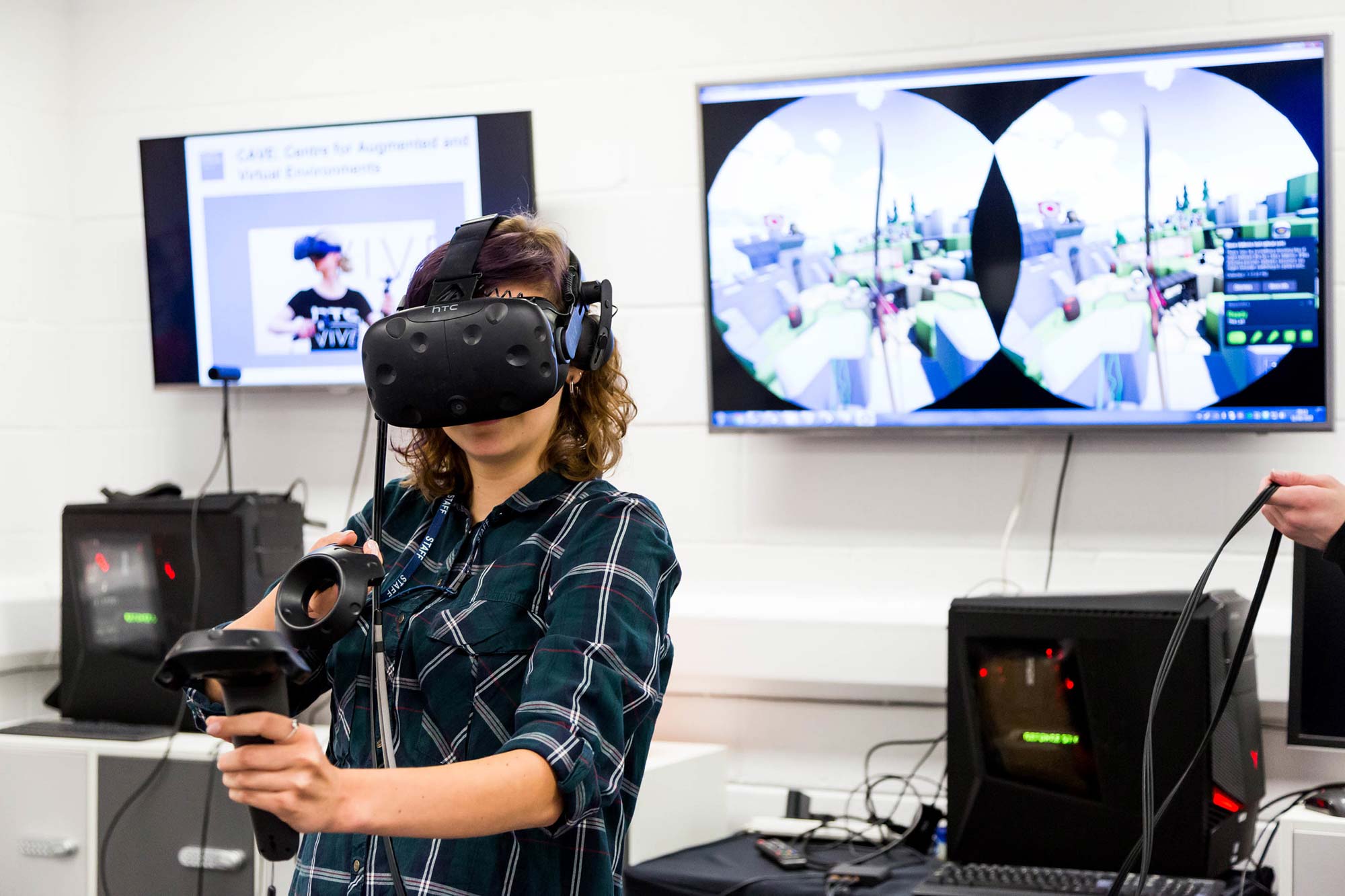
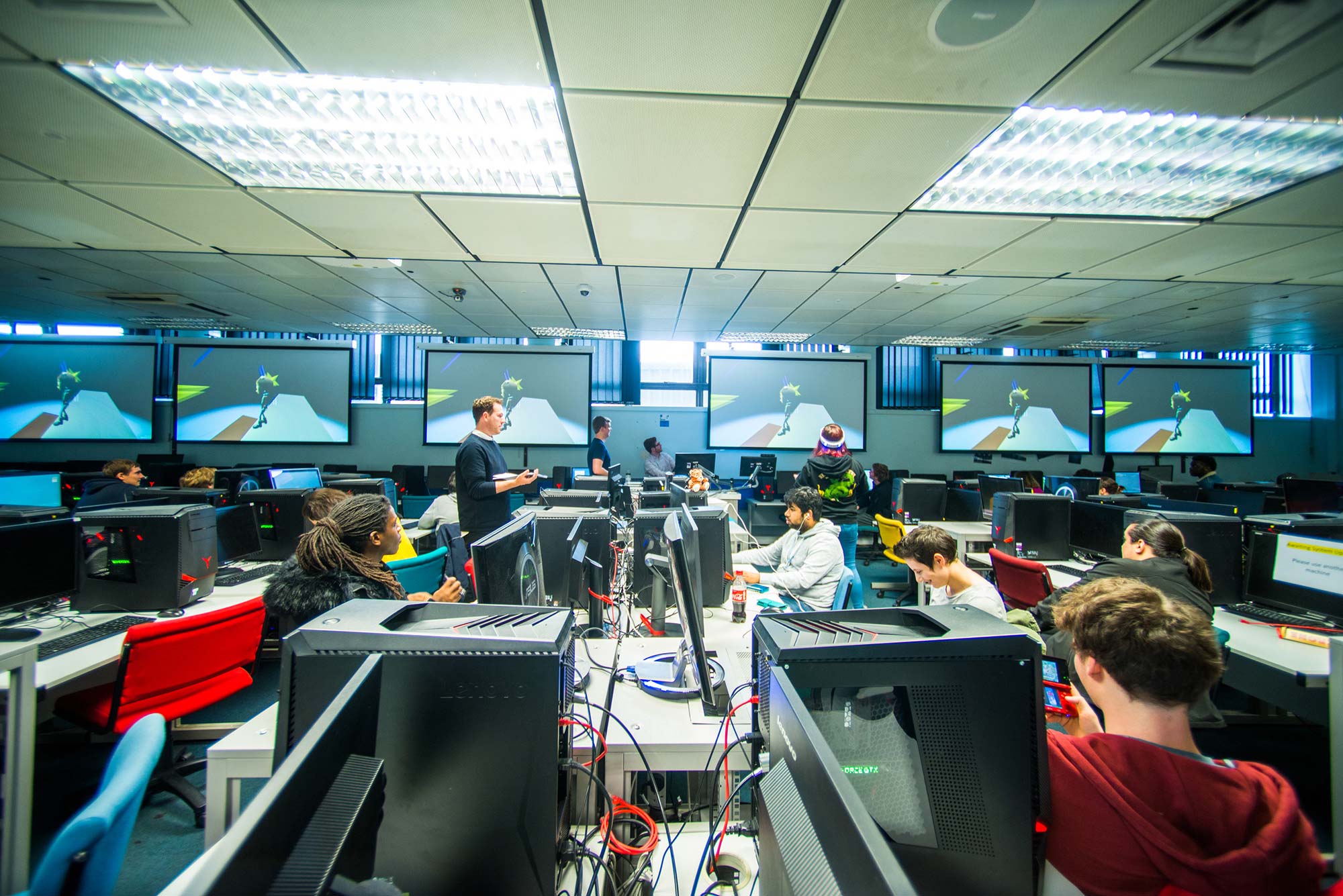
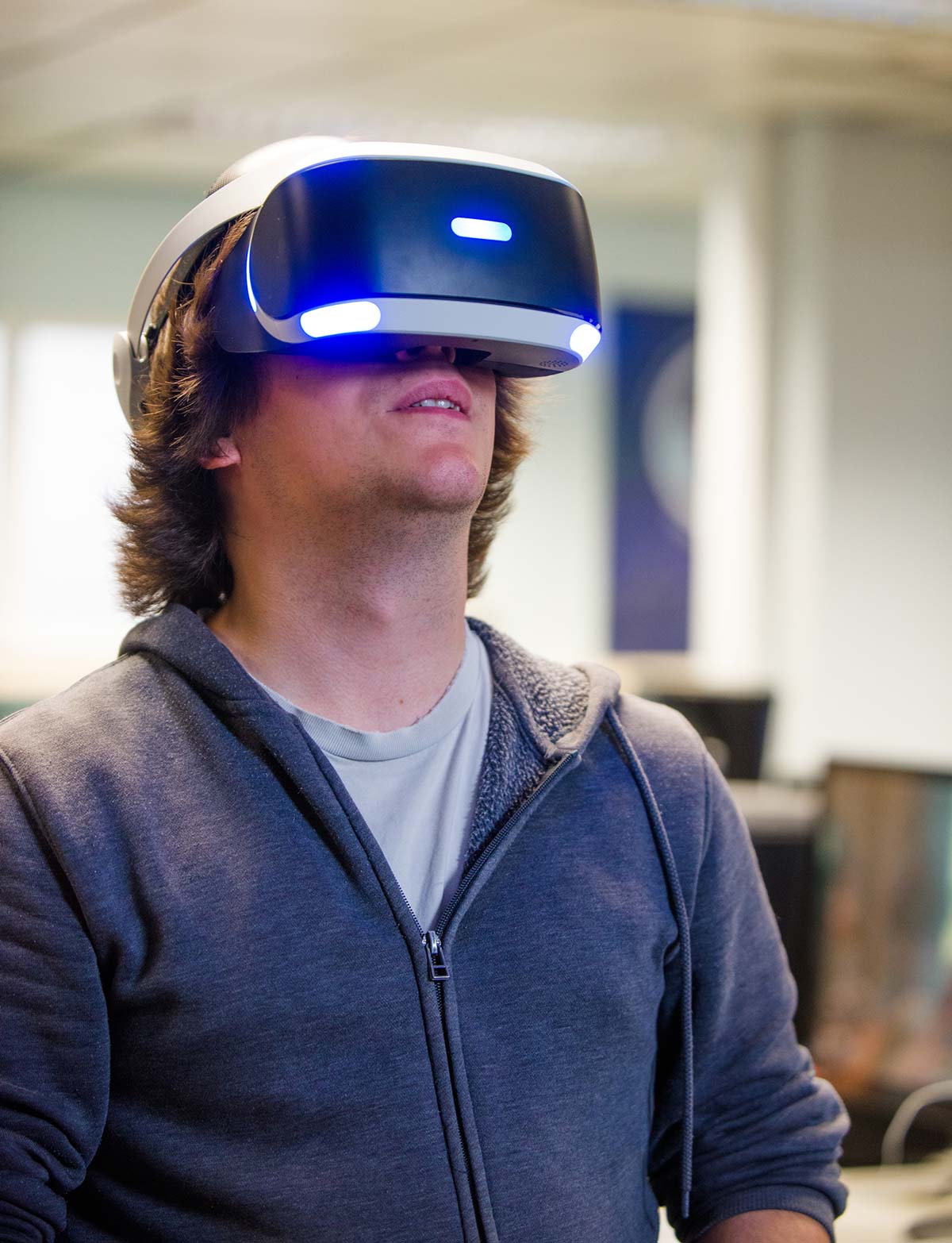
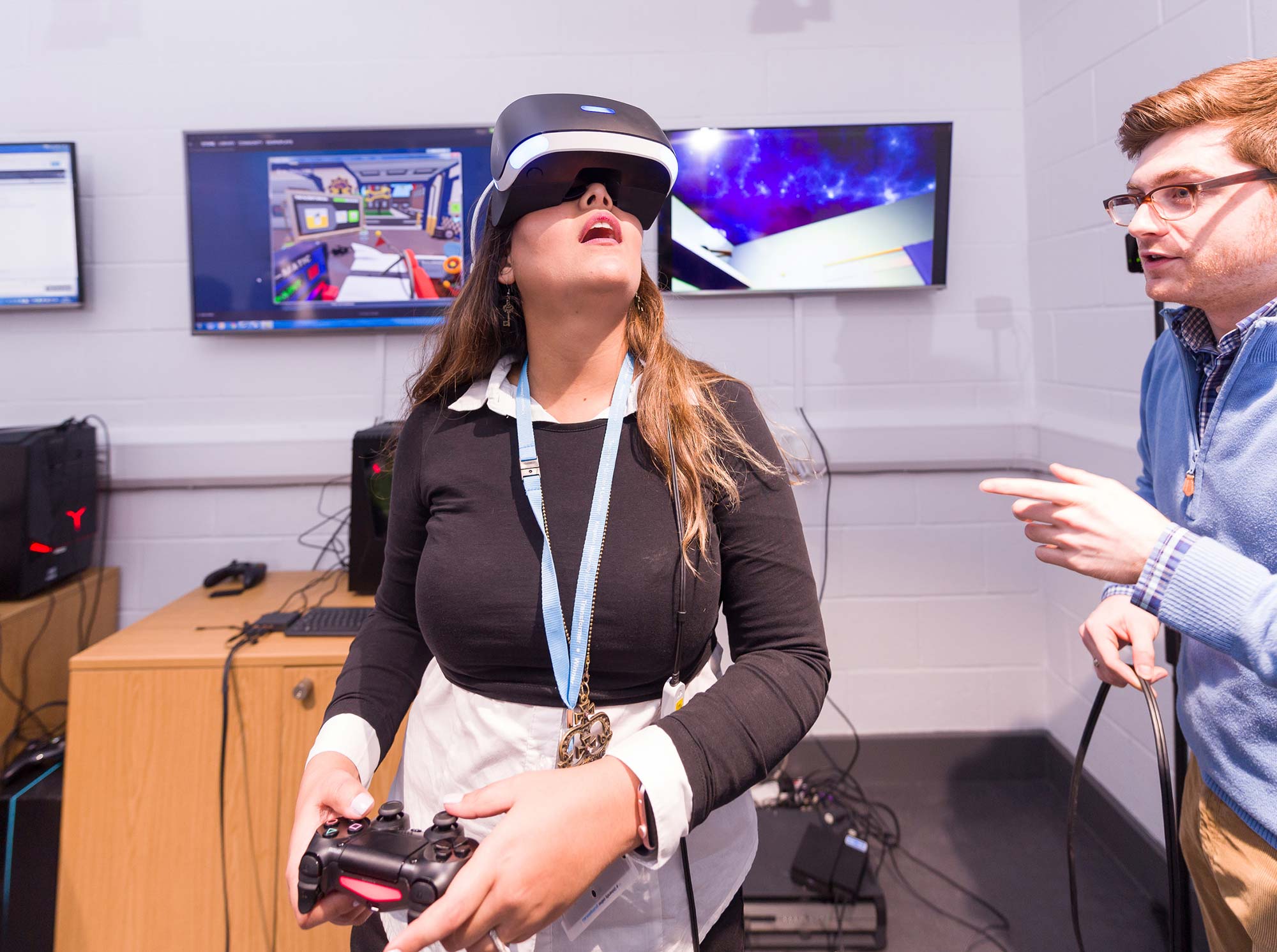
- You will use first-class facilities, such as gaming PCs, development consoles and VR and AR kit.
Sony PlayStation First
Kingston University is an educational partner of Sony through PlayStation First. Through this partnership you will have the opportunity to learn how to develop games for the PlayStation 5 as part of this course.
What you will study
You will design and create computer games, alone and in teams, using industry-standard production management tools and techniques that stimulate a professional environment of collaboration to deliver a product on time. You will also develop vertical-slice prototypes using new technologies, such as computer vision and stereoscopy, and will learn how to present yourself to potential employers through your professional presence and portfolio.
For a student to go on placement they are required to pass every module first time with no reassessments. It is the responsibility of individual students to find a suitable paid placement. Students will be supported by our dedicated placement team in securing this opportunity.
Core modules
Modules
Digital Studio Practice
30 credits
You will work with a multidisciplinary group of students as appropriate for your course (User Experience Design MSc, Game Development (Design) MA, Game Development (Programming) MSc and Computer Animation MA); involved with the digital media production process in response to a project brief developed in consultation with the industry panel and/or research staff. Projects concern contemporary platforms, such as iPhone, Android, Windows, Playstation, Xbox and Next Generation controllers and innovative input devices. You also develop a professional profile (online CV/portfolio) fitting for your role and intended destination which you maintain throughout the course.
- Coursework: report, prototype, and presentation (group and individual)
- Schedule: allow one weekday per week in the first semester
- Staff: course staff
Connected Games Development
30 credits
The module covers the process of creating multiplayer computer games using various technologies and designing approaches. This module provides guided teaching and practical sessions on topics related to connected games programming, design and portfolio development.
The aims of this module are:
- To enable students to solidify, develop, and design connected games of their selected genres aiming also to consolidate their portfolio.
- To develop problem-solving abilities in the relevant programming and designing techniques which underpin this.
- To help students develop a confident and extensive understanding of connected games under their own genre specialism.
3D Game Programming
30 credits
The aims of this module are to equip you with the skills necessary to be able to create 3D computer games to a professional standard using appropriate game libraries and to develop problem-solving abilities in the relevant mathematics, physics and graphics techniques which underpin this.
On successful completion of the module, you will be able to:
- select and incorporate relevant mathematics and physics techniques in a games implementation
- describe and make use of rendering techniques to display 3D graphics primitives and handle images
- apply and code standard game elements such as camera, movement, skyboxes and terrains
- select and code using a range of game libraries and engines
- incorporate realistic behaviours and gameplay
- develop reliable, tested games using industry-standard practices and techniques to schedule.
Machine Learning and Artificial Intelligence
30 credits
The module introduces fundamental concepts and methods in Machine Learning and Pattern Recognition, and discusses their applications in disciplines such as image and video analysis, computer games, information security, data science and mechatronics. Students are firstly introduced to classical methods, before they are taught modern state-of-the-art approaches. Then, they are exposed to applications related to their course. The module is taught in a practical fashion and therefore some knowledge of a programming language is required.
Digital Media Final Project
60 credits
The Digital Media Final Project, as a capstone project, consolidates the knowledge gained in earlier modules and is informed and supported by prior learning.
You will interpret the coursework into a practical solution and demonstrate skills in defining, analysing and developing a substantial solution to an individually defined design related problem. You will utilise an advanced understanding of contemporary digital media practice. The research and documentation of the project is an integral part of the submission; reflecting on the process, as well as the critical analysis and methodology of the research itself. The research will be conceptually integrated within the practical work. Individual project topics are expected to be wide ranging and provide the opportunity to fully investigate a practical situation, underpinned by a critical report on the work produced. Topics must allow the opportunity to position work with respect to business, social and cultural goals and identify and apply appropriate technology as a means of delivery.
On successful completion of the module, you will be able to:
- Critically apply theoretical knowledge of design and evaluate contemporary discourse on the subject.
- Demonstrate the application of design research methods in formulating concepts and ideas.
- Originate design propositions through the application of appropriate design ideologies, research principles, methods, materials and technology, forms, means, actions or interventions.
- Engage in the critical reflection of own work and in peer review related to the development and production of the major project, employing skills of evaluation, contextualisation and communication.
- Disseminate the research process and outcomes of the final project with appropriate currency and consideration of audience.
Professional Placement
120 credits
The Professional Placement module is a core module if you're following a masters programme that incorporates an extended professional placement. It provides you with the opportunity to apply your knowledge and skills in an appropriate working environment, and develops and enhances key employability and subject specific skills in your chosen discipline. You may wish to use the placement experience as a platform for a major project or your future career.
It is your responsibility to find and secure a suitable placement opportunity; this should not normally involve more than two placements which must be completed over a minimum period of 10 months and within a maximum of 12 months. The placement must be approved by your Course Leader prior to commencement to ensure its suitability. You will have access to the standard placement preparation activities offered by the Student Engagement and Enhancement (SEE) group.
Read more about the postgraduate work placement scheme.
Work placement scheme
Many postgraduate courses at Kingston University allow students to take the option of a 12-month work placement as part of their course. Although the University supports students in finding a placement and organises events to meet potential employers, the responsibility for finding the work placement is with the student; we cannot guarantee the placement, just the opportunity to undertake it. You may find securing a professional placement difficult as they are highly competitive and challenging, but they are also incredibly rewarding. It is very important to prepare and apply yourself if this is the route you wish to take. Employers look for great written and oral communication skills and an excellent CV/portfolio. As the work placement is an assessed part of the course, it is covered by a student's Student Route visa.
Find out more about the postgraduate work placement scheme.
Entry requirements
Teaching and assessment
Who teaches this course?
About Digital Media Kingston
This course is delivered by Digital Media Kingston.
Digital Media Kingston (DMK) is an interdisciplinary, collaborative project between the School of Computer Science and Mathematics, and School of Design at Kingston University. Its mission is to bring together creative expression, theoretical analysis, scientific rigour and technological innovation to underpin innovation and excellence in the computational arts.
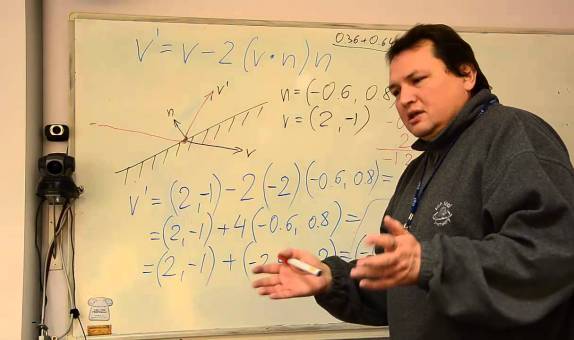
The teaching element of the DMK project delivers a suite of four related courses: Computer Animation MA, Games Development (Design) MA, User Experience Design MSc, and Games Development (Programming) MSc. You will share the majority of your taught modules with students taking these digital media courses.
Postgraduate students may run or assist in lab sessions and may also contribute to the teaching of seminars under the supervision of the module leader.




Facilities
Here is the range of facilities available to you as a student at Kingston that will help you during your course.
Other facilities
There is a wide range of other facilities at our Penrhyn Road campus, where this course is based. You will have access to a modern environment with the latest equipment including:
Facilities
Fees for this course
Additional costs
Depending on the programme of study, there may be extra costs that are not covered by tuition fees which students will need to consider when planning their studies. Tuition fees cover the cost of your teaching, assessment and operating University facilities such as the library, access to shared IT equipment and other support services. Accommodation and living costs are not included in our fees.
Where a course has additional expenses, we make every effort to highlight them. These may include optional field trips, materials (e.g. art, design, engineering), security checks such as DBS, uniforms, specialist clothing or professional memberships.
What this course offers you
Game Development (Programming) MSc is part of the Digital Media Kingston suite of courses, providing students with a unique mixture of creative and technical skills.
Students will have access to first-class technical facilities such as state-of-the-art editing suites, moving image studios, 3D workshops and other specialist resources. These include a number of Sony developer kits. Students will be able to develop for this platform under an academic development agreement with Sony. In addition other software is available including Unity Pro, Unreal and Visual Studio for C++ development. Students also have access to a body modelling suit.
This industry-facing course aims to hone your workplace skills including:
- team-work
- time management
- communication (oral, written and electronic)
- data collection, review and synopsis
- computing.
Input from industry practitioners and experts will add a valuable dimension to your studies, particularly though the games inKUbator which features regular industry speakers. There is also the opportunity to participate in Game James and Hackathons.
After you graduate
Graduates of this course are suited to jobs in the games and media industries, but the core skills you will learn are also excellent preparation for a wide range of computing careers. These include game programmer, AI programmer, VR game developer, VR developer, software engineer and technical programmer.
Links with business and industry
How we work with industry partners
Digital Media Kingston courses have been developed in consultation with our industrial advisory board. We are an academic partner with Sony Interactive Entertainment Europe through PlayStation First, meaning students are able to develop for the PlayStation 5 console. Students often work to live industry briefs.
We have regular guest speakers from industry, including our alumni. Recent talks in our inKUbator have included speakers from Creative Assembly, Ndreams, Rare, Rebellion and Frontier.
Some work placements, live projects and other opportunities will be available at the discretion of the Industry Panel for students on this course.
Course changes and regulations
The information on this page reflects the currently intended course structure and module details. To improve your student experience and the quality of your degree, we may review and change the material information of this course. Course changes explained.
Programme Specifications for the course are published ahead of each academic year.
Regulations governing this course can be found on our website.