

Postgraduate study
Want to advance or change your career, or dive deeper into a subject you love? Here’s everything you need to know about postgraduate study at Kingston University.

Explore postgraduate study options
Is your ambition to advance, evolve or even change your career?
Or maybe you are passionate to learn more about a subject you love? Whatever your reason for wanting to study further, at Kingston University we will help make it work.
We offer a wide range of taught and research masters courses. These include doctoral courses and diplomas with flexible study options to help meet your learning needs and enable you to balance studying with work or family commitments.

Search all postgraduate courses
Search all postgraduate courses


Flexible study options
There are a range of full-time and part-time postgraduate programmes available at Kingston University. Many postgraduate courses offer the flexibility of starting in January or March. This allows you to tailor your studies to suit your personal schedule or commitments.
To find out if your preferred course offers these alternative start dates, visit the specific course page for information and availability.
Postgraduate work placement
A professional placement option is available for both home and international full-time students. The placement year is an excellent way to gain valuable work experience and is an opportunity to develop the skills employers are looking for. You must find and secure your own placement, but you can make use of the University's career support services to help you. The placement will be undertaken after the taught portion of your course.
Types of postgraduate qualifications
Take a look at the list below to find out more about the qualifications you can study towards.
Explore our virtual experience
Discover more about Kingston University with our virtual experience. You can explore student life, accommodation and the support that will be available to you, as well as personalised on-demand content for your subject of interest.





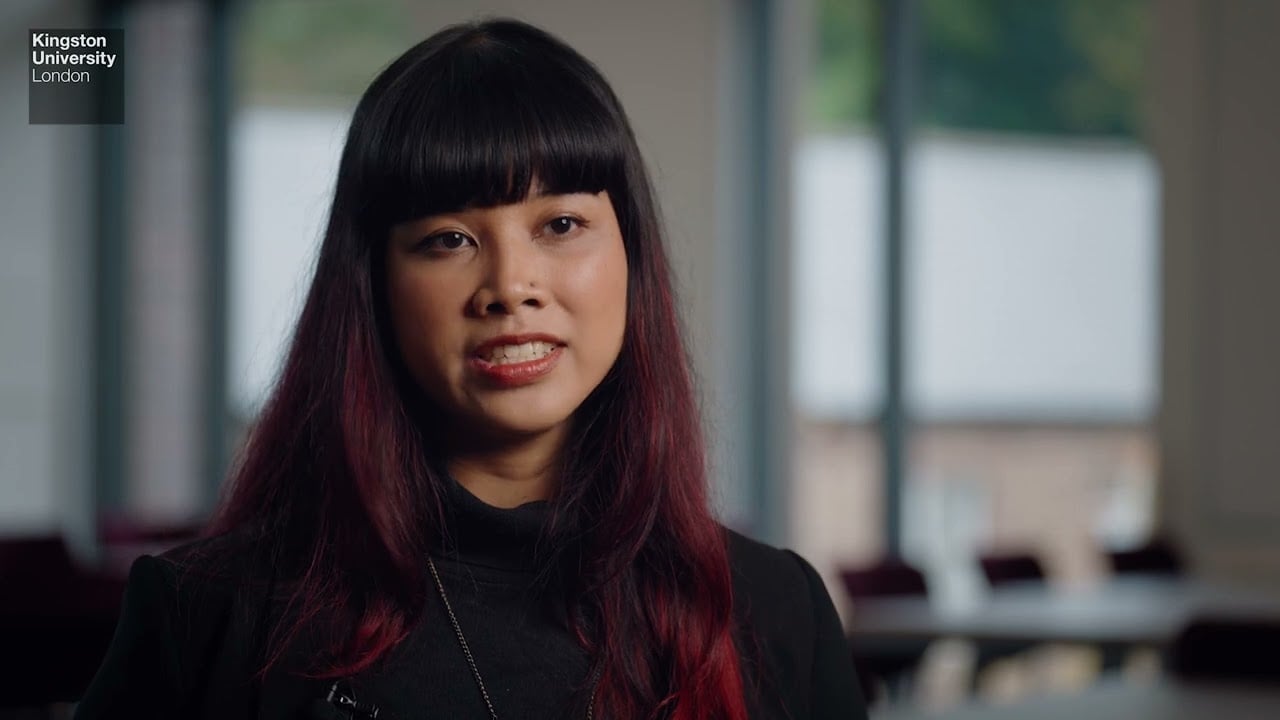
Our postgraduate students
Hear from our postgraduate students as they share the experiences and opportunities that have shaped their time at Kingston.
Questions about studying with us? Get in touch
Home students (from England, Northern Ireland, Scotland, Wales or any of the British Isles)
- Telephone: +44 (0)203 510 0106* (Monday – Friday, 08.30-17.00)
- Email our Admissions Team – we aim to respond within 24 hours
- WhatsApp: +44 (0)7366 320035 (Monday – Friday, 08.30-17.00)
*Calls are free from a UK landline or mobile.
International students (international student or a student from the European Union)
- Telephone: +44 (0)203 510 0746 (Monday – Friday, 08.30-17.00 UK time)
- Email our International Team – we aim to respond within 24 hours
- WhatsApp: +44 (0)7366 320035 (Monday – Friday, 08.30-17.00 UK time)