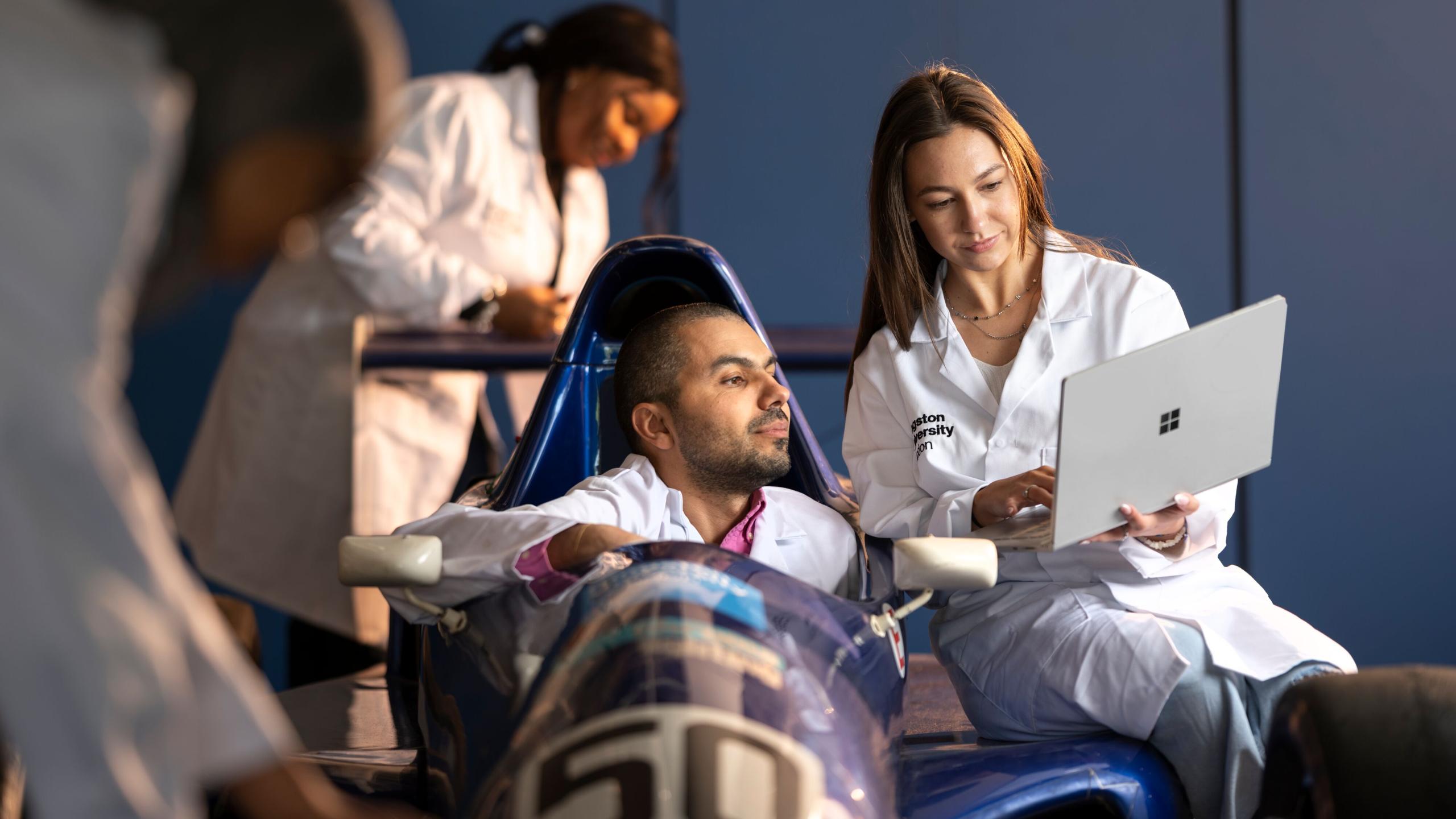
Aviation Engineering BEng (Hons)
- Engineering: aerospace, aviation and aircraft
- Undergraduate
Prepare for a future career in aviation engineering with the Aviation Engineering BEng (Hons) degree course from Kingston University. This course aligns with the UK Standard for Professional Engineering Competence (UK-SPEC) and meets the academic requirements for Incorporated Engineering (IEng) Membership of the Royal Aeronautical Society (RAeS). We are the only UK university with industry-standard flight simulators that include Airbus A320 Flight Simulator, Helicopter Simulator and Six-Degree of Freedom Motion Simulator.

This course is in Clearing.
Call our Clearing line on
0800 0483 334
More about Clearing
Gain the skills to design, manufacture and maintain aircraft
You’ll benefit from our successful history working alongside the aviation industry to successfully place Kingston graduates.
Our Aerospace and Aviation Engineering courses equip you with the essential skills to design, manufacture and maintain aircraft. You'll graduate prepared for a successful career in the aviation industry. With strong industry connections, Kingston graduates have secured roles at major aerospace companies, including Virgin Atlantic, EasyJet, Thales, and in key hubs like Heathrow and Gatwick airports.
At our Roehampton Vale campus, you'll train in a cutting-edge learning environment with composite manufacturing labs, 3D printing, flight simulators and advanced CAD/CAM facilities. You’ll gain hands-on experience with industry-standard software, including SolidWorks, AutoCAD, ANSYS and computational fluid dynamics tools. This means you'll develop future-ready skills in aircraft design and analysis.
Through real-world flight simulator training, you'll tackle real-life aviation challenges, enhancing your problem-solving and technical expertise. Our strong industry partnerships offer professional networking opportunities, industrial placements and career pathways, ensuring you're well-prepared for a dynamic career in aerospace and aviation engineering.
Engineering at Kingston University
Follow along as our students talk through the skills they're developing to design their future careers.
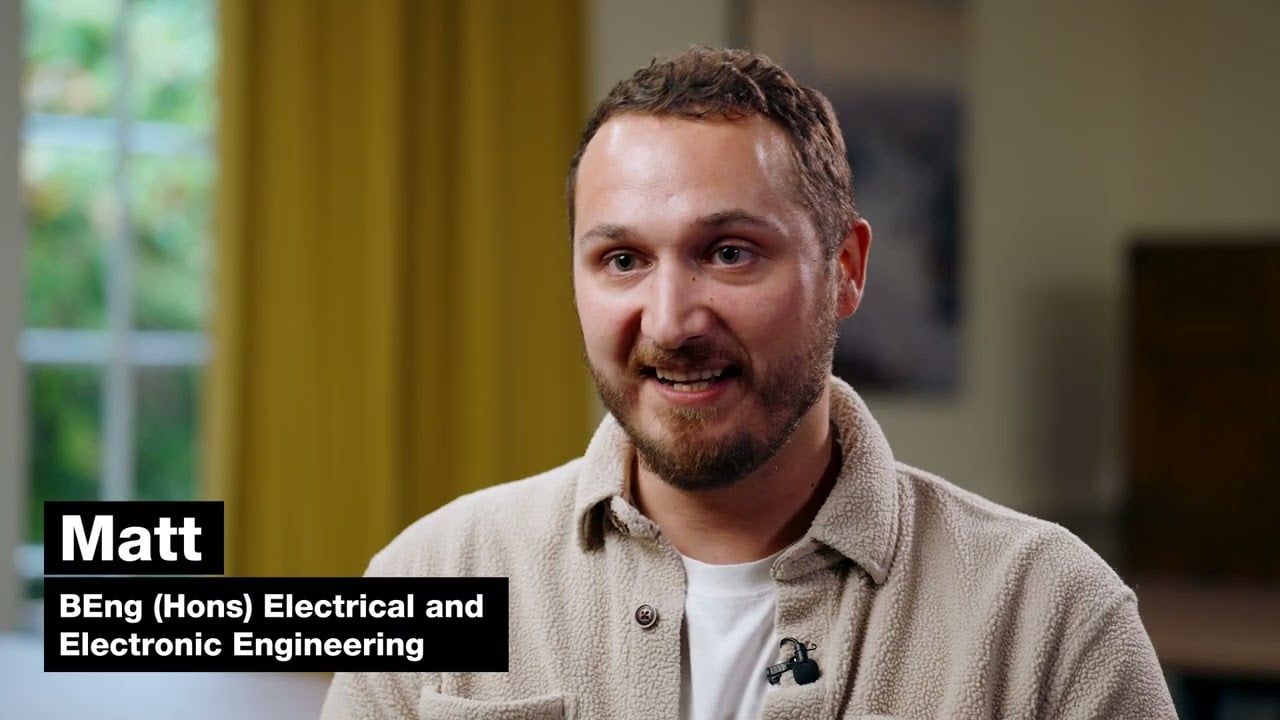
Soon after starting my final year, I applied and received conditional job offers from Thales UK, Airbus UK and Shell. I'm now currently working as a systems engineer within flight simulation. I write software for flight simulators which often involves travelling across the UK and the world, most notably northern England, Scotland and Dubai.
Why choose this course
If you’re considering an engineering career in aviation, this is the ideal degree course for you.
Throughout the course, you will learn via a combination of theory and practical skills. You’ll study aerodynamics, propulsion, structures and materials, analysis of structures using FEA & CAD, as well as the science and performance of aircraft. Through practical work in laboratories and workshops, you will apply the engineering principles you learn and refine your skills.
As a result, this course will prepare you to work in a range of areas. For example, aircraft maintenance, airworthiness, aviation management, logistics, systems integration, design, support, manufacturing, and air transport economics.
This degree will also equip you with valuable skills for your future career, such as effective communication, presenting, team-working, planning and project management.
Students on this course can study the first two years at the Asian Aviation Centre in Sri Lanka, and then transfer to study the final year of their degree at Kingston University London. Find out more in the Sri Lanka section on our page for country-specific information.
Accreditations
The course is accredited by the Royal Aeronautical Society. It aligns with the UK Standard for Professional Engineering Competence (UK-SPEC) and meets the academic requirements for Incorporated Engineering (IEng) Membership of the Royal Aeronautical Society (RAeS).

Course content
Year 1
In Year 1, you will acquire the fundamental engineering knowledge and skills building a solid foundation for students to undertake a deeper study in Year 2. You will have the opportunity to carry out hands-on practical work in laboratories and workshops throughout the programme. Most modules are designed to develop key employability skills such as communication, presentation, team-working, planning and project management.
In Year 1, there is a clear structure and guidance for your learning, with an emphasis on the acquisition of fundamental engineering knowledge and skills (e.g. Mathematics and IT), practical skills, design skills and the initial development of Future Skills.
Core modules
Year 2
In Year 2, there will be an increased expectation of independent study, supported by a reduced emphasis on the use of traditional lectures. You will study the engineering principles underpinning aircraft technologies such as aerodynamics, propulsion, structures and materials science and performance of aircraft. You will study aircraft maintenance operations, aircraft systems, airworthiness, and air transport economics. You will also learn to design and make aircraft structures using computational skills such as CAD and FEA. You will have problems based learning and interdisciplinary group work to tackle a live, real-world problem supplied by a well-known company or organisation.
Core modules
Optional modules
Year 3
In Year 3, you will study advanced materials and structures, propulsion and performance, aircraft maintenance, airworthiness and air transport economics. The assessment tasks in Year 3 focus on the real world-engineering activities that enhance students' employability. In Year 3, you will also learn about maintenance logistics, maintenance cost drivers and the key aspects of project planning. You will apply business methods to assess the economic and financial aspects of air transport and/or engineering projects. In this final year, you will be expected to select and apply requisite practical skills in your own independent research work in the Individual Project module.
Core modules
Extended degree with foundation year
If you would like to study one of our engineering degrees at Kingston University but are not yet ready for Year 1 of an undergraduate course, a foundation year is ideal.
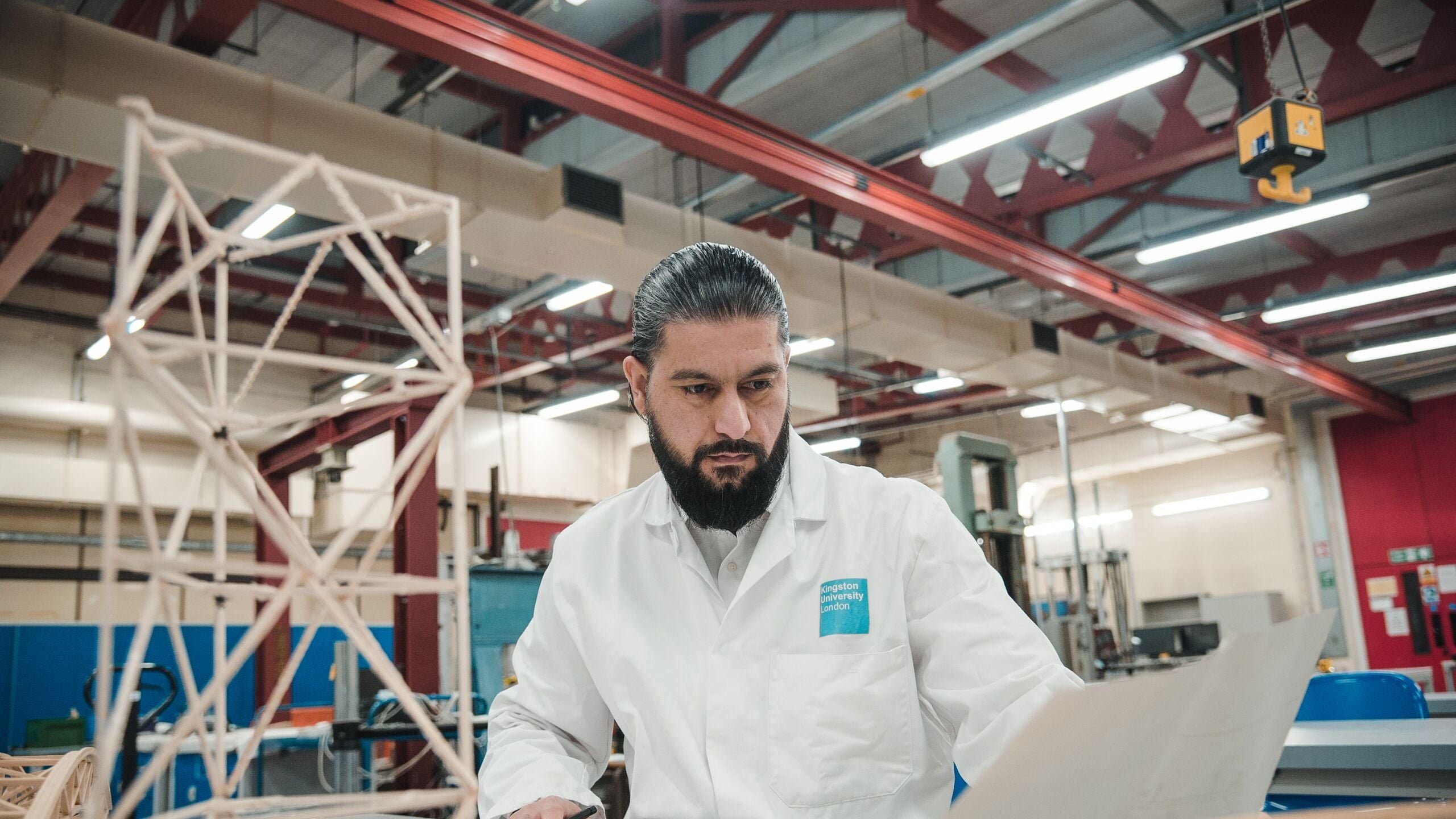
International students: direct application
Are you an international student? Have you decided Kingston is the place for you? If so, you can apply for this course directly, rather than having to go through UCAS.


What career opportunities does this course offer?
Graduates from this course go on to pursue career opportunities in maintenance and licensed aircraft engineering, certification, quality assurance, logistics, planning, design, technical services, production and control engineering. Graduate employers include the military as well as civil aviation and aerospace companies.
I started working with Starling Aerospace in 2016, before even completing my MSc and in October 2018 I joined Pall Corporation as a certification engineer. I believe that I am made in Kingston.
Future Skills
Our Future Skills programme is embedded within all our undergraduate courses and throughout the whole Kingston experience. These skills will help you to become a future-proof graduate by equipping you with the skills most valued by employers, such as problem-solving, digital competency and adaptability.
As you progress through your degree, you'll learn to navigate, explore and apply these graduate skills. You’ll also understand how to demonstrate and articulate to employers how these future skills give you the edge.

Teaching and assessment
Scheduled learning and teaching on this course includes timetabled activities including lectures, seminars and small group tutorials. It may also include placements, project work, workshops, workshops in computer labs, and laboratory workshops.
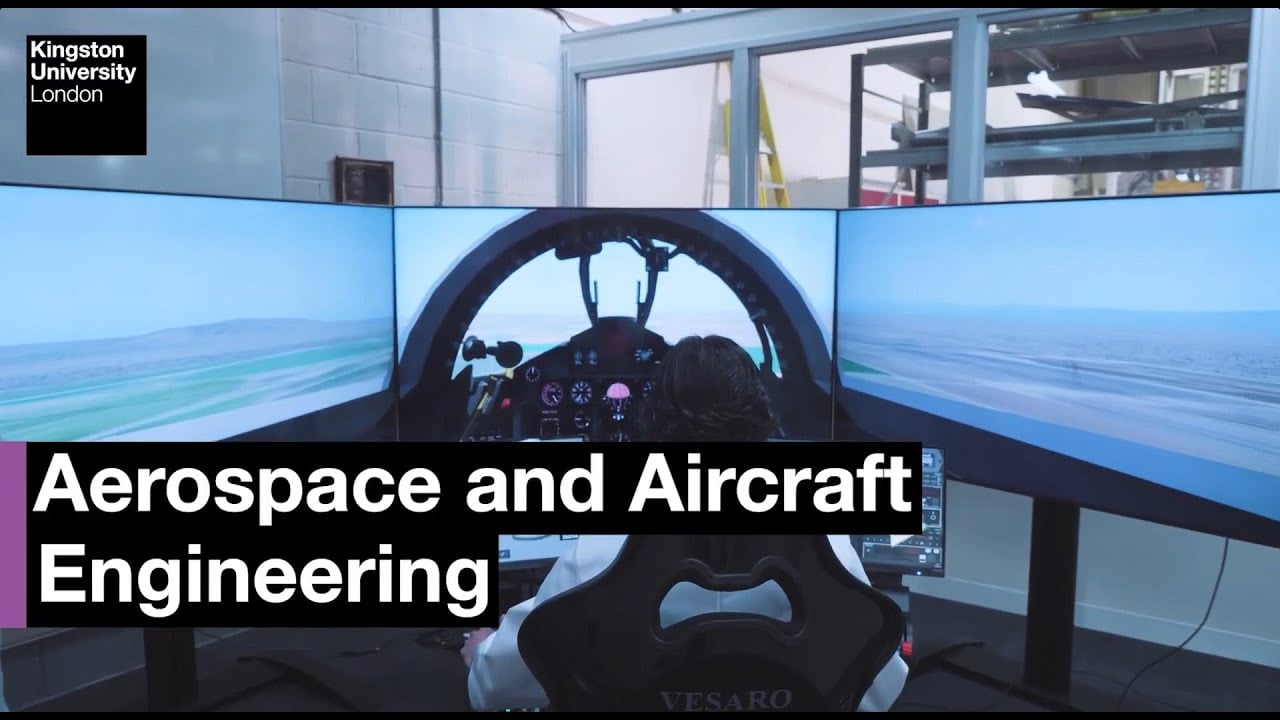
Inside the Department of Aerospace and Aircraft Engineering
Hear from our students and academics as they share their experiences and talk about the facilities and opportunities available throughout your studies.
Fees and funding
Additional course costs
Some courses may require additional costs beyond tuition fees. When planning your studies, you’ll want to consider tuition fees, living costs, and any extra costs that might relate to your area of study.
Your tuition fees include costs for teaching, assessment and university facilities. So your access to libraries, shared IT resources and various student support services are all covered. Accommodation and general living expenses are not covered by these fees.
Where applicable, additional expenses for your course may include:
Scholarships and bursaries
For students interested in studying this course at Kingston, there are several opportunities to seek funding support.

I decided to enrol at Kingston University as it was one of a select few universities that had a wide range of aerospace courses in both aeronautic and astronautic fields.
Aerospace engineering at Kingston University has truly contributed most significantly to where I'm currently at, where I attained a first class in my final year dissertation.
Course changes and regulations
The information on this page reflects the currently intended course structure and module details. To improve your student experience and the quality of your degree, we may review and change the material information of this course. Find out more about course changes
Programme Specifications for the course are published ahead of each academic year.
Regulations governing this course can be found on our website.
What our students and graduates say
In my final year I was able to join the international society, getting to know individuals of different faiths, origins and interests. I also won a runner-up cash prize and an award on my graduation day for the individual engineering poster competition.
I come from a small town in India with big dreams to achieve. From a very young age, I wanted to go to London to further my studies. There is a profound heritage about aerospace in Kingston University and therefore I chose to study here. I will be always grateful to the support I received from Kingston University and especially to the course director, Dr Sing Lo. The University helped me to grow both academically and professionally.
In my spare time I fly light aircraft, after carrying out flying lessons, most notably in Cessna 152s and Piper 28s. I've also supported Thales with flying drones during open days, and am now taking my drone licence.
What are the facilities like?
When you join Kingston University, you will have access to a wide range of facilities and resources designed to support your studies. Use the virtual tour below to explore some of the facilities and learning environments that students within this subject area may experience during their studies.




Key information
The scrolling banner below displays some key factual data about this course (including different course combinations or delivery modes of this course where relevant).