Aircraft Engineering BEng (Hons)
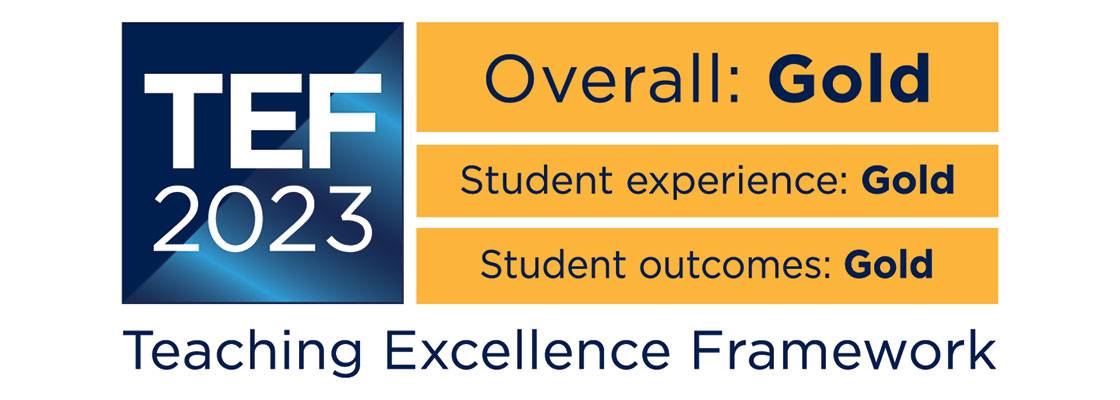
Teaching Excellence Framework (TEF) Gold award
Our commitment to high quality teaching has been recognised with a TEF Gold rating. The University has received an overall rating of Gold, as well as securing a Gold award in the framework's two new student experience and student outcomes categories.
Why choose this course?
Are you considering a career in aircraft maintenance? This degree will set you on the path to becoming an aircraft maintenance engineer and a maintenance manager in the future.
Your studies will include hands-on experience of aircraft component and equipment replacement, inspection, condition monitoring, fault diagnosis and rectification. You'll become familiar with the work environment and the legal requirements relating to commercial aircraft.
The skills you gain will improve your career prospects and enable you to complete further study.
Professional accreditation
This is the only UK degree that mirrors the requirements of CAA Part-147 approved courses, and it is accredited by the Royal Aeronautical Society as meeting the requirements for IEng registration with the Engineering Council. The course is taught at Cardiff and Vale College – and is CAA Part-147 approved. This course is RAeS accredited.
| Where taught | Attendance | UCAS code | Year of entry |
|---|---|---|---|
| International Centre for Aerospace Training (ICAT) Cardiff and Vale College - Provider Code C16 | 3 years full time | AG01 | 20242025 |
It is possible for you to complete the Engineering Foundation course (H408) at Kingston University and the BEng (Hons) at the International Centre for Aerospace Training (ICAT), Cardiff and Vale College.
| Main location | International Centre for Aerospace Training (ICAT) Cardiff and Vale College |
Reasons to choose Kingston University
- This is the only UK degree that mirrors the requirements of the European Aviation Safety Agency (EASA) Part-147-approved courses. Once you graduate, you'll need just two years of maintenance experience before applying to the Civil Aviation Authority (CAA) for your B Licence (the main licence for aircraft maintenance staff).
- The course covers all the knowledge requirements specified in the EASA category B1.1 aircraft maintenance engineering licence syllabus (Part 66).
- This degree is accredited by the Royal Aeronautical Society (RAeS) as meeting the requirements for IEng registration with the Engineering Council.
What you will study
Alongside academic modules, work-based modules provide you with hands-on experience of aircraft component and equipment replacement, inspection, condition monitoring, and fault diagnosis and rectification. You will gain an understanding of the work environment and legal requirements relating to the operation of commercial aircraft.
The course covers all the knowledge requirements specified in the EASA category B1.1 aircraft maintenance engineering licence syllabus (Part 66). It introduces you to practical and maintenance skills, and provides you with opportunities to practise and develop these skills.
This course is designed specifically to set you on the path for a career as an aircraft maintenance engineer in the aviation industry. It will give you the confidence and skills necessary to become a maintenance manager of the future.
Year 1
Year 2
Year 3
In Year 1 you will also gain higher education study skills and other interpersonal skills necessary for completion of the course.
Core modules
Mathematics and Physics for Practitioners
30 credits
This module covers all of the topics in the EASA part-66 Mathematics and Physics syllabuses, and provides the knowledge and understanding sufficient for the students to take the associated EASA category B licence examinations that must be passed in order to become an aircraft maintenance engineer.
It also extends the mathematics knowledge to a level sufficient to underpin key engineering principles and prepare students for the mathematics in the level 6 modules of the programme and further study. Additional topics beyond EASA Mathematics and Physics syllabuses include but not limited to: probability, statistical methods and applications, matrix algebra, vectors, applications of calculus and elementary differential equations.
To become a design engineer a student would need to complete some additional mathematics and science study at level 5.
Electrical Engineering Fundamentals
30 credits
This module comprises both theory and practical. The theory is delivered in a series of lectures and the practical involves the student completing a series of laboratory sessions designed to reinforce the knowledge gained in the lectures.
The module starts by looking at electrical charge and how electricity is created, before moving on to look at passive components such as resistors, capacitors and inductors and how they behave in simple direct current (d.c.) circuits. The study of inductors leads nicely into the topic of magnetism and then onto d.c. generators and motors which starts by exploring the fundamental principles of machines before moving on to look at various basic types.
The second part of the module focuses on alternating current (a.c.). Firstly passive components are revisited, this time in basic a.c. circuits. The relationship between: resistance, reactance and impedance; voltage, current and impedance; and reactive, true and apparent power are examined in the class and tutorial sessions whilst simple circuits containing combinations of resistors, capacitors and inductors are explored in the laboratory. Induction is then revisited for transformers before the final section which covers the theoretical aspects of a.c. generators and motors before looking at typical aircraft a.c. machines.
Aerodynamics and Theory of Flight
15 credits
This module will initially establish the need for a standard atmosphere (ISA) and describe the properties of the atmosphere as applicable to aerodynamics. The module will investigate the airflow around a body and the generation of lift and drag. Relevant terminology and formulae will be introduced and calculations performed. The module will go on to discuss lift augmentation and stability; specifying design features affecting these. High speed flight is then discussed, including design features associated with critical Mach number. The module will conclude with a look at the characteristics of aerofoils at all speeds of flight.
Aircraft Electronic and Digital Systems
15 credits
This module is a combination of electronics, digital techniques and aircraft digital systems. The electronics section starts by looking at the building block of semiconductor components: the P-N junction, this is followed by a look at the characteristics, uses, and basic testing of diodes and transistors.
Basic logic gates are then introduced, and combinational and sequential logic circuits examined. Op amps are studied and basic A to D and D to A conversion techniques investigated. The section concludes with look at the transducers and synchronous data transmission systems found on aircraft.
In digital techniques, computer terminology and the basic layout and operation of computers is studied before looking at the use of computer technology in aircraft. Aircraft specific databus systems and displays techniques are also studied prior to moving onto the final section of the module: digital systems.
The last section involves investigating the layout, operation and built-in-test equipment (BITE) of a selection of electronic and digital aircraft systems including: Electronic Flight Instrument systems (EFIS), Electronic Centralised Aircraft Monitor system (ECAM), Engine Indicating and Crew Alerting System (EICAS), Fly-by-Wire (FBW), Inertial Reference Systems (IRS), and the Flight Management System (FMS)
Sustainability in Aircraft Engineering
15 credits
The aircraft element of the module will give students an opportunity to develop basic hand and aircraft maintenance skills. This is a Level 4 module for the School of Engineering and the Environment (SEE) students. The module will explore the environmental, economic, and social problems that society faces and encourage students to find their own sustainable innovative solutions.
Focusing on the 21st-century environmental and climate change challenges, the students will learn, explore, debate, and work in teams and will be challenged to:
- unleash the interconnectedness among topics such as Sustainable Development Goals (SDGs), Net Zero Carbon, and Circular Economy
- identify approaches to problem-solving in real-world scenarios
Navigating Aircraft Engineers
15 credits
This module introduces and provides an opportunity for students to develop the academic skills needed to successfully complete a Higher Education (HE) programme and the basic communication skills needed to become an aircraft maintenance engineer.
The academic element of the module will cover basic research techniques, report writing, referencing, use of IT, maintaining digital records, the fundamentals of working in teams, maintaining a study journal, understanding and using feedback, reflection and personal development through a series of scheduled learning sessions that will comprise a mixture of presentation, lecture, discussion, workshop and tutorial. Students will maintain a study journal a portfolio of evidence that will be used for both formative and summative assessment purposes. The majority of the material needed for these two documents will be derived from work completed for the other modules in the year.
Students are introduced to their course learning aims and consider their anticipated learning targets from induction to graduation. Students are guided to identify and take ownership of their personal academic journey through the development and application of academic skills aligned to KU Graduate Attributes and their discipline. Students are tutored in a range of learning to learn techniques are introduced to assessment for learning and the role of feedback, reflection and feedforward as an integrated part of their learning journey. This will be supported through active engagement in the KU Navigate Programme enabling students to understand and develop a design thinking approach to Future Skills.
Core modules
Practical Engineering Skills and CAD
30 credits
This module introduces and provides an opportunity for students to develop the hand skills and basic maintenance skills needed to an aircraft maintenance engineer. The module is not intended to turn the student into skilled experts; rather it is designed to provide a thorough introduction and solid grounding for further training, practice and development.
The hand-skills experience will include: reading engineering drawings, marking out, cutting, filing, drilling, and thread cutting etc. Initially students will be closely supported and guided; however, as the module progresses, the students' dependence on staff is expected to decrease and the tolerances to which they work increase. The maintenance skills will include: using maintenance manuals, following procedures, completing documentation and fundamental maintenance activities such as: identifying parts, wire-locking, panel removal and refitment, torque loading, assembly and disassembly. At all times throughout the module, students will be expected to display maturity, integrity, good work practices and have a responsible attitude towards safety.
This module also gives students an opportunity to practice and demonstrate that they are capable of independent learning. Students will be given access to a CAD package and expected to learn how to use it by reviewing and completing tutorials; and using help pages and any other resources they are able to locate. Students will be expected to maintain a log book of their experience and complete a CAD-based assignment that will form part of the module assessment strategy. The experience gained and feedback received from maintaining the log book will be beneficial to the students when completing projects in the third year of the programme.
Aircraft Materials, Hardware and Maintenance
30 credits
This module comprises two parts; the first looks at aircraft materials and hardware and the second covers the theoretical aspects of aircraft maintenance practices. The practical work associated with this module takes place in other modules in the programme.
Part one of this module starts by exploring the characteristics, properties, applications and typical heat treatments of aircraft ferrous and non-ferrous metals before looking at the properties, characteristics and how to repair typical aircraft composite and non-metallic materials. The content of this element extends beyond the EASA syllabus and there will be a greater emphasis on the mechanical and physical characteristics of material, their time dependent behaviour, behaviour under various loading conditions and features related to the service environment. The module also looks at the selection and application of different types of materials in engineering applications. Where appropriate, state-of-the-art problems will be discussed to illustrate the structure-property relationship in materials. The final topic of this part covers aircraft hardware, here the properties, characteristics, uses and identification of fasteners, pipes, bearings, transmission systems, flying controls, and aircraft electrical cables and connectors are examined.
Part two provides students with the knowledge required to select and use the tools, materials, drawings and equipment necessary to perform aircraft maintenance tasks. It also provides them with the knowledge needed to enable them to work effectively and safely in an aircraft maintenance environment. Topics covered include: tools and equipment and their use, aircraft drawings and manuals, inspection and tolerance checking, electrical measurements, disassembly and reassembly, aircraft weighing and weight and balance calculations, aircraft handling; corrosion prevention removal, assessment and re-protection, non-destructive testing, aircraft storage and preservation and finally aircraft maintenance procedures.
Aircraft Structures and Their Mechanical Systems
15 credits
Aircraft Electrical & Avionics systems
15 credits
This module first discusses the operation of the electrical systems and avionics systems including but not limited to: electrical power generation and management, lighting. In each case, the depth of study will be sufficient to enable the student to describe the layout of each system, explain its operation and interaction with other aircraft systems and, given a period of time to gain some practical experience, determine the serviceability of the system and investigate and identify basic faults in it.
Practical maintenance experience, fault-finding techniques and an understanding of maintenance procedures and the appropriate action to be taken in the event of finding defects will be gained from other modules in the programme The module also examines aircraft instrument systems including: pitot-static for measuring airspeed and altitude, remote and direct reading compasses, gyroscopic flight instruments; and a number of avionic systems including: on-board maintenance, integrated modular avionics, cabin and information.
HE Study Skills and Explore
15 credits
Students will demonstrate a developing awareness of the skills required to operate as a professional in their subject area. These skills will include the development of teamworking, interpersonal and interdisciplinary skills, critical self-reflection, communication and presentation, time management, and the ability to organise, strategise and prioritise.
Students will develop their personal development plan (via their digital skills portfolio) and begin to explore and evidence how these acquired skills are applied across the portfolio of modules at Level 5.
A key element of this module will be the participation in an inter-disciplinary design thinking project. Students will contextualise their subject-specific knowledge, skills and behaviours as an interdisciplinary team member charged with developing a solution to a designated sustainability challenge.
Professional Practice for Aircraft Engineers
30 credits
This module is designed to introduce students to the wider issues and challenges associated with being an aircraft engineer in the 21st century. Specifically, the social, environmental and sustainability issues that are shaping our approach to our work. This module also introduces students to the engineering design process: to manage the design process from initial idea generation to the delivery of fully formed product or process to meet customer needs, while taking account of constraints.
A number of scheduled sessions will be used to introduce students to various topics in the module such as research, data collection, academic writing, project planning and network analysis. The engineering design process is introduced through a number of case study tasks. A small group design task will be used to provide students with an opportunity to test their ability to develop a systematic approach to solve an engineering problem, taking into consideration social, economic, environmental and legislative constraints. There will be further sessions to introduce students to the use of statistical methods to maximise reliability in Engineering Design.
However, the majority of this module is delivered as an independent study with tutor support. As with AE4004, students are expected to maintain a study journal and produce a portfolio of evidence that will be used for both the summative and formative assessment of the module. The journal and portfolio will be reviewed regularly by members of the teaching team and personal tutors who will provide guidance, advice and feedback on the contents; although in this module, students will be expected to be more proactive in maintaining the study journal and sourcing material for the portfolio.
In Years 2 and 3, you will develop these skills to improve your career prospects and enable you to complete further study.
Core modules
Aircraft Maintenance Practices
30 credits
Students will be given a group exercise in which they work together to produce a realistic and cost effective maintenance solution for an airline operation. The details of which (routes, flight schedule, aircraft details etc.) are provided by the course team. The project involves reviewing the "scenario" to determine the exact requirements, planning for successful completion of the project, identifying options and determining costs through research, analysing data collected and formulating an evidence-based solution and presenting the findings. As part of the project, students will produce a project plan, do a group presentation, produce a substantial written report, and maintain a project log book.
During the module students will be expected to display maturity, integrity and responsibility, and will need to demonstrate key skills such as: problem-solving; time management and planning; interpersonal communication; and the ability to work as an individual or as a member of a team. By the end of the module, students will be expected to have demonstrated that they are capable of performing maintenance tasks confidently, correctly and safely with minimal supervision, whilst still appreciating and understanding that they still have a lot to learn.
Individual Project
30 credits
The overarching aim of this individual project module is to provide each student with the opportunity to impress. Working on a topic of their own choosing, the student, with minimal guidance from their supervisor, should apply approximately 300 hours of individual effort into the analysis of a problem and determination of the best solution and/or course of action. The analysis can take a variety of forms ranging from an in-depth comparison of a number of already documented potential solutions to the collection and comparison of experimental and theoretical data. The topic investigated should ideally be of an aircraft maintenance or engineering nature, though other topics may be permitted with the agreement of the module leader.
By completing a capstone project of this type, each student is able to demonstrate that they can draw together the information from all the other teaching and learning on the course and past learning and experience; and through innovation and analysis, demonstrate that they truly are independent learners.
Aircraft Propellers
15 credits
The module looks at the aerodynamics principles of propellers, their construction and performance, before looking at propeller assemblies and associated control and monitoring systems. Topics covered include: propeller pitch control, over-speed mechanisms, protection devices, synchronising and synchrophasing.
Applied Business Management
15 credits
Students will demonstrate the ability to apply their developing professional skills competencies in their chosen area and will ensure they have a broad understanding of the business environment in which professional activities are undertaken. The module will develop the student's technical, management and interpersonal skills required to perform in a team environment and prepare the students for employment and entrepreneurship.
Students will participate in Kingston University's Bright Ideas competition where they will work together as a team to develop a business idea of their choice. To do this they will need to interact with relevant stakeholders outside the University.
Students will be guided to interact with professional and learning communities beyond the University and reflect on these interactions. This may include participation in co-curricular events such as subject-specific and career development events (e.g. talks, workshops, speed interviews), networking opportunities offered by the subject-specific professional bodies, exploring pathways to professional chartership/membership, leveraging interactions with professionals in the development of the final year research project and, reflecting on the co-benefits of these interactions.
Aviation Economics
15 credits
Turbine Engines
15 credits
The principles of operation of gas turbine engines are examined using fundamental laws of physics and the performance of a range of aircraft propulsion systems are assessed. The module also looks at the construction of typical engines by examining the various component parts (stages) of engines in detail. The layout and operation of engine systems (fuel, lubrication, air distribution, anti-icing, starting, ignition, power augmentation and fire systems) are also studied followed by engine monitoring, ground operation and storage. The engines element of the module concludes by examining the construction and operation of typical engine measuring and indication systems.
Foundation year
If you would like to study one of our engineering degrees at Kingston University but are not yet ready for Year 1 of an undergraduate course, a foundation year is ideal. Please see the engineering foundation year course page for details.
Future Skills
Knowledge to give you the edge
Embedded within every course curriculum and throughout the whole Kingston experience, Future Skills will play a role in shaping you to become a future-proof graduate, providing you with the skills most valued by employers such as problem-solving, digital competency, and adaptability.
As you progress through your degree, you'll learn to navigate, explore and apply these graduate skills, learning to demonstrate and articulate to employers how future skills give you the edge.
At Kingston University, we're not just keeping up with change, we're creating it.

Entry requirements
Teaching and assessment
Who teaches this course?
Offered as full three-year programme through our partner institution: International Centre for Aerospace Training (ICAT) Cardiff and Vale College.
Postgraduate students may run or assist in lab sessions and may also contribute to the teaching of seminars under the supervision of the module leader.
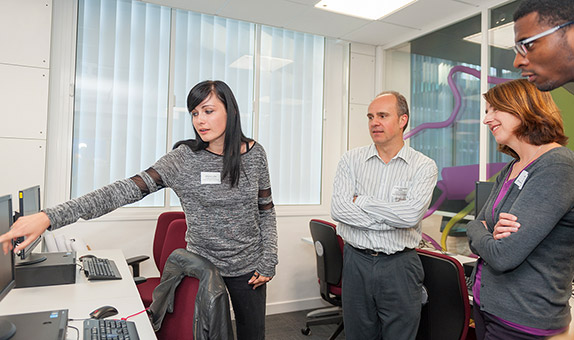


Partner Institutions and their facilities
Cardiff and Vale College
If you're interested in a career in the aviation industry there's no better place to start than at Cardiff and Vale College. All our Aircraft Engineering students benefit from the outstanding facilities provided by our training centre ICAT (International Centre for Aerospace Training).
Ideally located, next to Cardiff International Airport, ICAT is a purpose-built aerospace campus and is a recognised centre of excellence in education and training. It has gained approval from the Civil Aviation Authority (CAA) and European Aviation Safety Agency (EASA) as a Part-147 Aircraft Maintenance Training Organisation.
Our ICAT campus is fully equipped with classrooms, laboratories, specialist equipment and an aircraft hangar containing a portable Aero Wind Tunnel, Hydraulic Training rigs and equipment, and two aircraft: A Bulldog TMk1 Basic Flying Trainer and a Jetstream TMk2 multi-engine observer trainer aircraft.
You will have the opportunity to train in our Gas Turbines area, which houses a range of Gas Turbine Engines including Rolls-Royce RB211 Triple Spool High By-pass ratio engine, Avon Turbojet and Ardour Twin Spool Low By-pass ration engines.
There is also a Boeing 737 fuselage facility for Cabin Aircrew training. View images of ICAT's facilities.
About Cardiff and Vale College
Cardiff and Vale College takes pride in the facilities and learning experiences it offers its students. We have dedicated support staff that will help you to make the most of your time with us and we work hard to ensure that all our students achieve their full potential.
Serving the Vale of Glamorgan and Cardiff areas, we offer courses at 10 different sites and offer a full range of support services, including careers advice, dyslexia and disability support, learning centres and libraries, IT suites, sports centres, restaurants and cafes and childcare.
We also welcome international students from around the world. Our dedicated international team provides help and advice on everything from Student Route visas to accommodation to social activities.
Find out more from the Cardiff and Vale College website.
Alternatively, you can contact our partner liaison officer Mr Ward Broughton: wbroughton@cavc.ac.uk.
How do I become a licensed aircraft engineer?
Categories of licence and the routes to gaining them
Category B is the mainstay licence qualification for aircraft maintenance staff under EASA. Category B Licences are available in two main categories:
- B1 – mechanical (aircraft structure, power plant and mechanical and electrical systems) which is divided into four sub-categories.
- B2 – avionics (communications, navigation, radar, instrument and electrical systems).
How do I get a licence?
There are two basic routes to an EASA licence: the self-starter route and the EASA Part-147 approved course route:
- Self-starter route. To complete the self-starter route you need to study for the EASA examinations associated with the category of licence you are seeking and then sit the exams at an approved EASA examination centre. To gain the knowledge needed to take the examinations, you can self study or complete short courses or distance learning courses; a lot of providers are available and these can be found on the internet. If you follow this route, you will need to gain five years of maintenance experience on the appropriate category of aircraft in addition to passing all of the examinations before you can apply for a licence.
- The EASA Part-147 approved course route. Part-147 approved courses are typically of two to three years duration. However, once you have completed the course, you only need to obtain two years' maintenance experience before applying to the CAA for your B Licence. Another benefit of this route is that the EASA assessment will normally be part of the course and based on the material you are taught. Also, when you are trying to get a job to obtain the required work experience, you are applying from a position of strength, having completed a worldwide, industry-recognised course.
For more detailed information on how to obtain a Part 66 Licence please visit the European Aviation Safety Agency (EASA) (see Implementing Rules – Part 66) and Civil Aviation Authority (CAA) websites.
Course fees and funding
Additional costs
Depending on the programme of study, there may be extra costs that are not covered by tuition fees which students will need to consider when planning their studies. Tuition fees cover the cost of your teaching, assessment and operating University facilities such as the library, access to shared IT equipment and other support services. Accommodation and living costs are not included in our fees.
Where a course has additional expenses, we make every effort to highlight them. These may include optional field trips, materials (e.g. art, design, engineering), security checks such as DBS, uniforms, specialist clothing or professional memberships.
After you graduate
Graduates work as aircraft maintenance engineers, aircraft maintenance supervisors, air servicepeople and programme managers, for employers such as British Airways, Virgin Atlantic, KLM UK Engineering and Monarch Airlines.
What our students say
Accreditation
This course is taught at Cardiff and Vale College, and is EASA Part-147 approved. This course is RAeS accredited.
What our graduates say
Course changes and regulations
The information on this page reflects the currently intended course structure and module details. To improve your student experience and the quality of your degree, we may review and change the material information of this course. Course changes explained.
Programme Specifications for the course are published ahead of each academic year.
Regulations governing this course can be found on our website.