


Mechanical Engineering MEng/BEng (Hons)
Teaching Excellence Framework (TEF) Gold award
Our commitment to high quality teaching has been recognised with a TEF Gold rating. The University has received an overall rating of Gold, as well as securing a Gold award in the framework's two new student experience and student outcomes categories.
Why choose this course?
Mechanical Engineering at Kingston immerses you in a curriculum designed for the real world. You'll gain theoretical and practical knowledge in engineering design, thermodynamics, fluid mechanics, applied mechanics and electronics.
Our curriculum equips you with crucial skills in business and project management. Emphasising sustainable practices, the programme aligns with key United Nations Sustainable Development Goals, equipping you to tackle the pressing environmental and societal challenges of our time.
The course also provides specialised knowledge through the Automotive Engineering pathway.
| Course | Attendance | UCAS code | Year of entry |
|---|---|---|---|
| Mechanical Engineering MEng | 4 years full time | H303 | 20242025 |
| Mechanical Engineering MEng with Professional Placement | 5 years full time including professional placement | H304 | 20242025 |
| Mechanical Engineering BEng(Hons) | 3 years full time | H300 | 20242025 |
| Mechanical Engineering BEng(Hons) with Professional Placement | 4 years full time including professional placement | H301 | 20242025 |
| Mechanical Engineering BEng(Hons) | 4 years full time including foundation year | H308 | 20242025 |
| Mechanical Engineering BEng (Automotive Engineering) (Hons) | 4 years full time including foundation year | H322 | 20242025 |
| Mechanical Engineering (Automotive Engineering) MEng | 4 years full time | H323 | 20242025 |
| Mechanical Engineering (Automotive Engineering) MEng with Professional Placement | 5 years full time including professional placement | H324 | 20242025 |
| Mechanical Engineering (Automotive Engineering) BEng(Hons) | 3 years full time | H320 | 20242025 |
| Mechanical Engineering (Automotive Engineering) BEng(Hons) with Professional Placement | 4 years full time including professional placement | H321 | 20242025 |
Important: if you are an international student requiring a Student Route visa to study in the UK, you will need an ATAS certificate if you wish to apply for the Mechanical Engineering MEng course. Read further information.
Once you have completed the Mechanical Engineering Foundation Year (UCAS code H308), you can transfer to Mechanical Engineering BEng, dependent on satisfactory grades.
Please note: Teaching on this course may take place on more than one KU campus.
| Main location | Roehampton Vale |
Reasons to choose Kingston University
- You'll obtain a strong theoretical background and excellent hands-on skills.
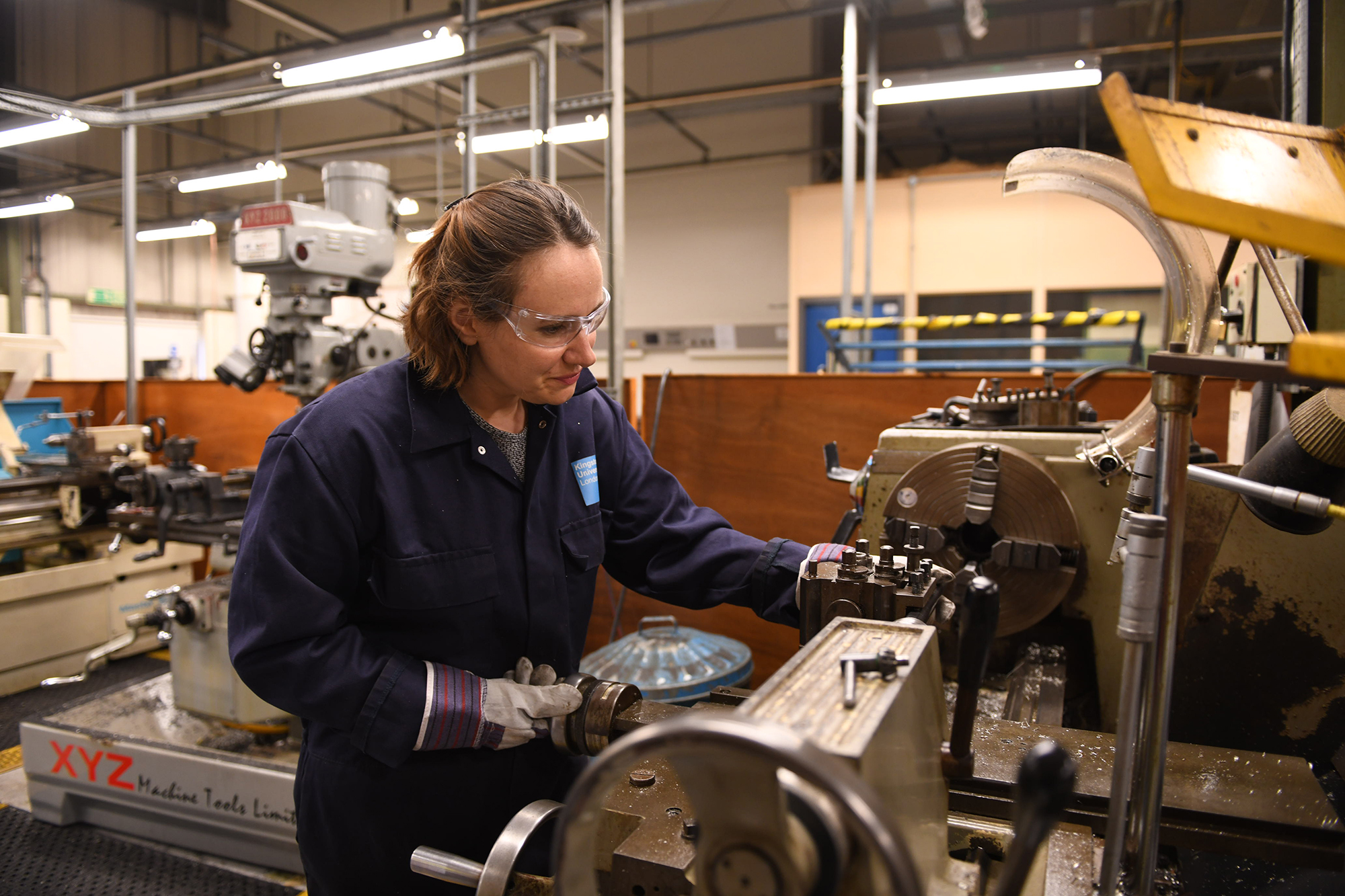
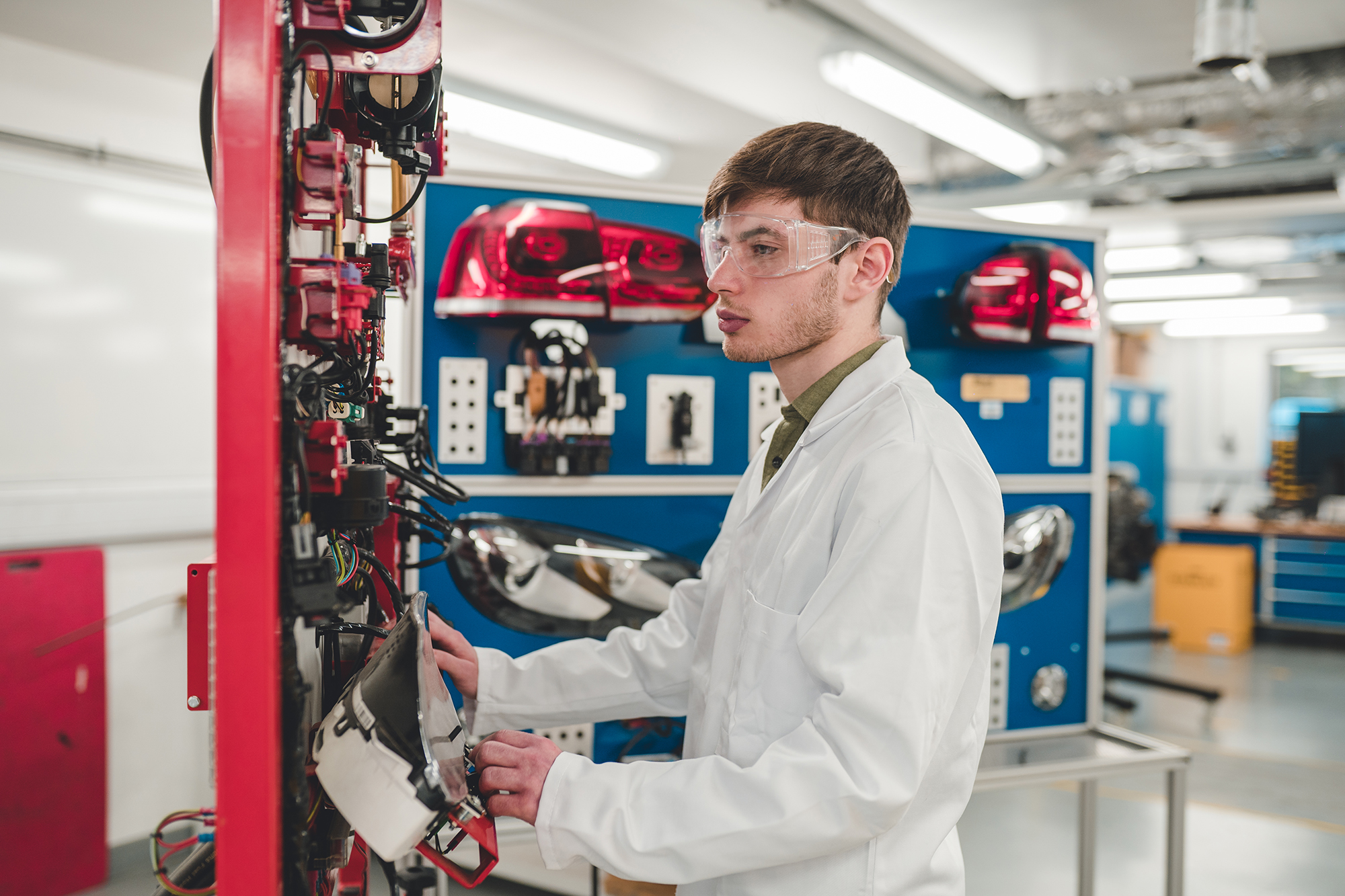
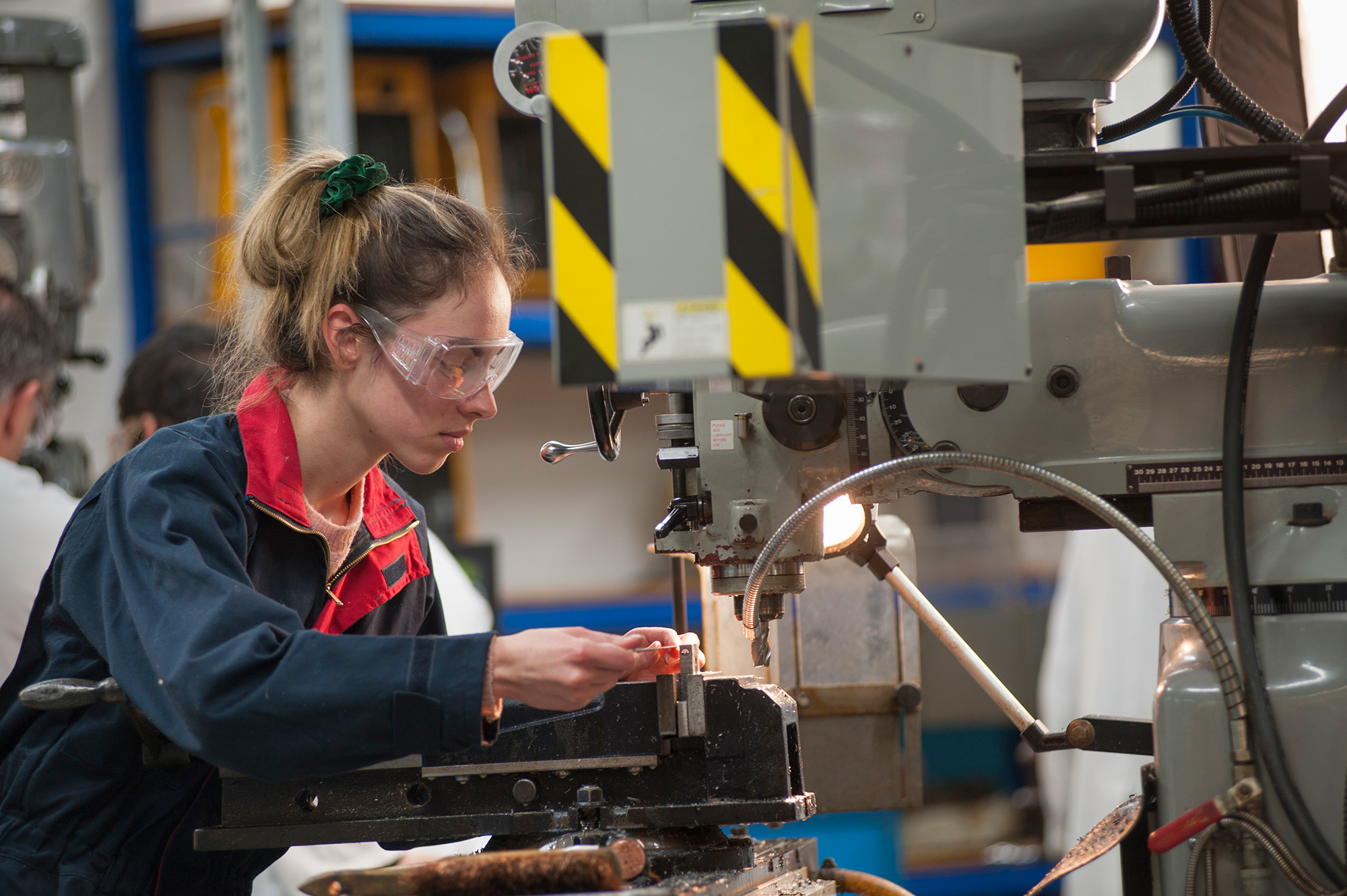
- Kingston offers the latest technology and industry-standard equipment, such as a 3D design studio, a mechanical engineering workshop, a material lab and automotive testing facilities.
- Through team-based design activities and industrially-based projects, you'll have lots of opportunities to enhance your communication skills and develop your ability to work collaboratively.
Mechanical and Automotive Engineering at Kingston University
Accreditation
The MEng fully meets the exemplifying academic benchmark requirements for registration as a Chartered Engineer (CEng).
The BEng(Hons) will meet, in part, the exemplifying academic benchmark requirements for registration as a Chartered Engineer. Students will need to complete an approved format of further learning pursuant to the requirements of UK-SPEC.
The BEng(Hons) will also automatically meet the exemplifying academic benchmark requirements for registration as an Incorporated Engineer (IEng).
- Further learning details are available on the Institution of Mechanical Engineers website.
- All accredited degrees are displayed on the Institution of Mechanical Engineers website.
Accreditation is a mark of assurance that the degree meets the standards set by the Engineering Council in the UK Standard for Professional Engineering Competence (UK-SPEC). Some employers recruit preferentially from accredited degrees, and an accredited degree is likely to be recognised by other countries that are signatories to international accords.
Please check the Engineering Council course search for more information.
What you will study
Please note that this is an indicative list of modules and is not intended as a definitive list. Those listed here may also be a mixture of core and optional modules.
MEng and BEng students take the same modules until Year 3 when the routes diverge. The MEng contains an extra year of advanced-level study.
Year 1
Year 2
Year 3
Year 4 - MEng only
Core modules (both pathways)
Navigate for the Professional Engineer
15 credits
Students are introduced to their course learning aims and consider their anticipated learning targets from induction to graduation. Students are guided to identify and take ownership of their personal academic journey through the development and application of academic skills aligned to KU Graduate Attributes and their discipline-specific professional body learning outcomes.
Students are tutored in a range of learning to learn techniques are introduced to assessment for learning and the role of feedback, reflection and feedforward as an integrated part of their learning journey. This will be supported through active engagement in the KU Navigate Programme enabling students to understand and begin to develop a design thinking approach to Future Skills development.
The Level 4 Personal Tutorial System (PTS) is integrated within this module, and timetabled tutorial sessions provide an opportunity for regular discipline-focused small-group discussion and debate to reinforce the key themes and practices of the taught programme. Professional and personal development skills are reflected throughout the module and the authentic application of the methods developed are highlighted in the taught curriculum.
Employability skills are explored in the PTS and students are challenged to consider the development of these skills horizontally between their Level 4 modules and vertically as they identify their learning pathway from Level 4 to graduation.
Engineering Mathematics
15 credits
The aim of this module is to provide a thorough background in engineering mathematics and equip students with the mathematical skills essential for solving engineering problems. The topics introduced will serve as basic tools for studies in many engineering subjects. This comprises algebra, functions, statistics and probability, trigonometry, calculus, differential equations and vectors.
Students will be empowered to understand and be able to use the language and methods of mathematics in the description, analysis and design of engineering systems. The emphasis is on using mathematical tools to solve engineering problems. The computing software used will typically include MATLAB and Excel.
Programming for Engineers
15 credits
This module will introduce you to scripting in one of the most popular programming languages in industry, which is widely used for data processing, automation of tasks and more recently for machine learning (ML) and artificial intelligence (AI) specifically in the engineering industry.
The module has been designed to cover all the fundamentals of programming. It provides a valuable transferrable skill set that can be fed forward to provide the essential skills needed for scripting in other computer languages in further modules. It also provides the crucial foundations for you to investigate applications involving both ML and AI as you progress through the course.
Thermodynamics and Fluid Mechanics
15 credits
This module introduces mechanical engineering students to the fundamentals of fluid mechanics and thermodynamics. The fluid mechanics section covers the fundamental properties of fluids along with the main basic conservation equations and their engineering applications. It also introduces the concept of dimensions and the SI units of measurement.
The thermodynamics section deals with the relationship between heat and other forms of energy. A variety of topics of engineering and science are dependent on various thermodynamics concepts. You can find applications of thermodynamics everywhere, such as in an internal combustion engine or sitting in a room with the air conditioning.
The thermodynamics laws that govern the behaviour of various systems will be discussed in depth as you find applications in a variety of disciplines.
The module is primarily delivered through lectures supported by tutorial sessions and laboratory-based practical sessions.
Engineering Mechanics and Materials
30 credits
The module introduces students to the fundamentals of structural analysis (statics and dynamics) and the mechanical behaviour of a broad range of engineering materials. The mechanics part provides an understanding of the behaviour of particles and rigid bodies while stationary and in motion.
Bodies such as trusses in equilibrium are studied and the external and internal parameters including force, moment, stress, or strain are defined and calculated. The analysis of structural components will be developed with theoretical and numerical skills that are necessary in the design of real structures. This section also introduces the dynamics of particles and rigid bodies with their engineering applications.
Material test methods will be used to determine the deformations and failures of the various engineering materials. A selection of materials for engineering applications, such as metals, alloys, polymers, and composites, will be studied including their carbon footprint and their impact on the environment.
The module is primarily delivered through lectures supported by tutorial sessions and laboratory-based practical sessions.
Engineering Design and Manufacture
30 credits
The principal aim of this module is to provide students with a flavour of what is involved in engineering design and to develop the good academic and professional practice needed to succeed during the course and attain professional status.
The module introduces the key aspects involved in planning a project from start to finish, design processes incorporating a sustainability agenda, building an awareness of the interactions across various disciplines, regulatory frameworks and Health and Safety procedures.
The module develops good academic and professional practice by developing skills in self-reflection and recording professional development. The basic principles of measurement and manufacturing processes in a workshop and testing environment are also addressed in the module.
The module also involves the IMechE Design Challenge as a part of the curriculum, to provide the students with a flavour of how to work in teams to produce engineering artefacts that are capable of accomplishing tasks, as well as developing interpersonal skills in order to enhance the student's employability.
Formula Student Fundamentals
0 credits
This module is a zero-credit module designed to develop students' knowledge in the formula student competition and build a foundation of awareness for future use as part of the team. It covers basic elements of the competition itself, design and manufacturing techniques, as well as qualities that are desirable in a team project-based environment.
The module is pass/fail and has multiple assessment points in the form of quizzes and practical tests.
Core modules (both pathways)
Numerical Analysis and Computing
15 credits
This module will equip you with fundamental mathematical skills that are crucial for comprehending engineering subjects effectively. The topics covered in the module will serve as fundamental tools for studying various engineering subjects. You will be empowered to comprehend and use the language and techniques of mathematics in describing, analysing, and designing engineering systems. The primary focus is on using mathematical tools to resolve engineering problems, especially on mechanical systems, robotics, control systems, and signal processing.
Exploring Engineering Project Management
15 credits
This module considers the principles and practices for the design and management of engineering projects. The nature of engineering project management is discussed in the context of constraints on quality, time, risk, and sustainability. The module broadens your knowledge of how organisations undertake and monitor projects.
Electronic and Control Systems
30 credits
Due to technological advancements, electronic and control system fundamentals play a vital role across many engineering disciplines. In this module you will be introduced to the fundamental principles of control system engineering.
This module also extends electronics teaching to more complex devices and methods for analysis of electronic circuits. You will learn how to model and analyse the behaviour of dynamic control systems. You will understand the concepts of stability and effects of the feedback loop in a control system. Furthermore, you will apply conventional control theory and more advanced artificial intelligence-based techniques to solve feedback control problems.
MATLAB will be used to reinforce the concepts learned in the module through simulation. This module is technical content rich to enhance analytical as well as employability skills across many engineering disciplines. Module content is delivered through formal lectures, which are supported by computing laboratory sessions along with tutorials and additional support material available on virtual learning environment. The assessment is through an in-class test, practical laboratory exercise and examination.
Core modules specific to Mechanical Engineering pathway
Thermofluids
15 credits
Building on foundational knowledge from the Level 4 module, this module dives deeper into thermodynamics and fluid mechanics, exploring boundary layers, heat transfer and combustion.
For internal and external flows involving fluid and solid surface interaction, the boundary layer is an important concept used in particular to determine the drag forces. The main theory behind boundary layers and their engineering applications will be covered.
Heat transfer by conduction and convection will also be covered extensively with some example problems. Combustion which is important in many engineering devices such as boilers, furnaces etc. will be discussed in detail.
Solid Mechanics and Vibration
15 credits
This module covers the principles that govern the performance of deformable solids made from various materials under the action of different types of static and dynamic loadings. Design of solid components and structures learned in this module is of crucial importance for solving many engineering problems.
In this module, students build on knowledge obtained in Level 4 module Engineering Mechanics and Materials. The engineering students will be able to design solid components and structures by selecting appropriate materials and geometry. Students learn to compare strength of materials against internal stresses, deformation of materials against internal strains, and the response of the systems to dynamic loads.
Topics covered in this module include mechanical properties of materials, types of loading, plane-stress and plane-strain conditions, design of beams, torsion of shafts, and buckling.
Computer-aided Engineering
30 credits
This module builds on the Level 4 module Engineering Design and Manufacture, and aims to deepen the knowledge of the mechanical engineers in design communication to British Standard BS8888, from reading engineering drawings to product design specification, design analysis, validation and optimisation.
The traditional design methods are supported by the CAD/CAE software to assist the students in solving and analysing engineering design problems. The digital modelling takes the students from the 2D conventional engineering drawing skills to 3D digital model using feature based and free form modelling techniques. The digital simulation covers two types of analysis, the engineering mechanism design and simulation, finite elements modelling (FEM) and analysis (FEA) using cutting edge solvers.
The second part of this module concentrates on the manufacturing stage of the engineering design process. The traditional design for machining and assembly methods are supported by the CAD/CAM software, assisting the students to optimise the design, machining and manufacturing cost. The digital manufacturing takes the students from the conventional methods to 3D digital machining simulation using feature-based recognition for CAD models.
The module is structured so that more than 50% of the teaching time is focused on CAD/CAM/CAE hands-on workshop sessions and practical manufacturing workshops. Core factual material is provided via Canvas with keynote lectures used to explain concepts of mechanical design, CAD/CAM/CAE and manufacturing techniques.
Core modules specific to Automotive pathway
Automotive Design Team Project
30 credits
This module is a core module for Mechanical Engineering (Automotive) BEng students and forms a strong foundation with regards to team-based design work. Industry standard software and design principles are taught alongside a project-based assessment regime to produce robust and quality outputs, which will help prepare students for Level 6.
Each year will involve a different automotive subsystem design towards which the student will work in groups to produce a technical report covering design, CAD, cost and manufacturing details. British standards will be applied to prepare students for industrial practice and increase employability in the engineering sector. A design report and group presentation are used as assessment methods with regular project reviews to help develop ideas and best practices.
Vehicle Dynamics and Suspension
15 credits
The module introduces basic principles of automotive suspension and chassis systems of modern vehicles and race cars. It is delivered through a project-based approach, including lectures, tutorials and practical laboratory sessions.
The module starts with the dynamics of high performance road vehicles and race cars, relating quantitative data to power and efficiency performance characteristics. It also introduces elements of suspension and chassis design. Apart from component identification, emphasis is put on preliminary calculations related to the introduced systems.
Automotive Powertrain Systems
15 credits
The module introduces basic automotive systems of modern vehicles and race cars. It is delivered through a project-based approach, including lectures, tutorials and practical laboratory sessions. The module introduces Internal Combustion (IC) engines and electric powertrains, as well as autonomous vehicle technology.
It also introduces elements of design and simulation of these systems and optimization for both high performance and high efficiency applications. The systems will be reviewed from a theoretical and mathematical basis, in conjunction with practical laboratory exercises for validation and further reinforcement of working principles.
Year 3 comprises core engineering topics and advanced mechanical engineering modules, plus a strong focus on independent and group project work. You will gain an understanding of the business world. MEng students will continue to deepen their knowledge in areas such as computer-aided design and mathematics.
Core modules (both pathways)
Applying Business Management
15 credits
Microcontrollers
15 credits
Machine Design with Finite Element Method
30 credits
Individual Project
30 credits
Core modules specific to Mechanical Engineering pathway
Fluid Dynamics and Thermal Systems
15 credits
Dynamics and Control
15 credits
Core modules specific to Automotive pathway
High Performance Vehicle Aerodynamics
15 credits
Automotive Design and Structural Analysis
15 credits
The final year of the MEng course will continue to deepen and broaden expertise. A strong emphasis is again on independent learning, as well as an industrially focused group project.
Core modules (both pathways)
Electrification Technology in Automotive Industry
15 credits
This module gives students an in depth understanding of various elements of electric vehicle technology and design. Emphasis is placed on design practices used in batteries, motors and invertors at automotive industry standards. Modern and emerging technologies are explored in this module and create a strong foundation for students wishing to enter into an electric vehicle design position.
In additional to the theoretical concepts, the focus of this module is on empirical, hands-on learning, providing students with a set of skills that will enhance their employability. The learning is supported by practical exercises in the automotive lab where outputs of the aforementioned elements are measured and optimised. Practical exercises in the automotive lab encourage collaboration and foster resilience, as students work to measure and optimise outputs. These exercises also promote self-awareness, as students recognise their strengths and areas for improvement.
Emerging technologies explored in the module foster adaptability and a questioning mindset, preparing students for the rapidly evolving electric vehicle industry. The focus on industry standards and hands-on learning instils an enterprise mindset, preparing students for real-world engineering challenges.
Product Design Lifecycle Analysis
30 credits
The module is structured in a way to develop an understanding of the different stages in the lifecycle of a designed product, for example, from inception, through design and manufacturing, then into service and finally retirement.
This module aims to help students develop an understanding of these stages in a product lifecycle and processes need to be undertaken in these stages and their interrelationships. This module will also aim to help students develop a fundamental understanding of product lifecycle from a business and organisational perspective. Case studies are used to illustrate the application and relevance of taught concepts.
Students will be asked to work in a team to perform a comprehensive product lifecycle analysis, using the knowledge learnt in this module as well as applying the knowledge acquired in pre-requisite modules. This will enable students to develop a set of kills to enhance their employability prospect in this demanding area.
Core factual materials are provided via Canvas with keynote lectures.
MEng Team Project
30 credits
The MEng Team Project is a module which runs throughout the final year of all MEng programmes in the School of Engineering. It provides a capstone element to the course by providing an opportunity for students to work on a major engineering design problem in a team in a way which closely parallels a real-world project. The groups are assigned to a particular project which has an outline project description, specification, or customer requirements provided by the teaching team. It is group's job to develop the specification in detail, to convert it to a technical specification and then carry out the tasks necessary to complete the project. This module provides an opportunity for students to further develop academic skills delivered earlier in the programme. In order to successfully complete the module, students must establish a plan and work schedule, perform the technical tasks necessary to fulfil the plan, monitor progress, manage the team activities, hold and minute formal team design meetings, and resolve any problems that arise. The module is delivered primarily through weekly formal design meetings and regular informal meetings.
Core modules specific to Mechanical Engineering pathway
Machine Learning
15 credits
The module introduces fundamental concepts and methods in Machine Learning and discusses their applications in smart mechatronic systems. Students are firstly introduced to classical methods before they are taught modern, state-of-the-art AI approaches. The module is taught in a practical fashion and therefore some knowledge of a programming language is required.
This Machine Learning module, through its practical focus on smart mechatronic systems, empowers students with digital competency and creative problem-solving skills. Engaging with both classical and state-of-the-art AI approaches cultivates a questioning mindset and adaptability.
The coursework encourages collaboration and resilience as students tackle complex real-world problems like autonomous driving. Regular feedback promotes self-awareness, and an enterprise mindset is fostered through real-world problem solving.
Additive Manufacturing
15 credits
This module builds upon previous knowledge students learnt about additive manufacturing and aims to deepen their knowledge of this subject area. This module will cover advanced knowledge of additive manufacturing with a particular focus on design for additive manufacturing practices. The fundamentals of additive manufacturing will be briefly revisited at the beginning of this module for students who do not have previous knowledge of additive manufacturing.
During the delivery of the module, students will get hands-on practice in preparing designs for additive manufacturing. Towards the end of the module, students will be asked to apply design for additive manufacturing strategies to design, optimise, prototype and test solutions for an engineering design task.
By learning this module, students develop an in-depth understanding of additive manufacturing, carrying out design solutions enabled by additive manufacturing and validating them, helping them get prepared for industry.
Structural Integrity and Failure Analysis
15 credits
Structural integrity and failure assessment deal with the ability of a structure to withstand a designed structural load without failure and includes forensic study of past structural failures to prevent failures in future designs. This module covers study of engineering structures and components under monotonic and cyclic mechanical loading, and harsh environments. It integrates aspects of stress analysis, materials behaviour, and the mechanics of failure into the engineering design process.
The students are provided with the knowledge and skills necessary to engage in structural integrity assessment cases involving failure mechanisms such as brittle and ductile fracture, low- and high-cycle fatigue, and corrosion. The module will review key theoretical aspects of stress analysis, linear elastic fracture mechanics (LEFM), and metal fatigue and it builds on the knowledge gained in the second year Solid Mechanics and Vibration module to extend further students' knowledge and skills in structural integrity analysis.
This module is primarily delivered through lectures supported by tutorials. Course materials are available via canvas where appropriate.
Core modules specific to Automotive pathway
Advanced Control Systems
15 credits
This module introduces classical control system analysis and design concepts. Time domain design methods are followed by frequency domain design methods. Although the module mainly deals with continuous-time systems, the discrete-time systems are also discussed.
In addition to the fundamental concepts, the focus of this module is analytical and numerical problem-solving, providing students with a set of skills that will enhance their employability. The module promotes creative problem-solving through an emphasis on analytical and numerical problem solving related to control systems. Digital competency is fostered by the use of simulation tools such as MATLAB & SIMULINK. Adaptability is nurtured as students navigate between time and frequency domain design methods and different types of control systems.
Through interactive tutorial sessions and lecture discussions, the module encourages a questioning mindset and collaboration, allowing students to deepen their understanding and solve complex problems together. Regular assessments and feedback cultivate resilience and self-awareness as students gauge their progress and identify areas for improvement.
The module content is delivered through formal lectures, which are supported by computing laboratory sessions along with tutorials and additional support material available on virtual learning environment.
Automotive Aerodynamics and Structural Analysis
15 credits
This module gives students an in-depth understanding of vehicle dynamics and aerodynamics. Emphasis is placed on the use of industry standard software tools to help with the analysis of whole vehicle dynamic behavior and aerodynamics. The research and professional practice undertaken by the academic staff involved in the delivery is a strong feature of this module.
In addition to the theoretical concepts, the focus of this module is on empirical, hands-on learning, providing students with a set of skills that will enhance their employability. The learning is supported by practical exercises in the wind tunnel where students' empirical methods are used for quantifying air flows, both internally and externally and the software simulation approach.
A range of transferable skills gained in this module is aimed to help with the work on the final project and extra-curricular activities available within the School. Empirical learning and practical wind tunnel exercises further nurture adaptability, equipping students with a set of diverse skills applicable to the dynamic automotive industry.
The focus on practical skills and empirical methods, combined with the use of professional-standard software, fosters an enterprise mindset, preparing students for real-world industry challenges.
Engineering and Business Resource Management
15 credits
This module focuses on using advanced management techniques, including simulation and business modelling, in an engineering company to maximise the utilisation of its finite resources in order to become more competitive. These techniques include discrete event simulation, business modelling, linear programming, and human resources optimisation, with the main aim to improve the company's overall operational efficiency, competitiveness and profit.
The intended module topics cover both local and global horizons of running a successful business by teaching companies they may benefit from using simulation techniques in streamlining their operations and resource deployment through a benchmarking process. Through extensive hands-on practical, students will learn how to use a sophisticated simulation software to improve resources utilisation in different business scenarios.
Throughout the module, students will benefit from the balanced diet of not only understanding the theoretical techniques of management skills, but also to apply the knowledge they gain and evaluate the results through developing complex business simulation models, therefore enhancing their employability potentials.
Foundation year
An Engineering Foundation course with pathways in Aerospace, Civil, Mechanical Engineering is available.
What our students say
Kingston has prepared me for my future career by exposing me to the motorsport industry through Formula Student, and developing my leadership, management and communication skills through group projects.
I also studied a project management module, which enabled me to take a Prince 2 foundation certification, and was set up with the ideal dissertation subject to enhance my aerodynamic knowledge and skillset.

Luke Grace, BEng Mechanical Engineering
Future Skills
Knowledge to give you the edge
Embedded within every course curriculum and throughout the whole Kingston experience, Future Skills will play a role in shaping you to become a future-proof graduate, providing you with the skills most valued by employers such as problem-solving, digital competency, and adaptability.
As you progress through your degree, you'll learn to navigate, explore and apply these graduate skills, learning to demonstrate and articulate to employers how future skills give you the edge.
At Kingston University, we're not just keeping up with change, we're creating it.

Entry requirements
Teaching and assessment
Scheduled learning and teaching on this course includes timetabled activities including lectures, seminars and small group tutorials.
It may also include placements, project work, workshops, workshops in computer labs, and laboratory workshops.
Who teaches this course
The course is taught by the Department of Mechanical Engineering. Staff have a wide range of experience across research and industry and continue to practise and research at the cutting edge of their discipline. This ensures that our courses are current and industry-informed, ensuring you get the most relevant and up-to-date education possible.
The Department has strong links with industry leaders, including Delphi, Lotus Engineering, MAN and Thales. Many of our innovative, hands-on projects involve students as well as academics and receive national and global coverage.
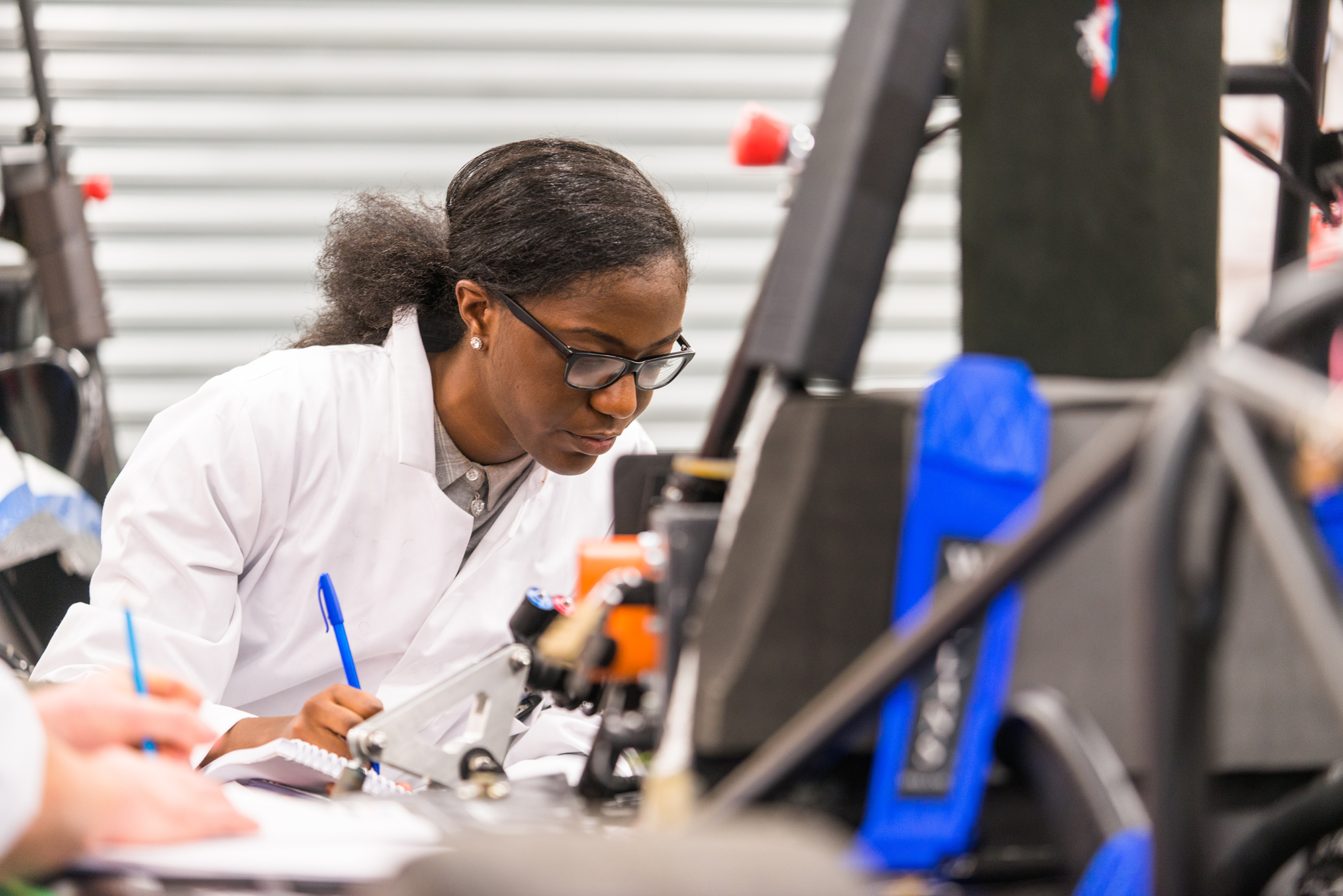
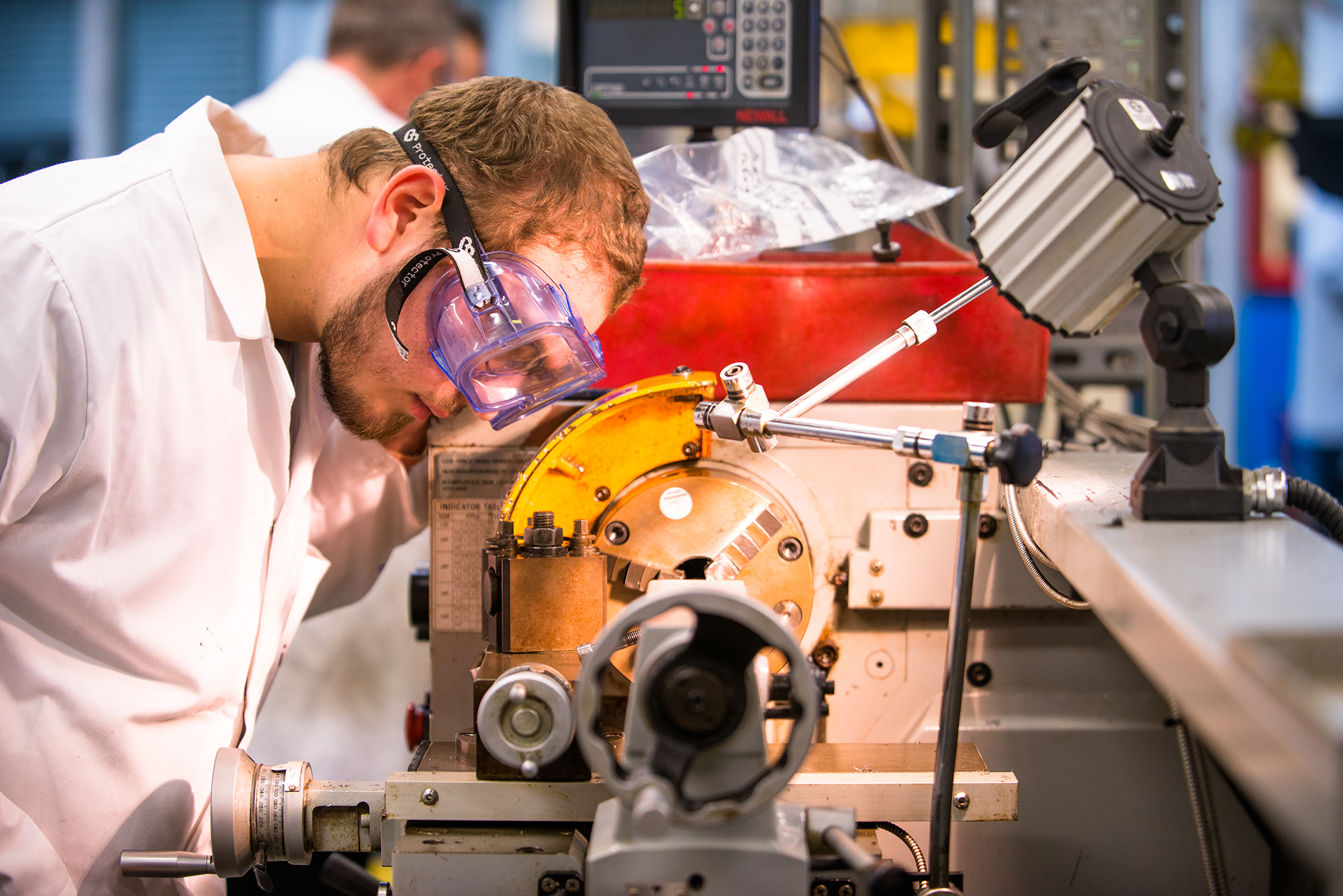
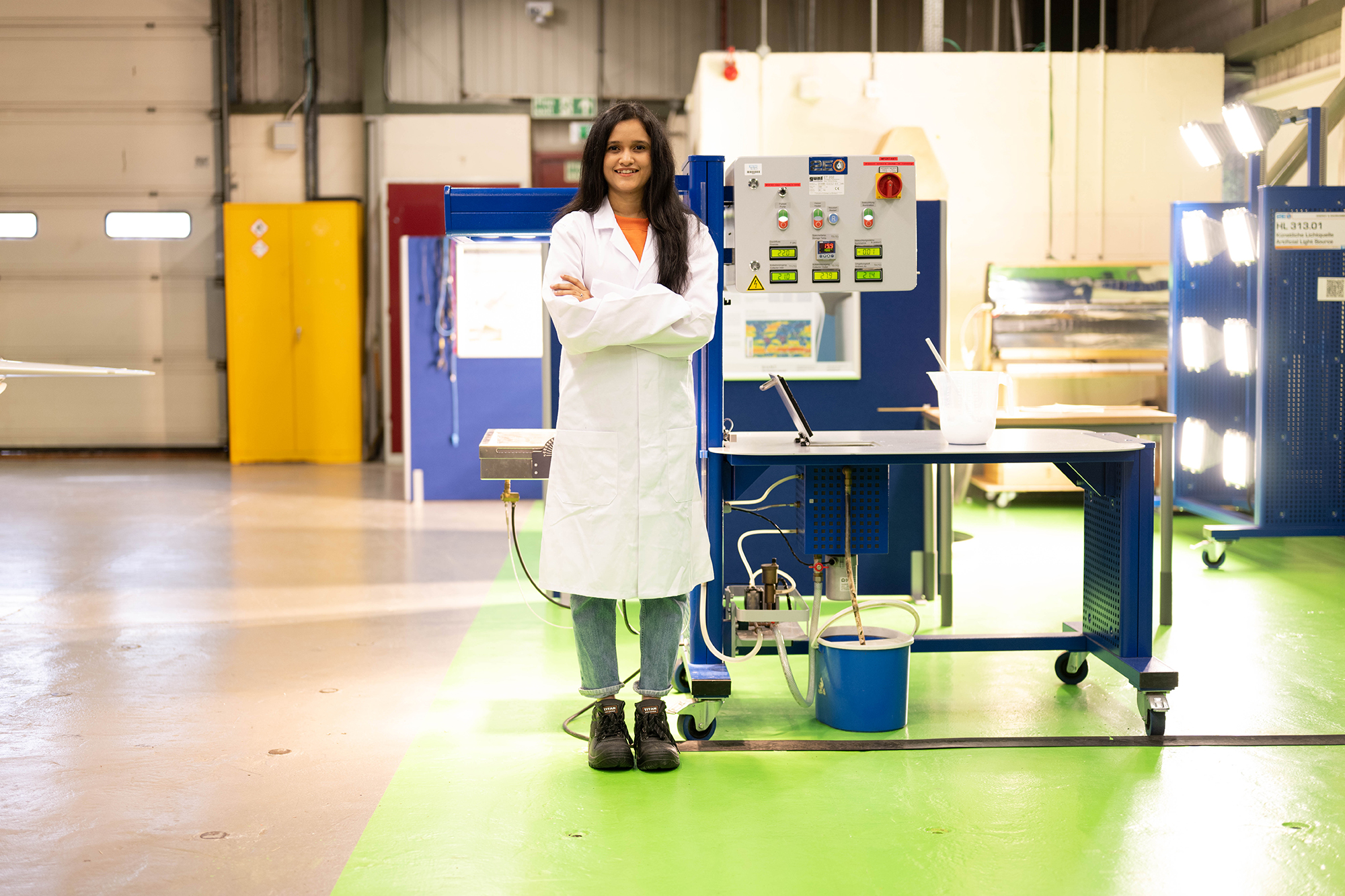
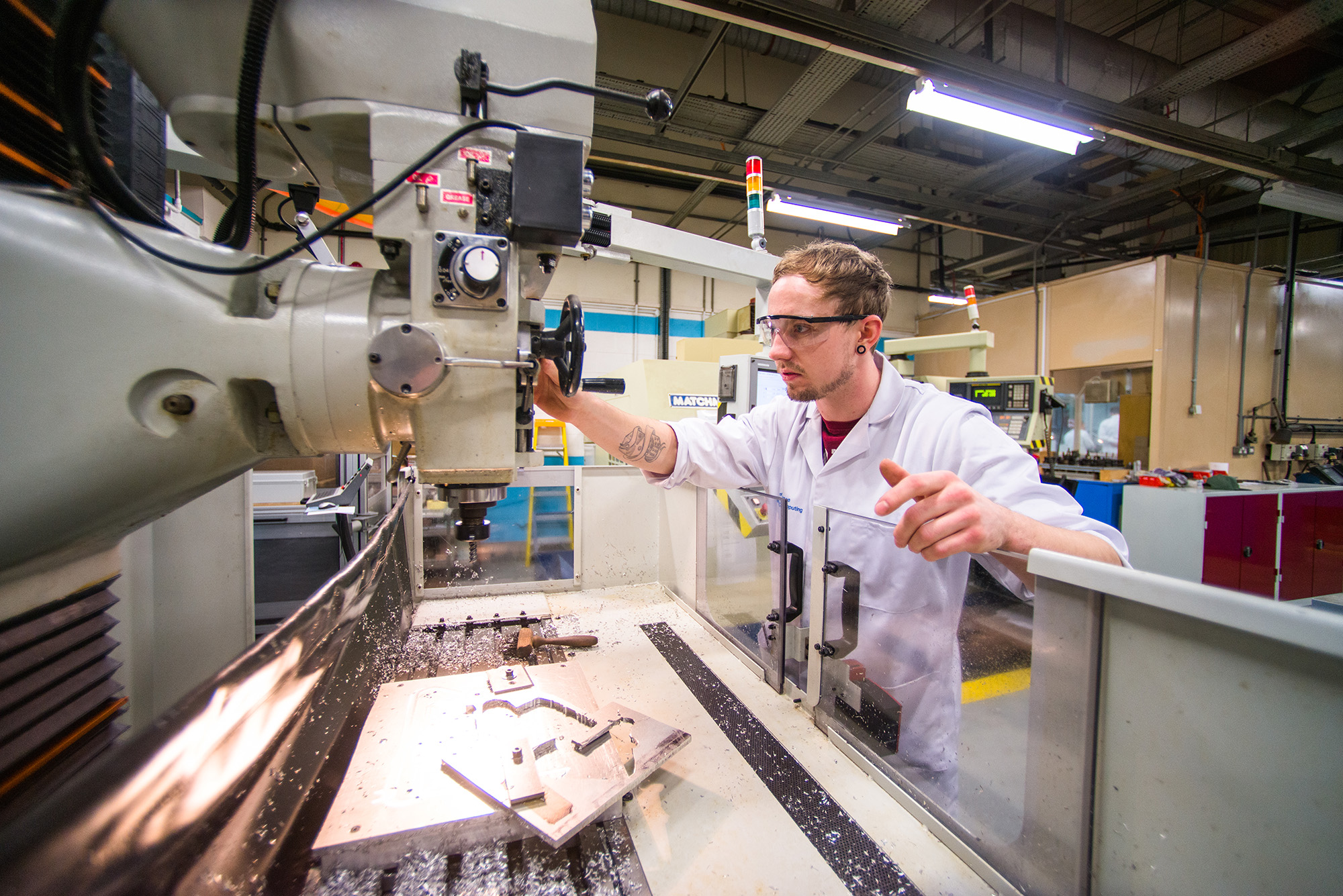
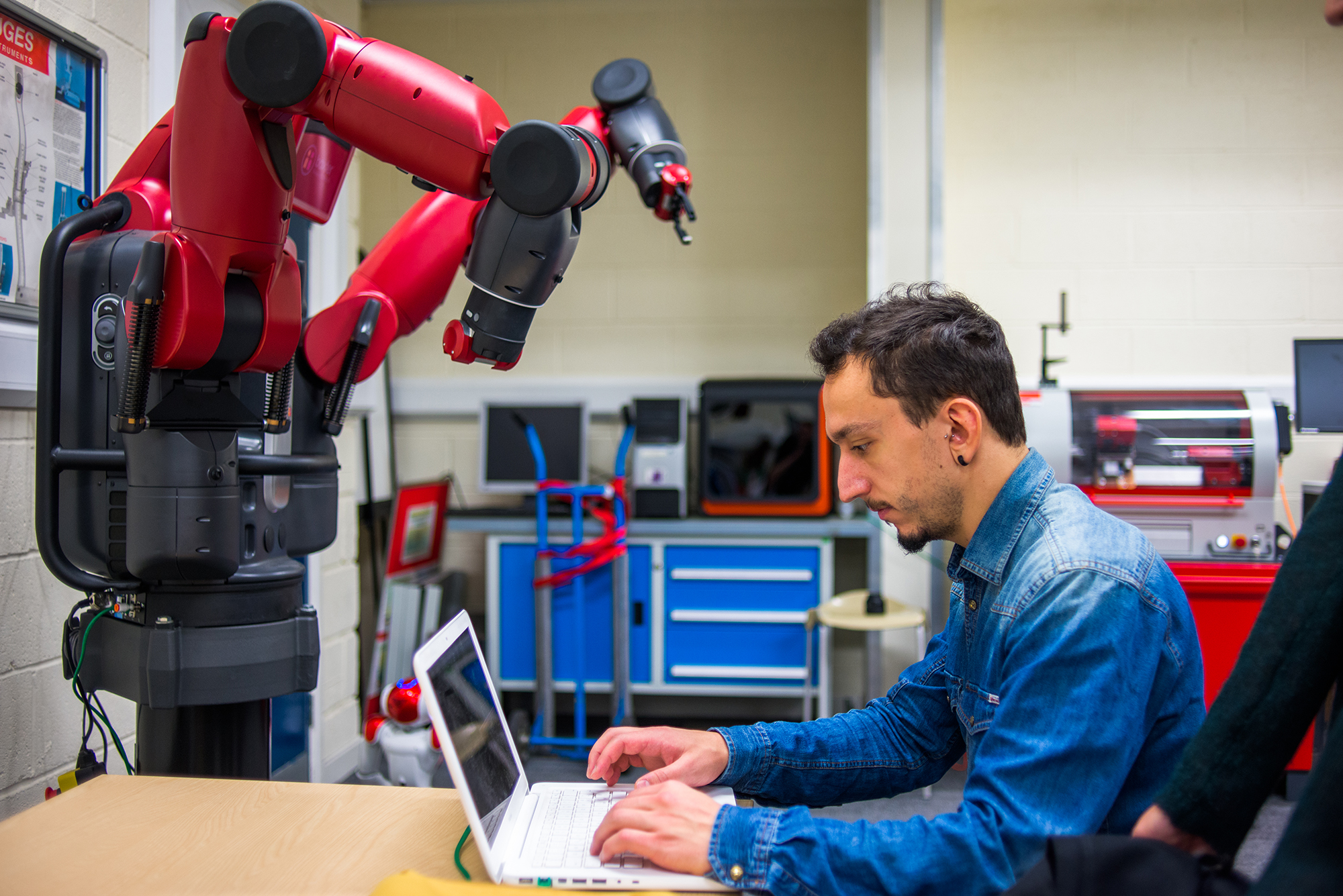
Our applied approach to teaching is supported by dedicated laboratories for mechanical, automotive and motorsport engineering, including wind tunnels, state-of-the-art rapid prototyping and manufacturing machinery, a fully-equipped materials lab, engine test cells, an automotive diagnostics lab featuring the latest industrial software packages, and a modern electronics/robotics lab with the recent addition of a robot and electronic equipment from National Instruments.
Students' learning experience is enhanced through the participation in competitions such as the IMechE Formula Student project, the IMechE Design Challenge competitions for Years 1 and 2 students, the Isle of Man TT-Bike race and the Caterham Academy Championship.
Postgraduate students may run or assist in lab sessions and may also contribute to the teaching of seminars under the supervision of the module leader.

















Facilities
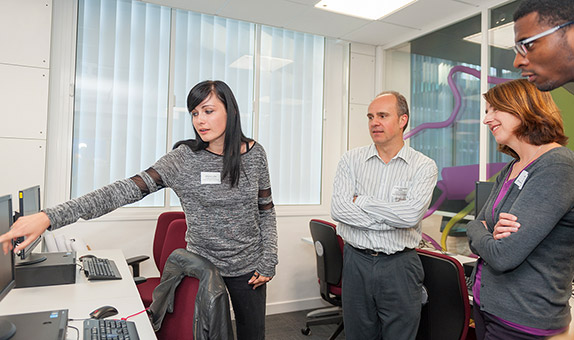
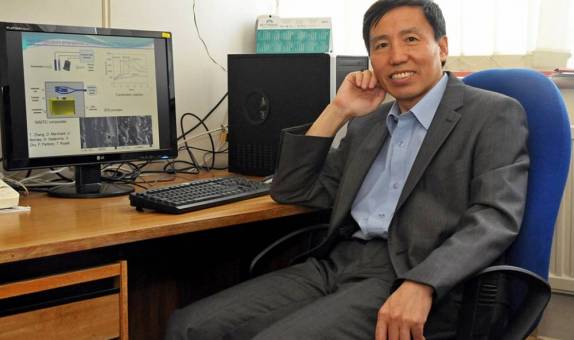
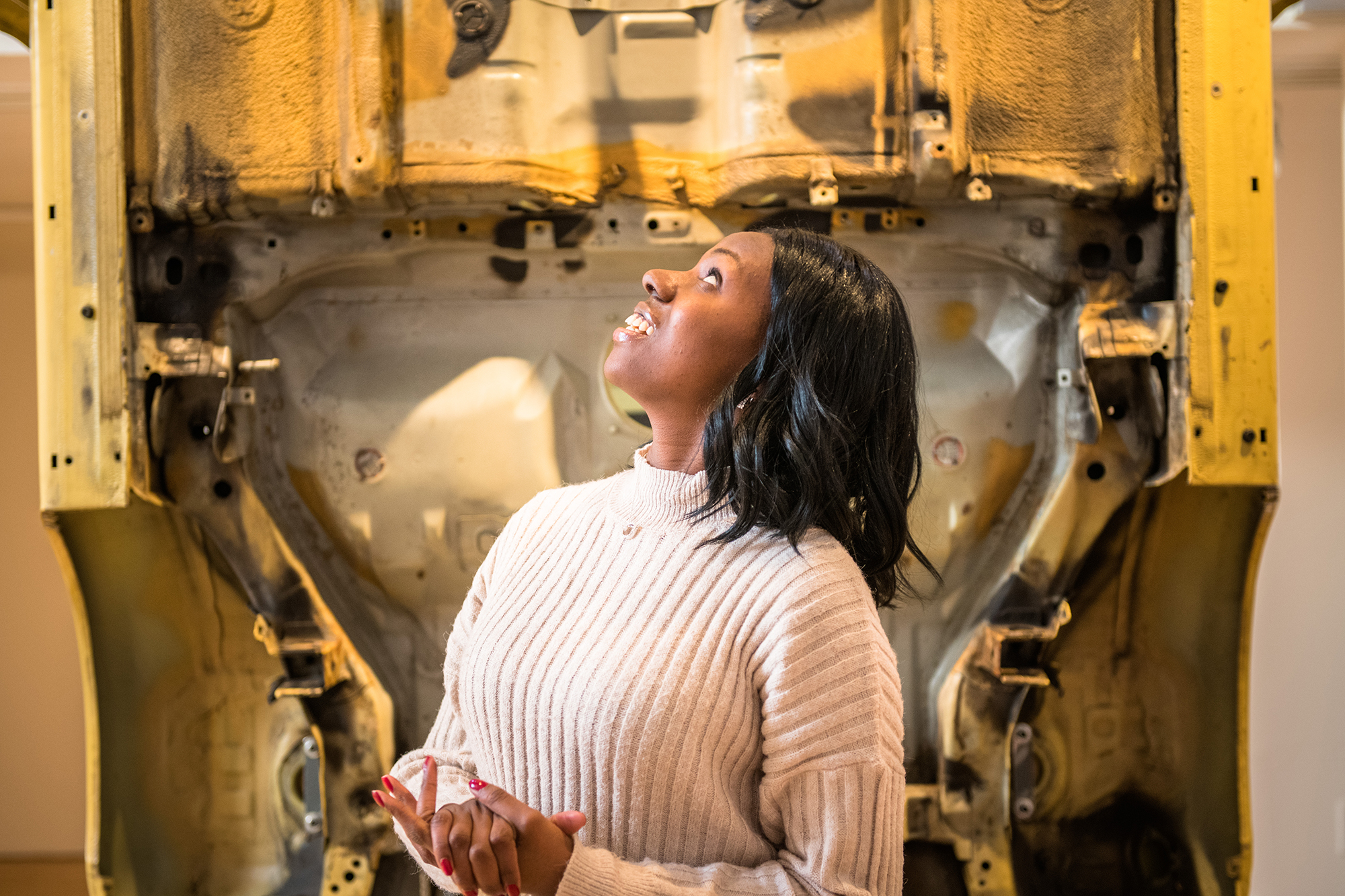
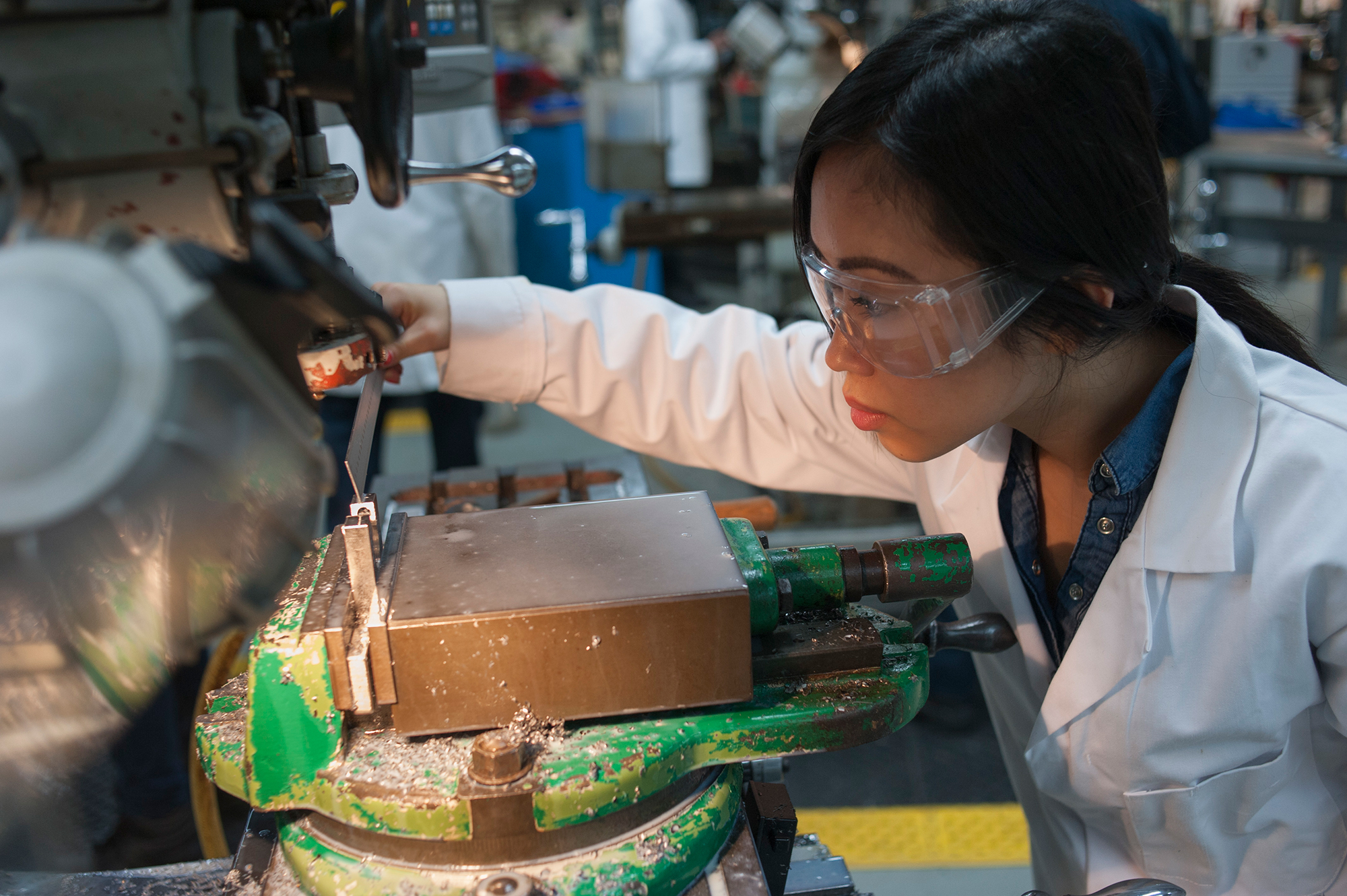
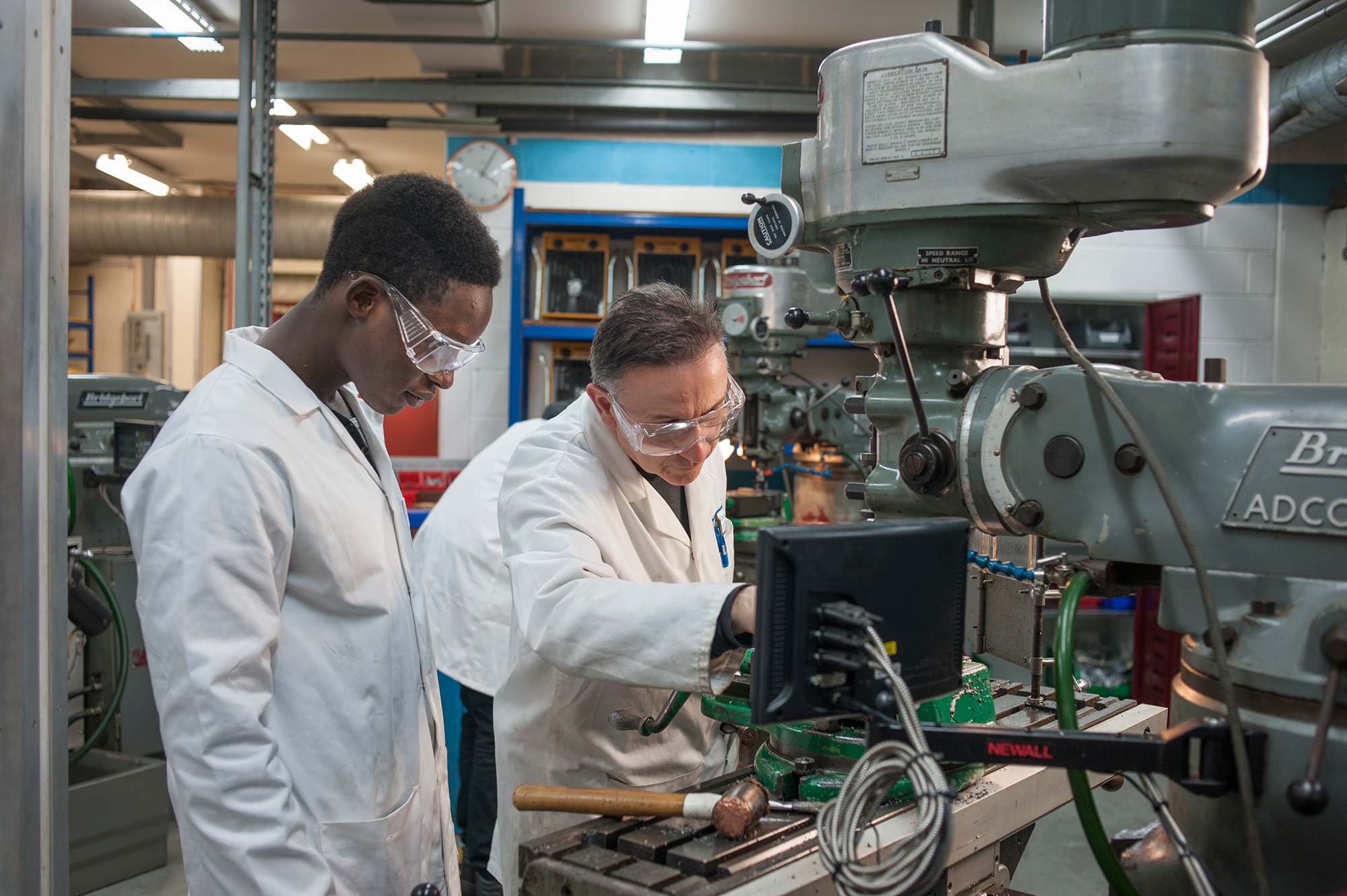
There is a wide range of facilities for practical work at our Roehampton Vale campus, where this course is based.
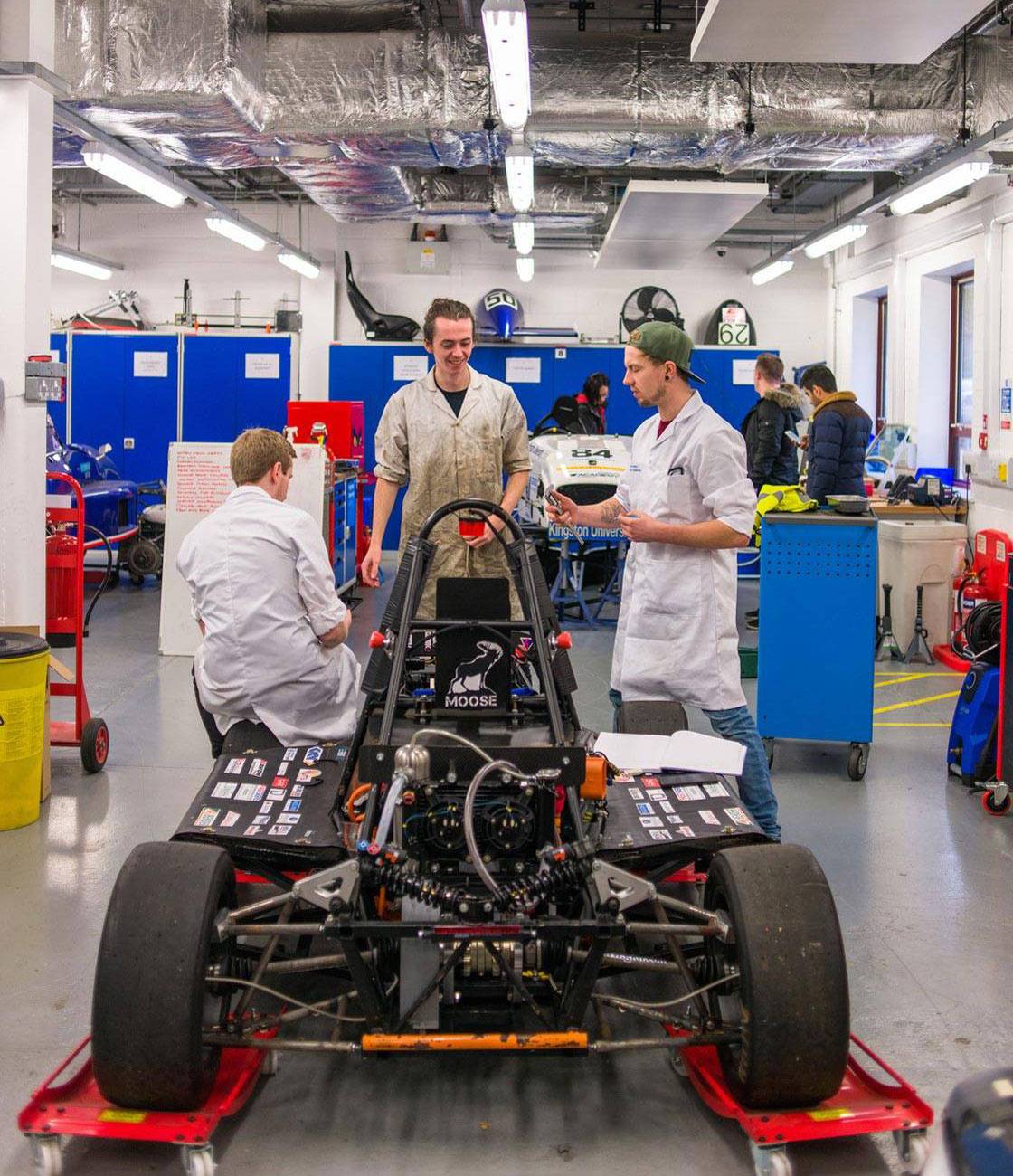
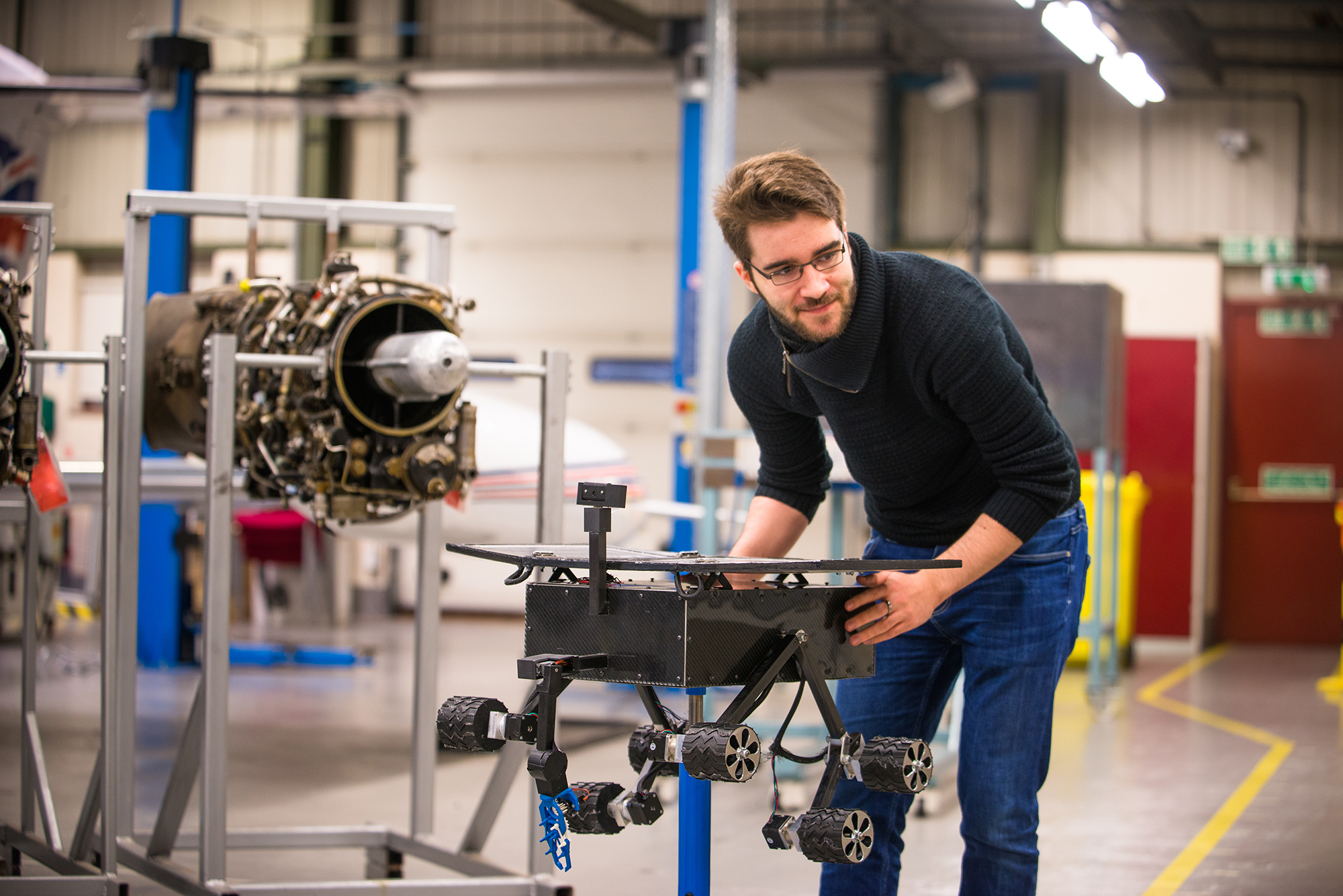
Our applied approach to teaching is supported by dedicated laboratories, including state-of-the-art facilities for rapid prototyping and manufacturing, a fully equipped materials laboratory, and a modern electronics and robotics lab. Our labs have recently been enhanced with the addition of robot and electronic equipment, providing students with access to the latest technologies and tools.
You will have access to a modern environment with the latest technology and industry-standard equipment, including:
- electronics and robotics labs
- 3D design studio and workshop
- mechanical engineering workshop
- rolling roads
- automotive testing facilities
- a Lotus Exige
- cars and motorcycles built by engineering students.
The recently enlarged library at Roehampton Vale provides collections of specialist engineering books and journals.
The £4 million Hawker Wing provides three floors of extra space for students and staff at Roehampton Vale, including improved learning and teaching facilities.
Facilities gallery


Course fees and funding
Additional costs
Depending on the programme of study, there may be extra costs that are not covered by tuition fees which students will need to consider when planning their studies. Tuition fees cover the cost of your teaching, assessment and operating University facilities such as the library, access to shared IT equipment and other support services. Accommodation and living costs are not included in our fees.
Where a course has additional expenses, we make every effort to highlight them. These may include optional field trips, materials (e.g. art, design, engineering), security checks such as DBS, uniforms, specialist clothing or professional memberships.
After you graduate
You'll graduate ready for a successful career in industry, having gained hands-on experience, practical, professional and technical skills.
Graduate destinations include Rolls-Royce, Atkins, Alstom, Formula 1, Lockheed Martin, British Aerospace, British Airways, McLaren and Subsea 7.
Formula Student and motorsport
Join this course at Kingston and you too could join the KU e-Racing team and help them drive for success in Formula Student year after year. It's a great chance to apply theory to a real workplace project. Enjoy the thrills of appearing at a major racing circuit and have something amazing to add to your CV.
About Formula Student
IMechE's Formula Student is the largest annual student motorsport event in the world and is delivered in partnership with key industry players including Airbus, Jaguar Land Rover, Shell, National Instruments and Mercedes-AMG Petronas. Ross Brawn OBE (Team Principal, Mercedes-AMG Petronas F1 team) is the patron and the event is entered by 141 university teams from 34 countries.
With its real-world bias, Formula Student is viewed by the motor industry as the standard for engineering graduates to meet. In fact, many high-profile motorsports engineers have participated in Formula Student whilst at university, including Andrew Shovlin, chief race engineer of Mercedes-AMG Petronas F1 team and James Painter, engineering lead of vehicle integration working on the BLOODHOUND land speed record.
KU e-Racing shines at Silverstone
The week after the likes of Lewis Hamilton and Sebastian Vettel raced at the British Grand Prix, students from around the world competed in their own motorsport event at Silverstone in the Institution of Mechanical Engineers' Formula Student competition. Kingston University's KU e-Racing proved to be the only UK team with a viable electric vehicle.
Read here how the KU team got on.
You can also see the KU e-Racing car being assembled, the chassis being constructed and the car being transported to Silverstone, as well as glimpses of the business presentation made as part of the University's entry. Produced by students Karam Rajaby and Joseph Bannister (Television and Video Technology BSc(Hons)), Amy Nicole Tinker (Media Technology BSc (Hons)); and Luka Stokic (Automotive Engineering BSc(Hons)).
Watch out for their full-length documentary on Formula Student.
Kingston motorsport
Students on this course can also get involved with the successful Kingston University motorsport team.
Work placement year
How you can work in industry during your course
Why take a placement? Work placements have many benefits:
- Providing work experience that is relevant to your course and future career
- Improving your chances of graduating with a higher grade degree
- Enhancing your CV
- Can lead to a graduate job
- Can enable you to earn a year's salary whilst studying (the vast majority of placements are paid)
-
Can help you select your final-year project.
"To be successful, tomorrow's leaders will need to be far more rounded individuals than ever before. They will collaborate in pursuit of shared goals. They will guide, challenge and support...They will have an appetite for change and a hunger for continuous improvement, and they will have an ethos of learning and development..."
Jeremy Darroch, Former Chief Executive, Sky
"Doing a placement year effectively gives you one foot in the door of a future job and to stand out from the crowd... as well as enhancing my CV... and future interviews. It's a great motivator to be successful in my studies as it only serves to open even more doors and gain more skills."
Placement student at Jagex Games Studios Ltd
- 81% of placement students and 34% of non-placement students got a first or 2.1 (Faculty of Computing, Information Systems and Mathematics, 2008).
- 100% of placement students during 2008 recommend doing a placement (Faculty of Computing, Information Systems and Mathematics, 2008).
-
Many employers offer a graduate job to their successful placement students.
There is a lot of support available for students looking to secure a placement (e.g. a jobs board with placement vacancies, help with writing CVs and mock interviews). Getting a placement and passing the placement year are ultimately the student's responsibility.
For further information please contact the Placements Team by telephone 020 8417 2969 or email secplace@kingston.ac.uk.
Examples of placements
Placements can be with large multinational companies, international companies, local companies and small start-ups; offering a diverse range of posts. Here are some examples of employers and roles:
|
Construction-based placement employers |
Construction-based placement roles |
|---|---|
|
RG Group |
Assistant site manager |
|
Science-based placement employers |
Science-based placement roles |
|
Reckitt and Benckiser |
Bioanalytical sciences |
|
Engineering-based placement employers |
Engineering-based placement roles |
|
Airbus |
Analysis of aircraft structure |
|
Computing and IS based placement employers |
Computing and IS based placement roles |
|
Disney |
Database co-ordinator |
|
Mathematics-based placement employers |
Mathematics-based placement roles |
|
Lloyds Banking Group |
Analyst |
Key information set
The scrolling banner(s) below display some key factual data about this course (including different course combinations or delivery modes of this course where relevant).
Course changes and regulations
The information on this page reflects the currently intended course structure and module details. To improve your student experience and the quality of your degree, we may review and change the material information of this course. Course changes explained.
Programme Specifications for the course are published ahead of each academic year.
Regulations governing this course can be found on our website.