

Biomedical Science BSc (Hons)
- Biology, biochemistry and biomedical science
- Undergraduate
Kickstart your medical or research career with the Biomedical Science BSc (Hons) degree course from Kingston University, accredited by the Institute of Biomedical Science (IBMS). If you also complete the IBMS Training Portfolio, you can apply to register as a Biomedical Scientist with the Health and Care Professions Council (HCPC).

This course is in Clearing.
Call our Clearing line on
0800 0483 334
More about Clearing
Contribute to innovative medical research using our modern laboratories
Gain first-hand experience of a busy research or diagnostic laboratory.
On our Biomedical Science BSc (Hons) course, you'll have the opportunity to do a placement year in NHS laboratories, research institutes or drug companies. This means you will graduate with the knowledge and practical skills necessary to pursue your dream career.
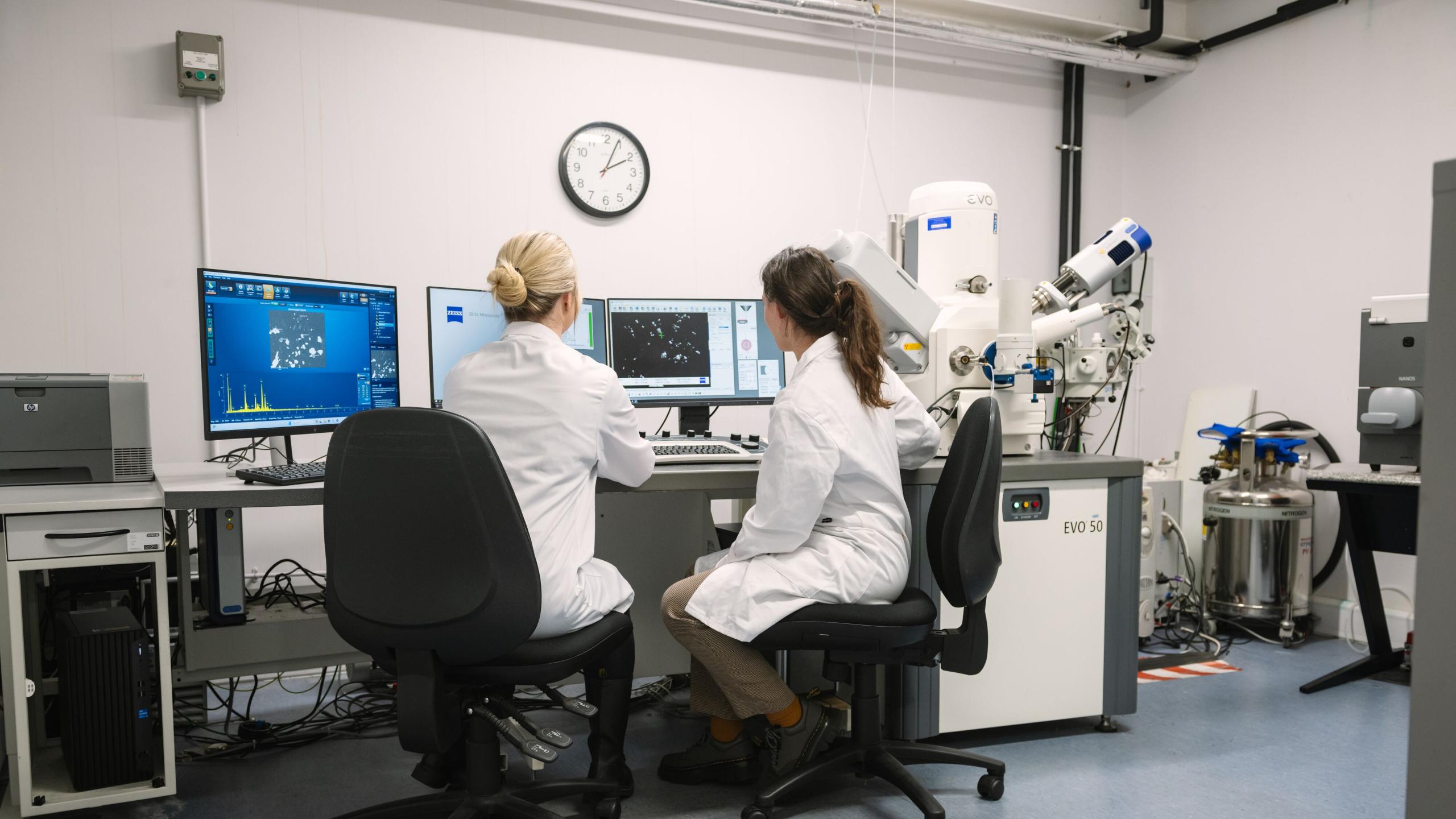
At our Penrhyn Road campus, you will have access to a modern environment with the latest equipment, including:
- The Integrated Research and Teaching Laboratories (IRTL), the hub for life sciences research. Students work there for projects and during internships.
- Modern applied biology laboratories equipped with quantitative PCR and Point of Care Machines.
- Computer science suites with a team of IT technicians to offer assistance.
The library in our award-winning new Town House Building offers:
- Onsite subject libraries.
- A range of printed and electronic resources.
- Online access to resources as well as a free inter-library loan scheme to other libraries in the Greater London area.
- Areas for quiet study and collaborative group workspaces.
Biology, biochemistry and biomedical science at Kingston University
Biology, biochemistry and biomedical science students are getting answers to some of the world's biggest questions through their studies. Discover where their passion is taking them.

Kingston's Biomedical Science degree has given me a good understanding of both haematology and oncology. This knowledge helped me secure my first two roles, and provided me with the foundation for my PhD.
Why choose this course
Biomedical Science covers a wide range of topics including immunology, microbiology, haematology and genetics; and more specifically, cancer screening, blood transfusion, control of infections, and cardiovascular diseases.
If you enjoy investigating things in a laboratory and monitoring diseases, this could be the ideal course to kickstart your future career. Biomedical Science BSc (Hons) is an accredited course offered by London’s only University to be ranked Gold in all three categories of the Teaching Excellence Framework (TEF).
At the completion of your BSc degree, you may continue your journey with a postgraduate course in Haematology, Microbiology or Cancer Biology at Kingston University. The University also offers teacher training courses if you want to follow that path.
You'll be introduced to principles of biomedical sciences, molecular and cell biology, physiology, anatomy, biochemistry, and relevant laboratory techniques. You'll also independently research a subject that interests you. This might include a laboratory-based project, computer-based projects such as bioinformatics, analysis of survey information or a review of scientific literature.
We have updated our modules to enhance student-centred teaching and align course content with industry needs, helping you become a future-proof graduate. The Biomedical Science BSc (Hons) course is aligned with the latest QQA 2023 benchmarks for IBMS-accredited degrees.
Kingston has been ranked No.1 in London for Biomedical Science accredited by IBMS (Complete University Guide 2026).
Accreditation
Our BSc and MSc Biomedical Science courses are all accredited by the Institute of Biomedical Science (IBMS). The IBMS Training Portfolio for IBMS registration can be completed during the placement year of the four-year professional placement course. Alternatively, it can be undertaken after graduation, once in appropriate employment.
Those who graduated with an honours degree will become eligible for registration with the Health and Care Professions Council (HCPC) as Biomedical Scientists, once they are in appropriate employment to fulfil the additional HCPC requirements of competencies and completion of the IBMS Certificate of Competence.

Course content
Year 1
Year 1 offers a firm foundation in the biological and chemical principles upon which biomedical science is based, including various laboratory techniques. You will be introduced to molecular and cell biology, physiology, anatomy and biochemistry.
Core modules
Year 2
Year 2 includes in-depth study of the more specialised aspects of biomedical science, particularly the nature and effects of human disease. You will develop your knowledge of microbiology and immunology and the cellular pathological changes that occur in medical conditions such as cancer and heart disease. You will learn about medical genetics, including a range of genetic diseases and disorders, and how to identify them.
Core modules
Year 3
Year 3 consists of specialist modules covering the theoretical and practical aspects of the major branches of biomedical science. These include clinical chemistry and haematology, clinical immunology and medical microbiology. The Clinical Applications of Biomedical Science module includes clinical case studies, integrating diagnostic procedures from across the course and developing awareness of contemporary issues within biomedical science.
Year 3 also includes a research project. This may be undertaken in University research laboratories or in a hospital or medical research laboratory. It enables you to carry out independent research in a subject that interests you, and gain first-hand experience of a busy research or diagnostic laboratory. The project could also be data analysis of survey information or a systematic review of scientific literature.
Core modules
Science Foundation Year
If you would like to study one of our science degrees at Kingston University but are not yet ready to join the first year of a BSc (Hons) course, you can include an extra foundation year within your chosen degree. Please see the science foundation year course page for details of modules.
International students: direct application
Are you an international student? Have you decided Kingston is the place for you? If so, you can apply for this course directly, rather than having to go through UCAS.

What career opportunities does this course offer?
This degree provides excellent preparation for careers in science, health and education. Many of our students also go on to further studies at postgraduate level. For example, with medical or research degrees.
Types of graduate jobs include:
- Biomedical scientist
- Medical laboratory assistant
- Senior healthcare technical officer
- Hospital administrator
- Product analyst
- Phlebotomist
- Retinal screener
- Teacher
- Lecturer
- Researcher
Graduate employers include NHS, Cancer Research UK, CL Medical, and Oxbridge Centre.
Future Skills
Our Future Skills programme is embedded within all our undergraduate courses and throughout the whole Kingston experience. These skills will help you to become a future-proof graduate by equipping you with the skills most valued by employers, such as problem-solving, digital competency and adaptability.
As you progress through your degree, you'll learn to navigate, explore and apply these graduate skills. You’ll also understand how to demonstrate and articulate to employers how these future skills give you the edge.

Teaching and assessment
Scheduled learning and teaching on this course includes timetabled activities including lectures, seminars, small group tutorials and practical sessions.
It may also include placements, project work, workshops, conferences and field trips.

I've really enjoyed the medical-related modules of the course. I also like the practical sessions and the lecturers are very good. They are positive, friendly and easy to get hold of. You have more opportunity to learn and the chance to improve your knowledge in specialist areas.
Fees and funding
Additional course costs
Some courses may require additional costs beyond tuition fees. When planning your studies, you’ll want to consider tuition fees, living costs, and any extra costs that might relate to your area of study.
Your tuition fees include costs for teaching, assessment and university facilities. So your access to libraries, shared IT resources and various student support services are all covered. Accommodation and general living expenses are not covered by these fees.
Where applicable, additional expenses for your course may include:
Scholarships and bursaries
For students interested in studying this course at Kingston, there are several opportunities to seek funding support.


Course changes and regulations
The information on this page reflects the currently intended course structure and module details. To improve your student experience and the quality of your degree, we may review and change the material information of this course. Find out more about course changes
Programme Specifications for the course are published ahead of each academic year.
Regulations governing this course can be found on our website.
What our students and graduates say
My 12-month placement at Kew Gardens was challenging because I was learning new techniques and using equipment I hadn't used before. But it was also very rewarding when I finally ironed out the [DNA] code.
Jumping genes are quite well known and present in all life forms, but as yet not much work has been done on their presence with large amounts of DNA. The information I have uncovered will help scientists to keep chipping away at a puzzle that has been fascinating experts for years.
After graduating, I went on to join the Institute of Cancer Research. I now investigate novel compounds used to treat cancer. This means looking at the properties of a cancer and then creating a brand-new drug to treat it. I enjoy discovering new things and the interaction with people that my work provides.
What are the facilities like?
When you join Kingston University, you will have access to a wide range of facilities and resources designed to support your studies. Use the virtual tour below to explore some of the facilities and learning environments that students within this subject area may experience during their studies.








Key information
The scrolling banner below displays some key factual data about this course (including different course combinations or delivery modes of this course where relevant).


