

Pharmaceutical Science BSc (Hons)
- Pharmacy, pharmaceutical science and chemistry
- Undergraduate
Kickstart your career with the Pharmaceutical Science BSc (Hons) degree course from Kingston University. This course is one of the first to be accredited by the Academy of Pharmaceutical Sciences (APS) and you can gain experience of how pharmaceutical science is applied in industry with an optional placement year.

Discover the role innovative pharmaceutical research can play
Span the worlds of chemistry and biology to transform the lives of patients.
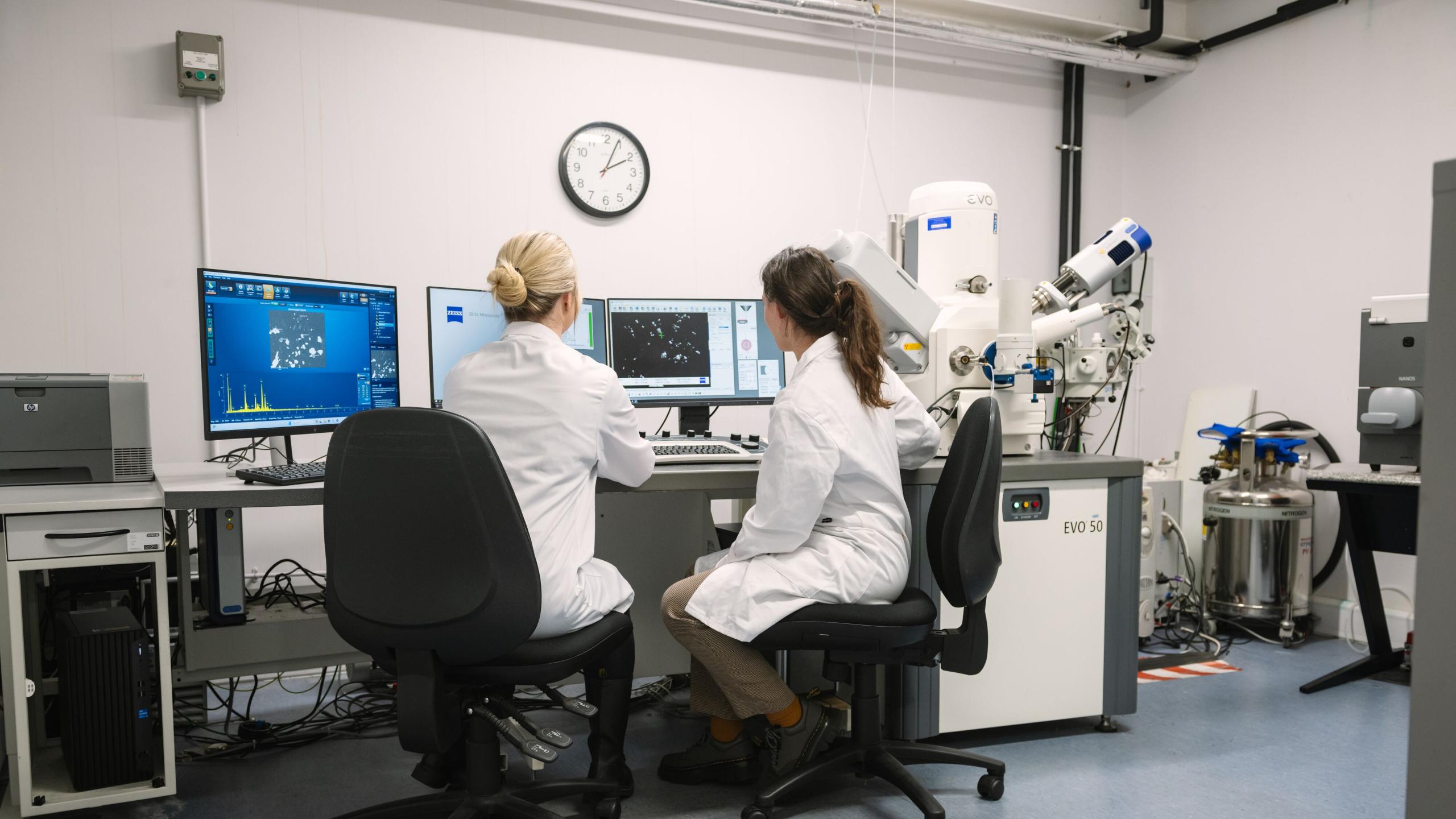
On our Pharmaceutical Science BSc (Hons) course, you will benefit from our wide range of facilities for practical work. You will have access to a modern environment with the latest equipment, including:
- Our £9.8 million Eadweard Muybridge building with state-of the art laboratories
- Specialist equipment, such as:
- Gas and liquid chromatography
- Electron microscopy
- Spectrometers, including mass spectrometers, infrared spectrometers and nuclear magnetic resonance spectrometers
- Nuclear science equipment
- Thermal analysis
- X-ray diffractometers
- Electrochemical analysis
- Computing laboratories and a team of IT technicians to offer assistance
Pharmaceutical science, pharmacology and chemistry at Kingston University
Join our chemistry, pharmacology and pharmaceutical science students and staff as they show you their favourite pieces of lab equipment and guide you through Kingston University’s state‑of‑the‑art facilities. Get an insider’s look at the tools and techniques used in industry to design medicines that work smarter with the human body.

Two months after graduating with a first-class honours, I landed my first role in an energy and chemical consultancy company in Oxford.
Why choose this course
Pharmaceutical science can benefit and transform patients' lives. Spanning the worlds of chemistry and biology, it discovers, develops and analyses medicines and pharmaceutical products. If you're considering a career in the pharmaceutical industry, this course will give you the knowledge and practical skills for success.
This course explores drug discovery and development, pharmacology, toxicology and immunology. You'll examine the most effective ways medicines are manufactured, packaged, stored and administered. As well as this, you'll take part in innovative research exploring new methods of drug delivery and drug synthesis.
In your final year, you'll get the opportunity to complete a major project where you can apply the knowledge and skills you have acquired to a range of real issues in different contexts. This is a great way to learn and is a valuable bridge to employment or further research at masters level.
We have recently updated our modules to enhance student-centred teaching and align course content with industry needs, helping you become a future-proof graduate.
Accreditation
This course has been accredited by the Academy of Pharmaceutical Sciences (APS) for 5 years from 2023.


Course content
Year 1
Year 1 introduces biology, chemistry, and physiology for pharmaceutical science.
Core modules
Year 2
Year 2 places emphasis on organic and medicinal chemistry and develops practical skills, especially in pharmaceutical analysis - important in relation to the actions and characterisation of drugs. You will also study the effect of drugs in living systems and the principles of the immune system. There will be an introduction to micro-organisms in relation to human disease, their control and safe working practices. You will explore organic and medicinal chemistry applied to the design and synthesis of drug molecules. Year 2 also focuses on the experimental aspects of pharmaceutical science, developing skills for conducting independent laboratory investigations.
Core modules
Optional professional placement year
An optional professional placement year between Years 2 and 3 provides the opportunity to gain experience of how pharmaceutical science is applied in an industrial situation.
Final year
Final year exposes you to specialised areas of pharmaceutical science which includes how drugs are manufactured in industry and how they are introduced onto the shelf. You will learn about new and innovative research linked to pharmaceutical science including new methods of drug delivery. You will also undertake a year-long research project, applying, in an experimental context, the theoretical knowledge you have gained in the previous two years.
Core modules
Science Foundation Year
If you would like to study one of our science degrees at Kingston University but are not yet ready to join the first year of a BSc (Hons) course, you can include an extra foundation year within your chosen degree. Please see the science foundation year course page for details of modules.
International students: direct application
Are you an international student? Have you decided Kingston is the place for you? If so, you can apply for this course directly, rather than having to go through UCAS.

The course is extremely well structured and accessible for all. The coursework helped me develop many skills. I learnt how to be innovative during a business pitch assessment, how to lead group projects and how to work independently.
What career opportunities does this course offer?
Many of our Pharmaceutical Science students go on to work in the pharmaceutical industry, research or clinical laboratories, hospitals and education.
The roles our graduates have secured include drug safety associates, quality control analysts, pharmacy technicians, microbiologists and medical publishers. Jobs in research include research assistants and scientists, clinical trial project managers and marketing researchers. While some graduates have continued their studies as PhD students.
Employers our graduates work for include Johnson & Johnson, Procter & Gamble, Braun Medical, the NHS, Nemaura Pharma Ltd and Quotient BioResearch.
Future Skills
Our Future Skills programme is embedded within all our undergraduate courses and throughout the whole Kingston experience. These skills will help you to become a future-proof graduate by equipping you with the skills most valued by employers, such as problem-solving, digital competency and adaptability.
As you progress through your degree, you'll learn to navigate, explore and apply these graduate skills. You’ll also understand how to demonstrate and articulate to employers how these future skills give you the edge.

Teaching and assessment
Scheduled learning and teaching on this course includes timetabled activities including lectures, seminars, small group tutorials and practical sessions.
It may also include placements, project work, workshops, conferences and field trips.
For me personally, the research project undertaken in my third year has most prepared me for when I graduate. As I will be going on to begin a masters and PhD, the experience was excellent for my academic confidence and research skills.
Fees and funding
Scholarships and bursaries
For students interested in studying this course at Kingston, there are several opportunities to seek funding support.

Additional course costs
Some courses may require additional costs beyond tuition fees. When planning your studies, you’ll want to consider tuition fees, living costs, and any extra costs that might relate to your area of study.
Your tuition fees include costs for teaching, assessment and university facilities. So your access to libraries, shared IT resources and various student support services are all covered. Accommodation and general living expenses are not covered by these fees.
Where applicable, additional expenses for your course may include:

What our graduates and students say
Not only did the laboratory sessions prepare us to go into industry, but the variety of academic material also prepared us to go into more office-based jobs.
We studied cardiovascular, neurodegenerative and autoimmune diseases in order to understand the mechanisms by which the disease occurs. We then looked at how drugs can be designed to treat them and the specifics of their modes of action. This module is definitely one to look forward to.
It gave me the opportunity to be even more inquisitive as a scientist, and allowed me to be a confident, proactive student. My supervisor gave me a huge amount of support and constantly believed in me, which really made me feel like a skilled and competent laboratory scientist.
A typical day on the Pharmaceutical Science BSc (Hons) course would consist of lectures, workshops and laboratory sessions. Workshops were a chance to reflect on the material from lectures, work with your classmates to solve problems and engage in academic discussion. Practical sessions involved a variety of experiments, such as synthesising different therapeutic compounds and analysing samples.
Course changes and regulations
The information on this page reflects the currently intended course structure and module details. To improve your student experience and the quality of your degree, we may review and change the material information of this course. Find out more about course changes
Programme Specifications for the course are published ahead of each academic year.
Regulations governing this course can be found on our website.






Key information
The scrolling banner below displays some key factual data about this course (including different course combinations or delivery modes of this course where relevant).

