Sport and Exercise Science (Nutrition) BSc (Hons)
- Sport, exercise and nutrition
- Undergraduate
If you’re interested in studying nutrition related to sport and exercise science, kickstart your career with this degree, accredited by the Association for Nutrition (AfN).

This course is in Clearing.
Call our Clearing line on
0800 0483 334
More about Clearing
Learn how to promote good health and help prevent disease
Your learning will be supported by co-curricular activities, highly valued by the Association for Nutrition (AfN) and by employers.
The Nutrition and Dietetics subject area at Kingston University has the top NSS score in the UK for 15 out of 27 NSS 2023 questions, scoring 100% in the positivity measure for all 15 questions. This is the highest number of questions to achieve 100% in the positivity measure across all (42) providers in the Nutrition and Dietetics subject area.
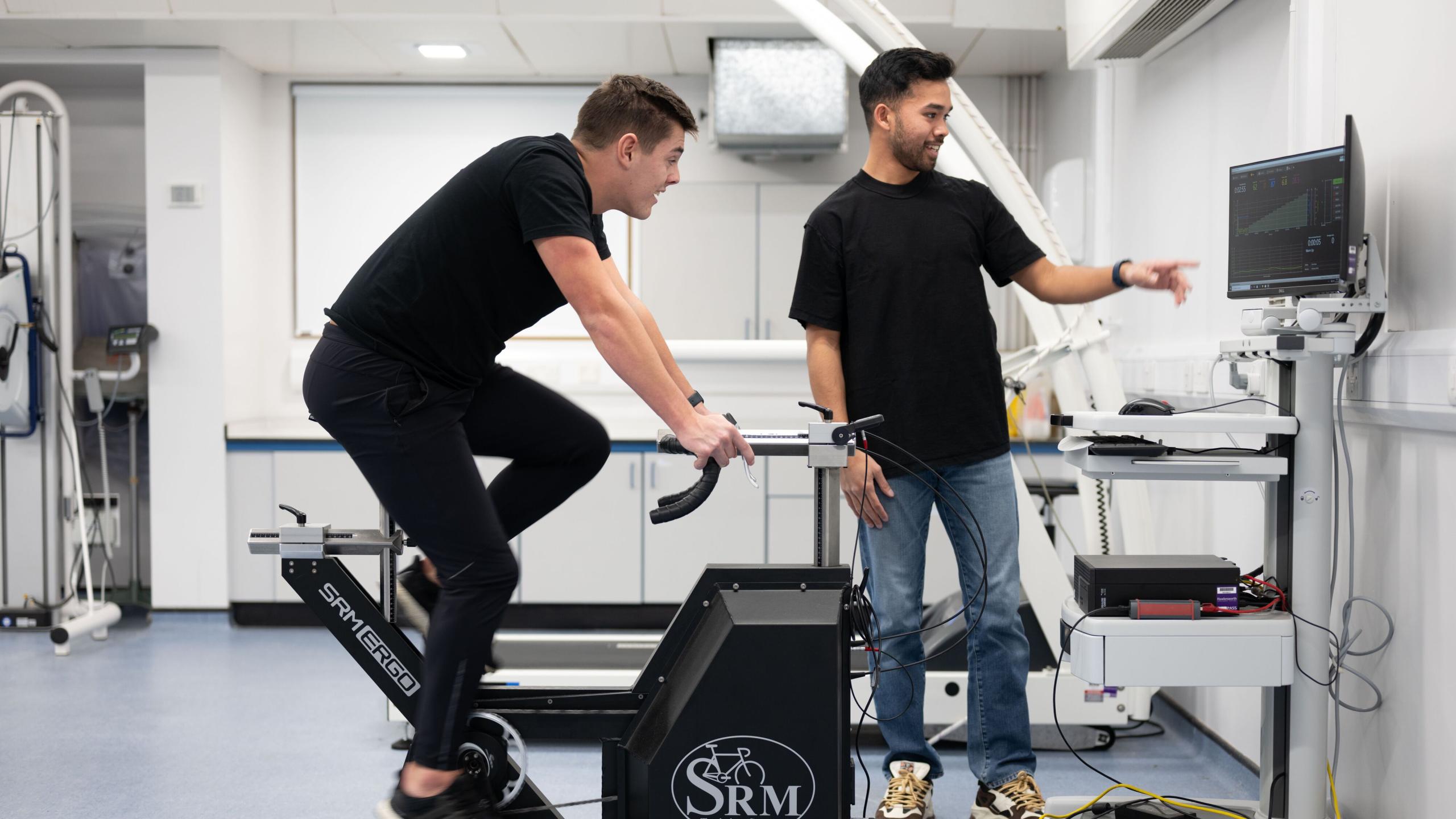
At our Penrhyn Road campus, you will have access to a modern environment with the latest equipment, including:
- the £9.8 million Eadweard Muybridge building with state-of-the-art laboratories
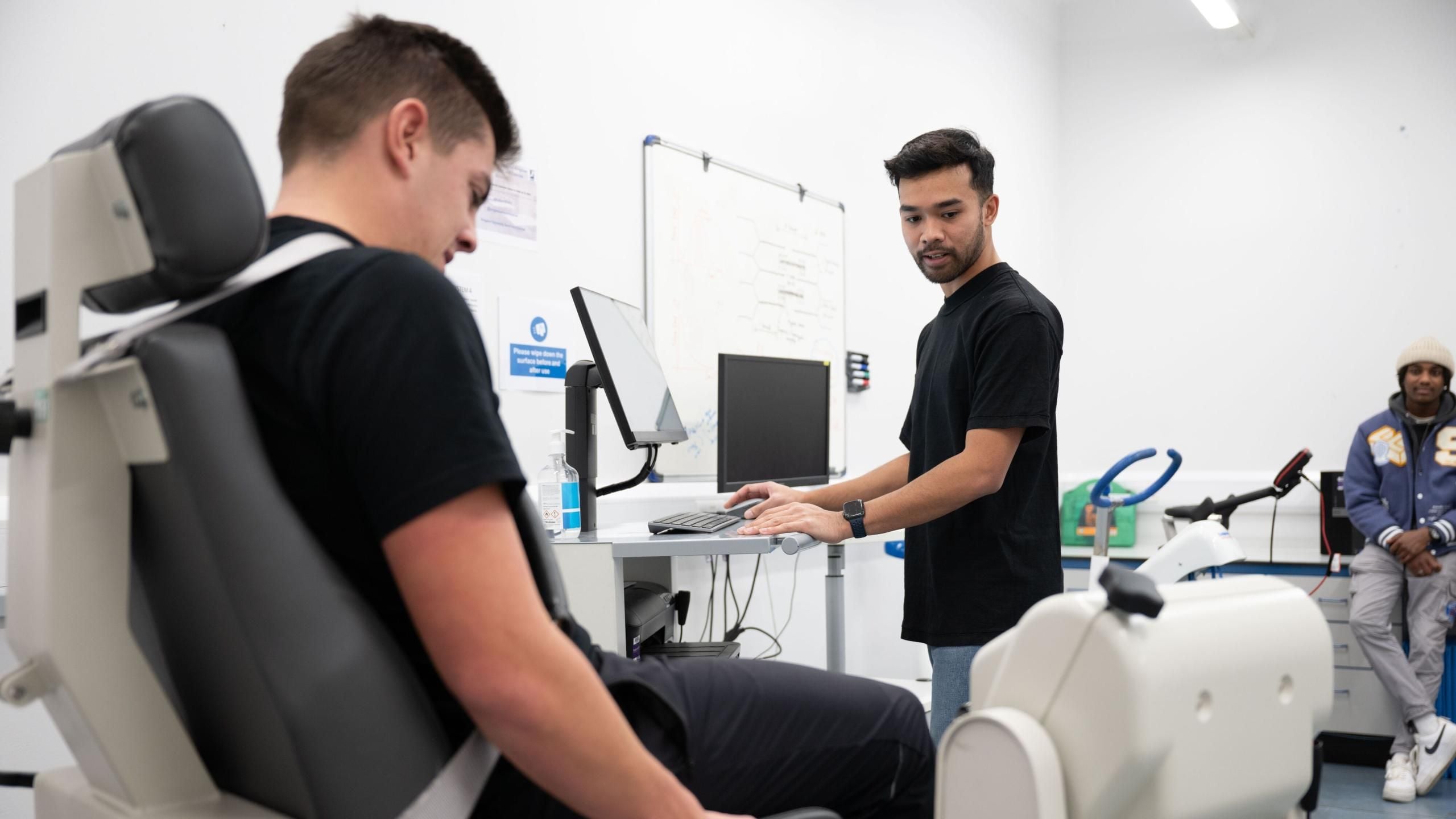
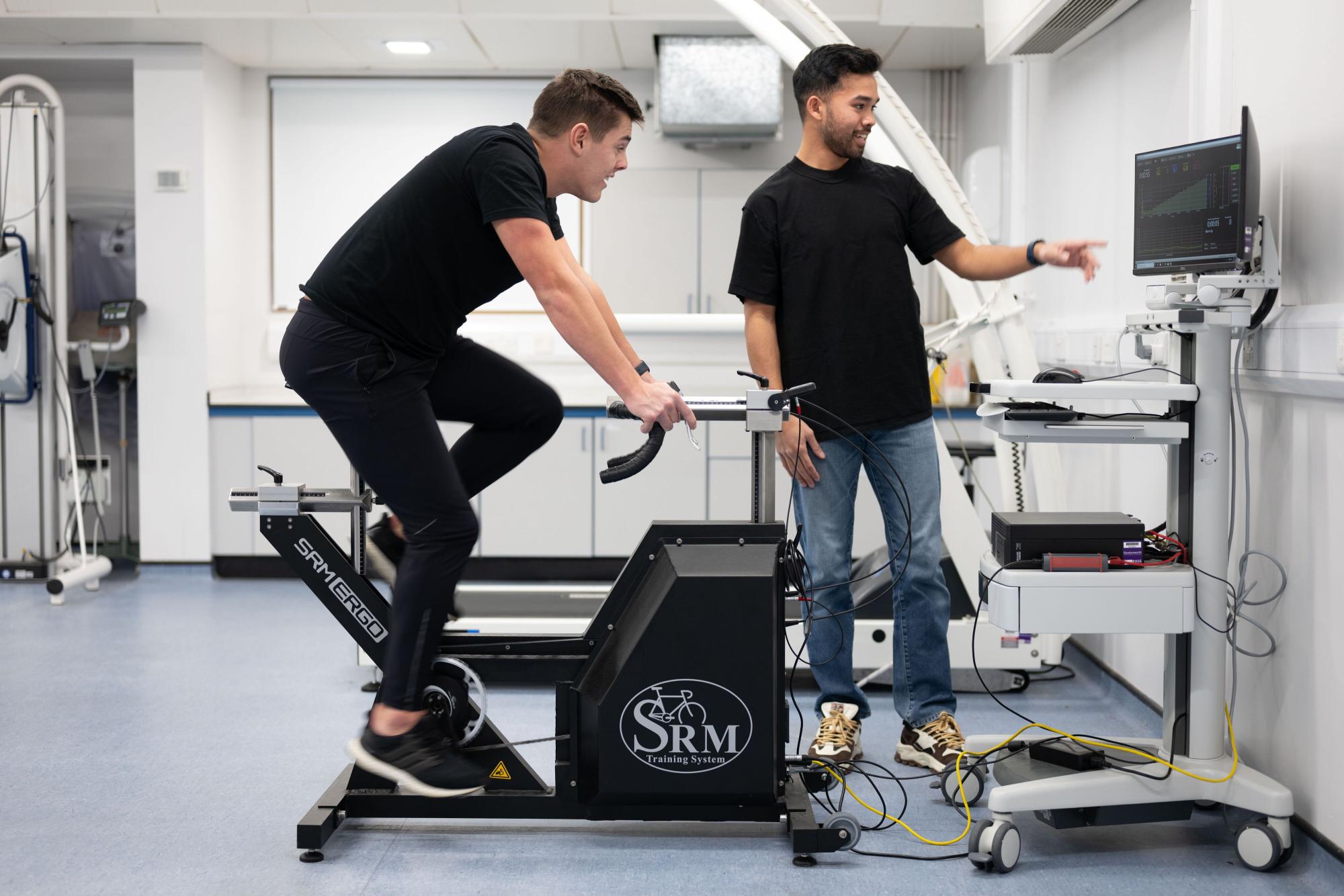
- an exercise physiology and biomechanics lab
- modern applied biology and chemistry laboratories
- specialist equipment, such as electron microscopes and spectrometers
- computing laboratories and a team of IT technicians to offer assistance
- a newly refurbished state-of-the-art nutrition kitchen
Sport & exercise science at Kingston University
Learn how our students are turning their passion for sport and exercise into a career with our sport and exercise courses.

It is clear that the staff care about the students at Kingston University. There are so many facilities to support students from career development to health and wellbeing support.
Why choose this course
Gaining a practical knowledge of the benefits of nutrition and exercise can give you the tools to help improve people's wellbeing.
This course studies anatomy, physiology, energy metabolism, nutrition, sport and exercise psychology and other related subjects. You'll examine the promotion of exercise and nutrition to improve people's physical and mental health. In Year 3, you will focus on nutrition, sport, and public health.
You’ll learn from staff who are actively engaged in research, presenting at international conferences and publishing in high-quality scientific journals. This means that you can be sure your course is being kept up-to-date and delivered by experts in the field.
You will also get the chance to observe sport science laboratory assessments of world-class athletes, thanks to staff consultancy services. We provide physiological, biomechanical and psychological support to a variety of athletes and squads including:
- the Great Britain Olympic Canoe and Kayak Team
- Fulham Football Club
- Thames Turbo Triathlon Club
Accreditation
The course is accredited by the Association for Nutrition. Accreditation means that Kingston University Sport and Exercise Science (Nutrition) BSc (Hons) graduates can apply to become associate registered nutritionists without having to prove competence.

Nutrition Kitchen
Our newly refurbished nutrition kitchen is a flexible and inviting learning space that is used for food science practicals, research projects, student nutrition society events and more.
The kitchen can also be used for small group teaching and personal tutor meetings. This makes it a valuable resource for all nutrition students, who can use it to learn, collaborate, and network.

Course content
Year 1
Year 1 introduces the fundamental concepts of food and nutrition, human anatomy, exercise and physiology, together with sport and exercise psychology. You will also study the essential principles of scientific investigation.
Core modules
Year 2
Year 2 extends your knowledge of the effects of nutrition, sport and exercise on human physiology and exercise prescription. You will examine the principles of energy metabolism and develop your understanding of health and exercise physiology and sport and exercise psychology. A module in research methods will prepare you for your Year 3 research project.
If you choose the four-year sandwich route of this degree, you will have a year's industry-related work experience between Years 2 and 3.
Core modules
Year 3
In your final year, you will apply your knowledge of nutrition and exercise to topics such as the role of nutrition in health and disease, public health promotion, and the psychological issues relating to health and exercise. You will also undertake an independent project, focused on exercise, nutrition or health science.
Core modules
Science Foundation Year: Sport and Exercise Science
If you would like to study one of our Sport Science degrees at Kingston University but are not yet ready to join the first year of a BSc(Hons) course, you can include an extra foundation year within your chosen degree. Please see the Science Foundation Year: Sport and Exercise Science course page for details of modules.

International students: direct application
Are you an international student? Have you decided Kingston is the place for you? If so, you can apply for this course directly, rather than having to go through UCAS.

I found the course enjoyable, especially the nutritional aspects. The practical sessions were very useful, as was the coursework which had a practical element, as it gave us a chance to see what it would be like to test a patient or athlete in real life.
What career opportunities does this course offer?
Graduates from this course go on to opportunities in nutrition, exercise and health-related research, the sport and leisure industries, lifestyle management, health promotion, the NHS, public health and teaching.
Future Skills
Our Future Skills programme is embedded within all our undergraduate courses and throughout the whole Kingston experience. These skills will help you to become a future-proof graduate by equipping you with the skills most valued by employers, such as problem-solving, digital competency and adaptability.
As you progress through your degree, you'll learn to navigate, explore and apply these graduate skills. You’ll also understand how to demonstrate and articulate to employers how these future skills give you the edge.

Teaching and assessment
Scheduled learning and teaching on this course includes timetabled activities including lectures, seminars, small group tutorials and practical sessions.
It may also include placements, project work, workshops, conferences and field trips.
My course has given me knowledge and a broad understanding of so many topics that I could apply to a future career. The focus on practical learning and laboratory competency has given me the ability to understand how to conduct myself in real-life career situations.
Nutrition at Kingston University
Hear nutrition student Michael share what it's like to study at Kingston University whilst undertaking a placement at St George's Hospital.

Fees and funding
Additional course costs
Some courses may require additional costs beyond tuition fees. When planning your studies, you’ll want to consider tuition fees, living costs, and any extra costs that might relate to your area of study.
Your tuition fees include costs for teaching, assessment and university facilities. So your access to libraries, shared IT resources and various student support services are all covered. Accommodation and general living expenses are not covered by these fees.
Where applicable, additional expenses for your course may include:
Scholarships and bursaries
For students interested in studying this course at Kingston, there are several opportunities to seek funding support.

What our students and graduates say
I originally chose to study at Kingston University as it was one of the only courses in the UK that offered the combination of sports science and public nutrition I was looking for.
I chose this course because it covers all the areas that interest me – nutrition, health and exercising. There is also a wide choice of career options open to its graduates.
I particularly enjoyed being able to use the equipment in the physiology lab when we measured body fat percentage, such as the BODPOD which is one of the most accurate ways to measure body fat percentage. Two other pieces of equipment. I enjoyed using was an Electro Cardio Gram (ECG) to test heart rhythms and a resistance bike when I participated in the VO2 Max test.
What are the facilities like?
When you join Kingston University, you will have access to a wide range of facilities and resources designed to support your studies. Use the virtual tour below to explore some of the facilities you will use as part of your course.
Course changes and regulations
The information on this page reflects the currently intended course structure and module details. To improve your student experience and the quality of your degree, we may review and change the material information of this course. Find out more about course changes
Programme Specifications for the course are published ahead of each academic year.
Regulations governing this course can be found on our website.


Key information
The scrolling banner below displays some key factual data about this course (including different course combinations or delivery modes of this course where relevant).