

Occupational and Business Psychology MSc
Why choose this course?
This course is ideal if you want to apply the science of psychology to people at work, with roles including in-house and external consultancy, HR, organisational development, public sector and research.
You will learn how to successfully drive sustainable change at work through rigorous science, data, technology, and experiential projects.
You will use psychological methods and specialist software. Additional short courses cover psychometric testing, for a fraction of the private market cost.
- Course materials grounded in research and practice, delivered by a course team currently working in the field.
- Theoretical and practical understanding that enables you to become a 'reflective practitioner' and demonstrate the skills demanded by employers.
- A supportive and pleasant study environment and an expert academic team to help you achieve your academic goals.
| Mode | Duration | Attendance | Start date |
|---|---|---|---|
| Full time | 1 year | 2–3 days a week |
September 2024 January 2025 |
| Full time | 2 years including professional placement | 2–3 days a week plus placement year |
September 2024 January 2025 |
| Main location | Kingston Hill |
Reasons to choose Kingston University
- Kingston Business School is one of just 5% of the world's business schools with accreditation from AACSB International.
- This course has accreditation from the British Psychological Society. It can form part of the route towards becoming a chartered and registered occupational psychologist.
- You will attend talks from guest speakers from a range of organisations.
- You will become an evidence-based practitioner, able to use a rigorous data-driven approach.
- Free car parking at the Kingston Hill campus is available for students of this course. The campus can also be easily accessed by public transport. Halls accommodation is just a walk away from the classrooms.
Kingston Business School Accreditations
Kingston Business School holds the prestigious international accreditation by the AACSB (Association to Advance Collegiate Schools of Business) in recognition of the excellence of its business education. This accreditation has been earned by just 5% of the world's business schools and recognises the high quality and standard of our business degree offerings.

Specialist careers support
You will take part in an Assessment Centre Experience, providing the opportunity to experience the pathway to employment with tailored feedback to help develop your employability skills for the world of graduate employment.
- Develop your understanding of the jobs market, including current trends and opportunities, different recruitment processes and how to identify relevant roles
- Receive personalised feedback reports to help you to improve and progress
- Access additional webinars on top tips, employer expectations and best practice

At Kingston Business School we lead
The Department of Management at Kingston Business School
The Department of Management offers a broad range of accredited undergraduate and postgraduate courses covering all areas of business, from human resources and finance, to marketing, logistics and management.
Our programmes are developed in consultation with industry practitioners and alumni to ensure that your studies are future-facing and enable you to thrive, whether your ambition is to start your own company or become a senior leader in a global organisation.
Personal development
Your development is at the heart of this course. The programme begins with a focus on the skills you need to gain for your personal career aspirations. As well as building essential transferrable skills, such as communication and interpersonal ability, it has a strong focus on teaching and refining the competencies that employers value, and which will help you succeed in higher level jobs.
You will:
- learn about the process of contracting with organisations as an occupational or business psychologist, and the consultancy cycle;
- analyse qualitative and quantitative data, and hone your presentation and report writing skills;
- develop skills and techniques, such as critical incident interviewing, job analysis and career counselling;
- learn to think creatively and work independently, developing management and leadership skills; and
- develop an understanding of the different psychological approaches to workplace issues, and how to apply them and synthesise them in practice.
We offer you practice-based training that teaches you to use psychological tools and specialist software.
Accreditation
British Psychological Society
The course has been accredited by the British Psychological Society (BPS).
If you already hold an honours degree in a BPS-accredited psychology undergraduate course, this MSc upon graduation will satisfy the criteria for stage one of the BPS Chartership process. Those without a background in psychology and/or an accredited psychology undergraduate course can complete a conversion diploma in psychology after your MSc.
Both routes will enable you to become a full Chartered and Registered Occupational Psychologist in the future.
Health and Care Professions Council
'Occupational Psychologist' is a protected title regulated by the Health and Care Professions Council (HCPC). Students who hold GBC as well as this MSc and then continue to successfully complete their Stage 2 training in Occupational Psychology are eligible to apply to register with the HCPC. Please note, this course is not accredited by the HCPC.
The Association of Business Psychology
This course is accredited by the Association for Business Psychology (ABP). Our ABP accreditation demonstrates the quality and rigour of our approach, and shows employers and clients that you have a thorough understanding of psychology in a business context.
What you will study
The course also considers how other disciplines such as human resource management and sociology inform occupational and business psychology.
The modules for this course investigate various approaches to applying psychological principles in the workplace and how these ideas can increase organisational, team and individual performance. You will learn to critically evaluate the evidence base when making decisions.
You will apply theories and evidence to case studies, examples from the field and real-life practice. You will also learn about ethical considerations and your role as a psychologist in organisations, enhancing your professional skills. You will complement this by learning about ways of overcoming the barriers many occupational and business psychologists face when trying to implement their programmes in an organisation.
Other practice-based training will also be offered, including psychometric testing (offered as an additional short course).
MSc
Optional placement year
Core modules
Behavioural Science and Data Analytics
15 credits
This module covers the key theories and concepts in behavioural science, equipping you with the skills and knowledge to help your future behavioural scientist career, especially within business and public policy, research, or consultancy.
You will gain practical experience in designing and conducting experiments, analysing data and interpreting results using innovative and novel approaches.
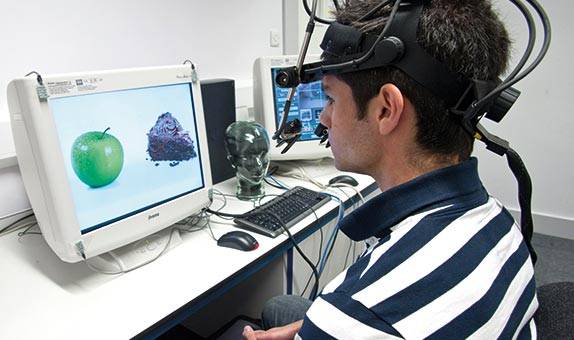
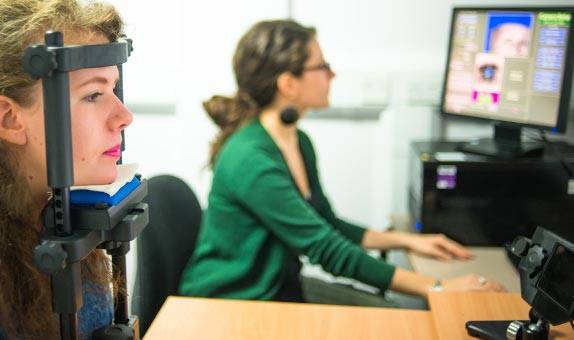
You will learn to apply behavioural science theories to real-world challenges through experiential lab-based learning using our nationally leading BRAINS (Behavioural Research Analytics In Neurotechnological Systems) Lab .
Empirical Research Project
60 credits
The module introduces you to the role that research methods play in developing discipline knowledge, and in providing knowledge that underpins evidence-based practice.
You will critically evaluate research articles and other documents from a methodological perspective, while also developing the skills to conduct high quality research.
You will be supported by a research supervisor who will act as a guide, mentor and source of information as you progress through your research project.
Healthy and Inclusive Workplaces
30 credits
According to the World Health Organisation, wellbeing comprises "quality of life as well as the ability […] to contribute to the world in accordance with a sense of meaning and purpose". This module explores this notion in work settings from two different, yet complementary perspectives:
- Mental health and its impact in work contexts, with a particular focus on mental health issues, their prevalence and risk factors.
- Wellbeing with a view to diversity and inclusion issues, which includes accounting for surface-level (demographic) and deep-level (psychological) attributes in organisational settings.
You will evaluate research evidence and explore the usefulness of behavioural science knowledge to positively influence wellbeing at work.
The module covers key content as described in the British Psychological Society's knowledge area ‘Wellbeing and work' and is aligned with the United Nations' sustainable development agenda, especially concerning ‘good health and wellbeing' (goal number 3) and ‘decent work' (goal number 8).
Leadership, Creativity and Innovation for 21st Century Organisations
15 credits
The world of work is constantly changing and facing new challenges, from how we think about work to the way we design and run organisations. A new mindset and set of skills are required to tackle these challenges.
This module will provide you with exactly that, focusing on leadership, creativity and organisational innovation approaches required for success. You will develop a full understanding of leadership, processes and practice of organisational creativity and innovation in the 21st century.
Through a combination of lectures, workshops, external speakers and industry visits, you will be exposed to issues inherent in the theory and practice of both leadership and creativity, including ethical issues.
The module embraces the United Nations' sustainable development agenda, especially concerns with 'gender equality' (goal number 5) and ‘decent work' (goal number 8). The module also incorporates key content as described in the British Psychological Society's knowledge area 'Leadership, engagement and motivation'.
Psychological Assessment for Selection and Retention
15 credits
This module explores the theory and practice of applying psychological assessments to people at work, typically focusing on assessment in selection and development contexts, and for the purpose of conducting performance appraisals.
You will learn how to apply fair, standardised and rigorous techniques for assessing people for job positions, in terms of understanding their current level of suitability and their potential to develop in the future.
You will explore contemporary issues in assessment, selection, and developmental contexts, with a focus on fairness, justice and the candidate experience, and an attention towards the implications of using virtual reality, gamification and artificial intelligence in assessment.
The module will enable you to critically appraise the suitability of assessment methodologies for both in-house and external consultancy.
Psychology of Coaching, Learning and Development
15 credits
This module explores the ways in which individuals approach career management and associated learning and development.
In addition to learning about academic and practitioner perspectives, you will reflect on your own career and development to date; assessing how your career has unfolded, your goals and motivations, and what barriers and facilitators may exist in the path of achieving those goals and motivations.
You will also study the theoretical and practical elements of the training cycle, including training needs analysis, design, implementation, evaluation and transfer of learning.
Applied Psychology at Work
30 credits
This module will support you to critically evaluate research from a methodological perspective, while also acquiring the skills needed to conduct high quality applied research.
You will explore key content as described in the British Psychological Society's knowledge areas ‘Applying psychology to work and organisations' and ‘Research design, advanced data gathering and analytical techniques'.
The module is delivered through interactive seminars with a mixture of lectures, lab-based tutorials and practical workshops. You will collect and analyse data using different research approaches, such as interviews, focus groups, survey questionnaires and experiments.
Professional Skills and Development
0 credits
This module will provide you with an opportunity to explore, understand and reflect on the various career paths of occupational and/or business psychology whilst building self-awareness to confidently position yourself effectively in today's global business world.
You will be supported to define your own personal brand and explore how to effectively communicate this through employability tools and platforms to optimise impact after graduating.
You will take part in a series of interactive sessions that are designed to challenge your current perceptions of yourself and career, as well as providing you with valuable commercial, critical and creative thinking skills.
The professional placement year is optional. It takes place after the full-time year. It allows students to do a 12-month work placement as part of their course. The work placement is an assessed part of the course and is therefore covered by a Student Route visa.
Find out more about the postgraduate work placement scheme.
Core modules
Professional Placement
120 credits
The Professional Placement module is a core module for those students following a masters programme that incorporates an extended professional placement that follows completion of the first 180 credits of taught modules and project or dissertation. It provides students with the opportunity to apply their knowledge and skills in an appropriate working environment, and to develop and enhance key employability skills and subject specific skills in their chosen subject.
It is the responsibility of individual students to locate and secure a suitable placement opportunity; this will normally involve one placement which must be completed over a minimum period of 10 months and within a maximum of 12 months. The placement must be approved by the module leader prior to commencement to ensure its suitability.
Linking with the workplace
We make sure that all the theory you learn is backed up with an understanding of how it applies in practice – the real life situations that occupational psychologists face every day – giving you the skills employers value and preparing you for the workplace.
Entry requirements
Teaching and assessment
Who teaches this course?
You will be taught by an experienced teaching team whose expertise and knowledge are closely matched to the content of the modules on this course. The team includes senior academics and professional practitioners with industry experience. Postgraduate research students may also contribute to the teaching of seminars under the supervision of the module leader. The following group of staff members are currently involved in the delivery of different elements of this course. This pool is subject to change at any time within the academic year.










Fees for this course
Additional costs
Depending on the programme of study, there may be extra costs that are not covered by tuition fees which students will need to consider when planning their studies. Tuition fees cover the cost of your teaching, assessment and operating University facilities such as the library, access to shared IT equipment and other support services. Accommodation and living costs are not included in our fees.
Where a course has additional expenses, we make every effort to highlight them. These may include optional field trips, materials (e.g. art, design, engineering), security checks such as DBS, uniforms, specialist clothing or professional memberships.
After you graduate
This course will equip you to work in a diverse range of settings. Occupational and business psychologists often work in management training centres, assessment centres, organisational development departments and for private companies. Public sector organisations, such as the civil service and the health sector employ occupational and business psychologists. This programme equips you for careers such as:
- occupational psychology consultancy;
- psychometric test publishing;
- talent management consultancy;
- recruitment;
- human resource professional;
- health and wellbeing professional;
- employee engagement professional;
- leadership expert; and
- learning and development.
Whatever career path graduates choose, the organisations they join value their ability to study and analyse staff to identify talent, then coach, develop and enhance people's motivation and performance at work.
Mature students, who often study this course so that they can change careers, sometimes choose to set up their own businesses.
Graduates can also choose to continue working towards a professional qualification in psychology, possibly becoming Chartered and Registered Occupational Psychologists following further training.
Kingston Business School: who do you want to be?
Course changes and regulations
The information on this page reflects the currently intended course structure and module details. To improve your student experience and the quality of your degree, we may review and change the material information of this course. Course changes explained.
Programme Specifications for the course are published ahead of each academic year.
Regulations governing this course can be found on our website.