

Museum and Gallery Studies MA
- Creative arts
- Creative professions
- Postgraduate
Enhance your curatorial portfolio and creative practice. Kingston University’s MA in Museum and Gallery Studies will give you the skills and knowledge you need to tap into a rewarding career in this vibrant industry.

Create and curate leading cultural experiences
Reimagine links between academia and the professional world and explore what that means for museum studies and practice.
Studying on our Museum and Gallery Studies MA programme will open new doors to both professional and research opportunities. Recent graduates have gone on to work in galleries and museums in the UK and across the world, with others progressing to PhD studies at a range of high-profile institutions.
During the course, you’ll participate in new exhibitions, cultural programming and community development. You’ll access our annual awards in Community Engagement and Outstanding Creative Practice, and feel empowered to pursue your own individual interests at the cutting-edge of creative practice.
Through a blend of practical and theoretical learning, you’ll experience collections, institutions, exhibitions and audiences. You’ll bring your knowledge together with a bespoke research project on your chosen topic.
I chose the Museum and Gallery Studies MA at Kingston University as it provided both a theoretical and practical understanding of the museum as a cultural institution. The course also approached the subject in a more imaginative, creative and experimental way than other universities.

Why choose this course
While you study, you’ll benefit from top quality teaching at Kingston University. Not only are we ranked Gold in the Teaching Excellence Framework, our work has contributed to a nomination for the Art Fund's Museum of the Year award – the biggest prize in the UK museum world.
Our Museum and Gallery Studies MA has an interdisciplinary approach. This means you'll be able to engage across artistic, urban planning, architectural and design practices. We aim to promote a sustainable, place-based perspective to understand the future of museums and galleries.
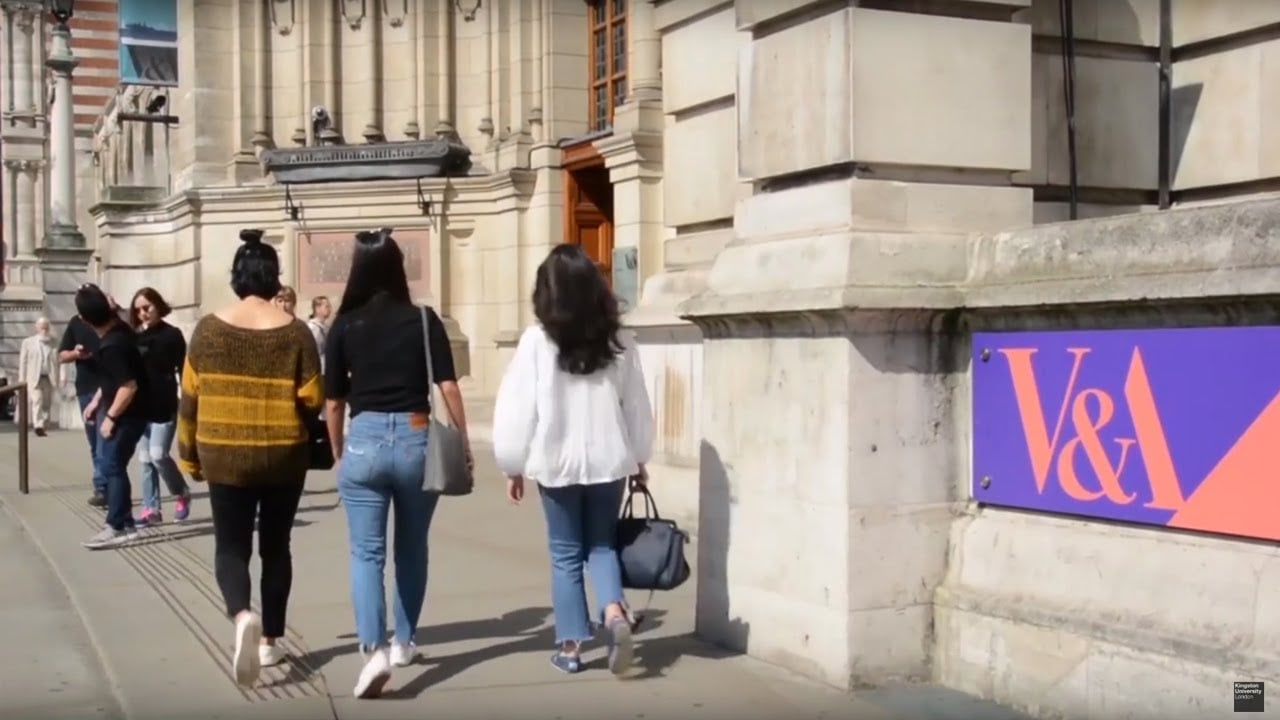
You’ll also study in Kingston upon Thames – just a 30-minute train journey from central London’s world-famous museums and galleries. We’ve partnered with sector-leading institutions such as the Museum of London, National Maritime Museum, the V&A, the Estorick Collection, and the Freud Museum, London to create a range of live projects for this course.
Plus, Kingston University has two on-site galleries, which offer exciting opportunities for career progression. Grade II-listed Dorich House is the former home of the sculptor Dora Gordine, while the Stanley Picker Gallery is one of the UK’s leading university galleries. Our Knights Park campus also has a bookable project space for large-scale exhibitions.
The Art School Experience
As part of Kingston School of Art, students benefit from joining a creative community where we encourage collaborative working and critical practice.
Our workshops and labs are open to all disciplines, enabling students and staff to work together, share ideas and explore multi-disciplinary making.

Course content
The course examines contemporary issues and practices, including those relating to collections management, interpretation, audiences and exhibition. You will study taught modules covering critical analysis and creative practice, and conduct research around the broad themes and subjects addressed by each module. As well as working with our own in-house museums, Stanley Picker Gallery and Dorich House Museum, we work with four external institutions each year to develop real-world museum projects.
You'll take five core modules, working on live projects with our partners. Four of the modules are worth 30 academic credits each and the major project is worth 60. The course totals 180 credits.
Students can choose to complete a professional placement by opting to study for an additional year. This is not a compulsory part of the course which can be completed either with the placement year or as a single year.
Year 1
You will study a series of taught modules that are concerned with issues of critical theory and analysis, research methodologies and creative practice. You will be expected to conduct research around the broad themes and subjects addressed by each module. This research will allow you to tailor your own path of study according to your particular interests and future aspirations.
Core modules
Optional placement year
Many postgraduate courses at Kingston University allow students to do a 12-month work placement as part of their course. The responsibility for finding the work placement is with the student; we cannot guarantee the work placement, just the opportunity to undertake it. As the work placement is an assessed part of the course, it is covered by a student's Student Route visa.
Core modules
Inside Museum and Gallery Studies MA
Hear from Course Leader, Dr Helen Wickstead, as she shares insights about the course, the creative opportunities available throughout your studies and working in partnership with museums and galleries in London.
I found the lectures and tutorials really inspirational and would always come out buzzing with thoughts and ideas. When I set about writing my dissertation I had help and solid, knowledgeable support.
Career opportunities
After you graduate
You’ll complete this course fully equipped to work in museums and galleries across the world. Possible institutions include the Tate Gallery, British Museum, National Gallery, Victoria and Albert Museum, Saudi Art Council and National Folk Museum of Korea. Previous graduates have also progressed onto PhD studies at University College London, Sheffield Hallam University and Royal Holloway, University of London.
Links with business and industry
We work in partnership with museums, galleries and other practitioners to develop and assess several modules on this course. We also regularly welcome visiting lecturers who are leading practitioners in their field.
Leading research
Our staff and students regularly work on collaborative and individual research projects and with local, national and international events.
Museum and Gallery Studies sits within the Visual and Material Culture Research Centre, where academics, emerging scholars, and students conduct research in a stimulating, progressive environment. Find out more about research at Kingston School of Art.
Our key research areas include:
The Museum and Gallery Studies MA provided a valuable introduction to managing museums in our modern world. We covered the myriad practicalities of the industry, from the continually shifting debate surrounding collections and their interpretation to the academic theory in which they are situated.

Teaching and assessment
You will be taught and assessed through essays, project work, portfolio, and a dissertation (12,000–15,000 words) or creative project (5,000 words and a piece of critically-informed creative practice). The course involves regular guided tours of museums and galleries across London. Students will need to pay for travel within London travel zones. There may also be optional extra visits to museums and galleries outside of London.
Fees and funding
Fees for future course years
Part time
If you start your second year straight after Year 1, you will pay the same fee for both years.
If you take a break before starting your second year, or if you repeat modules from Year 1 in Year 2, the fee for your second year may increase.
Funding support for postgraduate students
If you are a UK student living in England and under 60, you can apply for a loan to study for a postgraduate degree. Find out more through the government's website.

Scholarships and bursaries
Interested in studying Museum and Gallery Studies MA at Kingston? The following funding support is available:
Additional course costs
Some courses may require additional costs beyond tuition fees. When planning your studies, you’ll want to consider tuition fees, living costs, and any extra costs that might relate to your area of study.
Your tuition fees include costs for teaching, assessment and university facilities. So your access to libraries, shared IT resources and various student support services are all covered. Accommodation and general living expenses are not covered by these fees.
Where applicable, additional expenses for your course may include:

How to apply
Before you apply
Please read the entry criteria carefully to make sure you meet all requirements before applying.
How to apply online
Use the course selector drop-down at the top of this page to choose your preferred course, start date and mode, then click 'Apply now'. You will be taken to our Online Student Information System (OSIS) where you will complete your application.
If you’re starting a new application, you’ll need to select ‘new user’ and set up a username and password. This will allow you to save and return to your application.
Application deadlines
We encourage you to apply as soon as possible. Applications will close when the course is full.
Information required
If English is not your first language, you’ll need to provide proof of your proficiency. This is usually either an IELTS or TOEFL test certificate. If you don’t have a formal English language qualification, please let us know how you have acquired your proficiency in written and spoken English.
All communications should include your full name and Kingston University ID number. You can find this in your offer letter.
After you apply
If we need more information or want to invite you for an interview, we will be in touch directly. After that you will then hear whether your application has been successful.
Course changes and regulations
The information on this page reflects the currently intended course structure and module details. To improve your student experience and the quality of your degree, we may review and change the material information of this course. Find out more about course changes
Programme Specifications for the course are published ahead of each academic year.
Regulations governing this course can be found on our website.
What our graduates say
I particularly appreciate how practical and useful the course was. Every day I use the knowledge gained during my studies. This has been integral to the displays and ideas I have put forward during my role at the London Bus Museum.
I enjoyed the freedom of being able to follow my research interests and to develop them further in my final dissertation. The course also gave me the opportunity to gain new skills by working with creative practices not commonly associated with this field of study, such as film, scenography, and creative forms of writing.
Undoubtedly the most exciting feature of the Museum and Gallery Studies MA was the element of collaboration between the University and some of London's most famous and respected museums. This allowed students to tackle realistic, real-world challenges within the safe confines of the course's academic projects.


