Graphic Design MA
- Design
- Creative arts
- Postgraduate
Develop your creative practice in a studio-based context, so you're ready for the future social impacts and professions related to graphic design. Test the boundaries of design technologies and tools through critical thinking and ambitious projects in collaboration with your peers and external partners.

Master innovative ways of thinking and making in graphic design
Gain the future skills to excel in competitive design fields and create meaningful work.
Graphic design is framed as an expanded practice and subject of study, a launchpad to diverse careers and roles that combine creativity, social and ecological impact, and cutting-edge technology. Whilst studying a Graphic Design MA, you’ll explore and challenge assumptions about the designer as a researcher, facilitator, producer, artist and storyteller. You’ll embrace opportunities to see yourself as a teacher, author, entrepreneur, provocateur, leader and agent of change.
We encourage students to explore new and unfamiliar processes and techniques. Through experimentation and innovation you’ll develop your own disciplines and individual creative practices. In the process of reconfiguring design’s roles and responsibilities, you will learn the Future Skills needed to thrive in an age of uncertainty.
You will get to know some amazing and inspiring tutors who will always help you find the right questions to ask.
Student work


Why choose this course
The MA Graphic Design programme at Kingston School of Art takes a critical, process-based, research-oriented approach to the practice and profession of graphic design. In doing so, we work together with diverse creative industries and communities to anticipate the future potential of the discipline.
Our TEF Gold standard teaching team will ask you to reflect on your existing knowledge, skills and interests to help expand your own practice with originality, play, experimentation, ethics, positioning and inclusivity.
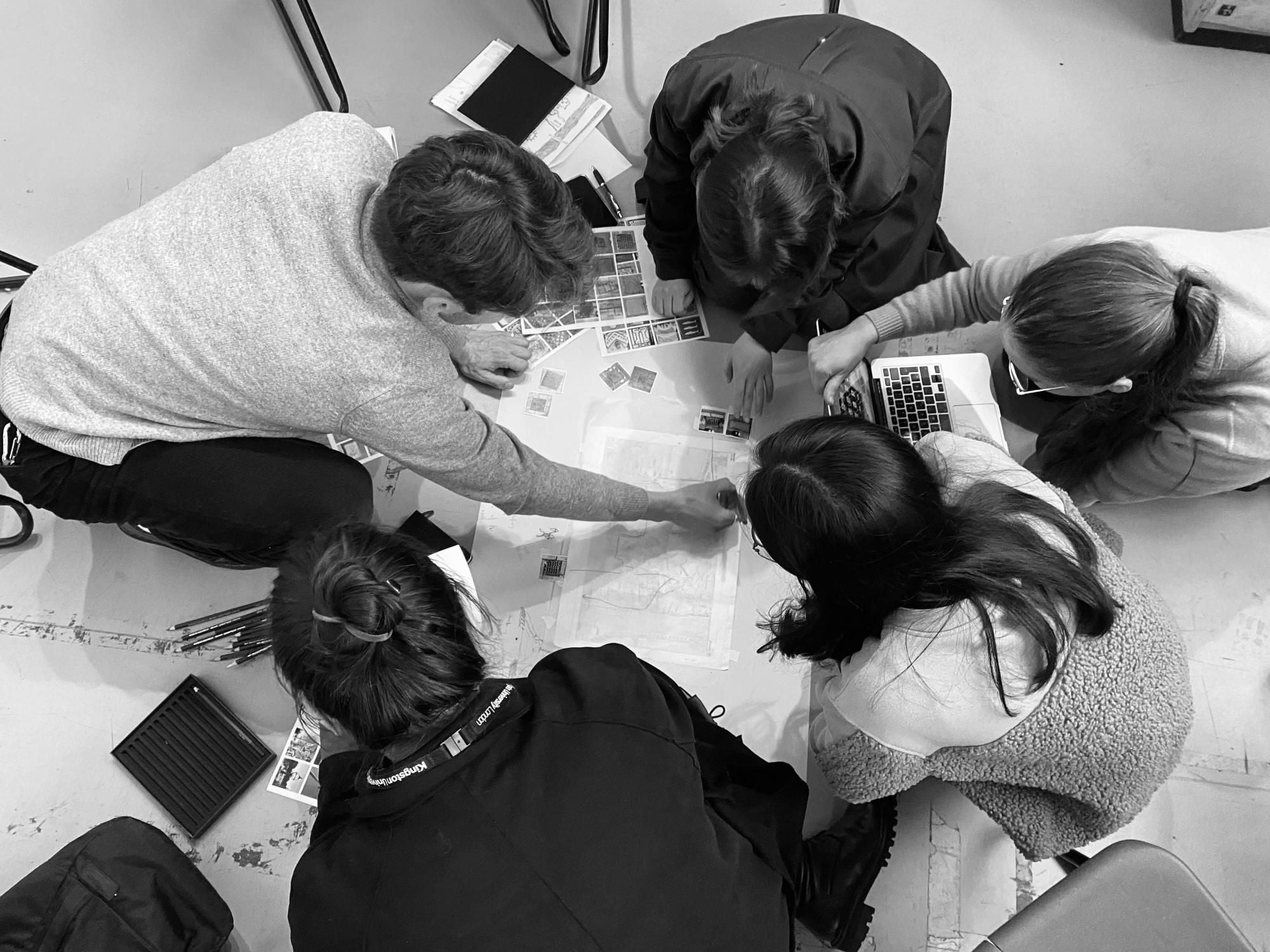
Kingston’s Graphic Design MA emphasises research and experimentation, blending theoretical and practical approaches through teamwork and studio-based learning with a focus on future design challenges. You will benefit from industry-standard technologies, exceptional workshop facilities, and expert lecturers.
The course encourages future-facing approaches to graphic design. You'll explore advanced design methods, critical thinking and practical applications, working on live projects and building a professional portfolio.
You will benefit from a variety of different learning and teaching approaches including:
- brief-led project work
- workshops that encourage creative experimentation
- individual critical reflection
- external collaborations
Studio modules include development of design skills, concepts and practice through project work. You’ll use the studio as a site for making. Reading modules focus on critical and contextual theory or issues and positioning practice. We encourage students to initiate, propose, and realise an Extended Research Project (Capstone Project) that is ambitious in scale and scope.
The Art School Experience
As part of Kingston School of Art, students benefit from joining a creative community where we encourage collaborative working and critical practice.
Our workshops and labs are open to all disciplines, enabling students and staff to work together, share ideas and explore multi-disciplinary making.

Course content
Through tutorials, field trips, lectures, seminars, workshops and research projects, you will gain the technical skills, critical tools, knowledge and confidence needed to contribute to the development of the subject and its practice. You will be asked to examine and reflect on your own practice and identify existing practice-based research methods, which will then be developed by introducing discipline specific notions of rigour, originality, play, experimentation, ethics, empathy, positioning, responsibility, and inclusivity.
Modules have been designed and aligned to ensure that you can make intellectual links between practice, critical theory and real-world scenarios. In doing so, this programme prioritises the development of individual and/or collective practices through creative thinking and making.
There is an emphasis on independent and self-directed learning. You will be given autonomy to develop an individual and/or collective practice that supports your aspirations and ambitions. Skills in critical reflection and analysis provide you with the tools necessary to make decisions about your practice and learning trajectory. You will be provided with the opportunity to initiate, propose, and realise an Extended Research Project (Capstone Project), that is ambitious in scale and scope.
Studio modules include development of design skills, concepts and practice through project work and use the studio as a site for making. Reading modules focus on critical and contextual theory or issues and positioning practice critically. Presentation modules orientate you within a professional landscape and include preparation for employment through development of future skills and career planning.
Modules
You will be encouraged to develop your understanding of the relationship between language and its visual, material and digital form; analogue and digital interactions; social and machine-led modes of communication and transmission.
Core modules
Optional placement year
Many postgraduate courses at Kingston University allow students to do a 12-month work placement as part of their course. The responsibility for finding the work placement is with the student; we cannot guarantee the work placement, just the opportunity to undertake it. As the work placement is an assessed part of the course, it is covered by a student's Student Route visa.
Find out more about the postgraduate work placement scheme.
Core modules

In the individual projects, we had two tutors who focused on different aspects of graphic design. They helped us to make our personal projects ambitious and perfect.
Career opportunities
Graduates gain advanced creative skills and industry knowledge, preparing them for roles in diverse spheres of design practice, including; branding, project management, copywriting, strategy, UX, in-house design, education, and doctoral research. Kingston fosters adaptability and innovation for the evolving job market.
Preparing for the world of work
The Graphic Design MA incorporates modules designed and aligned to make intellectual links between practice, critical theory and real-world scenarios. In doing so, this programme prioritises the development of individual and/or collective practices through creative thinking and making.
Presentation modules orientate students within a professional landscape. We include direct preparation for employment through development of future skills and career planning.
Our emphasis on independent and self-directed learning gives students autonomy to develop an individual and/or collective practice that supports their aspirations and ambitions. Skills in critical reflection and analysis provide you with the tools necessary to make decisions about your practice and learning trajectory - even beyond graduation.
Teaching and assessment
Students will benefit from a variety of different learning and teaching approaches including brief-led project work, workshops that encourage creative experimentation and individual critical reflection. We take a dialogic and discursive approach to learning and teaching, through peer-led learning, discussion groups and seminars as well as opportunities to co-construct the curriculum.
An elective range of assessment strategies and methods allows students to take responsibility for their own learning.
Kingston School of Art has an established an ethos of Thinking Through Making, underpinned by a policy that supports equal access for all students to the 2D and 3D workshops. Students are encouraged to explore new and unfamiliar processes and techniques and use these to experiment and innovate within their own disciplines and individual creative practices.
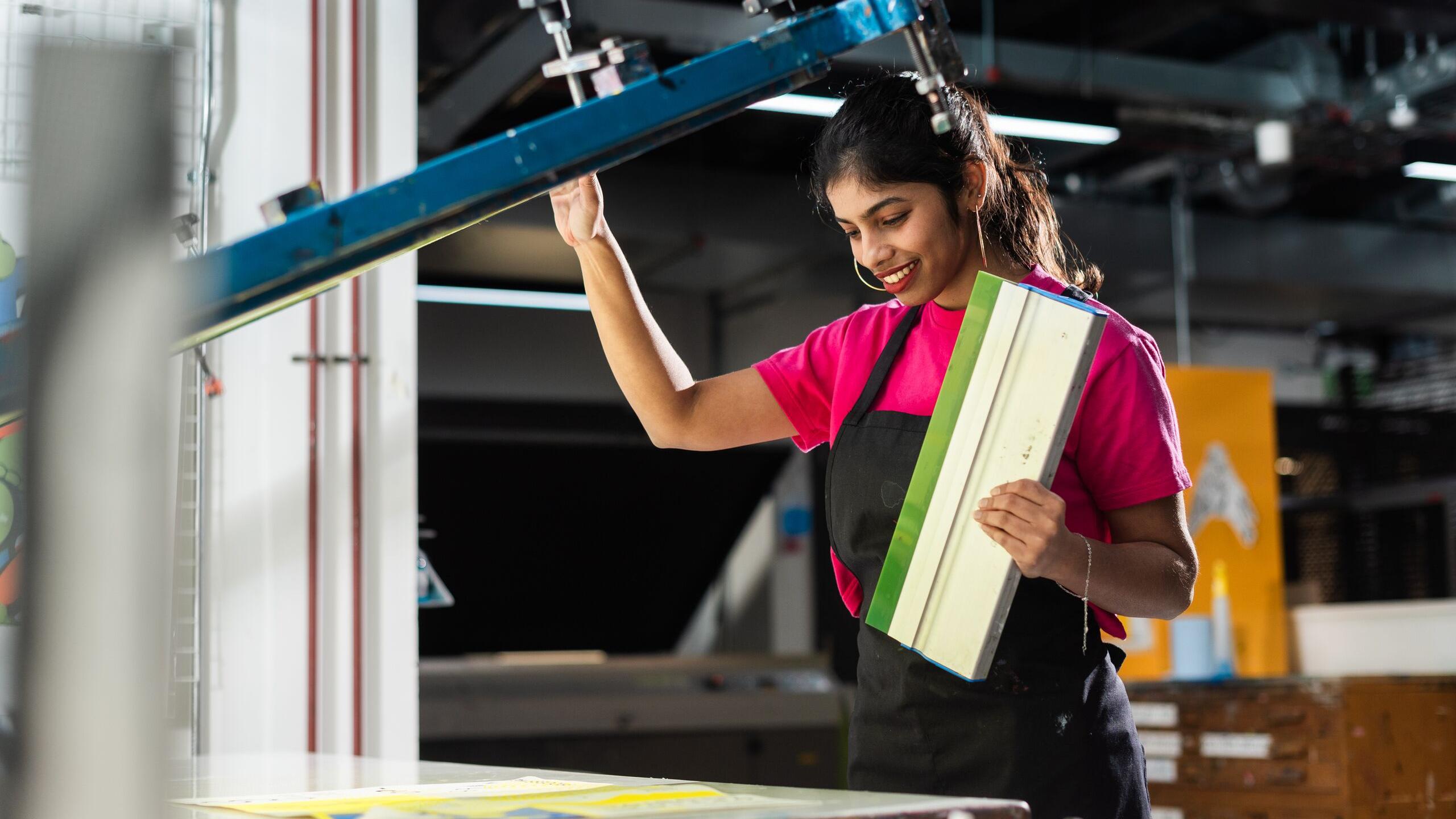
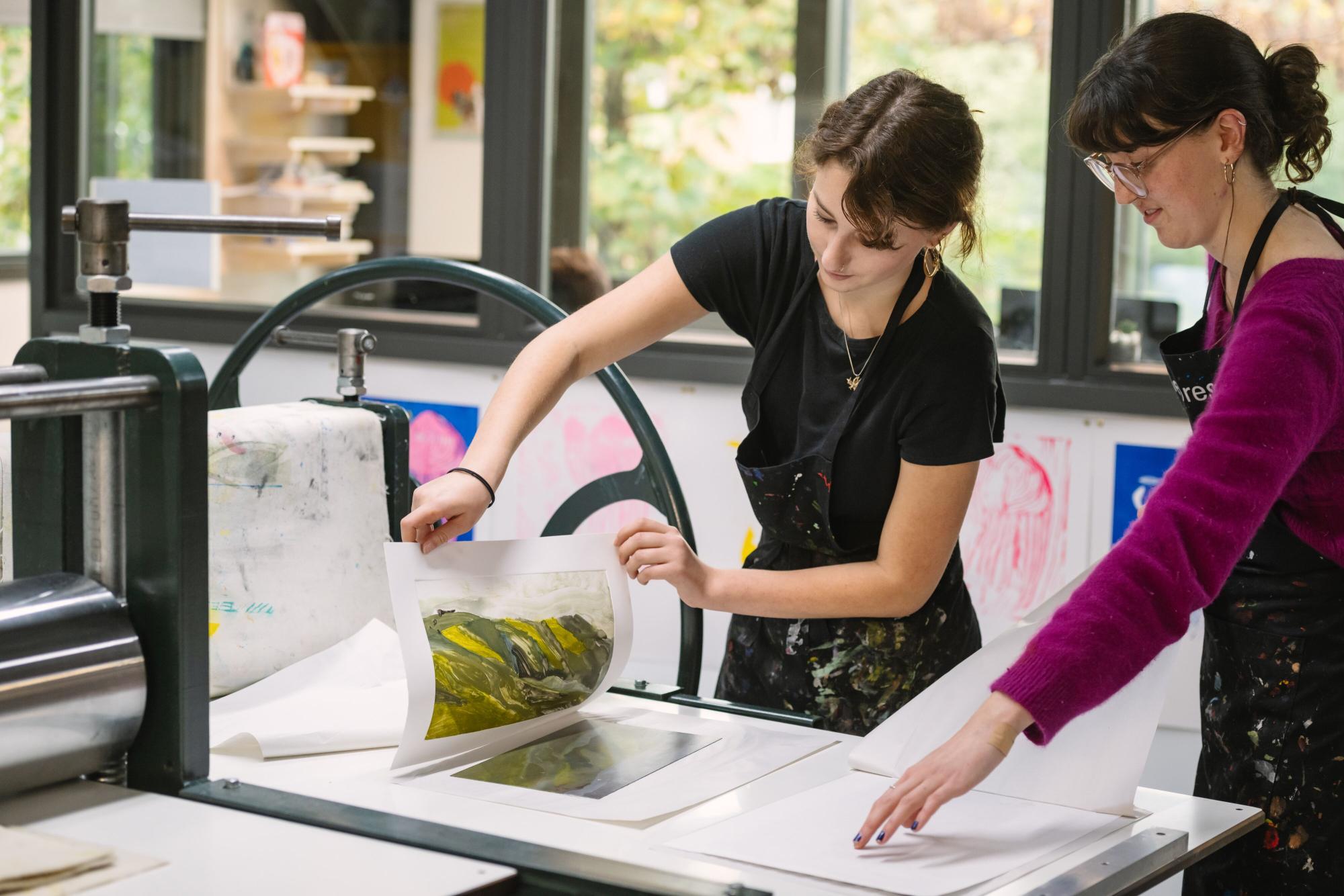
The facilities at Kingston allowed us to bring our projects to another level. There was an amazing 3D workshop, but for me the print workshop was a godsend. The skills I acquired there built my confidence and pushed me to discover new techniques and the help from technicians was second to none.
Fees and funding
Additional course costs
Some courses may require additional costs beyond tuition fees. When planning your studies, you’ll want to consider tuition fees, living costs, and any extra costs that might relate to your area of study.
Your tuition fees include costs for teaching, assessment and university facilities. So your access to libraries, shared IT resources and various student support services are all covered. Accommodation and general living expenses are not covered by these fees.
Where applicable, additional expenses for your course may include:
Fees for future course years
Part time
If you start your second year straight after Year 1, you will pay the same fee for both years.
If you take a break before starting your second year, or if you repeat modules from Year 1 in Year 2, the fee for your second year may increase.
Funding support for postgraduate students
If you are a UK student living in England and under 60, you can apply for a loan to study for a postgraduate degree. Find out more through the government's website.

Scholarships and bursaries
Kingston School of Art offers a range of postgraduate scholarships, including:

You learn to widen your skill set and get different perspectives from a very lovely, international community. If I could do it again I would. I have never felt as challenged yet so free as I felt during my time at Kingston.
How to apply
Before you apply
Please read the entry criteria carefully to make sure you meet all requirements before applying.
How to apply online
Use the course selector drop-down at the top of this page to choose your preferred course, start date and mode, then click 'Apply now'. You will be taken to our Online Student Information System (OSIS) where you will complete your application.
If you’re starting a new application, you’ll need to select ‘new user’ and set up a username and password. This will allow you to save and return to your application.
Application deadlines
We encourage you to apply as soon as possible. Applications will close when the course is full.
Information required to confirm your place
If English is not your first language, we will require proof of your proficiency to allow us to confirm your place on the course. This will generally be either an IELTS or TOEFL test certificate, which can be forwarded to us after you have submitted your application. If you do not hold a formal English language qualification, please indicate how you have acquired your proficiency in written and spoken English.
After you have applied
For courses that select on application alone, applicants should normally receive an initial decision or a request for more information within four to six weeks of receipt of their application. Our admissions team will notify you of the decision by email.
Learn more about the postgraduate application process in detail.
Course changes and regulations
The information on this page reflects the currently intended course structure and module details. To improve your student experience and the quality of your degree, we may review and change the material information of this course. Find out more about course changes
Programme Specifications for the course are published ahead of each academic year.
Regulations governing this course can be found on our website.
What our students and graduates say
I had a really great experience on the Graphic Design MA. We undertook group as well as personal projects. For the group project we worked with students from different design disciplines.
This was not easy for me as English is not my native language, but these projects inspired me and I was positively influenced by the different perspectives from the diverse fields of design of my fellow group members.
I cannot be grateful enough for the chance to study in a cool, relaxed and inspiring space where I could do anything I (literally) wished. If you get up with the wild idea of making an alphabet out of 2-metre-long wooden letters or to research and screen print rainbows for a month – and you can also explain why you want to do it – you will not just have a proper technical and theoretical background to support you, but also people who will encourage you.