Sustainable Design MA
- Design
- Postgraduate
Future-proof your career with critical, innovative and strategic thinking skills. Kingston University’s Sustainable Design MA will help you channel your creativity towards building a more sustainable, inclusive and equitable society.

Redesign design
Challenge the industry to rethink its practices
Studying this masters in Sustainable Design will give you the critical thinking skills and practical experience you need to succeed in further study or employment.
During the course, you’ll explore innovative, practical, provocative, speculative and radical ways to realise sustainable visions through design. You’ll examine the diverse agendas that sustainability addresses and the intersectional challenges it presents.
You’ll learn from expert tutors, professional designers and specialist practitioners, as well as field trips, workshops and talks from a wide range of sustainability-focused organisations.
And with London just a 30-minute train journey from the University, you’ll have easy access to the capital’s world-famous museums and galleries.
Through a blend of making, testing, questioning and imagining, you’ll boost your sustainability literacy and design meaningful responses to challenges you care about.
This socially-led, multi-disciplinary course will challenge you to ask what’s next for the design industry. You’ll consider how to address the climate emergency, imagine a more sustainable future and design in new, more innovative ways.
You’ll join a collaborative cohort of graphic designers, product designers, service designers, furniture designers, textile designers, digital designers, experience designers, fashion designers, interior designers, architects, illustrators, filmmakers, strategists and more.
Whatever your background, this programme will push you beyond the boundaries of your existing design disciplines. There’s even the opportunity to boost your employability with the stand-alone Design for Social Innovation module.
This Sustainable Design MA is ideal for showing how designers need to adapt and respond better to current challenges we face locally and globally. The lectures were exceptional, with a breadth of industry experience led by one of the best course leaders a university could have. We benefited from being taught every pillar of sustainability, and being able to dive deeper into how it all joins up and relates to us personally.
Student work

Plastik Protein
A chocolate bar made with plastic-eating mushrooms. In 2049 landfills are overflowing, oceans are toxic, and microplastics flow freely through human bloodstreams. Scientists turn to fungi’s ability to biodegrade plastic. Each bar tells the story of the waste it has cleansed – PET bottles, polyurethane foam, plastic grocery bags. By Odette Dierkx.

Rooted In Place
What if we built homes only from what the land gives us? An interior space using materials made entirely from United Arab Emirates’s natural resources: Dunecrete, Datecrete, Desert Board and Mudbrick. Instead of importing and consuming, the space celebrates what is already abundant and local. By Layla Ghaddar.

Impressions
A board game designed to spark conversations that might not otherwise happen. Using abstract stamps and open-ended prompts, players slow down, listen, and reflect before responding – creating space for dialogue on topics that can feel difficult to raise. By Josie Bachman.

The 79th Organ, 2221
The organ attaches itself to the lower abdomen, close to the liver and kidneys, working in tandem with your natural filtration system. Microscopic needles pierce through tissue, extracting microplastics from your bloodstream and channelling them through a specialized filter lined with fungal mycelium. By Odette Dierkx.

Remnt, 2142
A single-use inhalant. A capsule. A relic. From 2050 – the year the last tree fell – real fragments of the earth, illicitly smuggled from the Spitsbergen seed vault, pressed into perfect, airtight cubes. More than an olfactant – this is a sensory artefact. By Josie Bachman.

Makers Map
A printed and digital guide that showcases crafting communities across Kingston Borough. From community-led programs to charity-driven efforts, the map shines a light on grassroots initiatives that uplift and enrich the local community. By Odette Dierkx.
Why choose this course
While you study, you’ll benefit from top quality teaching at Kingston University. Not only are we ranked Gold in the Teaching Excellence Framework, our staff are experts in sustainable, social, participatory, strategic and service design.
The art school experience
As part of Kingston School of Art, you’ll benefit from joining a creative community where we encourage collaborative working and critical practice. Our workshops and studios are open to all disciplines, enabling students and staff to work together, share ideas and explore multi-disciplinary making.
University museums and galleries
Kingston University has two on-site galleries, which offer exciting opportunities for career progression. Grade II-listed Dorich House is the former home of the sculptor Dora Gordine, while the Stanley Picker Gallery is one of the UK’s leading university galleries. Our Knights Park campus also has a bookable project space for large-scale exhibitions.
Workshops and studios
Explore, collaborate and share ideas in our state-of-the-art workshop facilities, designed by Stirling Prize-winning studio, Haworth Tompkins. Facilities are open to all Kingston University students, and include:
- 3D workshops, with spaces for ceramics, concrete, resin-casting, plastics, metalwork, woodwork, bronze-casting foundry, set design and large scale model making
- Animation and post-production studios
- A digital media workshop
- Knitting and sewing workshops with digital and analogue facilities, plus a working dress archive including from 1750 to the present day
- A HackSpace for collaborative, creative, solutions-focused projects
- A letterpress and printmaking workshop
- A moving image workshop, with studios, an editing suite and industry-standard equipment
- A fully-equipped photography workshop
The Art School Experience
As part of Kingston School of Art, students benefit from joining a creative community where we encourage collaborative working and critical practice.
Our workshops and labs are open to all disciplines, enabling students and staff to work together, share ideas and explore multi-disciplinary making.

Student work

WOW Crisps
A speculative proposal for a more sustainable food system, harnessing the algae cultivation and processing within the design of a circular economy. By Gexuan Zhang.

Balsam Biofilm
A new bioplastic from Himalayan Balsam - an abundant but highly invasive species that currently threatens biodiversity. By Liwei Liu.

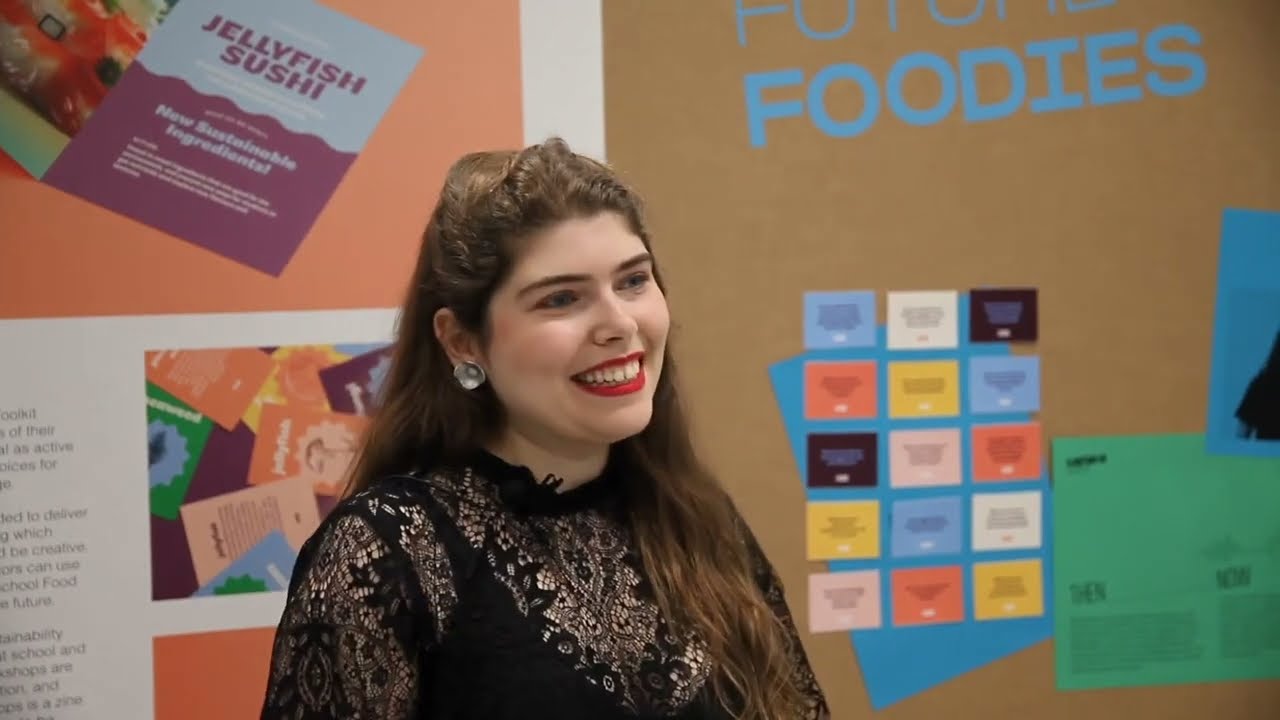
Future Foodies
A workshop toolkit that enables students to become designers of their future food - recognising teens' potential as participants in pollicy making, leadership voices for food systems, and ambassadors for change. By Mariana Costa.

The Swap
A board game designed to reconstruct gender role ideologies by challenging inequalities and platforming discussion. By Shuozhen Fan.

Travel Memories in the Making
A series of workshops for travellers, encouraging genuine community engagement and cultural exchange, in contrast to the unstainable consumerism of mass-tourism.

KEEP IT! KASHI
A design fiction presenting life in 2070, that highlights the existing potential of the Indian town of Kashi, when seen from the perspective of planetary and social wellbeing, in contrast to the imperative of growth. By Shivangi Singhal.

PUKAAR
Participatory textile artworks and exhibition design aimed at provoking and informing policymakers to reassess provision of reporting and support mechanisms for victims of abuse. By Anurag Wallace.
Course content
The course offers diverse approaches to designing, including research techniques and ethics, user-centred and participatory methods, experimental making, prototyping and user-testing. You'll work in the studio and workshops on specific projects reflective of the modules comprising the course. Activities can include specialist lectures, workshop inductions, group and individual tutorials, seminars and symposiums.
You'll be expected to think critically about both sustainability and design practice, and to engage with related theoretical and contextual studies, through curated reading lists and lectures. You'll be encouraged to bring your personal interests and experiences to the project briefs – in order to explore aspects of sustainability that resonate with you, and to become a Citizen Designer.
You'll need to be self-directed, reflective and practical in your approach, with direction and purpose.
This course is part of the Design School's postgraduate programme. The structure, shared with students from other design courses, enables you to explore your individual specialist interests within an integrative learning environment that provides an understanding of the value and role of interdisciplinary methods and ways of working. The influences and impact of thinking from other related design subjects on your own specialist study is an important aspect of the identity and the community of interdisciplinary practice at masters level in the Design School.
Please note: Optional modules only run if there is enough demand. If we have an insufficient number of students interested in an optional module, that module will not be offered for this course.
Modules
Core modules
Optional placement year
Many postgraduate courses at Kingston University allow students to do a 12-month work placement as part of their course. The responsibility for finding the work placement is with the student; we cannot guarantee the work placement, just the opportunity to undertake it. As the work placement is an assessed part of the course, it is covered by a student's Student Route visa.
Find out more about the postgraduate work placement scheme.
Optional modules
Stand-alone module: Design for Social Innovation
Design for Social Innovation
Design for social innovation is an emerging mode of design practice gaining popularity and interest both within the design professions and more widely, for example in the public sector. Local authorities are increasingly looking to employ designers to redesign public services and to deliver their programmes more effectively.
There is therefore demand for training in design for social innovation. This is a distinguishing feature of the Sustainable Design MA, but there are designers and other practitioners who do not yet wish to embark on a full MA course. This module is for them.
The module will be based around a 'live' project brief and include sessions with leading practitioners in the field.
"This module will be useful to designers and those who come from the world of frontline social impact services, who want to learn more about innovation and design - and to gain practical experience with which to develop." Nat Hunter (Chief design officer, Design Council)
About the stand-alone module
This is currently a course-specific module within the Sustainable Design MA. It is also available as a credit-bearing, stand-alone module, whereby it can be taken without enrolling on the Sustainable Design MA (although the credits could be used subsequently for entry to the course). Students enrolled on the MA and stand-alone modules are part of the same module cohort, participate equally, and have the same module experience.
Sessions
Please note that this is an indicative list of sessions and is not intended as a definitive list.
- The role for design in social innovation
- Design process models (including the Double Diamond framework)
- User-centred design research methods (such as personas, journey mapping, role playing, user diaries)
- Designing your design brief
- Physical prototyping of your concepts
- Research ethics in social innovation
- Design studio visit(s)
Dates
This is a 12-week module.
- Ten full teaching days (10.30am–1pm, 2–4.30pm), one day per week (specific day to be confirmed)
- One self-directed project day (Week Six, the University's Enrichment Activity Week)
- Some teaching days include individual and group tutorials to support development of your work for submission for assessment. This means you will not attend for the whole day on those days.
Cost
The stand-alone module Design for Social Innovation is charged on a pro rata basis from the Home full-time MA fee (one sixth).
Apply or enquire
Please email Zoe Bather with any enquiries about this stand-alone module.
The Sustainable Design course at Kingston has changed the way I design for good. The way sustainability is addressed in this course is holistic and goes far beyond the lecture slides and usual green clichés. Students reflect on different ways in which they can contribute to tackling the biggest problem of our time – enhancing the well-being of people while protecting the environment, in a positive and thoughtful way.

Career opportunities
After you graduate
You’ll complete this course with the skills and knowledge needed to tap into a range of opportunities. Recent graduates have progressed to roles in social innovation, strategy, sustainability consultancy and design management. Others are working in communication, circular, biophilic, policy and service design.
Possible locations include agencies, start-ups, social enterprises, charities, government organisations – or maybe even your own company.
Explore potential graduate career paths:
- Futerra
- Climate Labs
- Design Council
- RSA
- Arc Americas
- Connected Places Catapult
- Innovation Unit
- EY Seren
- Engine UK
- Nexer Digital
- Transform
- Sustrans
- Simply Sustainable
- Fuse London
- Plant Designs
- Surrey County Council.
Links with business and industry
We partner with a range of leading organisations, including the Design Council, Futerra, Makerversity, Active Minds and Kingston Hive. During your studies, you’ll connect with a variety of contemporary design practitioners and build contacts in the industry. You’ll also benefit from working on collaborative projects with external employers and professionals.
The Design Research Centre
Research is a big part of our work in design, which means your tutors will bring best practice and cutting-edge thinking to their teaching. Kingston University’s Design Research Centre is a creative hub for cultural, environmental and presentational engagement. Research focuses on five key areas:
- Curating the contemporary
- Design innovation
- Design for environments
- Design for screen
- Sustainability
Teaching and assessment
Assessment will be made at the completion of each module. Module marks are added to achieve a total final mark. Assessment will be made through practical design projects, presentations, and a final major project.
Fees and funding
Fees for future course years
Part time
If you start your second year straight after Year 1, you will pay the same fee for both years.
If you take a break before starting your second year, or if you repeat modules from Year 1 in Year 2, the fee for your second year may increase.
Funding support for postgraduate students
If you are a UK student living in England and under 60, you can apply for a loan to study for a postgraduate degree. Find out more through the government's website.

Scholarships and bursaries
Interested in studying an MA in Sustainable Design at Kingston? The following funding support is available:
Additional course costs
Some courses may require additional costs beyond tuition fees. When planning your studies, you’ll want to consider tuition fees, living costs, and any extra costs that might relate to your area of study.
Your tuition fees include costs for teaching, assessment and university facilities. So your access to libraries, shared IT resources and various student support services are all covered. Accommodation and general living expenses are not covered by these fees.
Where applicable, additional expenses for your course may include:
How to apply
Before you apply
Please read the entry criteria carefully to make sure you meet all requirements before applying.
How to apply online
Use the course selector drop-down at the top of this page to choose your preferred course, start date and mode, then click 'Apply now'. You will be taken to our Online Student Information System (OSIS) where you will complete your application.
If you’re starting a new application, you’ll need to select ‘new user’ and set up a username and password. This will allow you to save and return to your application.
Application deadlines
We encourage you to apply as soon as possible. Applications will close when the course is full.
Apply for the standalone module
If you want to apply for the standalone module, complete the application form and create an electronic portfolio showcasing three relevant projects (maximum 10 slides, 10MB). Send both documents to the course leader, Paul Micklethwaite at [email protected].
After you apply
If the admission tutor wants to see your portfolio, we will email asking you to upload your zipped portfolio to the OSIS portal within three weeks. If we need more information or want to invite you for an interview, we will be in touch directly. After that you will then hear whether your application has been successful.
Course changes and regulations
The information on this page reflects the currently intended course structure and module details. To improve your student experience and the quality of your degree, we may review and change the material information of this course. Find out more about course changes
Programme Specifications for the course are published ahead of each academic year.
Regulations governing this course can be found on our website.
What our students and graduates say
The course was more than I expected. I had the chance to deconstruct the concept I had of sustainability and social innovation, and then rebuild and re-frame it with a new postmodern perspective. It really helped me understand my role as a designer, and what I can offer.
For me, the course was an ideal combination of practical research methods and theory, of innovation and design, all with a continuous focus on sustainability. Being on the course broadened my horizons and gave me the confidence and a setting from which to explore topics I wouldn't have otherwise considered.