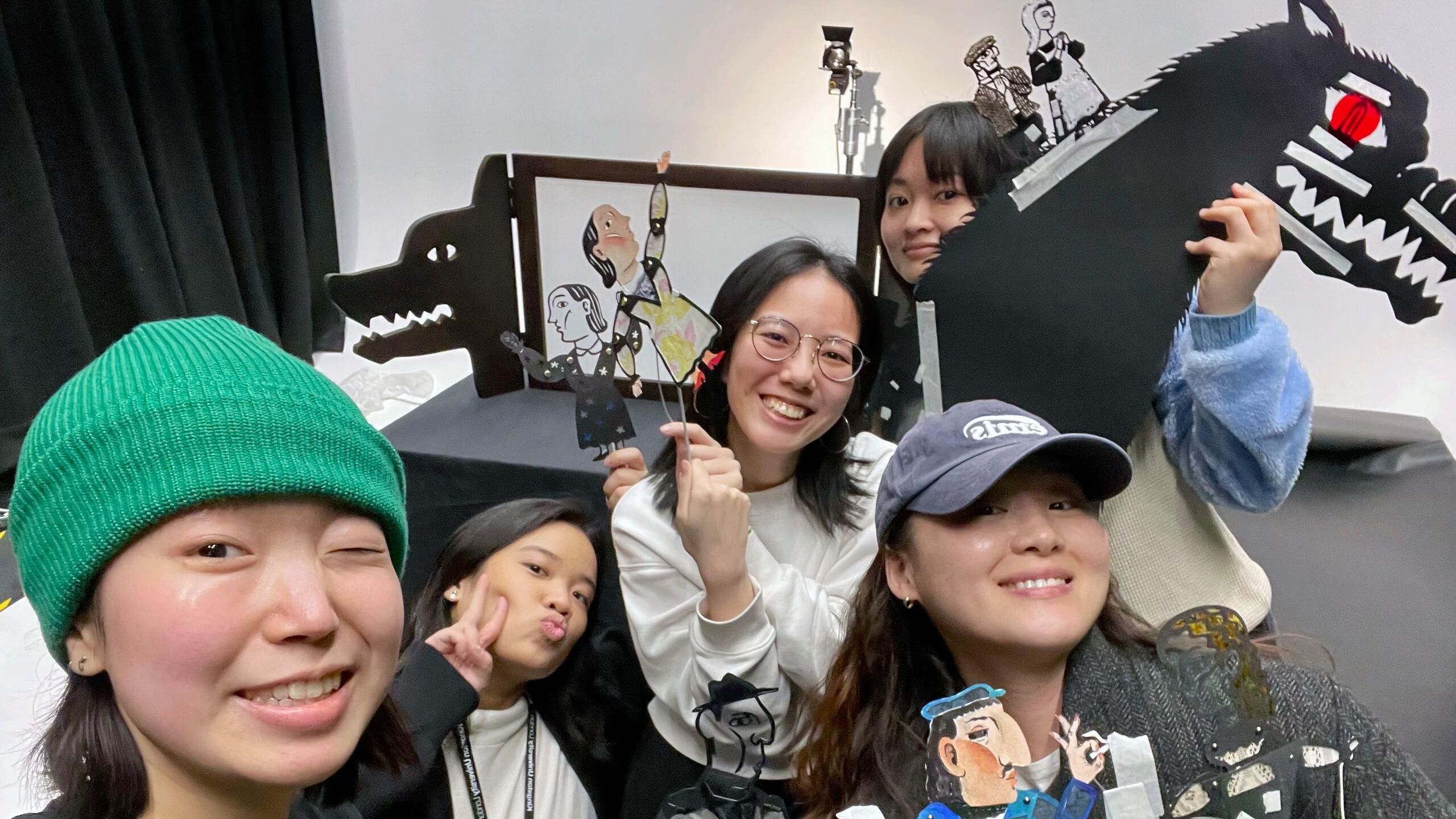
Illustration MA
- Creative arts
- Postgraduate
Build your visual practice. Kingston University’s MA in Illustration will give you the critical, creative and research skills needed to refine your practice and stand out in the professional world.
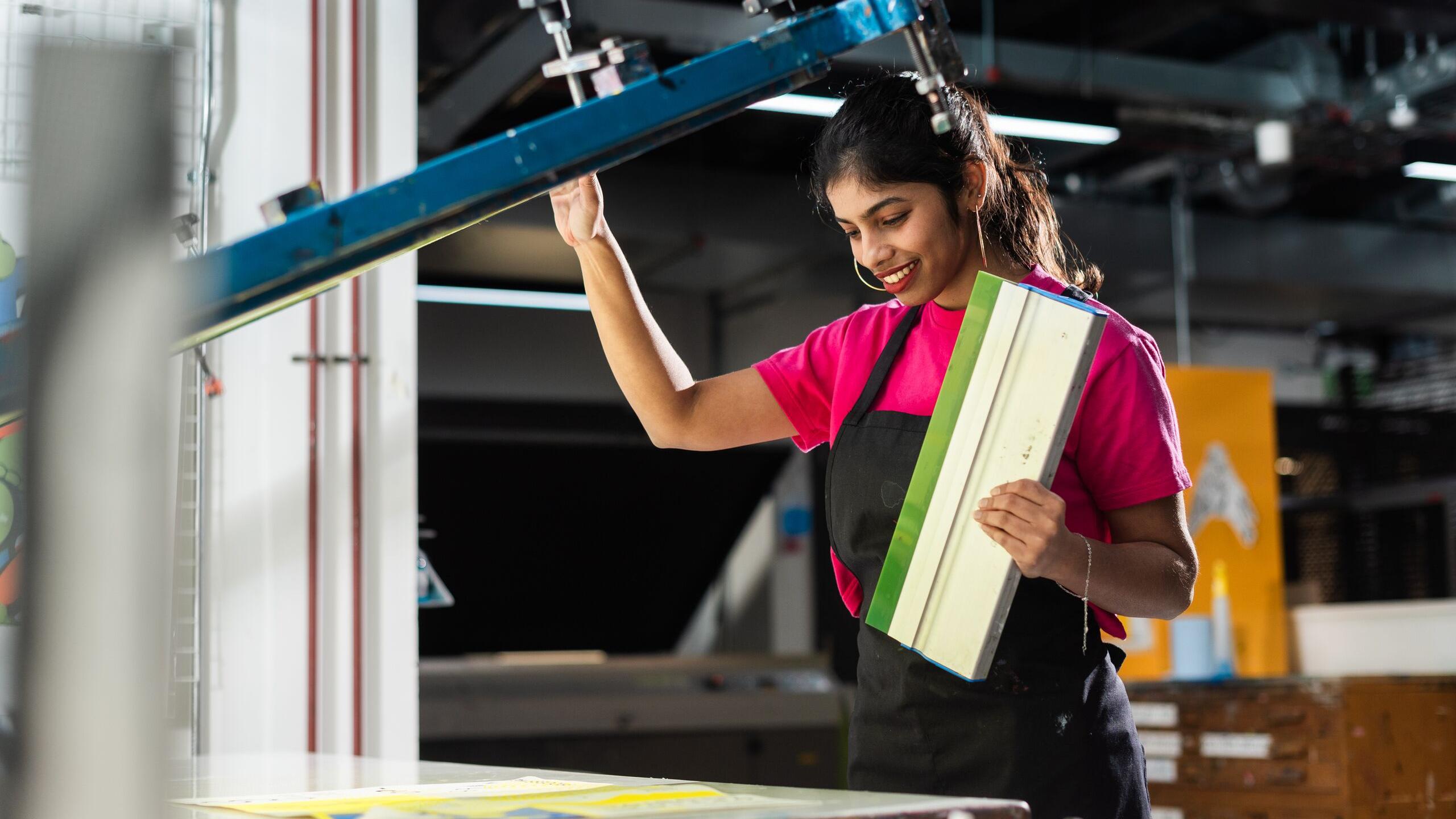
Realise the true potential of practice-based illustration
You’ll understand image production through connections between images, words, situations, objects, people and places.
Studying this Illustration MA at Kingston University will prepare you for a broad range of professional opportunities. Recent graduates have gone on to roles in publishing, curation, engagement, teaching and more.
Through tutorials, field trips, lectures, seminars, workshops and research projects, you’ll gain technical tools, knowledge and confidence. You’ll share two modules with students from across the design school, explore diverse disciplinary settings and unpack the social and political aspects of illustration.
Every part of this course encourages creative experimentation and individual critical reflection. You’ll take a dialogic, discursive approach, with plenty of peer-led learning, discussion groups and opportunities to co-create the curriculum. You’ll embrace process as a way of creating meaning, and craft thoughtful and illuminating visual stories through a carefully curated programme.
During the course, you’ll examine discipline-specific ideas about rigour, innovation, positioning and inclusivity.
Through a blend of knowledge-building and debate, you’ll bring your unique perspective to examine existing illustrative practices. You’ll explore the challenges, ethics and impact of visual representation across global professional and public territories.
This course aligns with SHAPE, the British Academy’s collective name for the Social Sciences, Humanities and Arts.

Dear Gilan — Aida Sajedi

Xiaoshanshui — Cecilia Liu

Phantom Settlement — Chin Ling Chang

Inbetween — Rebecca Choi

I Will Walk Towards a Tree — Zijing GaoT

Vulva of the Tree — Ziyun Chen

Why choose this course
While you study, you’ll benefit from top quality teaching at Kingston University. We are ranked Gold in the Teaching Excellence Framework, and our state-of-the art facilities create the perfect modern learning environment.
As part of Kingston School of Art, you’ll benefit from joining a creative community where we encourage collaborative working and critical practice. Our workshops and studios are open to all disciplines, enabling students and staff to work together, share ideas and explore multi-disciplinary making.
Here’s what you’ll have access to as an MA Illustration student:
The Art School Experience
As part of Kingston School of Art, students benefit from joining a creative community where we encourage collaborative working and critical practice.
Our workshops and labs are open to all disciplines, enabling students and staff to work together, share ideas and explore multi-disciplinary making.

Course content
Through tutorials, field trips, lectures, seminars, workshops and research projects, you will gain the technical skills, critical tools, knowledge and confidence to contribute to the development of the subject and its practice. You will be asked to examine your own practice and identify existing practice-based research methods. These will then be developed by introducing discipline-specific notions of rigour, originality, ethics, positioning and inclusivity.
Modules have been designed and aligned to ensure that you can make intellectual links between practice, critical theory and real-world scenarios. In doing so, this programme prioritises the development of an individual practitioner and their creative work.
There is an emphasis on independent and self-directed learning where you have autonomy to develop a practice that supports your aspirations and ambitions. Skills in critical reflection and analysis provide you with the tools necessary to make decisions about your practice and learning trajectory. You will be provided with the opportunity to initiate, propose, and realise an Extended Research Project (Capstone Project), that is ambitious in scale and scope.
Studio modules include development of illustration skills, concepts and practice through project work and use the studio as a site for making. Reading modules focus on critical and contextual theory or issues and positioning practice critically. Presentation modules orientate you within a professional landscape and include preparation for employment through development of future skills and career planning. Reading and Presenting modules are shared with Animation MA and Graphic Design MA Programmes.
Year 1
Core modules
Optional placement year
Many postgraduate courses at Kingston University allow students to do a 12-month work placement as part of their course. The responsibility for finding the work placement is with the student; we cannot guarantee the work placement, just the opportunity to undertake it. As the work placement is an assessed part of the course, it is covered by a student's Student Route visa.
Find out more about the postgraduate work placement scheme.
Core modules

Career opportunities
After you graduate
You’ll complete this course equipped for opportunities in a range of areas, from publishing and commissions to emerging areas in research and public engagement.
Recent graduates have progressed to roles in project consultancy, direction and management. Others work in publishing, curation, exhibition and engagement in the cultural sector and beyond. You could even go on to teach and lead higher education initiatives that expand how images can contribute globally.
Links with business and industry
On this course, you’ll benefit from our strong national and international industry links. We collaborate with many organisations to make sure modules address the changing nature of communication design in the global workplace.
Here are a few examples of our recent connections:
- We recently produced a pan-European magazine with Illy Coffee in Italy.
- London’s Draught Associates have offered portfolio reviews, professional guidance and internships.
- Students have regular opportunities to add to their portfolio through competitions.
- We’ve collaborated with Hongik University in Korea, focusing on new technologies, professional networks and new opportunities for designers.
Teaching and assessment
Students will benefit from a variety of different learning and teaching approaches including brief-led project work, workshops that encourage creative experimentation and individual critical reflection. We take a dialogic and discursive approach to learning and teaching, through peer-led learning, discussion groups and seminars as well as opportunities to co-construct the curriculum. An elective range of assessment strategies and methods allows students to take responsibility for their own learning.
Kingston School of Art has an established an ethos of Thinking Through Making, underpinned by a policy that supports equal access for all students to the 2D and 3D workshops. Students are encouraged to explore new and unfamiliar processes and techniques and use these to experiment and innovate within their own disciplines and individual creative practices.
Fees and funding
Fees for future course years
Part time
If you start your second year straight after Year 1, you will pay the same fee for both years.
If you take a break before starting your second year, or if you repeat modules from Year 1 in Year 2, the fee for your second year may increase.
Additional course costs
Some courses may require additional costs beyond tuition fees. When planning your studies, you’ll want to consider tuition fees, living costs, and any extra costs that might relate to your area of study.
Your tuition fees include costs for teaching, assessment and university facilities. So your access to libraries, shared IT resources and various student support services are all covered. Accommodation and general living expenses are not covered by these fees.
Where applicable, additional expenses for your course may include:
Funding support for postgraduate students
If you are a UK student living in England and under 60, you can apply for a loan to study for a postgraduate degree. Find out more through the government's website.

Scholarships and bursaries
Interested in studying an MA in Illustration at Kingston? The following funding support is available:

How to apply
Before you apply
Please read the entry criteria carefully to make sure you meet all requirements before applying.
How to apply online
Use the course selector drop-down at the top of this page to choose your preferred course, start date and mode, then click 'Apply now'. You will be taken to our Online Student Information System (OSIS) where you will complete your application.
If you’re starting a new application, you’ll need to select ‘new user’ and set up a username and password. This will allow you to save and return to your application.
Application deadlines
We encourage you to apply as soon as possible. Applications will close when the course is full.
After you apply
If the admission tutor wants to see your portfolio, we will email asking you to upload your zipped portfolio to the OSIS portal within three weeks. If we need more information or want to invite you for an interview, we will be in touch directly. After that you will then hear whether your application has been successful.

Course changes and regulations
The information on this page reflects the currently intended course structure and module details. To improve your student experience and the quality of your degree, we may review and change the material information of this course. Find out more about course changes
Programme Specifications for the course are published ahead of each academic year.
Regulations governing this course can be found on our website.