Graduate Diploma Creative Practice
- Design
- Postgraduate
If you wish to move into a creative field or strengthen your portfolio for postgraduate study and already hold a bachelor’s degree, Kingston School of Art’s Graduate Diploma in Creative Practice will provide you with the practical, intellectual and professional tools to take the next step.
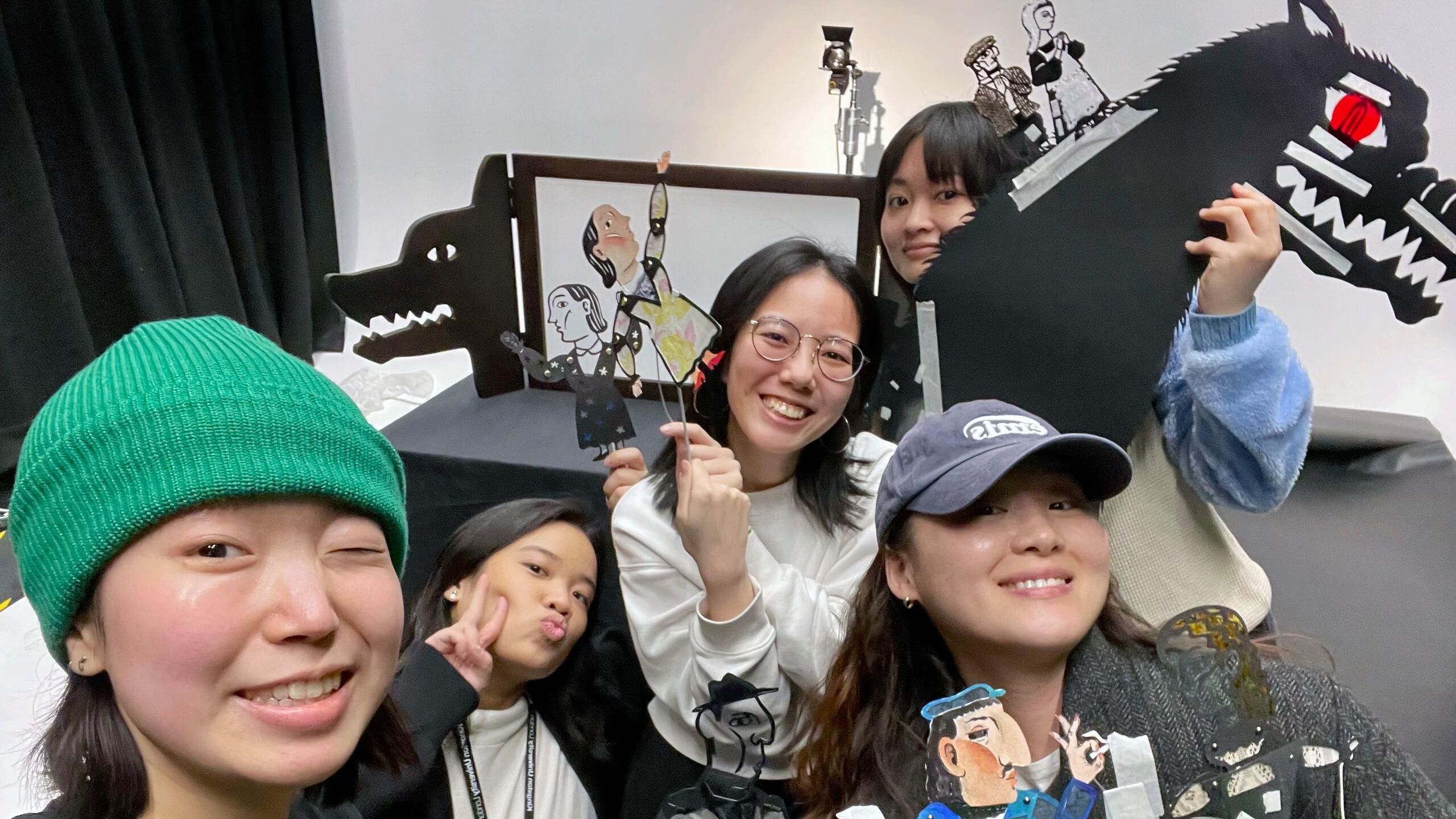
Accelerate your creativity
Specialise in fashion, graphic design, interior & product design or illustration Animation.
On this intensive one-year course, you can find your creative direction and the confidence to progress to postgraduate study. Focusing on experimentation, reflection and professional portfolio-building, you’ll develop your creative practice through studio projects, critical discussion and industry-informed assignments designed to reflect contemporary art and design processes.
Bespoke delivery
You'll be able to choose from one of four bespoke pathways:
- Fashion
- Graphic Design
- Illustration Animation
- Interior & Product Design
Creative destination
Whatever pathway you choose, you'll be able to learn alongside Kingston’s vibrant postgraduate community. You can then progress to a practice-based masters course or graduate ready for roles in design, publishing, media, film, fashion, advertising and more.
Located in Kingston upon Thames, our riverside campus offers a calm, green environment for creative focus, just 30 minutes from central London’s museums, studios and galleries. It’s an ideal balance of safety, space and cultural access.
Transitioning from a career in law to communication design was a significant step and the Creative Practice diploma was essential in bridging that gap. The curriculum provided me with the opportunity to fully examine my artistic voice and develop the key skills necessary for a career in illustration. I valued the supportive atmosphere fostered by the friendly tutors and knowledgeable technical staff, which created an ideal environment for this intensive change.
Student work - Illustration Animation pathway
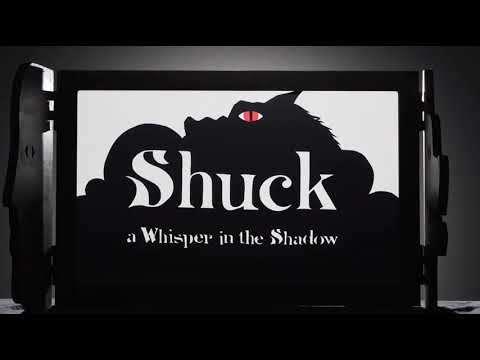
Shuck by Min Jung Kang

Kaylee Lu

Cyber Tomb by Chanjuan Peng

Chih Liang Liu

Jiahao Zhao
Why choose this course
While you study, you’ll benefit from top quality teaching at Kingston University. Not only are we ranked among the Top 10 in the UK for Art & Design (The Complete University Guide 2026), but we are also rated Gold in the Teaching Excellence Framework – one of just 26 universities in the UK to have achieved Gold in all three categories.
- A direct route to postgraduate study: The vast majority of Creative Practice students progress to a Master’s degree at Kingston School of Art.
- Build a professional creative portfolio: Explore conceptual, technical and reflective skills through a range of studio and self-initiated projects that prepare you for advanced creative study.
- A supportive global community: Learn in small groups with dedicated tutor guidance and a welcoming international cohort — including many students from across East and Southeast Asia — all sharing ideas and creative cultures.
- Calm to create, London to explore: Enjoy the green, riverside setting of Kingston upon Thames, with affordable living and quick access to central London’s creative scene.
- Celebrated by students: The course consistently receives excellent feedback for its supportive teaching, friendly atmosphere and the confidence it builds in creative thinking — reflected in student satisfaction surveys and social media.
- Future Skills for the design world: Strengthen creativity, collaboration and adaptability — the professional qualities most valued by global employers.
The Complete University Guide 2026 ranks us in the Top 10 in the UK for Art & Design – covers Fashion, Fashion Promotion and Communication, Fine Art, Graphic Design, Illustration Animation, Interior Design, and Product and Furniture Design.
The Art School Experience
As part of Kingston School of Art, students benefit from joining a creative community where we encourage collaborative working and critical practice.
Our workshops and labs are open to all disciplines, enabling students and staff to work together, share ideas and explore multi-disciplinary making.

Workshops and studios
Explore, collaborate and share ideas in our state-of-the-art workshop facilities, designed by Stirling Prize-winning studio Haworth Tompkins. Facilities are open to all Kingston University students and include:
- 3D workshops for ceramics, concrete, resin-casting, plastics, metalwork, woodwork, bronze casting, set design and large-scale model making
- Animation and post-production studios
- A digital media workshop with immersive technology and state-of-the-art large-format printers
- Knitting and sewing workshops with both digital and analogue facilities, plus a dress archive dating back to 1750
- A HackSpace for collaborative, creative, solutions-focused projects
- A contemporary printmaking studio with risograph, screen printing and traditional letterpress
- Moving image workshops with studios, an editing suite and industry-standard equipment
- Professional-standard photography studios with both digital and analogue darkrooms
Our workshops and labs are open to all disciplines, enabling students and staff to work together, share ideas and explore multidisciplinary making.

Student work - Fashion pathway

Ziyuan Huang

Xuti Zhou

Yu-Chu Chang

Yu-Chu Chang

Zhen Tian

Yaojing Teng

Yushi Bai

Xianzi Yang

Xianzi Yang

Tingfei Ding

Shangjie Yu
Course content
The curriculum for this course is tailored to your discipline specific area of interest which you define upon application. You can choose pathways focusing on Fashion, Graphic Design, Illustration Animation or Interior & Product Design.
You will work within your subject-specific course peer group and alongside other Creative Practice students, building a strong portfolio of relevant project work that clearly demonstrates your creative strengths. Our projects are designed to help you develop creative and flexible thinking, sound technical skills, utilising diverse approaches.
You'll be expected to complete two 30-credit modules and one 60-credit module, totalling 120 credits. These modules run sequentially in teaching blocks 1 and 2 and are underpinned by a learning agreement specific to your course subject area.
Modules
Core modules

Career opportunities
You’ll complete this course having gained the creative skills you need to progress to a practice-based masters course. Previous graduates have also gone on to work for design offices, publishing houses, interactive media, film and television companies, fashion houses and advertising agencies worldwide.
Student work - Graphic Design pathway

Yaqi Liu

Isha Sayed

Scarlett Hu

Elvira Eppich

Martin Kaltenböck

Martin Kaltenböck

Haolang Wu
Ruilin Du

Jae Hee Jeong

Jae Hee Jeong

Mingjie Tang
Xinyan Liu
Teaching and assessment
Fees and funding
Scholarships and bursaries
For students interested in studying Building Surveying MSc at Kingston, there are several opportunities to seek funding support:
Inspire the Future Scholarship
The Inspire the Future Scholarship offers a 40% reduction in fees for taught masters or postgraduate diploma courses with September start dates. 20 scholarships are available for progressing Kingston University graduates.
For more information on how to apply for this scholarship, visit the Inspire the Future Scholarship page.
International scholarships
International postgraduate students could receive up to £5,000 towards tuition in their first year of study.
For more information on how to apply for these scholarships, visit the International Scholarship page.
Progression Scholarship
If you are a Kingston University 2024/25 undergraduate progressing to a 2025/26 postgraduate degree (taught or research), you could get a 15% reduction in tuition fees.
For more information on how to apply for this scholarship, visit the Postgraduate Progression Scholarship page.
Discounts for Kingston University alumni
Kingston University offers a 10% discount on full and part-time postgraduate degree course tuition fees to our alumni.
For more information on how to apply for this discount, visit our alumni discount page.
Student work - Interior & Product Design pathway

Kingston 2050 by Ong Chulanuka
Kingston 2050 by Ong Chulanuka
Kingston 2050 by Ong Chulanuka

Flourishing Places by Huang Minghui

Flourishing Places by Huang Minghui

Huang Minghui

Huang Minghui

Politeness Glove by Howard Wang
Concept Watch by Howard Wang
Additional course costs
Some courses may require additional costs beyond tuition fees. When planning your studies, you’ll want to consider tuition fees, living costs, and any extra costs that might relate to your area of study.
Your tuition fees include costs for teaching, assessment and university facilities. So your access to libraries, shared IT resources and various student support services are all covered. Accommodation and general living expenses are not covered by these fees.
Where applicable, additional expenses for your course may include:

How to apply
Before you apply
Please read the entry criteria carefully to make sure you meet all requirements before applying.
How to apply online
Use the course selector drop-down at the top of this page to choose your preferred course, start date and mode, then click 'Apply now'. You will be taken to our Online Student Information System (OSIS) where you will complete your application.
If you’re starting a new application, you’ll need to select ‘new user’ and set up a username and password. This will allow you to save and return to your application.
Application deadlines
We encourage you to apply as soon as possible. Applications will close when the course is full.
Information required
If English is not your first language, you’ll need to provide proof of your proficiency. This is usually either an IELTS or TOEFL test certificate. If you don’t have a formal English language qualification, please let us know how you have acquired your proficiency in written and spoken English.
All communications should include your full name and Kingston University ID number. You can find this in your offer letter.
After you apply
If the admission tutor wants to see your portfolio, we will email asking you to upload your zipped portfolio to the OSIS portal within three weeks. If we need more information or want to invite you for an interview, we will be in touch directly. After that you will then hear whether your application has been successful.
Course changes and regulations
The information on this page reflects the currently intended course structure and module details. To improve your student experience and the quality of your degree, we may review and change the material information of this course. Find out more about course changes
Specifications for this course are published ahead of each academic year.
Regulations governing this course can be found on our website.
What our students and graduates say
I chose to study the GDCP Illustration course at Kingston University because Kingston is a beautiful town. I really love the natural scenery here. When I stroll in the surrounding parks, such as Bushy Park and Richmond Park, I feel comfortable and at ease. I am also very grateful to the professors for their support and assistance during the course. I learned to constantly research and reflect on my work in illustration. This year of study has been very inspiring for my future creative development.”
Our tutors have been absolutely wonderful – some of the best instructors I’ve ever had, always willing to help and attentive to each student’s needs. I honestly would not have been able to create and finish everything I have on this course without their support. I was also inspired by my new friends on the course who come from all over the world, each bringing unique backgrounds and perspectives.