Sport and Exercise Science (Coaching and Physical Education) BSc (Hons)
- Sport, exercise and nutrition
- Undergraduate
Begin your career in sports coaching and physical education with the Sport and Exercise Science (Coaching and Physical Education) BSc (Hons) course from Kingston University.
Gain the skills and understanding you need to coach athletes on their way to greatness
Access our state-of-the-art facilities
This course is endorsed by the Chartered Association of Sport and Exercise Sciences (CASES). In addition, you can gain your CIMSPA Coaching Assistant qualification after successfully completing your first year. In the final year, you will have experience in a school setting to develop your teaching skills. This ensures you will be employment-ready on graduation.
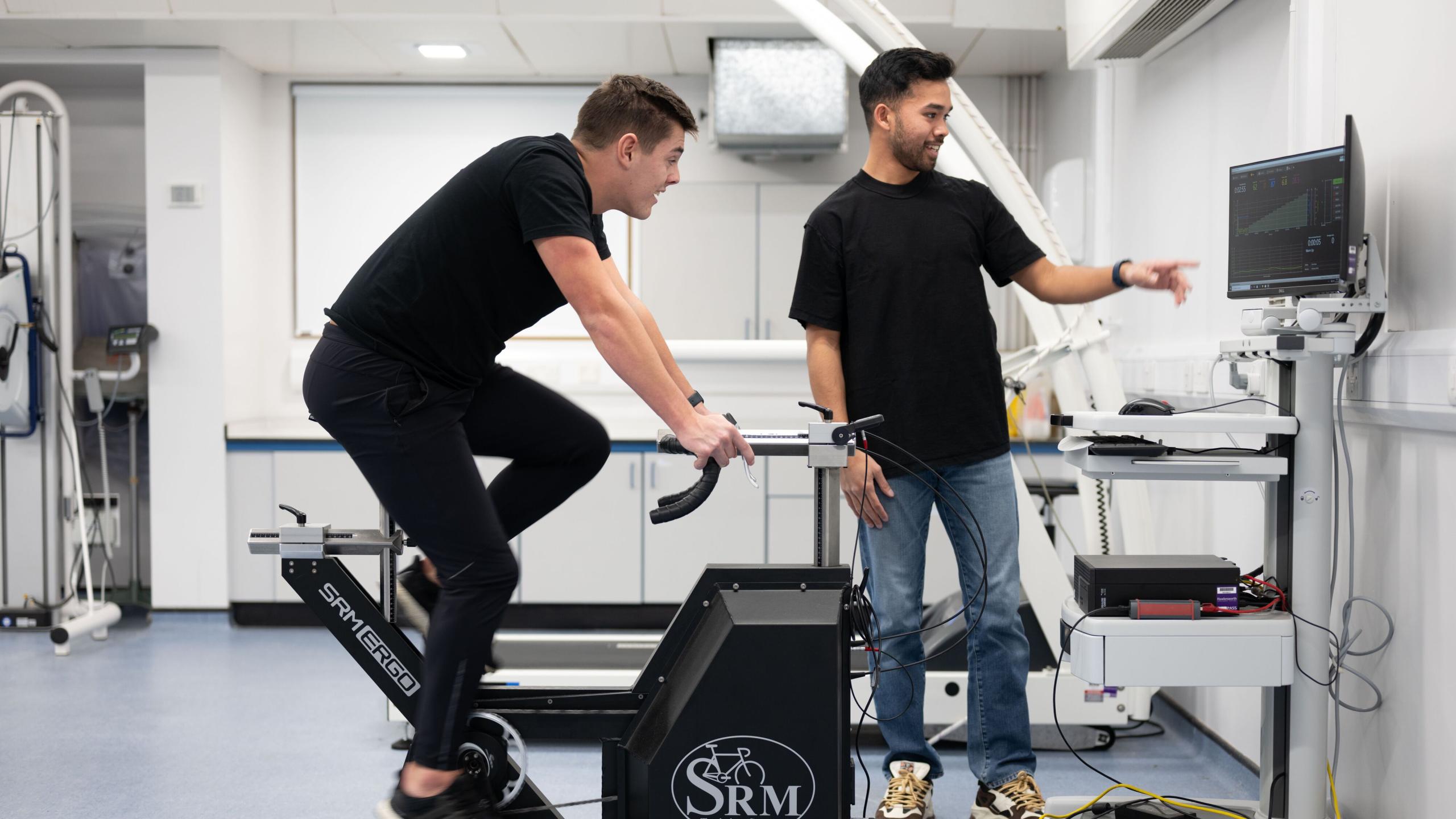
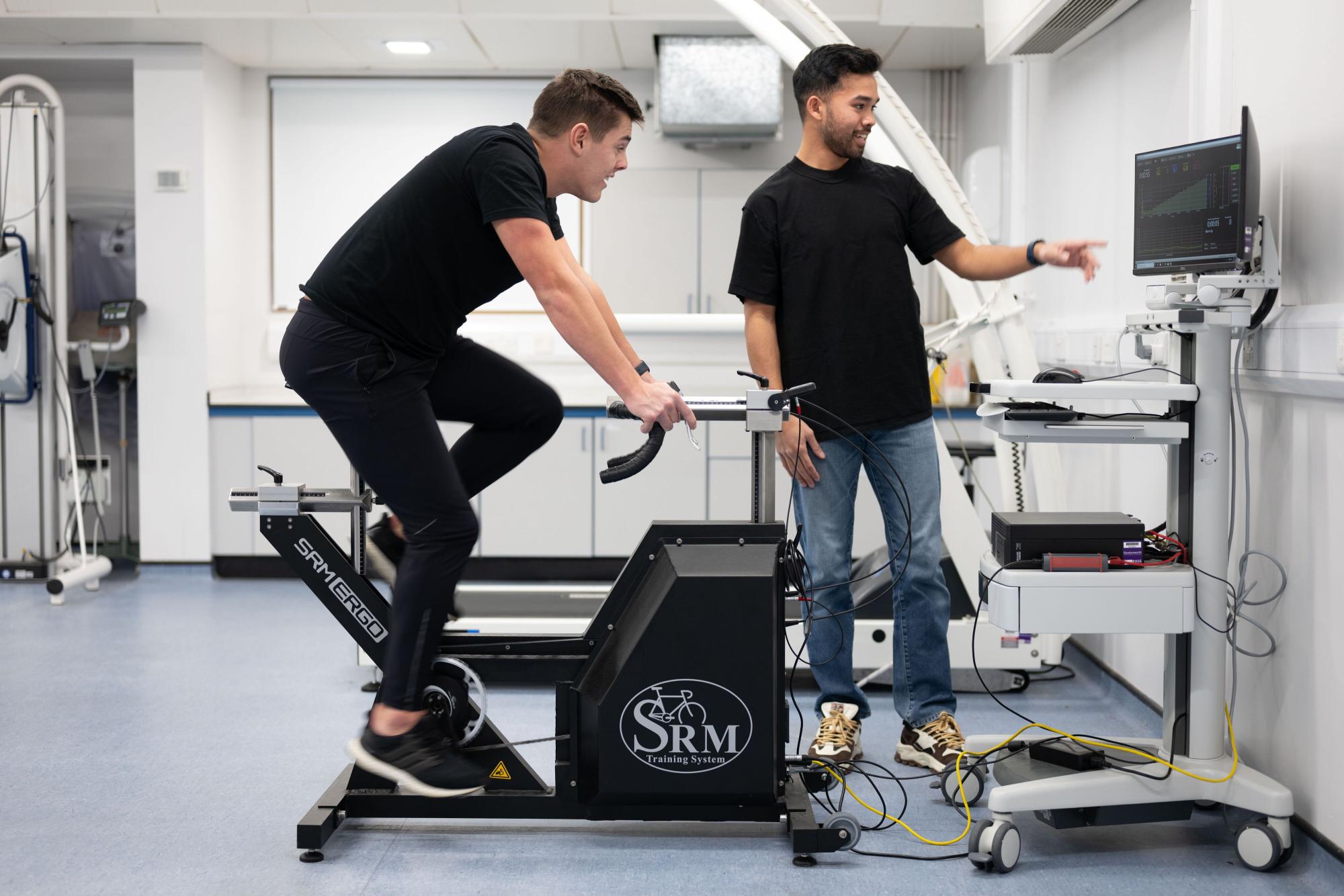
Physiology lab facilities
We have a number of ergometers, such as treadmills and cycle and rowing kayaks, for analysing sports-specific performance. Sophisticated equipment allows us to measure physiological responses to exercise, such as oxygen consumption.
We also have two environmental chambers that can adjust heat/humidity levels and simulate altitude environments.
Biomechanics lab facilities
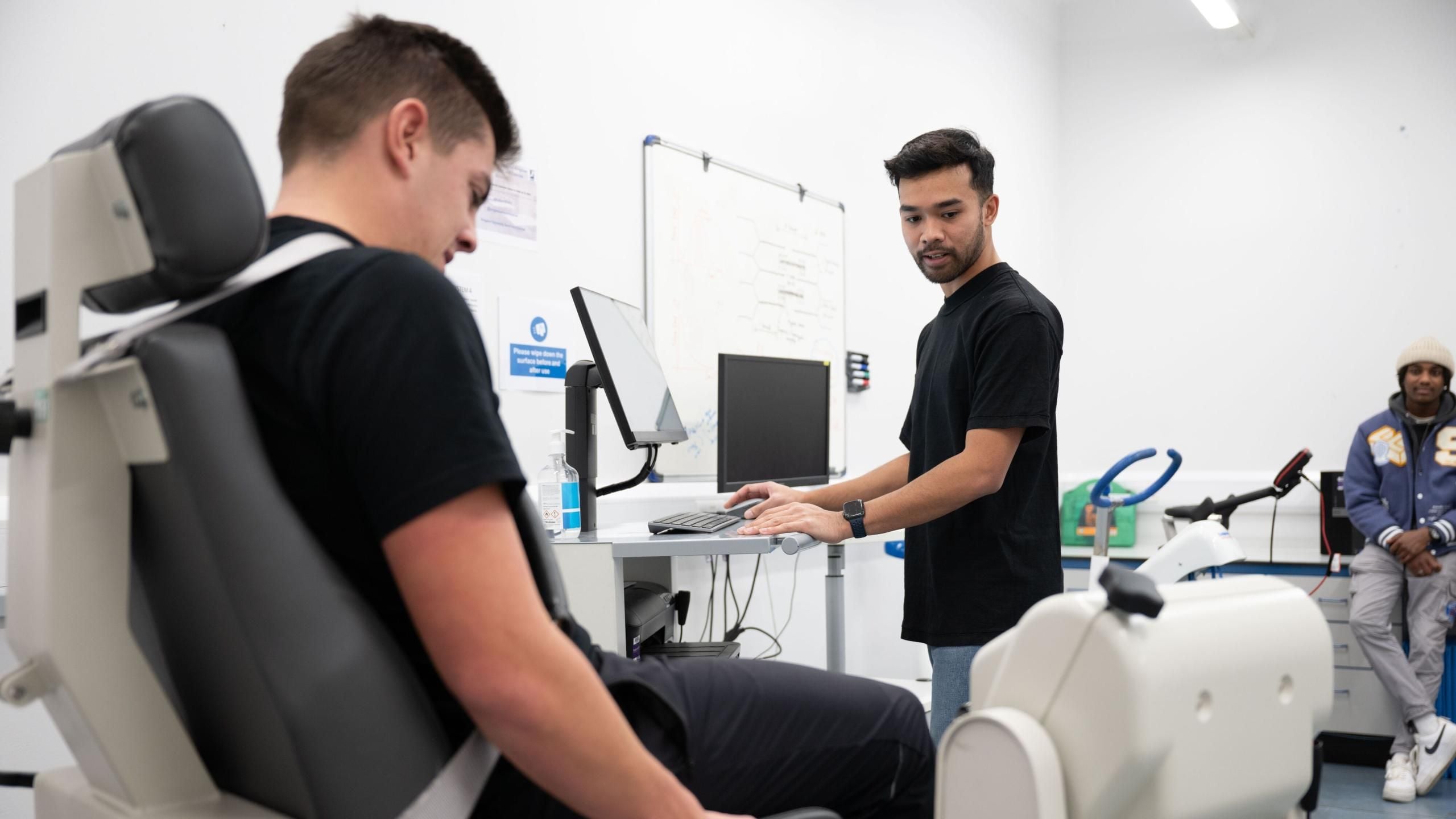
We can analyse sports movements and skills, thanks to:
- force platforms fitted in the floor
- a 3D motion capture system
- an isokinetic dynamometer
- Electromyography
Two smaller labs also provide space for specific activities, such as gait analysis, assessment of muscle function and data analysis.
Sport & exercise science at Kingston University
Learn how our students are turning their passion for sport and exercise into a career with our sport and exercise courses.

Why choose this course
Do you want to develop the knowledge and practical skills you need to become a professional sports coach? Our Sport and Exercise Science (Coaching and Physical Education) BSc (Hons) course is the right platform for you to do so.
On this practical course, you'll develop your coaching skills and study the science behind effective coaching, performance, leadership and sports analysis.
You’ll learn the principles of physical education from Kingston University’s Department of Education, who also offer Secondary Teaching leading to Qualified Teacher Status (QTS) PGCE: Physical Education as a progression route.
You'll also have access to sophisticated equipment to measure physiological responses to exercise and analyse sports movements and skills.
Modules cover psychology, motivation, human physiology, anatomy, biomechanics and notational analysis. A project on a selected topic will also help you to develop your independent learning skills.
Endorsements
This course is endorsed by the Chartered Association of Sport and Exercise Sciences (CASES) and CIMSPA.


Course content
If you choose to take the four years full time including professional placement route of this degree, you will undertake one year of industry-related work experience.
Year 1
Year 1 introduces the theory and practice of effective coaching and leadership. You will take part in a practical-based coaching module, exploring the theories that underpin coaching and leadership roles in sport and exercise. You will learn to understand sport as an academic subject. Other modules cover key concepts in sport and exercise psychology, such as motivation and personality. There are also modules regarding human physiology and an introduction to anatomy and biomechanics. In addition, you will be introduced to the essential principles of scientific investigation.
Core modules
Year 2
Year 2 introduces areas such as performance analysis in sport. There are further practical modules in sport analysis, and you will study physiology and psychology in more detail. You will be introduced to contemporary issues in sport coaching and gain a deeper understanding of sport and exercise psychology. Finally, you will study research methods in physical activity, preparing you for the Year 3 research project.
Core modules
Year 3
Final year offers further experience through the Coaching Practice module. You will develop analytical skills by studying advanced notational analysis, and you will extend your knowledge of sport physiology or sport psychology and/or biomechanics (depending on your preference and focus for coaching). All final year students are required to develop their independent learning skills by carrying out a project on a selected topic in coaching, physical education and sport analysis.
Core modules
Science Foundation Year: Sport and Exercise Science
If you would like to study one of our Sport Science degrees at Kingston University but are not yet ready to join the first year of a BSc(Hons) course, you can include an extra foundation year within your chosen degree. Please see the Science Foundation Year: Sport and Exercise Science course page for details of modules.

International students: direct application
Are you an international student? Have you decided Kingston is the place for you? If so, you can apply for this course directly, rather than having to go through UCAS.

What career opportunities does this course offer?
After graduating from this course, you'll be ready to pursue a career in sport development and coaching-related roles in both the public and private sectors. You will also have opportunities to work with athletes in national and international competitions, as well as in grassroots sports.
Future Skills
Our Future Skills programme is embedded within all our undergraduate courses and throughout the whole Kingston experience. These skills will help you to become a future-proof graduate by equipping you with the skills most valued by employers, such as problem-solving, digital competency and adaptability.
As you progress through your degree, you'll learn to navigate, explore and apply these graduate skills. You’ll also understand how to demonstrate and articulate to employers how these future skills give you the edge.

Teaching and assessment
Scheduled learning and teaching on this course includes timetabled activities including lectures, seminars, small group tutorials and practical sessions.
It may also include placements, project work, workshops, conferences and field trips.
Fees and funding
Additional course costs
Some courses may require additional costs beyond tuition fees. When planning your studies, you’ll want to consider tuition fees, living costs, and any extra costs that might relate to your area of study.
Your tuition fees include costs for teaching, assessment and university facilities. So your access to libraries, shared IT resources and various student support services are all covered. Accommodation and general living expenses are not covered by these fees.
Where applicable, additional expenses for your course may include:
Scholarships and bursaries
For students interested in studying this course at Kingston, there are several opportunities to seek funding support.


What are the facilities like?
When you join Kingston University, you will have access to a wide range of facilities and resources designed to support your studies. Use the virtual tour below to explore some of the facilities and learning environments that students within this subject area may experience during their studies.
Course changes and regulations
The information on this page reflects the currently intended course structure and module details. To improve your student experience and the quality of your degree, we may review and change the material information of this course. Find out more about course changes
Specifications for this course are published ahead of each academic year.
Regulations governing this course can be found on our website.


Key information
The scrolling banner below displays some key factual data about this course (including different course combinations or delivery modes of this course where relevant).