Secondary Teaching leading to Qualified Teacher Status (QTS) PGCE: Citizenship with Social Science
- Education and teaching
- Postgraduate
Do you want to help young people understand, question and shape an increasingly complex and rapidly-changing world? Train to teach in one year with our Secondary Teaching PGCE course for Citizenship with Social Science.

Prepare to inspire informed, active citizens in a rapidly-changing world
Are you a social science and humanities graduate, passionate about inspiring young people to become active, engaged citizens?
Kingston University's future-facing PGCE Citizenship with Social Science prepares graduates to be compassionate, confident, values-driven teachers who combine evidence-informed practice and professional judgement to make a positive difference in young people's lives.
You'll explore the key concepts that underpin citizenship education, including democracy, justice, rights, identity and diversity, while developing the expertise to teach citizenship to 11–16-year-olds, including GCSE. You'll learn how to teach topical and controversial issues with confidence, equipping you to lead thoughtful, respectful classroom discussions that encourage critical thinking and active participation.
Alongside citizenship, you'll gain the knowledge to teach subjects such as sociology, politics, criminology and psychology to 14–19-year-olds, broadening your expertise and enhancing your career opportunities. Throughout the course, you'll engage with current educational research and develop reflexive practice, enabling you to continually evaluate and strengthen your teaching.
Our strong partnerships enrich your training through work with the Houses of Parliament, the Association for Citizenship Teaching (ACT), UCL's Centre for Holocaust Education and expert subject leaders from our partner schools. University and school-based training are carefully integrated. Expert mentors and university tutors work together to provide coherent support throughout your training.
By the end of the course, you'll be a research-engaged, evidence-informed teacher. You'll have the confidence, compassion and professional judgement to thrive in diverse, contemporary classrooms and continue developing throughout your career.
The Citizenship with Social Science PGCE allows you to be creative when introducing new topics and every day is different. I get to take my knowledge from my Psychology degree and help pupils view different events and aspects of society and themselves in a new light. I have loved getting to explore complex topics in Key Stages 3 and 4 with pupils and adding other perspectives from their own to widen their worldview.
Teaching is fun, exciting and a joy. You're allowed to be the best version of yourself every day. I've enjoyed the variety that the course has provided me so far, as well as the challenge. This PGCE offers you every opportunity to stretch yourself at every moment, developing skills that won’t just shape your professional career, but also shape you as a person.
Why choose this course
Ready to make a difference in young people's lives? Join our future-facing teacher education programme, built on compassion, evidence-informed practice and professional judgement.
An ambitious, future-facing curriculum
Our curriculum fully integrates the Initial Teacher Training and Early Career Framework (ITTECF), carefully sequencing university and school-based learning to support your development throughout the year. Built around reflexive practice, it develops the evidence-informed professional judgement needed to make well-informed decisions in the classroom and wider professional practice, including the intentional, critical and ethical use of AI. Intensive Training and Practice (ITaP) in areas such as behaviour management, inclusive practice and questioning enables you to apply theory in real classroom contexts, preparing you for the next stage of your professional development as an Early Career Teacher (ECT).
Compassionate expert guidance and support
You'll be supported throughout the course by research-engaged subject-specialist university tutors and expert school-based mentors who work together to provide coherent guidance, coaching and feedback. Through critical engagement with educational research, observation of expert practice and regular opportunities for reflexive practice, you'll develop the subject knowledge, pedagogical expertise and professional judgement needed to become an effective teacher.
Our strong school partnerships, high-quality mentor training and compassionate pastoral support create an environment in which you'll be challenged, supported and encouraged to succeed. Alongside our commitment to staff and student wellbeing, this provides a strong foundation for achieving Qualified Teacher Status (QTS) and building a rewarding career working with children and young people.
Reflexive, evidence-informed practice
Our PGCE is built around developing reflexive practice: using evidence, feedback and critical reflection to continually strengthen your teaching and professional judgement. By learning to question assumptions, evaluate your practice and respond thoughtfully to new evidence, you'll develop the compassionate professional judgement needed to adapt confidently to the changing demands of teaching throughout your career.
A qualification that takes you further
Alongside Qualified Teacher Status (QTS), you'll be awarded a masters-level PGCE with 60 credits that can support your continued postgraduate study, including progression to Kingston University's Master of Education (MA).
Over 95% of our graduates enter the teaching profession.
Library and learning resources
Our library (the Nightingale Centre) has every teaching resource you could think of to help you plan your lessons. The range of educational resources available reflect current educational thinking and are used in local schools. They cover material from early learning through to A-level.
The Nightingale Centre has no end of imaginative literature, with children's novels for all ability levels. Also available are the journals ‘Books for Keeps’ and ‘Carousel’, which provide the latest reviews on appropriate resources for children and teenagers.
You'll have access to a range of artefacts, games, posters and kits that can be used in history, religious education, science, maths and music lessons.

Course content
Year 1
Core modules
Career opportunities
The course aims to develop your professional skills to help you gain employment in a secondary school and continue with your professional development. Over 95% of our graduates enter the teaching profession after they complete their course. Many go into middle and senior management roles in schools.
Classroom experience
The course has been designed to allow trainees to spend 120 days in school, ensuring you start your teaching career with confidence. A school-based professional mentor and tutors from the University will support you during your placements.
You will benefit from two contrasting placements with our partnership schools. Whilst on placement, students are expected to carry out the normal school hours and engage in school life. This expectation includes attending early morning/evening meetings, which will vary depending on the school.
My school placements were both challenging and rewarding. I had the chance to teach a wide range of students in different settings, and the most rewarding part was seeing the progress my pupils made over time. I also really valued the feedback from my university tutor and placement mentors, who supported my development and helped me grow in confidence.
Links with schools
We have links with:
- a strong partnership of schools and settings in which you'll train
- special schools
- teaching school alliances
- multi-academy trusts
- schools and settings-centred Initial Teacher Training providers
- local authorities
- teaching unions
- other universities around the country to share good practice
Teaching and assessment
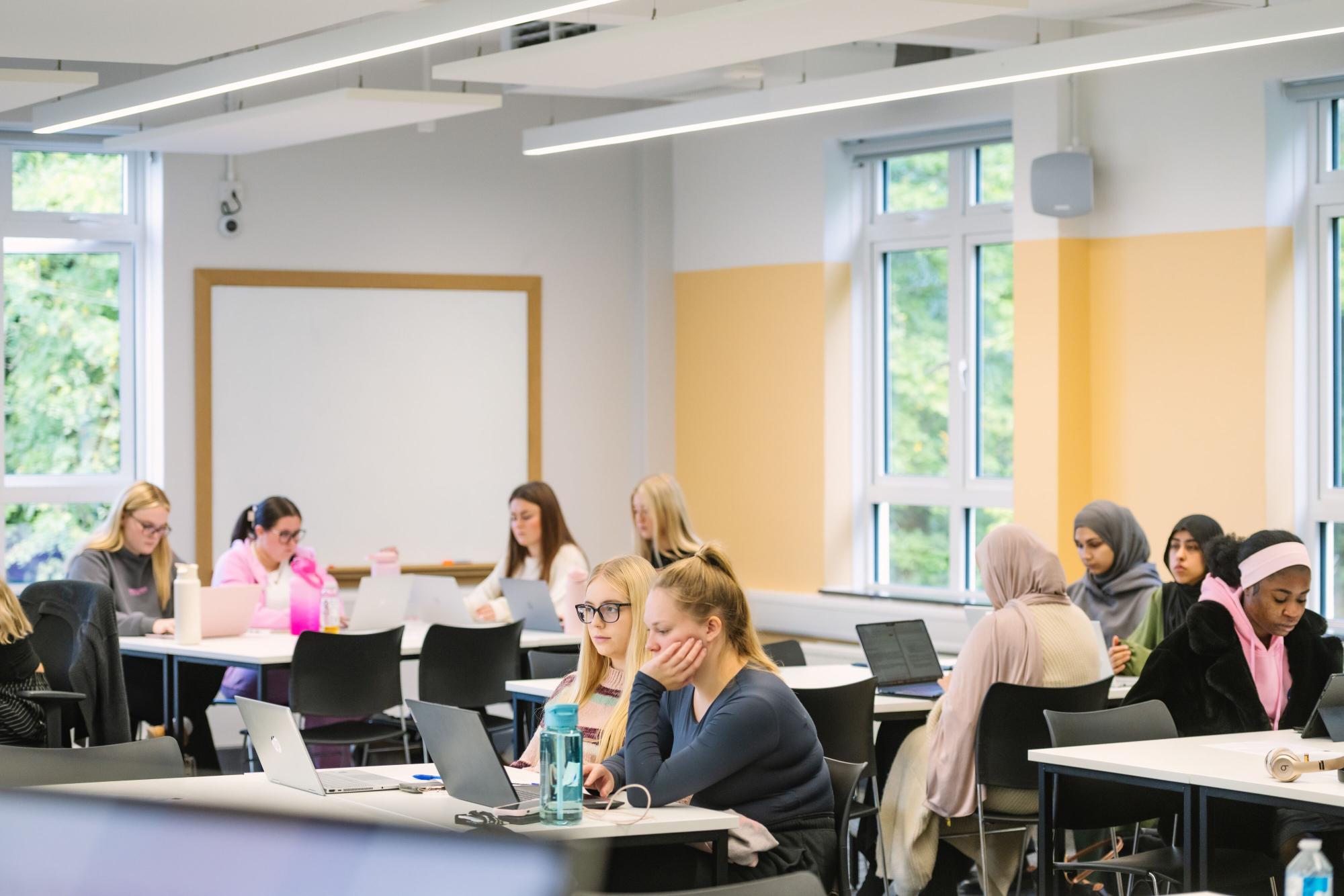
Your taught sessions will be a mix of seminars, lectures, practical workshops, field trips and work with pupils. Peer-led critical support groups will also feature in the programme. Most of your sessions will be taught by University tutors but there may also be guest speakers, such as headteachers or subject leaders.
We explored how to teach controversial and sensitive issues, such as identity, human rights, and social justice, in a safe, inclusive, and critical way.
Fees and funding
Additional course costs
Some courses may require additional costs beyond tuition fees. When planning your studies, you’ll want to consider tuition fees, living costs, and any extra costs that might relate to your area of study.
Your tuition fees include costs for teaching, assessment and university facilities. So your access to libraries, shared IT resources and various student support services are all covered. Accommodation and general living expenses are not covered by these fees.
Where applicable, additional expenses for your course may include:
Funding support for PGCE students
Eligible UK and EU students can apply to the Government for a tuition loan, which is paid direct to the University. This has a low interest rate which is charged from the time the first part of the loan is paid to the University until you have repaid it.

Please be aware: although this course is at postgraduate level, as it is possible to obtain a tuition fee loan for PGCE courses they are to be treated as undergraduate courses when it comes to tuition fee liability as a result of withdrawal or break in studies.
Scholarships and bursaries
For students interested in studying Citizenship with Social Science PGCE at Kingston, there are several opportunities to seek funding support:
How to apply
Before you apply
Before you submit your application, please read through our entry criteria carefully to ensure you meet our requirements.
How to apply online
You can apply for your course through the UK Department for Education portal.
Please enter the details of institutions and courses clearly and correctly on your form, paying particular attention to the codes.
- The code for Kingston University is K84
- The course code for Secondary Teaching leading to Qualified Teacher Status (QTS) PGCE: Citizenship with Social Science is 2VZZ.
After you apply
Interviews are an important part of the selection process for teacher training courses. The University will make a decision following your interview and will then inform you through the UK Department for Education portal.

Course changes and regulations
The information on this page reflects the currently intended course structure and module details. To improve your student experience and the quality of your degree, we may review and change the material information of this course. Find out more about course changes
Programme Specifications for the course are published ahead of each academic year.
Regulations governing this course can be found on our website.