Learning Disabilities Nursing BSc (Hons) Integrated Degree Apprenticeship
Subject and course type
- Nursing and midwifery
- Undergraduate
- Degree apprenticeship
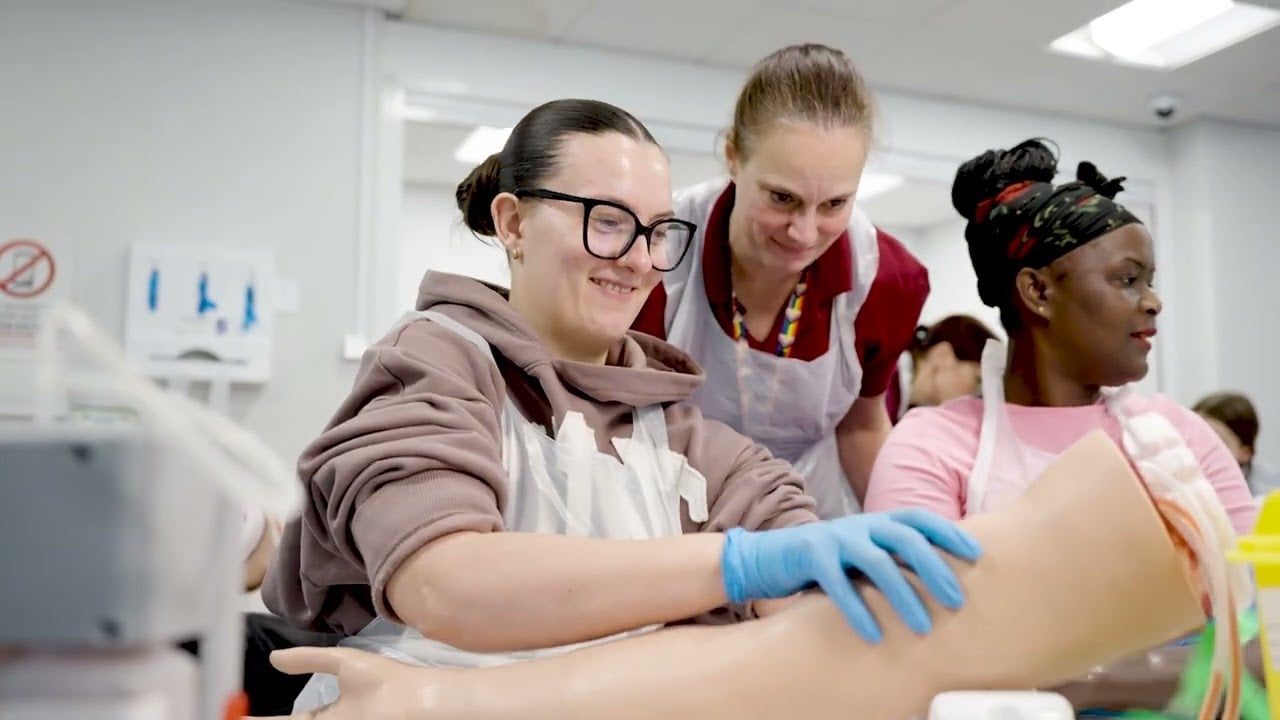
Earn while you learn to become a registered learning disabilities nurse. Experience real-world clinical placements and cutting-edge simulation training.
You are reading:
Advance your career in learning disabilities nursing
Gain the knowledge and skills to become a compassionate, highly skilled learning disabilities nurse.
With practical placements, hands-on training, and expert guidance, you'll be prepared to excel in the nursing profession. On completion of the programme, you will be recommended to the Nursing and Midwifery Council for professional registration.
Why choose this course
Kingston University’s Learning Disabilities Nursing Degree Apprenticeship allows you to work and study simultaneously, leading to both an academic qualification and NMC registration.
You'll gain experience in varied clinical settings, including hospitals, community care, and simulation labs. Placement opportunities are with one of our partner providers.
You'll also have opportunities to work with renowned organisations beyond the medical setting. Our students work with the famous Baked Bean Theatre Company. You'll have the chance to join the Learning Disability Nursing UK and Ireland network, and attend the Positive Choices Learning Disability Conference.
The course is designed with input from local healthcare providers and service users, ensuring you graduate with the skills employers need. Kingston University has a TEF Gold rating, and we’re proud to be ranked top in London for Nursing and Midwifery (The Complete University Guide 2026).
Kingston University is top in London for Nursing and Midwifery (The Complete University Guide 2026).
Top University in London for General Nursing, The Guardian University Guide 2026.
Accreditation
This degree confers both an academic award and a professional qualification in nursing. On completion of the programme, students are recommended to the Nursing and Midwifery Council for professional registration.
Course content
Year 1
Core modules
30 credits
This module is designed to help you develop your knowledge and understanding of human anatomy and physiology in relation to nursing, which is an essential element of nursing knowledge. The knowledge you develop in this module will support your clinical practice as a nursing student. You will be introduced to the pathophysiology of common conditions, and you will also begin to develop your knowledge of pharmacological concepts in preparation for year 2.
The main features of the module are to enable you to apply scientific principles to nursing care. It will also support you to identify and understand current nursing practices underpinned by scientific theory. This is a shared module that all students will undertake together providing opportunities for intra-professional discussion and learning.
60 credits
This module introduces you to the context of learning disability nursing practice across a range of care settings. You will be introduced to The Code (NMC, 2018) to gain knowledge and understanding of its importance in guiding the learning disability nurse to deliver safe, effective and compassionate care in partnership with families, carers and other healthcare professionals. You will explore the skills and knowledge needed to safeguard vulnerable people, optimise the quality of care and enhance the experience of people accessing healthcare.
No credits
This module is the Practice Assessment Module which is designed to support you with the achievement of the NMC proficiencies and practice assessment requirements. The module focuses on practice preparation, reflection following practice experiences and the development of your numeracy skills. You will learn how to demonstrate that you can apply your knowledge of clinical, legal, ethical and professional elements of nursing to the safe and effective care of patients.
This module will enable you to effectively complete your practice assessment document.
30 credits
This module will introduce you to the principles and practice of public health and the nurse’s role within this. It will develop your knowledge, skills and attitudes to make a positive impact on the health of individuals, communities and populations.
You will be introduced to the central themes of public health practice and the NMC Future Nurse standards (2018) Platform 2. You will gain an understanding of the aims and principles of health promotion and protection and prevention of ill health. You will also develop a foundational awareness of the four core elements of public health nursing practice: Search for health needs, stimulation of awareness of health needs, influence on policy effecting health, facilitation of health enhancing activities.
You will be equipped with essential digital skills, including the use of public health intelligence to survey and assess a population’s health and wellbeing. You will develop an understanding of how the social/wider determinants of health are important drivers of health inequalities. This module will also consider approaches to reducing these disparities. You will gain an understanding of public health policy and be supported to reflect on the ethical dimensions of public health practice.
The module will also introduce you to the global dimensions of health, and its links with UK health outcomes. This includes the impact of climate change and the need for sustainable development and environmental management for the benefit of public health. This is a shared module that all students will undertake together providing opportunities for intra-professional discussion and learning.
Year 2
Core modules
30 credits
This module explores some of the most common health needs that impact people with a learning disability. It considers how we define health and wellbeing, and how learning disabilities nurses can support people who use services to maintain good wellbeing. It considers health across the life span, and across a spectrum of conditions of which learning disability is part. You will learn about digital safety, and how this contributes to wellbeing. You will practise applying the social determinants of health to case studies and vignettes of people with a learning disability, based on contributions from experts by experience. You will also learn about the health inequalities that people with a learning disability experience. You will also begin to consider the intersectionality between learning disability and the social determinants of health. This will enable you to plan care in inclusive, co-produced ways.
30 credits
This module focuses on assessment and care planning as part of the nursing process. You will explore health inequalities and the impact on people with a learning disability across the lifespan. You will apply person-centred inclusive approaches to assess and plan care with people with learning disabilities, and their families and care workers, within legal and ethical frameworks. The skills and knowledge for assessment and planning will be explored within a framework of work place culture, using evidence-based models.
30 credits
This module will provide you with the requisite skills and knowledge to understand the principles of evidence-based healthcare and how to apply them effectively to your clinical practice. The concepts and skills you will learn include those involved in searching for, reviewing and critiquing evidence. You will also develop the clinical skills and proficiencies required for Part 2 of your programme through skills and simulated practice learning activities. A key element of this will be developing an understanding of the digital technologies utilised for enhancing care in line with contemporary healthcare policy. This is a shared module that all students will undertake together providing opportunities for intra-professional discussion and learning. Personal tutor groups and preparation for practice are integrated into this module as is time with your course director and year lead. This module will develop your Future Skills through engagement with Explore.
15 credits
This module will provide you with the foundational pharmacological and medicines management knowledge to enable you to safely develop your skills and knowledge in the administration of medicines to clients, patients and service users. You will develop your understanding of the regulatory, legal, and ethical frameworks that influence medicines management and the underlying pharmacological science. Issues such as concordance will be explored, and the skills required to access resources to support medicines management practice. Embedded within the module is simulated practice learning that will support the development of your clinical skills related to medicines management. This is a shared module that all students will undertake together providing opportunities for intra-professional discussion and learning.
No credits
This module is the Practice Assessment Module which is designed to support you with the achievement of the NMC proficiencies and practice assessment requirements. The module focuses on practice preparation, reflection following practice experiences and the development of your numeracy skills. You will learn how to demonstrate that you can apply your knowledge of clinical, legal, ethical and professional elements of nursing to the safe and effective care of patients.
This module will enable you to effectively complete your practice assessment document.
15 credits
In Year 2 of the course, you will have the opportunity to undertake an option module. Examples of modules available include: Global Health, Wound Management, Child and Adolescent Mental Health. You will be provided with details of all modules available at the beginning of Year 2 so you can make your decision.
Year 3
Core modules
30 credits
Navigating the transition from student to a registrant who understands the professional and political environment in which they will be working is critically important to the delivery of safe, effective, and high-quality health care. This module aims to explore the key areas that will enable you to transition and fulfil the role of a registered nurse. The module is designed to prepare you for professional nursing practice by further developing your knowledge and skills to enable you to be an accountable and compassionate registrant within the health and social care system. It focuses on the mechanisms that underpin care organisation and delivery, how nurses are integral to and can influence this and aims to develop your critical understanding of the factors influencing the environment in which you will be working. The role of politics in health and social care policy is critically explored and the module will provide you with the opportunities to explore these issues through a social justice lens.
Personal tutor groups and preparation for practice are integrated into this module as is time with your course director and year lead. The transition toward professional registration and employment is supported by the integration of the Apply Future Skills workshops into the module. This is a shared module that all students will undertake together providing opportunities for intra-professional discussion and learning.
30 credits
This module focuses on the collaborative learning and teaching of peers, people and families/carers. You will integrate your knowledge of learning theories, communication and relational skills to enable you to work collaboratively with others, critically reflecting on the challenges this can pose. You will also develop the clinical skills and proficiencies required for Part 3 of your programme through skills and simulated practice learning activities.
You will have the opportunity to critically discuss inter and intra professional working alongside developing strategies for managing challenging communication. Your clinical communication skills will be refined building on your learning from previous modules, and you will have the opportunity to explore best practice approaches to communication for supporting people their families and carers in preventing ill health and managing their care. This is a shared learning module in which you will learn alongside your peers from other fields of practice and develop a critical insight into these fields.
30 credits
This module will provide you with the underpinning knowledge and skills required for their future leadership role in coordinating and managing the complex needs of people with a learning disability across a range of organisations and settings. The module explores the complex role of the learning disability nurse, working as a specialist, to enrich the quality of life of people with learning disabilities. Experts from lived experience will be involved in the learning and teaching, supporting students through a range of complex case studies and current socio economical and workforce challenges. You will build on their knowledge of partnership and collaborative working and examine the cultural, political, psychosocial and technological influences on nursing care, resource management and finances.
30 credits
Navigating the transition from student to a professional practitioner who is skilled at leading teams is critically important to the delivery of safe, effective and high quality health care. This module will prepare you for professional nursing practice by expanding your knowledge and skills to enable you to be an accountable and compassionate leader within the health and social care system. It focuses on leadership, team working, and performance management and enables learning disability nursing students to reflect on their transition to registered practice and build the evidence base for a career development portfolio.
Some sessions will be shared across fields as they are core for all fields.
No credits
This module is the Practice Assessment Module which is designed to support you with the achievement of the NMC proficiencies and practice assessment requirements. The module focuses on practice preparation, reflection following practice experiences and the development of your numeracy skills. You will learn how to demonstrate that you can apply your knowledge of clinical, legal, ethical and professional elements of nursing to the safe and effective care of patients.
This module will enable you to effectively complete your practice assessment document.
What career opportunities does this course offer?
You’ll gain essential skills for a rapidly evolving healthcare environment. Graduates are eligible to apply for professional registration with the Nursing and Midwifery Council (NMC).
Our curriculum emphasises leadership, decision-making, and teamwork, ensuring you are equipped to excel in roles such as:
- Registered learning disabilities nurse in hospital or community settings
- Specialist roles in clinical health teams for people with learning disabilities
- Leadership positions in healthcare
Future Skills
Our Future Skills programme is embedded within all our undergraduate courses and throughout the whole Kingston experience. These skills will help you to become a future-proof graduate by equipping you with the skills most valued by employers, such as problem-solving, digital competency and adaptability.
As you progress through your degree, you'll learn to navigate, explore and apply these graduate skills. You’ll also understand how to demonstrate and articulate to employers how these future skills give you the edge.

Teaching and assessment
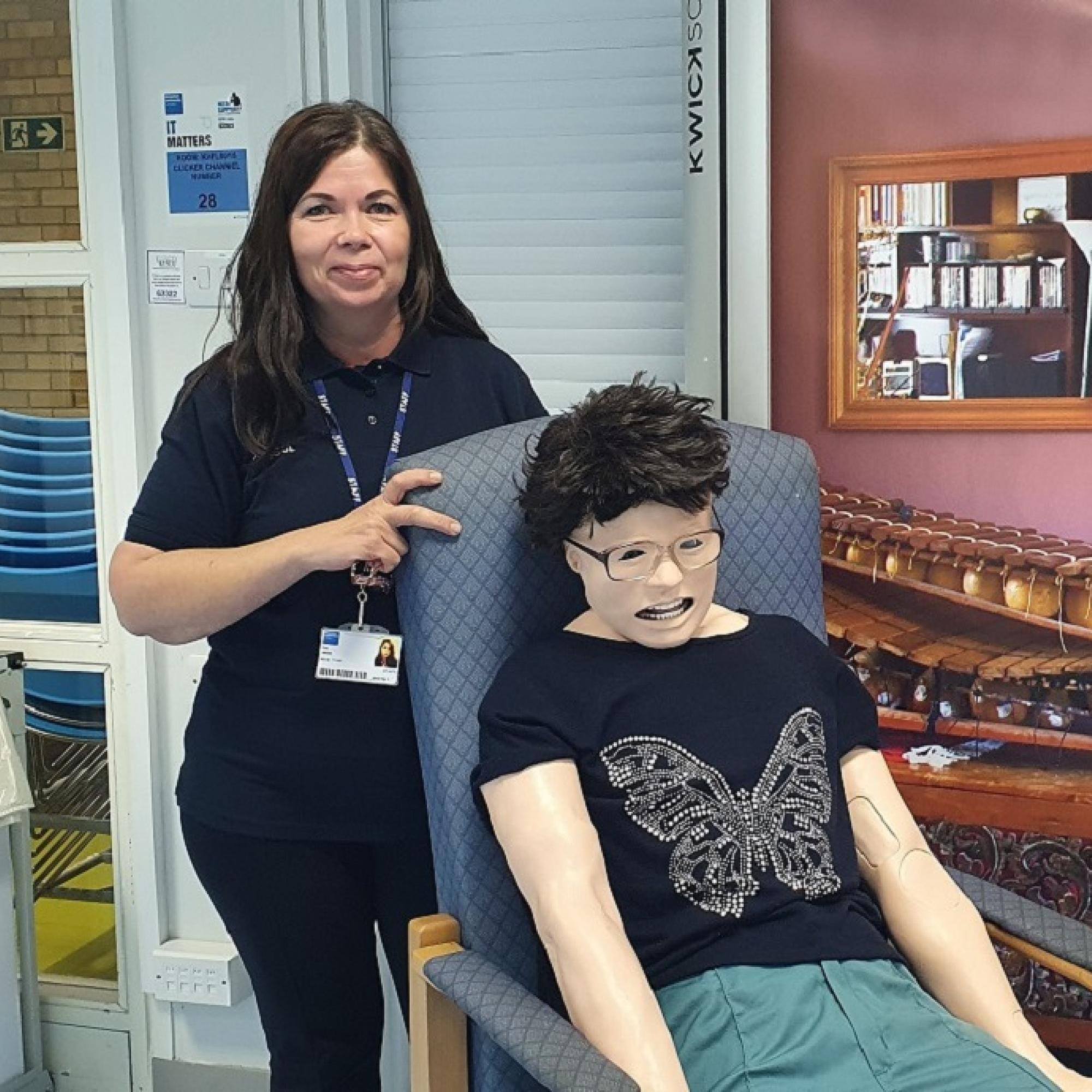
You will learn about learning disabilities nursing through lectures, seminars and online work in our Virtual Learning Environment (CANVAS). You will also participate in tutorials, workshops, conferences and project work. Your learning in the simulation suite will help you relate theory to practice.
The programme is offered through block release. This provides you with blocks of theory and blocks of supernumerary practice placements; skills and simulation delivered at the University are included in the total practice hours.
In each part of the programme, you will also have blocks of time in which you return to your employer; these are not part of programme hours. You will take your annual leave during your time back with your employer.
The programme is divided into three parts. Each part is approximately 15 months long and includes blocks of theory, blocks of placements and blocks of time back with your employer.
When not attending timetabled sessions, you will be expected to continue learning independently through self-study. This typically will involve reading journal articles and books, working on individual and group projects, undertaking preparing coursework assignments and presentations, and preparing for final assignments. Your independent learning is supported by a range of excellent facilities including online resources, the library and CANVAS, the online virtual learning platform.
Our academic support team here at Kingston University provides help in a range of areas.
When you arrive, we'll introduce you to your personal tutor. This is the member of academic staff who will provide academic guidance, be a support throughout your time at Kingston and show you how to make the best use of all the help and resources that we offer at Kingston University.
Year 1
- Placement learning including skills: 652 hours
- Scheduled teaching: 170 hours
- Guided independent study: 650 hours
- On the job learning (time with employer) (approx.): 1050 hours
Year 2
- Placement learning including skills: 817 hours
- Scheduled teaching: 160 hours
- Guided independent study: 650 hours
- On the job learning (time with employer) (approx.): 712.5 hours
Year 3
- Placement learning including skills: 882 hours
- Scheduled teaching: 160 hours
- Guided independent study: 650 hours
- On the job learning (time with employer) (approx.): 900 hours
Please note: To meet Nursing and Midwifery Council requirements, all apprentices will be supernumerary of their practice placements, which will not be at their usual workplace. Each level is taught over approximately 15 months.
Assessment typically comprises exams (e.g. test or exam), practical (e.g. presentations, performance) and coursework (e.g. essays, reports, self-assessment, portfolios, dissertation). The approximate percentage for how you will be assessed on this programme is as follows, though depends to some extent on the optional modules you choose.
- Year 1: coursework: 50%; practical: 25%; exams: 25%
- Year 2: coursework: 50%; practical: 25%; exams: 25%
- Year 3: coursework: 75%; practical: 25%
Based on the Education and Skills Funding Agency Funding Rules, you will also be assessed that the on the job learning meets the requirements of the apprenticeship standard.
We aim to provide feedback on assessments within 20 working days.
Your individualised timetable is normally available to learners within 48 hours of enrolment. Whilst we make every effort to ensure timetables are as student-friendly as possible, scheduled teaching can take place on any day of the week between 9am and 6pm.
End-Point Assessment
Each apprentice on an approved Apprenticeship Standard is required to take an End-Point Assessment (EPA) to complete the programme. The EPA is delivered by an End-Point Assessment Organisation (EPAO) that is registered with the Education and Skills Funding Agency (ESFA).
The EPA is either integrated as part of the apprenticeship or completed after the course element. If an apprentice is completing the EPA after the course element, they must ensure they have successfully completed their learning, achieved the gateway requirements and finished uploading their evidence prior to taking the EPA.
Fees and funding
This degree apprenticeship programme is funded through the Government's Apprenticeship Levy within the approved funding band.
Additional course costs
Some courses may require additional costs beyond tuition fees. When planning your studies, you’ll want to consider tuition fees, living costs, and any extra costs that might relate to your area of study.
Your tuition fees include costs for teaching, assessment and university facilities. So your access to libraries, shared IT resources and various student support services are all covered. Accommodation and general living expenses are not covered by these fees.
Where applicable, additional expenses for your course may include:
Our libraries have an extensive collection of books and journals, as well as open-access computers and laptops available to rent. However, you may want to buy your own computer or personal copies of key textbooks. Textbooks may range from £50 to £250 per year. And a personal computer can range from £100 to £3,000 depending on your course requirements.
While most coursework is submitted online, some modules may require printed copies. You may want to allocate up to £100 per year for hard-copies of your coursework. It’s worth noting that 3D printing is never compulsory. So if you choose to use our 3D printers, you’ll need to pay for the material. This ranges from 3p per gram to 40p per gram.
Kingston University will pay for all compulsory field trips. Fees for optional trips can range from £30 to £350 per trip.
Your tuition fees don’t cover travel costs. To save on travel costs, you can use our intersite bus service. This route links the campuses and halls of residence with local train stations - Surbiton, Kingston upon Thames, and Norbiton.
Courses involving placements or direct work with vulnerable groups may require a DBS check or other security checks.
Specific courses may require uniforms, specialty clothing, or specific equipment like lab coats and safety shoes.
If you choose to do a placement year, travel costs will vary depending on your location. These costs could be up to £2,000.
Some courses may require professional memberships. Once you graduate, you'll be recommended to the Nursing and Midwifery Council (NMC) for professional registration and can continue to develop your career with your employer.
Next steps
Employees
If you are currently employed full time and would like to find out more about apprenticeships, please ask your employer to contact the Kingston University apprenticeship team.
Employers
If you are an employer interested in how apprenticeships can support your organisation and employees, please contact the apprenticeship team for further details.
Partner with us for industry-led apprenticeships
Enhance your workforce with our expert-designed apprenticeship programmes, combining academic excellence with practical training. Join us in shaping the future of skilled professionals.

Course changes and regulations
The information on this page reflects the currently intended course structure and module details. To improve your student experience and the quality of your degree, we may review and change the material information of this course. Find out more about course changes
Programme Specifications for the course are published ahead of each academic year.
Regulations governing this course can be found on our website.