Automation and Control Engineering MSc
- Engineering, electronics and robotics
- Postgraduate
Discover the future of smart systems. At Kingston University, our Automation and Control Engineering MSc prepares you to innovate in robotics, AI, and advanced engineering. Accredited by the Institution of Mechanical Engineers, and the Engineering Council, this degree will position you for success.
Please note: this course was previously named Mechatronic Systems MSc. The delivery and content of the course remain the same.

Shape the future of intelligent engineering systems
Develop the skills to design, control and deploy the next generation of automated and robotic systems.
This MSc in Automation and Control Engineering is designed to keep you at the forefront of technological innovation, giving you the skills and knowledge to take on leadership roles in advanced engineering sectors.
The course focuses on the technologies driving modern industry, including robotics, intelligent automation, control systems, and machine learning. You will learn how to model complex engineering systems, design advanced control strategies, and implement autonomous solutions across real-world applications such as manufacturing, healthcare, and smart mobility.
Delivered by research-active academics, the course combines strong theoretical foundations with hands-on experience in a state-of-the-art robotics laboratory, enabling you to translate ideas into working systems.
Whether your goal is to work in robotics, automation, or advanced engineering design, this course will prepare you to contribute to a rapidly evolving technological landscape.
Why choose this course
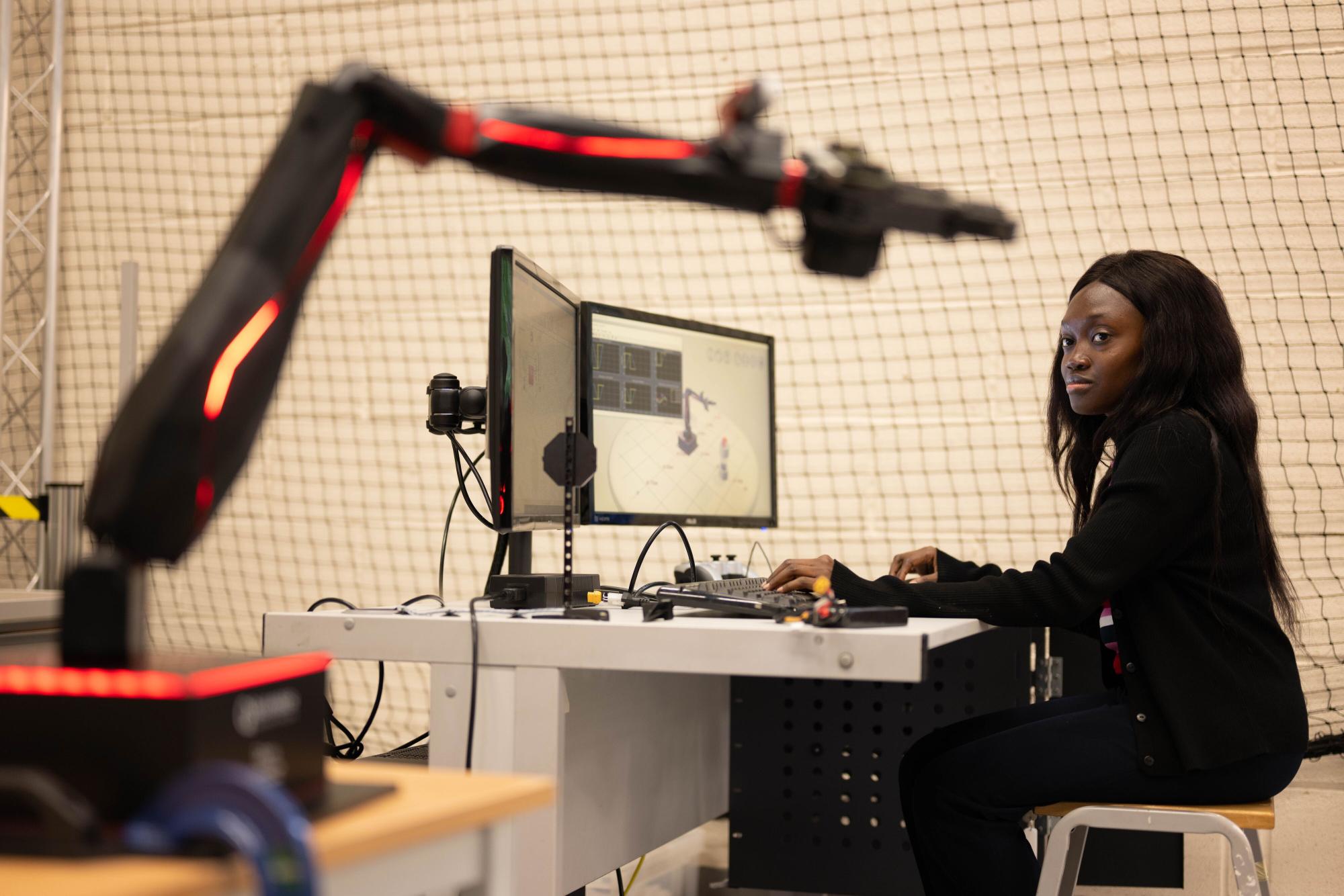
On our Automation and Control Engineering MSc course, you will work with state-of-the-art robotic and haptic systems, gaining hands-on experience with industry-relevant platforms. These include:
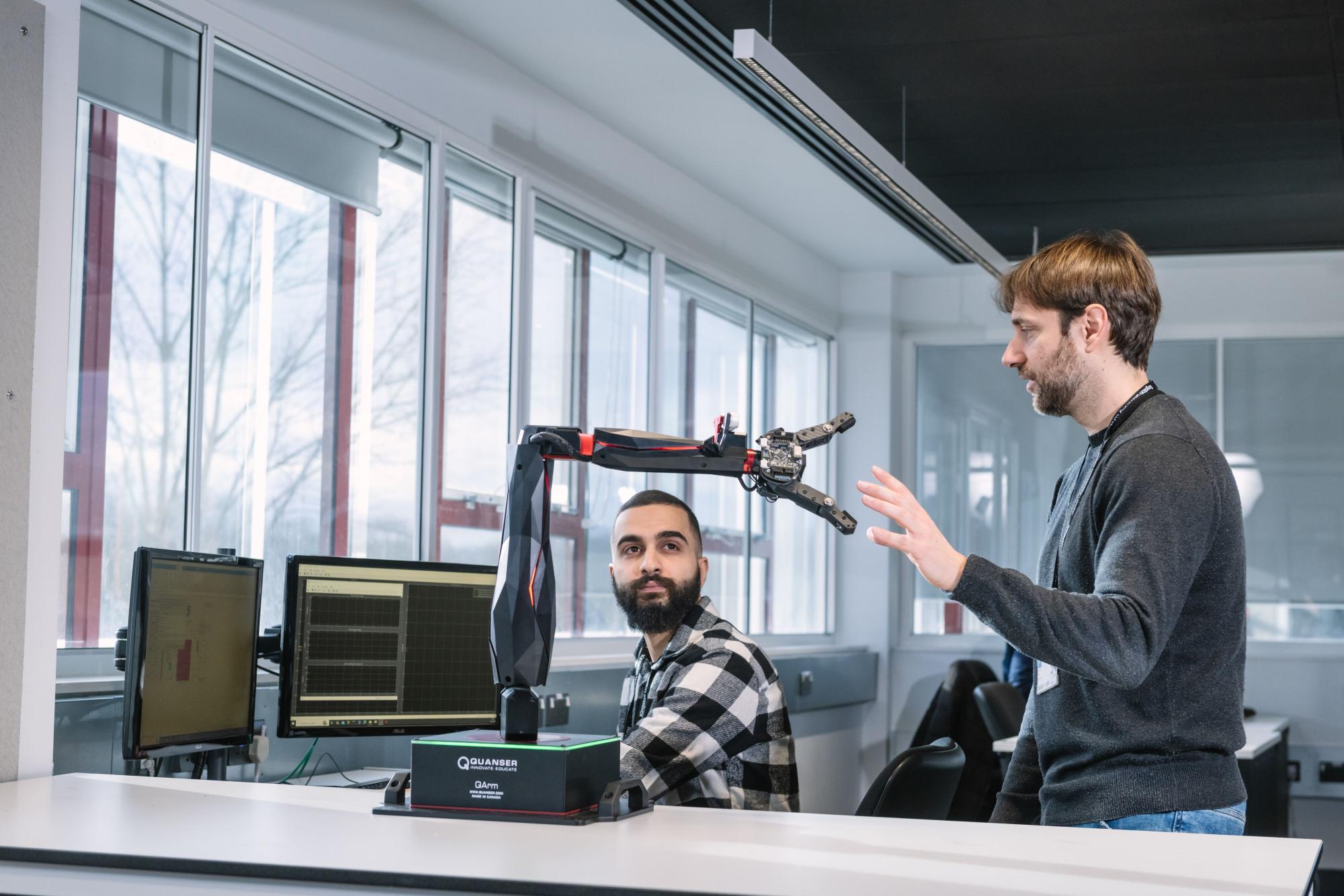
Franka Emika Research 3 collaborative manipulators and FANUC industrial robots
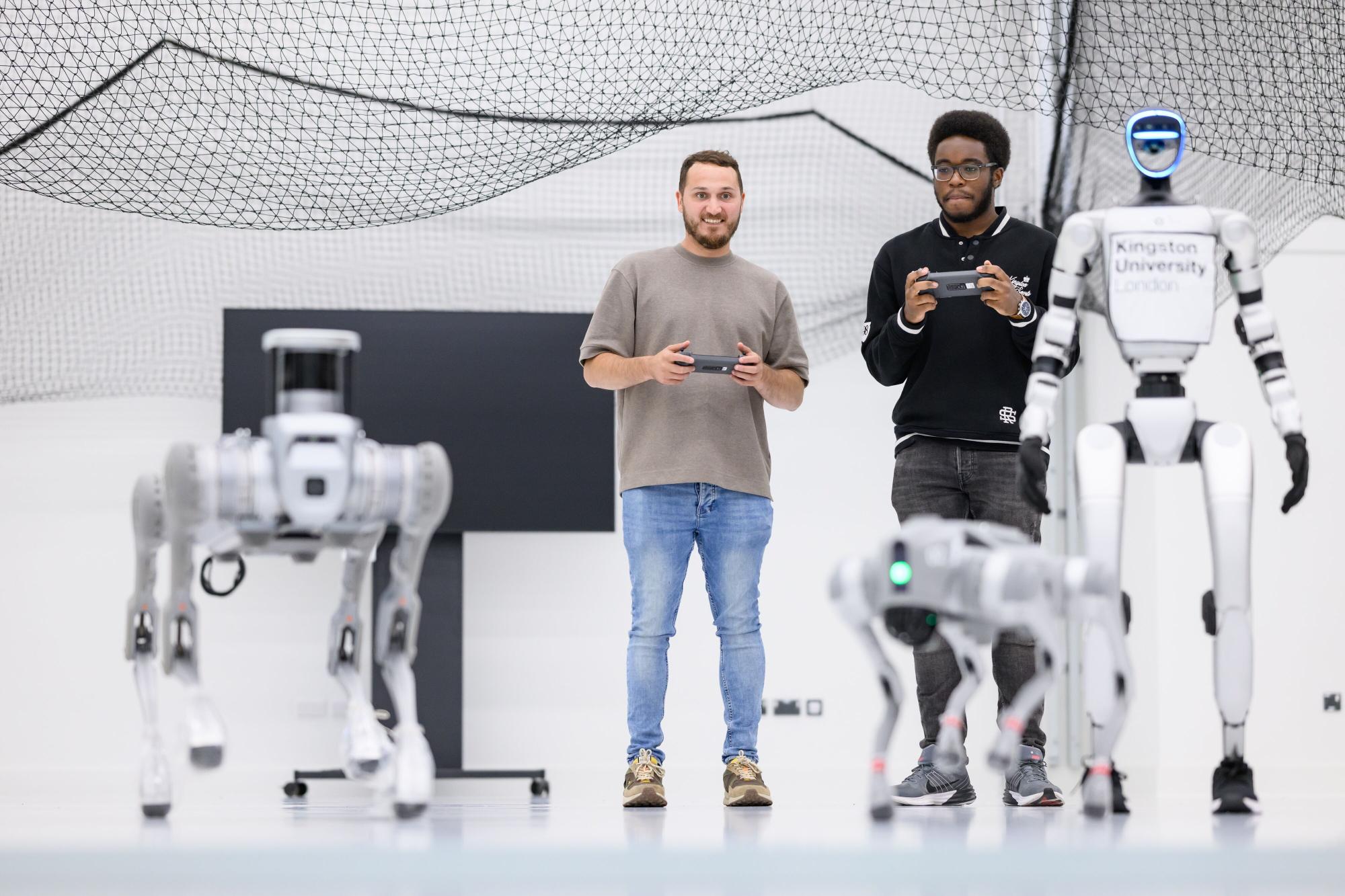
Advanced legged and humanoid platforms such as the Unitree G1 and H1 humanoids and Unitree quadrupedal robots (B1 and Go2)
Geomagic Touch haptic interfaces, enabling interaction with robotic systems through force feedback and supporting applications in teleoperation and human–robot interaction.
Based at our Roehampton Vale campus, these facilities provide a modern, robotics-focused environment where you can develop practical skills in automation, control, and intelligent systems.
In our Robotics modules we use industry-leading software to provide a realistic, hands-on experience. We employ the following tools.
RoboDK for intuitive robot simulation and offline programming, with its extensive robot library and robust post-processing, students can visualise and refine robot paths.
CoppeliaSim offers a flexible 3D simulation platform that supports multiple physics engines and a powerful API for modelling complex robotic scenarios.
Matlab/Simulink for robotics, control, and machine learning. This supporting detailed system modelling, real-time simulation, algorithm development, and automatic code generation.
Together, these tools ensure you gain the practical skills needed to excel in robotic control and advanced automation.
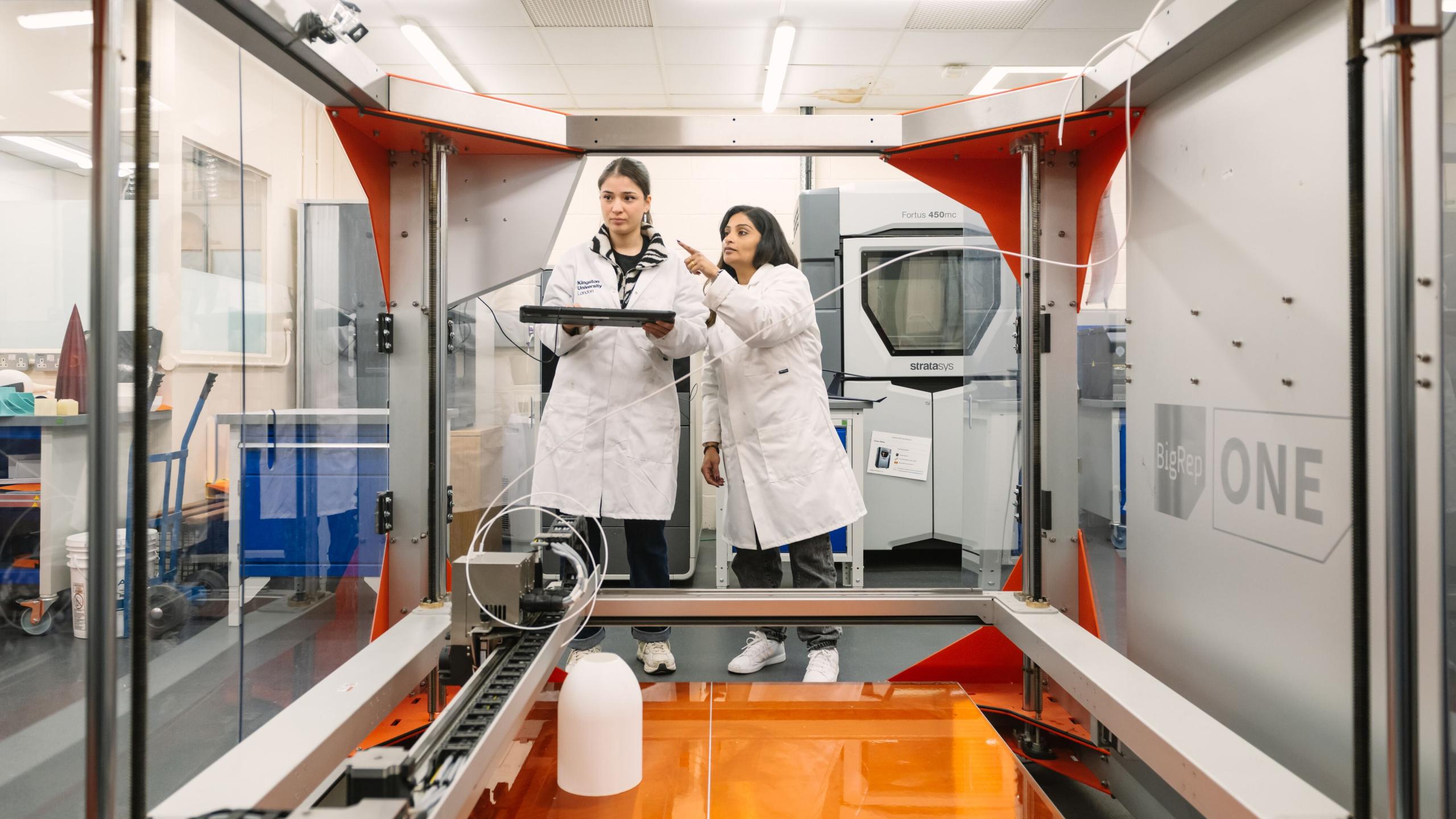
Our applied approach to teaching is supported by dedicated laboratories for mechanical, automotive and motorsport engineering. They include wind tunnels, state-of-the-art rapid prototyping and manufacturing machinery, and a fully-equipped materials lab. You will be able to experiment with engine test cells, an automotive diagnostics lab, and a modern electronics/robotics lab.
Expert academic support from faculty members with strong industry links ensures a comprehensive learning experience. Academic staff within the Department of Mechanical Engineering continue to practise and research at the cutting-edge of their discipline.
Our London location places you at the heart of one of the world’s leading engineering and technology hubs.
You can also achieve an MSc accredited by the Engineering Council and the Institution of Mechanical Engineers. In doing so, you’ll also meet, in part, the requirements for registration as a Chartered Engineer.
Facilities for Automation and Control Engineering
On this course, you will benefit from access to a brand-new Robotics Laboratory, equipped with state-of-the-art robotic platforms and experimental systems to support both teaching and research activities.
The laboratory includes a wide range of advanced robotic systems, such as:
- Franka Emika Research 3 collaborative manipulators
- FANUC ER-4iA industrial robotic arms
- Unitree G1 and H1 humanoid robots
- Unitree B1 quadrupedal robot
- Unitree Go2 platforms (wheeled and quadrupedal configurations)
These facilities will enable you to gain direct experience with industrial manipulators, legged locomotion, humanoid robotics, and autonomous systems, bridging the gap between theory and real-world applications.
You will use these platforms in laboratory sessions, coursework, and MSc projects, developing skills in robot programming, control implementation, perception, and AI-based decision making.
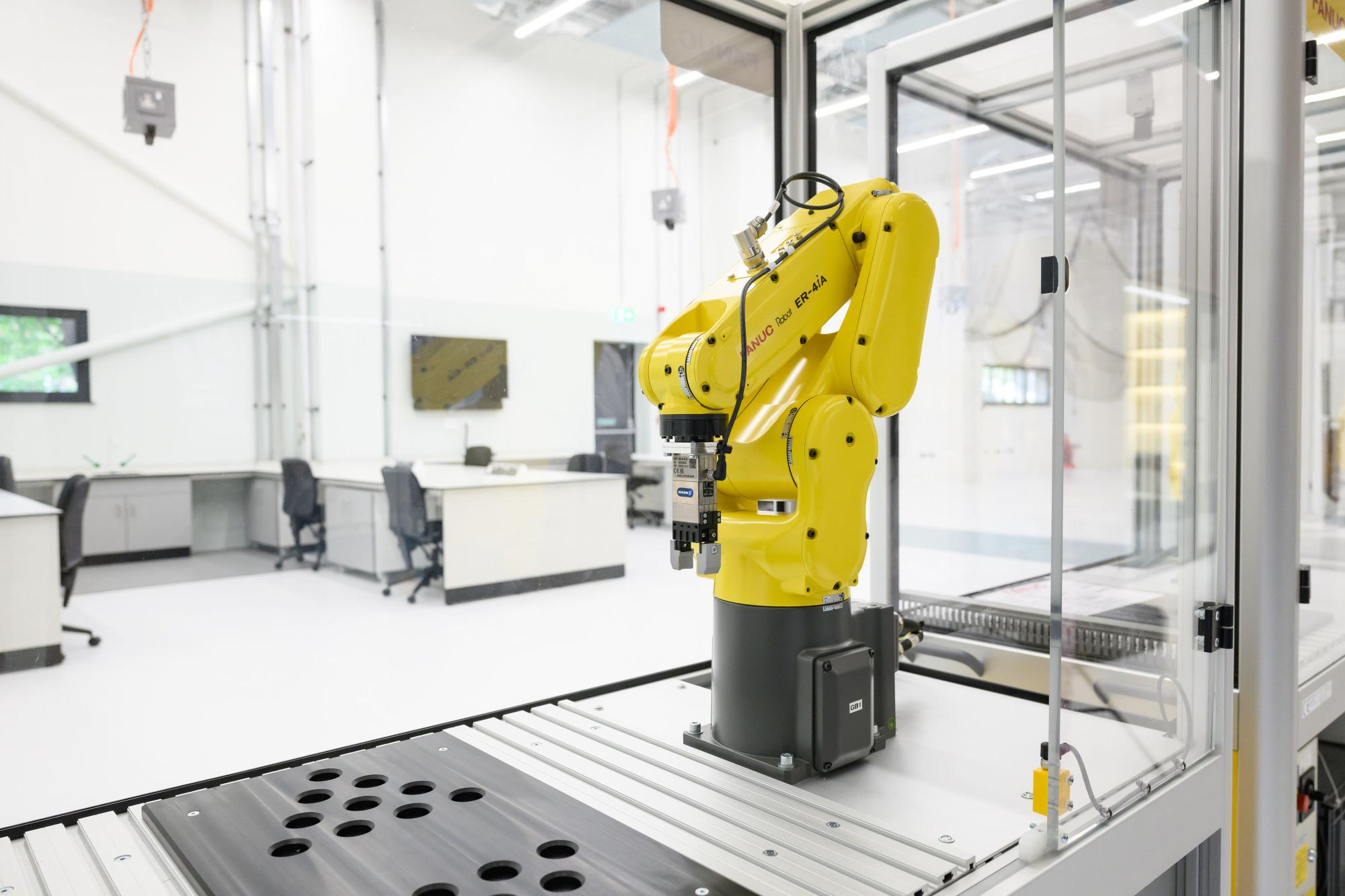
Robotic arm
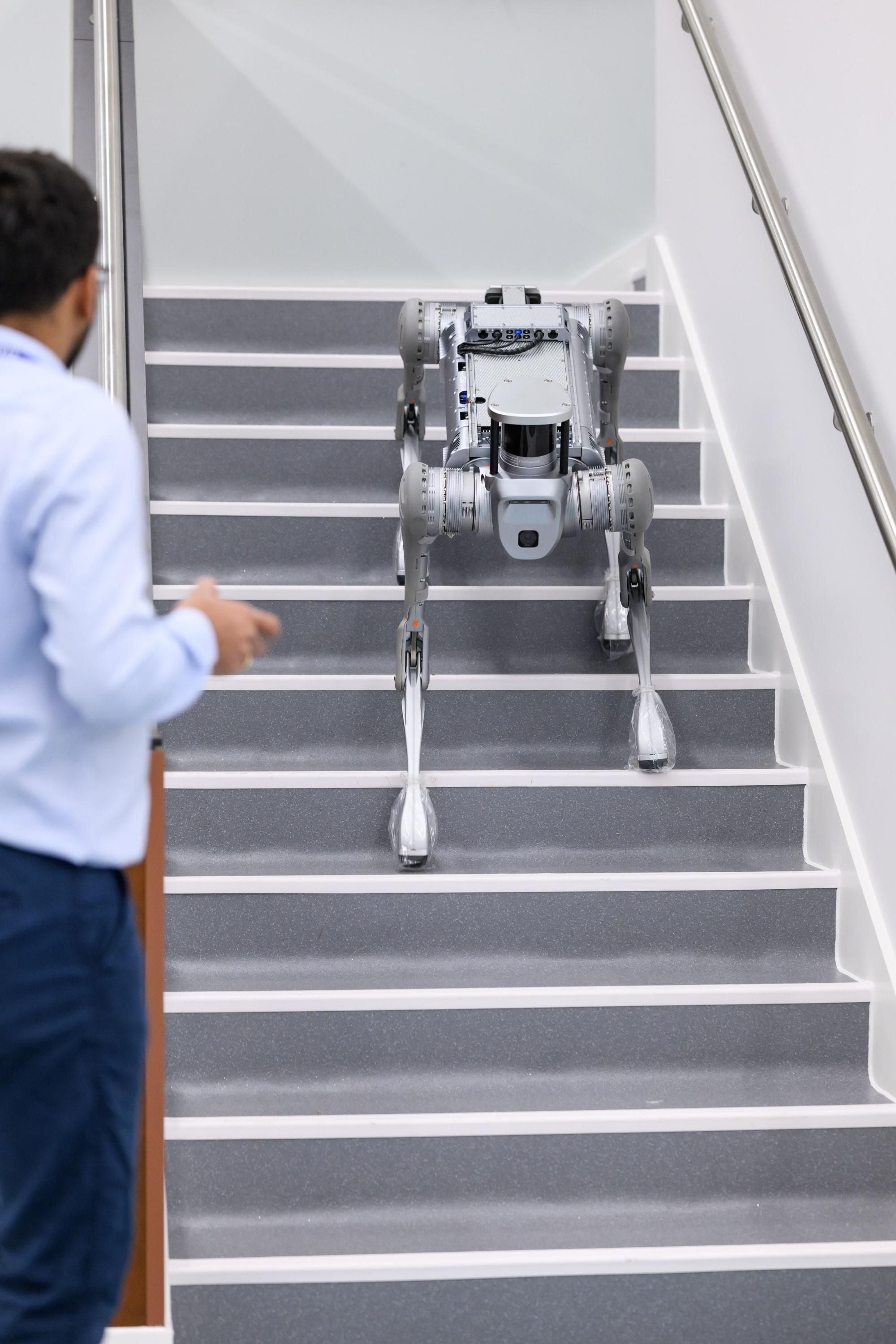
Robot descending stairs

Robots at Roehampton Vale campus

Students inspecting a humanoid robot

This course is currently going through the process of reaccreditation with the Institution of Mechanical Engineers (IMechE) for the intake of 2026 and beyond.
The MSc will meet, in part, the academic benchmark requirements for registration as a Chartered Engineer. Accredited MSc graduates who also have a BEng(Hons) accredited for CEng, will be able to show that they have satisfied the educational base for CEng registration.
It should be noted that graduates from an accredited MSc programme, who do not also have an appropriately-accredited honours degree, will not be regarded as having the exemplifying qualifications for professional registration as a chartered engineer with the Engineering Council; and will need to have their first qualification individually assessed through the individual case procedure if they wish to progress to CEng.
Find out more about Further Learning and discover all accredited degrees by visiting the Institution of Mechanical Engineers website.
Accreditation is a mark of assurance that the degree meets the standards set by the Engineering Council in the UK Standard for Professional Engineering Competence (UK-SPEC). Some employers recruit preferentially from accredited degrees, and an accredited degree is likely to be recognised by other countries that are signatories to international accords.
Check the Engineering Council website for more information.
Engineer your future
Meet our engineering students and hear about their experiences at Kingston University, the opportunities they’ve embraced and how they’re preparing for their future careers.

Course content
Modern automation and control engineering extends far beyond traditional robotics, encompassing a wide range of applications where intelligent decision-making and feedback control are essential. These include automated manufacturing systems, autonomous vehicles, smart sensing platforms, and advanced healthcare technologies such as assistive and rehabilitation devices.
A strong hands-on approach is central to the course. You will work in our state-of-the-art robotics laboratory, using advanced platforms such as industrial and collaborative manipulators, humanoid and quadrupedal robots, and haptic interfaces. This practical experience, combined with the use of industry-standard software and control tools, enables you to develop and validate real-world solutions in automation, robotics, and intelligent systems.
The course aligns with research activities of the teaching staff, implementing the latest advances in our research. Using applied research, you will have the opportunity to do your own research within an individual industry-relevant 'capstone' project. This includes preparation of a scientific paper, giving an opportunity for that first breakthrough into publishing your work.
To go on placement you will be required to pass every module first time with no reassessments. It is your responsibility to find a suitable paid placement. You will be supported by our dedicated placement team in securing this opportunity.
Please note: Optional modules only run if there is enough demand. If we have an insufficient number of students interested in an optional module, that module will not be offered for this course.
Project work
Students on this course undertake innovative MSc projects across robotics, automation, and intelligent systems. Recent examples include quadrupedal robot learning using reinforcement learning, human-robot collaboration in industrial tasks, autonomous navigation for vehicles, and robotic systems for surgical guidance. These projects combine advanced theory with hands-on implementation, preparing graduates for real-world engineering challenges.
Examples of recent projects include:
- Human-robot collaboration in lifting tasks
- Gait optimisation using reinforcement learning for quadrupedal robots
- Autonomous navigation for formula student AI
- Haptic virtual fixtures for surgical guidance with a robotic manipulator
- Model predictive control for flexible robotic arms
- AI-driven robot trajectory planning using vision-language models.
Modules
Core modules
Optional modules
Professional placement
Career opportunities
Graduates of the Automation and Control Engineering MSc are highly sought after in industries such as robotics, automotive engineering, aerospace, and industrial automation. Typical roles include Robotics Engineer, Systems Designer, and Automation Specialist.
The Department has strong links with industry leaders, including Delphi, Lotus Engineering, MAN and Thales. Many of our innovative, hands-on projects involve students as well as academics and receive national and global coverage.
You will take part in trips to the National Instruments' NIDays conference in London. With an individual project, you may research a subject of interest with the opportunity to publish your work.
Teaching and assessment
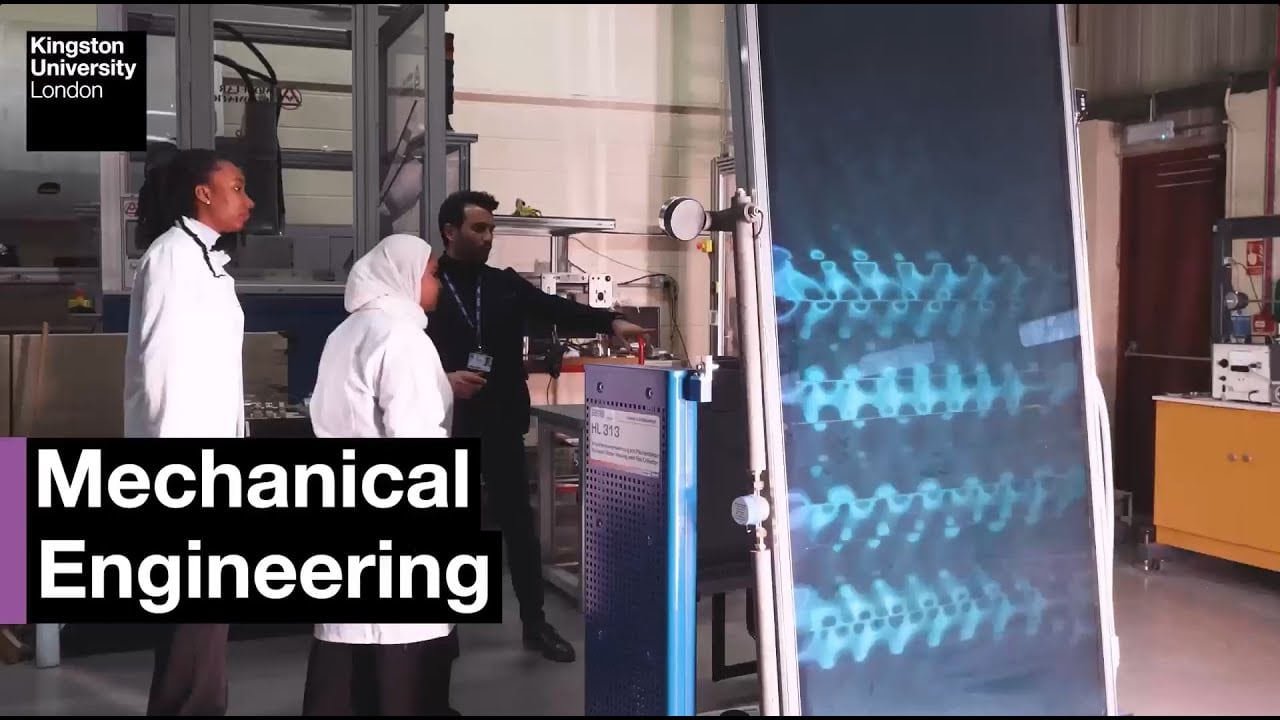
Discover mechanical engineering
Hear from our students and academics as they share what it's like to study mechanical engineering at Kingston. Learn about the facilities, opportunities and skills you can develop throughout your studies.
Fees and funding
Fees for future course years
Part time
If you start your second year straight after Year 1, you will pay the same fee for both years.
If you take a break before starting your second year, or if you repeat modules from Year 1 in Year 2, the fee for your second year may increase.
Additional course costs
Some courses may require additional costs beyond tuition fees. When planning your studies, you’ll want to consider tuition fees, living costs, and any extra costs that might relate to your area of study.
Your tuition fees include costs for teaching, assessment and university facilities. So your access to libraries, shared IT resources and various student support services are all covered. Accommodation and general living expenses are not covered by these fees.
Where applicable, additional expenses for your course may include:
Funding support for postgraduate students
If you are a UK student living in England and under 60, you can apply for a loan to study for a postgraduate degree. Find out more through the government's website.

Scholarships and bursaries
For students interested in studying Automation and Control Engineering MSc at Kingston, there are several opportunities to seek funding support:
How to apply
Before you apply
Please read the entry criteria carefully to make sure you meet all requirements before applying.
How to apply online
Use the course selector drop-down at the top of this page to choose your preferred course, start date and mode, then click 'Apply now'. You will be taken to our Online Student Information System (OSIS) where you will complete your application.
If you’re starting a new application, you’ll need to select ‘new user’ and set up a username and password. This will allow you to save and return to your application.
Application deadlines
We encourage you to apply as soon as possible. Applications will close when the course is full.
Information required to confirm your place
If English is not your first language, we will require proof of your proficiency to allow us to confirm your place on the course. This will generally be either an IELTS or TOEFL test certificate, which can be forwarded to us after you have submitted your application. If you do not hold a formal English language qualification, please indicate how you have acquired your proficiency in written and spoken English.
After you have applied
For courses that select on application alone, applicants should normally receive an initial decision or a request for more information within four to six weeks of receipt of their application. Our admissions team will notify you of the decision by email.
Learn more about the postgraduate application process in detail.

Course changes and regulations
The information on this page reflects the currently intended course structure and module details. To improve your student experience and the quality of your degree, we may review and change the material information of this course. Find out more about course changes
Programme Specifications for the course are published ahead of each academic year.
Regulations governing this course can be found on our website.