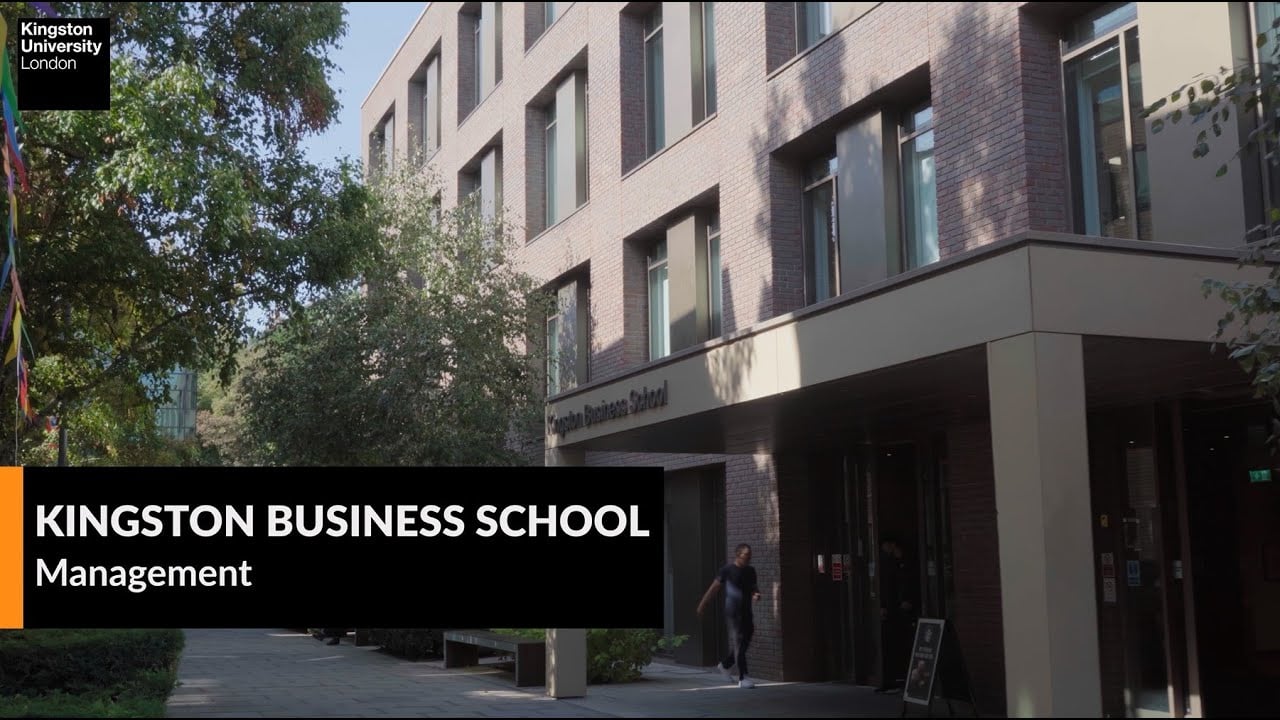
Business Management and Supply Chain BSc (Hons)
Subject and course type
- Business, management and marketing
- Undergraduate
Gain the skills and experience to excel in business, logistics, and operations. Through hands-on projects and industry-focused learning, you’ll master supply chain management, analyse business performance, and apply data-driven insights to real-world challenges. This will prepare you for a career in logistics, consultancy or business leadership.
You are reading:
Lead and transform the supply chains of tomorrow
Gain hands-on skills that set you apart in business, logistics and operations.
This course has been developed in close collaboration with industry experts to ensure you gain the knowledge and skills employers are actively looking for. From digital transformation and sustainability to building resilient global supply chains, you’ll explore the big issues shaping the future of business.
We work with leading organisations like the Chartered Institute of Procurement and Supply (CIPS) and the Chartered Institute of Logistics and Transport (CILT) to shape the curriculum, offer expert guest lectures, and create real-world projects led by employers. Our strong industry links include logistics and retail companies, digital supply chain consultancies, and procurement professionals - offering opportunities for placements, live projects, and co-created learning experiences.
Through this course, you won't just learn about supply chains - you'll develop the confidence and capabilities to help lead and transform them.
This exciting course blends business management with supply chain expertise to prepare you to excel in the real world. Through hands-on projects and industry-focused learning, you’ll build digital intelligence, sharpen critical thinking and develop a global, sustainability-minded perspective. Guided by our expert lecturers and focused on human-centric, enterprising skills, you’ll be fully equipped to thrive in logistics, operations, and supply chain roles – and make a real impact in today’s fast-moving business environment.

Why choose this course
This degree will give you a complete understanding of how supply chains function – and how to manage them in a fast-paced, global business environment. You’ll explore the entire process from procurement and production to transportation, inventory, and distribution, while also developing a strong foundation in wider business management principles.
You’ll tackle real challenges faced by businesses today. You'll work on live case studies, simulations, and employer-led projects. Using professional tools like ExtendSim, you’ll apply theory to practice and develop key skills such as critical thinking, problem-solving, and data-informed decision making. All these skills are essential for success in roles across supply chain, logistics, and operations.
Taught by a mix of industry professionals and academic researchers, you’ll gain a combination of practical industry insights and solid theoretical foundations. Embrace opportunities to network with industry professionals and take part in events to enhance your graduate employability. From hackathons to speed interviewing, you’ll discover the variety of the business world at Kingston.
International Success Support Scholarship
If you are an international student, you may be eligible for a £2,500 International Success Support Scholarship for this course, for September 2026 start only.
Kingston Business School accreditation
Kingston Business School holds the prestigious international accreditation by the AACSB (Association to Advance Collegiate Schools of Business) in recognition of the excellence of its business education. This accreditation has been earned by just 6% of the world's business schools. It recognises the high quality and standard of our business degree offerings.
Ready for business
At Kingston Business School, we believe that professional success is shaped by honing your personal capacity and skillset, supported by the academic framework of knowledge. Through vocationally rich, employer-engaged and research-informed courses, we work alongside our students to help them meet personal goals and career ambitions.
Course content
This course offers a forward-thinking approach to business education, combining core knowledge in Business Management and Supply Chain with the skills that employers across industries are actively seeking.
You’ll develop a strong foundation in key business areas, including marketing, finance, strategy, organisational behaviour, and responsible leadership. Alongside this, the course delivers in-depth insight into global supply chain management – covering strategy, procurement, operations, and sustainability.
The curriculum will help you understand how businesses operate, both locally and globally. You'll be equipped with the tools to lead, innovate, and adapt in a rapidly-evolving professional landscape.
Foundation Year in Business
If you would like to study this business degree at Kingston University but are not yet ready to join the first year of a BSc (Hons) course, you may want to consider studying this course with a foundation year.
The foundation year in business is part of a four-year degree. It is taught at Kingston College, close to Kingston University's Penrhyn Road campus. You'll be introduced to professional skills, numerical concepts, business IT, marketing, customer care and business law.
Year 1
Year 1 introduces the foundations of business. You'll cover the environmental influences faced by organisations, and the key concepts of marketing and sales. You'll also explore disruptive technologies and how they can be used to deliver digital enhanced solutions for all areas of business. You'll gain insights into how organisations and individuals collaborate to achieve organisational excellence.
Core modules
30 credits
Information Technology (IT) is the ultimate change agent impacting industry structures, strategic positioning, customer interactions and every part of a business function.
This module focuses on how data analytics and digital technologies are utilised by businesses to enable better decisions and alter consumer interactions. Understanding the business value of data and digital technology not only requires knowledge and an appreciation of various analytical techniques, but also on the effective use of IT for the gathering, summarising and communication of this information.
You will use a problem-centric approach to apply analytical techniques with the aid of information technology, while developing your employability skills.
30 credits
Understand the dynamic external environment shaping businesses today. This module equips you as a future manager with essential skills to understand how organisations operate in today's rapidly changing world. You'll explore the economic forces, market structures, and external factors that shape organisational success, from consumer behaviour and pricing strategies to globalisation and industrial policy.
30 credits
This module introduces you to the core principles of marketing and how they apply in today’s digital world. It covers fundamental marketing concepts, principles, and frameworks before exploring digital marketing, sales management, and professional selling.
You will learn how to create and deliver value to customers, understand buyer behaviour, and develop effective marketing communications. The module also examines how selling and buying have evolved in the digital era.
Through real-world examples, case studies, and interactive role-plays, you will gain both theoretical knowledge and practical skills in marketing, digital communications, and sales techniques.
30 credits
Why do some teams and organisations thrive while others struggle? This module explores the critical relationship between people and organisational success, combining organisational behaviour theory with applied practical human resource management. You'll examine how individuals, groups, and organisations interact, covering motivation, leadership, team dynamics, organisational culture, and strategic HR planning. Through live briefs, role play, games, and real-world challenges from external organisations, you'll learn to build effective stakeholder relationships in (technologically advanced) workplaces.
Year 2
In Year 2, you’ll explore how businesses create value, operate responsibly, and make data-driven decisions. You’ll study accounting and financial management, global logistics, and sustainable business practices, while gaining hands-on experience with real-world tools and scenarios. You’ll also develop practical skills in business analytics and digital intelligence, turning data into insights that support smarter business decisions.
Core modules
30 credits
This module looks at value creation across all functions of the corporation for different industries and types of businesses. It begins with an evaluation of key financial ratios used to evaluate financial performance of different types of businesses, focusing on how these metrics vary across industries and how firms can be assessed relative to peers and broader industry benchmarks.
It then moves to evaluating investment decisions, including capital budgeting, calculating project returns and how to choose the best projects that maximise returns for investment objectives and given risk constraints.
You will learn how to unlock value in a choice of capital structure and financing decisions in terms of instruments, markets where you issue and how you determine your optimal capital structure subject to a target cost of funding and other structural constraints.
It finishes with a review of how to put all this together to be able to value a business. Throughout the module you will also be introduced to how negotiation has an impact on each area.
30 credits
This module introduces you to the strategic and operational aspects of logistics within global supply chains. You will explore key areas such as procurement, warehousing, inventory management, transport systems, logistics service providers, and international logistics, while examining contemporary issues including sustainability, outsourcing, and risk management.
Through real-world case studies and applied learning, you will gain hands-on experience in international shipping, port management, carrier selection, and trade documentation. The module also considers how global business environments influence logistics decisions, including location strategy and sourcing.
Aligned with Kingston University’s Future Skills agenda, this module develops your digital fluency, problem-solving, adaptability, and cross-cultural competence. It also encourages ethical and sustainable logistics practices, supporting the United Nations Sustainable Development Goals (SDGs), which are global targets for a more sustainable and equitable world - particularly SDG 9 (Industry, Innovation and Infrastructure) and SDG 12 (Responsible Consumption and Production).
30 credits
The module covers the concepts and knowledge of sustainable business and supply chain management by looking at the ethical issues that emerge in the interactions between a business and its stakeholders and implementation of socially responsible and sustainable programmes and initiatives. You will study Environmental, Social and Governance (ESG), innovation, the triple bottom line – economic, environmental and social sustainability in the supply chains, uncertainty and risk management, stakeholder value and reputation.
In addition, the module will provide you with the project tools and techniques that focus on how to create a business case for sustainable projects, as well as utilising traditional and contemporary project and product delivery frameworks to support the delivery of sustainable benefits both to businesses, and a wider community of stakeholders. You will consider how investment decisions can incorporate ethics and risk.
30 credits
Understand strategic role of business analytics and digital intelligence in modern organisations. You will explore how data-driven approaches and emerging technologies - such as artificial intelligence, machine learning, and big data are transforming business models, customer experiences and innovation processes.
Through your studies you will gain hands-on experience with analytical tools, create impactful visualisations, and tackle ethical challenges ensuring you understand the broader implications of digital intelligence in business contexts.
Optional year
You have the option to take an additional year to study abroad or to undertake a year-long work placement (or even a mix of both).
For business students, this is a great opportunity to gain international experience and apply your learning in real-world settings. Whether through study abroad or a professional placement, you’ll broaden your outlook, build global connections, and develop key skills like adaptability and problem-solving.
Final year
In your final year, you’ll apply your knowledge to real-world business challenges, exploring supply chain management, operations, strategy, and leadership. You’ll also build career-ready skills through tailored projects, mentoring, and experiential learning, preparing you to lead and succeed in business, finance, and consultancy roles.
Core modules
30 credits
This module provides you with a comprehensive understanding of supply chain management and its strategic importance in modern business operations. You will explore the key concepts, processes, tools, and techniques that underpin effective supply chain design, planning, implementation, and control, with a focus on value creation, competitiveness, and sustainability.
You will examine the end-to-end supply chain, including procurement, production, logistics, distribution, and customer service. The module emphasises integration across supply chain activities, supplier relationship management, inventory control, risk mitigation, and the role of digital technologies such as Digital Product Passports, Enterprise Resource Planning systems, and supply chain analytics.
Through case studies, you will develop analytical and problem-solving skills to evaluate supply chain performance and propose improvements. The module also addresses contemporary challenges, including ethical sourcing, circular supply chains, and the impact of geopolitical and environmental factors on global supply networks. It is suitable for careers in retail, manufacturing, financial services, and consultancy.
30 credits
This module covers the concepts, theories and techniques on which strategic management is based and explores their application in a wide range of international business and other settings.
It aims to expand your' perspective on wider issues and scenarios, identifying opportunities and growth over medium and long terms. You will develop your ability to communicate and present your commercial awareness across the board.
30 credits
This module addresses complexity and sense making techniques to identify changes in the environment. It includes theoretical and practical perspectives of effective and responsible leadership in contemporary complex and changing organisational contexts. You will critically evaluate concepts of leadership alongside current practices of leading change in contemporary organisations faced with complex and uncertain environments.
You will critically reflect on your own leadership capacity and skills in initiating and leading change in different contexts, and consider your own progress and career journey in the context of these environments and leadership styles.
15 credits
Operations Management is a core discipline within business and supply chain education, focusing on the effective design, execution, and continuous improvement of processes that create and deliver goods and services. This module introduces you to the fundamental principles, frameworks, and tools used to manage operations in both manufacturing and service contexts. Key themes include process design, capacity management, quality management, supply chain integration, lean thinking, and the integration of sustainability and digital technologies into operations.
You will explore how operational decisions impact organisational performance and competitiveness, examining real-world examples from industries such as retail, logistics, healthcare, and manufacturing. The module also highlights the strategic role of operations in creating value, improving efficiency, and supporting long-term business resilience.
15 credits
This module gives you a dedicated opportunity to develop your Future Skills Graduate Attributes.
At the start of the module, you will be supported to self-assess your current skills profile. You will determine which attributes and skills you need to develop to support your career ambitions. In this process, you will be supported by a dedicated career coach, helping you explore a range of options that includes self-employment/freelancing, starting your own business, higher level study, and other professional graduate-level opportunities. Throughout the module, you will be given opportunities to engage with external mentors, to support reflection and to develop a professional network.
You will undertake a tailored series of activities and projects, aligned to your goals, from a menu of development options. This could include short courses, enrichment activities and experiential learning options such as micro-placements. You will also be able to reflect on activities outside the University that develop your graduate attributes, such as work or volunteering.
International students: direct application
Are you an international student? Have you decided Kingston is the place for you? If so, you can apply for this course directly, rather than having to go through UCAS.

What career opportunities does this course offer?
Our Business Management graduates go on to work in a wide range of organisations – from large multinational companies and small-to-medium enterprises (SMEs) to start-ups and social enterprises. Many choose to launch their own businesses, while others continue their studies through postgraduate degrees or pursue professional qualifications to further specialise.
Graduates from this course will also be well prepared for roles such as:
- supply chain manager
- warehouse and inventory controller
- logistics coordinator/manager
- procurement manager
- global sustainability supply chain analyst
The Business Management and Supply Chain BSc course will offer the option to undertake a one-year work placement. Placements help you to develop your skills and gain invaluable experience. You’ll:
- Improve your career choices
- Stand out from the competition when you apply for a job
- Support your studies (on average, students who take part in work placements get better results in their final year)
- Develop your professional skills
- Increase your employability (many of our students receive graduate job offers from their placement employer).
Future Skills
Our Future Skills programme is embedded within all our undergraduate courses and throughout the whole Kingston experience. These skills will help you to become a future-proof graduate by equipping you with the skills most valued by employers, such as problem-solving, digital competency and adaptability.
As you progress through your degree, you'll learn to navigate, explore and apply these graduate skills. You’ll also understand how to demonstrate and articulate to employers how these future skills give you the edge.

Teaching and assessment
Scheduled learning and teaching on this course includes timetabled activities including lectures, seminars and small group tutorials.
Outside the scheduled learning and teaching hours, you will learn independently through self-study which will involve reading articles and books, working on projects, undertaking research, preparing for and completing your work for assessments. Some independent study work may need to be completed on-campus, as you may need to access campus-based facilities such as studios and labs.
Our academic support team here at Kingston University provides help in a range of areas.
When you arrive, we'll introduce you to your personal tutor. This is the member of academic staff who will provide academic guidance, support you throughout your time at Kingston and show you how to make the best use of all the help and resources that we offer at Kingston University.
A course is made up of modules, and each module is worth a number of credits. You must pass a given number of credits in order to achieve the award you registered on, for example 360 credits for a typical undergraduate course or 180 credits for a typical postgraduate course. The number of credits you need for your award is detailed in the programme specification which you can access from the link at the bottom of this page.
One credit equates to 10 hours of study. Therefore 120 credits across a year (typical for an undergraduate course) would equate to 1,200 notional hours. These hours are split into scheduled and guided. On this course, the percentage of that time that will be scheduled learning and teaching activities is shown below for each year of study. The remainder is made up of guided independent study.
- Year 1: 12% scheduled learning and teaching
- Year 2: 12% scheduled learning and teaching
- Year 3: 12% scheduled learning and teaching
The exact balance between scheduled learning and teaching and guided independent study will be informed by the modules you take.
Your course will primarily be delivered in person. It may include delivery of some activities online, either in real time or recorded.
Types of assessment
- Year 1: Coursework 70%; practical 30%
- Year 2: Coursework 87%; practical 13%
- Year 3: Coursework 93%; exams 7%
Please note: the above breakdowns are a guide calculated on core modules only. If your course includes optional modules, this breakdown may change to reflect the modules chosen.
We aim to provide feedback to you on your assessments within 20 working days.
Your individualised timetable is normally available to students within 48 hours of enrolment. Whilst we make every effort to ensure timetables are as student friendly as possible, scheduled learning and teaching can take place on any day of the week between 9am and 6pm. For undergraduate students, Wednesday afternoons are normally reserved for sports and cultural activities, but there may be occasions when this is not possible. Timetables for part-time students will depend on the modules selected.
Fees and funding
| Fee category | Annual Fee |
|---|---|
| Home (UK students) | |
| £10,050* | |
| Foundation Year | £5,760 |
| International | |
| Year 1 (2027/28): | £To be confirmed |
| Year 2 (2028/29): | £To be confirmed |
| Year 3 (2029/30): | £To be confirmed |
| Year 4 (2030/31): | £To be confirmed |
The tuition fee you pay depends on whether you are assessed as a 'Home' (UK), 'Islands' or 'International' student.
Please visit the Fees and Funding page for more information.
For courses with Professional Placement, the fee for the placement year can be viewed on the undergraduate fees table. The placement fee published is for the relevant academic year stated in the table. This fee is subject to annual increases but will not increase by more than the fee caps as prescribed by the Office for Students or such other replacing body.
*For full-time programmes lasting more than one academic year, a tuition fee is payable for each academic year of the course.
Your annual tuition fee covers your first attempt at all modules required for that academic year. Any re-study or repeat of modules will incur additional charges, calculated according to the number of credits taken.
Home students (UK):
Tuition fees are subject to inflation-linked increases in line with government policy. Updated fees will be confirmed in line with the maximum fee cap set by the Government or the Office for Students (OfS) for each academic year. This means your fee may increase for each academic year of study, but only up to the maximum amount permitted for that year.
Eligible UK students can apply to the Government for a tuition loan, which is paid direct to the University. This has a low interest-rate which is charged from the time the first part of the loan is paid to the University until you have repaid it.
International students:
Full-time taught international student fees are subject to an annual increase, which is published in advance for the full duration of your programme.
| Fee category | Annual Fee |
|---|---|
| Home (UK students) | |
| £9,790* | |
| Foundation Year | £5,760 |
| International | |
| Year 1 (2026/27): | £18,500 |
| Year 2 (2027/28): | £19,200 |
| Year 3 (2028/29): | £19,900 |
| Year 4 (2029/30): | £20,700 |
The tuition fee you pay depends on whether you are assessed as a 'Home' (UK), 'Islands' or 'International' student.
Please visit the Fees and Funding page for more information.
For courses with Professional Placement, the fee for the placement year can be viewed on the undergraduate fees table. The placement fee published is for the relevant academic year stated in the table. This fee is subject to annual increases but will not increase by more than the fee caps as prescribed by the Office for Students or such other replacing body.
*For full-time programmes lasting more than one academic year, a tuition fee is payable for each academic year of the course.
Your annual tuition fee covers your first attempt at all modules required for that academic year. Any re-study or repeat of modules will incur additional charges, calculated according to the number of credits taken.
Home students (UK):
Tuition fees are subject to inflation-linked increases in line with government policy. Updated fees will be confirmed in line with the maximum fee cap set by the Government or the Office for Students (OfS) for each academic year. This means your fee may increase for each academic year of study, but only up to the maximum amount permitted for that year.
Eligible UK students can apply to the Government for a tuition loan, which is paid direct to the University. This has a low interest-rate which is charged from the time the first part of the loan is paid to the University until you have repaid it.
International students:
Full-time taught international student fees are subject to an annual increase, which is published in advance for the full duration of your programme.
| Fee category | Annual Fee |
|---|---|
| Home (UK students) | |
| £9,535* | |
| Foundation Year | £5,760 |
| International | |
| Year 1 (2025/26): | £17,700 |
| Year 2 (2026/27): | £18,500 |
| Year 3 (2027/28): | £19,200 |
| Year 4 (2028/29) | £19,900 |
The tuition fee you pay depends on whether you are assessed as a 'Home' (UK), 'Islands' or 'International' student. In 2025/26 the fees for this course are above.
Please visit the Fees and Funding page for more information.
For courses with Professional Placement, the fee for the placement year can be viewed on the undergraduate fees table. The placement fee published is for the relevant academic year stated in the table. This fee is subject to annual increases but will not increase by more than the fee caps as prescribed by the Office for Students or such other replacing body.
* For full time programmes of a duration of more than one academic year, the published fee is an annual fee, payable each year, for the duration of the programme. Your annual tuition fees cover your first attempt at all of the modules necessary to complete that academic year. A re-study of any modules will incur additional charges calculated by the number of credits. Home tuition fees may be subject to annual increases but will not increase by more than the fee caps as prescribed by the Office for Students or such other replacing body. Full time taught International fees are subject to an annual increase and are published in advance for the full duration of the programme.
Eligible UK students can apply to the Government for a tuition loan, which is paid direct to the University. This has a low interest-rate which is charged from the time the first part of the loan is paid to the University until you have repaid it.
Additional course costs
Some courses may require additional costs beyond tuition fees. When planning your studies, you’ll want to consider tuition fees, living costs, and any extra costs that might relate to your area of study.
Your tuition fees include costs for teaching, assessment and university facilities. So your access to libraries, shared IT resources and various student support services are all covered. Accommodation and general living expenses are not covered by these fees.
Where applicable, additional expenses for your course may include:
Our libraries have an extensive collection of books and journals, as well as open-access computers and laptops available to rent. However, you may want to buy your own computer or personal copies of key textbooks. Textbooks may range from £50 to £250 per year. And a personal computer can range from £100 to £3,000 depending on your course requirements.
While most coursework is submitted online, some modules may require printed copies. You may want to allocate up to £100 per year for hard-copies of your coursework. It’s worth noting that 3D printing is never compulsory. So if you choose to use our 3D printers, you’ll need to pay for the material. This ranges from 3p per gram to 40p per gram.
Kingston University will pay for all compulsory field trips. There may be the opportunity for a visit to an external assessment centre as well as optional day trips to companies in London. The cost would be approximately £100 per year.
Your tuition fees don’t cover travel costs. To save on travel costs, you can use our intersite bus service. This route links the campuses and halls of residence with local train stations - Surbiton, Kingston upon Thames and Norbiton.
If you choose to do a placement year, travel costs will vary depending on your location. There is an internship option in the second year. Travel for this will vary according to the location of the internship and whether travel costs are covered by the internship provider. However, for a London-based internship, the cost of a London Travelcard for zones 1-6 for three months could cost up to £600.
Scholarships and bursaries
For students interested in studying this course at Kingston, there are several opportunities to seek funding support.

International Success Support Scholarship
The International Success Support Scholarship provides £2,500 towards tuition fees if you are an international student starting in September 2026, on this course or selected others. Eligible undergraduate students can receive £2,500 per year for up to three years, helping to support their academic journey from day one.
You don’t need to apply separately. If you’re eligible, the scholarship will automatically be applied to your tuition fee invoice, empowering you to focus on achieving your goals at Kingston University.
For more details, please visit the International scholarships webpage.
Course changes and regulations
The information on this page reflects the currently intended course structure and module details. To improve your student experience and the quality of your degree, we may review and change the material information of this course. Find out more about course changes
Programme Specifications for the course are published ahead of each academic year.
Regulations governing this course can be found on our website.
Key information
The scrolling banner below displays some key factual data about this course (including different course combinations or delivery modes of this course where relevant).