Environmental Science BSc (Hons)
Subject and course type
- Environmental science and geography
- Undergraduate
Kickstart your career in environmental science with Kingston University, ranked Top 10 in the UK for Geography in the Guardian University Guide 2026. Our Environmental Science BSc (Hons) course is also accredited by the Institute of Sustainability and Environmental Practitioners (ISEP), meaning you'll be employment-ready upon graduation.
You are reading:
Join the movement to find sustainable solutions to environmental challenges
Gain the skills to tackle climate change, development pressures, resource use and pollution.
On our Environmental Science BSc (Hons) course, we place a strong emphasis on real world learning, in the natural classroom outdoors. As a result, you can turn theory-based learning into real world experience with the local and global fieldwork opportunities we offer throughout this course.
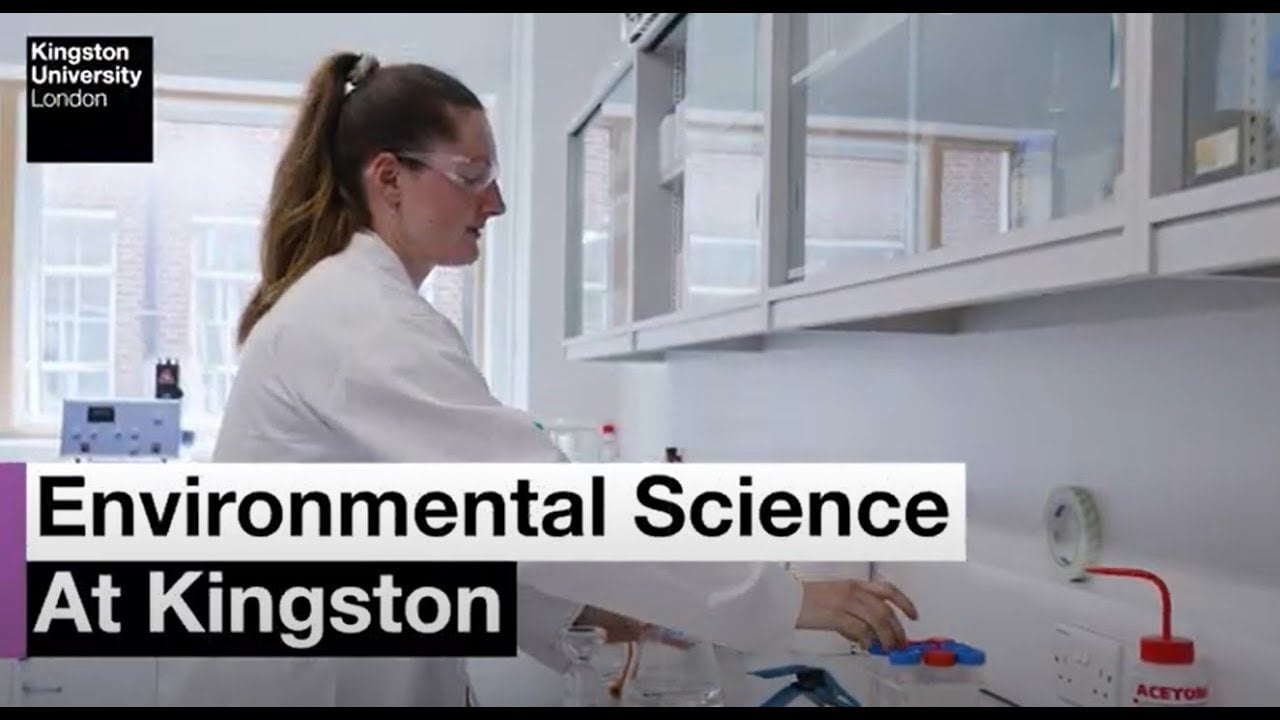
At our Penrhyn Road campus, you will have access to a modern environment with the latest equipment, including:
- Laboratories dedicated to environmental science learning and research
- The £9.8 million Eadweard Muybridge building with state-of-the-art laboratories
- Computing laboratories and a team of IT technicians to offer assistance
- The award-winning Town House, with a well-stocked library that boasts an impressive collection of texts, journals and online e-books/journals
- Excellent social spaces, plus a large, fully equipped gym and fitness centre
- A fully integrated virtual learning environment (Canvas) so you can learn and interact with others on your course 24/7
The laboratory lessons on this course interest me the most, as they enable us to relate the theory into practice. The group projects have also helped us learn to study independently. I'm now much more confident in discussions and able to ask the lecturers for help whenever I want.
Why choose this course
We're facing huge environmental challenges, such as climate change, development pressures, resource use and pollution. Throughout this course, you'll gain the skills to investigate, monitor, evaluate and understand environmental systems. As well as to predict and respond to such environmental challenges.
The course is highly practical. You will analyse environmental samples in the lab. For example, you'll investigate water quality or measure metal contamination in soils. You will acquire the skills and knowledge needed to analyse geospatial data, learning how to use ArcGIS to evaluate and solve many environmental issues.
You'll continually apply your studies to real-life situations through fieldwork in the UK and overseas, and through paid work placement opportunities. For example, during Years 2 and 3, many of the modules on this course include day trips and excursions.
Throughout Years 2 and 3 of this course, many of the modules include day trips and excursions.
You might visit:
- The River Thames and its tributaries (water quality, water management, geomorphology, surveying)
- Ashtead Common, a local national nature reserve (ecology, conservation), close to Kingston
- Ham Common, Richmond (soil contamination)
- The nearby North Downs and Surrey Hills (landscapes, ecology, agriculture)
- The Sussex-Kent coastline (coastal erosion, landslides, coastal management, climate change)
- The Thames Estuary and Two-Tree Island (Essex) (climate change, flood risk and mitigation/adaptation strategies, climate resilience)
- Rochester, the Medway Estuary and the Isle of Sheppey (flood and erosion risk mapping, cliff retreat, flood management and policy)
Top 10 in the UK for Geography, The Guardian University Guide 2026.
100% of students were satisfied with the academic support they received (NSS 2025).
Field trips
What to expect on our field trips
You will also take part in longer field trips throughout the course, including:
Year 1: Southern UK Based
In your first year you will do a southern UK-based, week-long trip to a specific area, such as Dorset. Here you will:
- learn and develop a variety of environmental fieldwork skills
- consider the ways in which we collect and analyse data to understand social and environmental issues
- study a range of topics, such as water resources, tourism and natural capital, coastal hazards and climate change
- complete work suggested by lectures and individual projects
- research controversial environmental issues
Year 2: International fieldwork options
At the end of Year 2, students have opportunities to engage in optional fieldwork overseas during the summer (for at least two weeks), collecting data for their final year research projects. This is part funded by the Turing Scheme (UK government programme) and by the University. Recent summer fieldwork destinations include Almeria in Spain, Indonesia, Malaysia, France, South Africa and Chesapeake Bay in the USA.
Year 3: European based
In Year 3, you will participate in an overseas residential field trip to a location in Europe, such as Tenerife. This gives you the chance to study an environment very different to that of the UK. You will focus on ecological diversity, develop a range of ecological techniques and design and manage a group-based ecological project.
Accreditation
This course is accredited by the Institute of Sustainability and Environmental Practitioners (ISEP). ISEP is the professional body for everyone working in environment and sustainability. This course entitles students to FREE student membership for the duration of the course and on successful completion you qualify for GradISEP. Graduate membership is a launchpad for future leaders within environment and sustainability and offers a range of benefits to support you throughout your career. You can then "Fast track" to Practitioner Membership.
The degree apprenticeship route is accredited by the ISEP.
Course content
Please note: If you would like to study one of our science degrees at Kingston University but are not yet ready to join the first year of a BSc (Hons) course, you can include an extra foundation year within your chosen degree. Please see the science foundation year course page for details of modules.
Year 1
Year 1 introduces key environmental science concepts and methods of scientific investigation. You will learn in a variety of environments including the classroom and laboratory and develop fundamental fieldwork skills. You will study environmental systems and the nature and consequences associated with environmental change. You will investigate how people interact with their environment and examine sustainability challenges. You will learn to make accurate observations of environmental phenomena in the field and the laboratory, and evaluate your findings.
Core modules
30 credits
This module introduces key fundamental topics in physical geography, overviewing the various spheres of the Earth, associated processes and interaction. Themes are presented systematically as a cross-section of the Earth's physical structure: geological underpinning, Earth surface processes (introducing geomorphology, the pedosphere and hydrosphere), the atmosphere, and the biosphere.
Interwoven within these topics are lectures on associated environmental hazards, including geophysical hazards (e.g., volcanic eruptions, earthquakes and tsunamis), atmospheric hazards (including hurricanes and tornadoes) and environmental and ecological hazards (including oil spills, and wildfires).
Processes behind these major natural and man-made environmental hazards will be described, with reasons provided for their occurrence and global spatial distribution. Detailed case studies from a variety of geographical regions will help to build a portfolio of examples, enhancing student knowledge of the processes, impacts and means of forecasting and mitigating against hazards becoming disasters.
The module introduces students to the application of environmental and geophysical knowledge and skills to real world challenges and potential discipline-related employment opportunities.
30 credits
Maps are tools for visualising spatial information to communicate pattern, processes, and the results of geographical analysis. This module explores the principles and practice of map design and production using Geographical Information System (GIS) software. Basic GIS principles are introduced, including data modelling, data quality, and simple analytical operations. The cartographic design process will be examined through the lens of the ‘map communication model’ (MCM) and graphic and cartographic design principles. The MCM will be critically evaluated in the modern context of interactive web maps, open source enabled self-production, crowdsourcing, personalisation, ‘big data’, and emerging AI technologies. Ethical and legal issues relating to data collection, linkage, copyright and attribution are explained. Digital literacy employability skills will be developed, and the module will provide a baseline for developing more advanced GIS and mapping skills in Levels 5 and 6.
30 credits
This module explores the foundations for academic and professional success, introducing you to the higher education learning environment and supports your development as an effective, independent learners.
The module equips you with essential academic and research skills to thrive in professional environments. It encourages you to take ownership of your learning journey by developing competencies aligned with Kingston University Graduate Attributes and discipline-specific professional standards. Through weekly sessions, you will explore effective learning strategies, assessment for learning, and the role of feedback and critical self-reflection. You are introduced to key research methods including research design, qualitative and quantitative data collection, analysis, and interpretation. Fieldwork is a central component, offering hands-on experience in geographical and environmental investigation.
30 credits
This module introduces the basic principles of environmental science, including environmental chemistry, water quality analysis/assessment, environmental pollution, and ecology. The module further explains the core concepts and approaches of sustainability, including sustainable development and SDGs, environmental justice and perception. The module will investigate basic environmental principles to help you understand how physical and human processes and activities can promote change in environmental systems and sustainability at a range of spatial and temporal scales. You will investigate the impacts of environmental change, sustainable development, understand their significance, and show how this knowledge can be applied to the management of environmental and sustainability challenges. The importance of a holistic approach to problem solving in the environmental sciences will be introduced along with material on key underpinning scientific disciplines including environmental chemistry and ecology through the investigation of global habitats.
Year 2
Year 2 builds knowledge of environmental systems and develops your analytical science skills portfolio through the collection, analysis and interpretation of environmental data. You will develop your practical skills in environmental project management, cartography and GIS (Geographic Information Science). You will have opportunities to further develop you fieldwork skills via international field work in Europe, Asia or North America.
Core modules
30 credits
This module explores the physical science of Earth's hydrosphere and the atmosphere, key processes and principles, and associated hazards. Through a sculpted narrative, the module will take students on an investigative journey to explore land, ocean and atmosphere environments and their interactions, with a persistent focus on the impact of climate change on these systems.
Environments to be explored include the dynamic coastal zone (including beaches, saltmarshes, estuaries and deltas), rivers and drainage basins, oceans and ocean circulation, and the atmosphere. Hydrological and sedimentological processes will be considered, following a source to sink approach.
A variety of hydrospheric and atmospheric hazards will be considered throughout the module. These include riverine and coastal flooding, sea-level rise, and severe weather hazards associated with ENSO (El Nino Southern Oscillation), the Indian Ocean Dipole and the SE Asian Monsoon System. Fieldwork, GIS and remote sensing practical sessions are integral to this module; they provide real-world skills and training relevant to a wide variety of environmental science, hazards and geography careers. An embedded field trip will investigate hazards associated with environmental change in the Thames Estuary and explore appropriate mitigation and adaptive strategies to best manage this environment in the future.
30 credits
You will be trained in quantitative and qualitative data analysis, as well as Geographical Information Science (GIS). You will learn how to collect, manipulate, and interpret environmental and geospatial data using industry-standard tools such as SPSS, Envivo and ArcGIS. The module will develop practical skills in statistical interpretation of environmental datasets, as well as in coding and interpreting qualitative data. You will also develop practical skills in visualisation, mapping and interpretation of different datasets (e.g., land use, pollution, biodiversity). Emphasis will be placed on critical evaluation of data sources and analytical methods. The skills acquired will support you in making evidence-based decisions and applying your learning to project-based investigations, including fieldwork and research projects.
30 credits
The module comprises two key components, ecology and contaminated land. Ecological concepts are explained using a hierarchical approach: population, community and ecosystem levels of ecology are explored, highlighting the interactions between man and nature. A research-led approach emphasises the models by which ecologists explain complex biological systems. Contaminated land principles are explained using a systematic approach. First, an understanding of the importance of key soil properties and processes underpinning storage/retention, transport and bioavailability of contaminants in soil is explained. This forms the essential base for introducing and explaining soil pollution, including the impact of pollutants on environmental systems (soil, water, plants and air) and human health, before discussing pollution mitigation and control/remediation strategies. Core factual material is provided using keynote lectures to explain concepts. The practical and fieldwork elements develop observing, sampling, recording, laboratory testing, data analysis, data interpretation and presentation skills.
30 credits
This module explores how we manage the environment and promote climate resilience through the study of environmental policy and practice. It develops the Level 5 Future Skills Explore Learning Outcomes and encourages you to reflect on the Kingston University Graduate Attributes through project-based learning. The first part focuses on environmental policy, examining global challenges and the legal, political, and economic systems that shape our relationship with the environment. It highlights the importance of interdisciplinary approaches to informed decision-making. In the second part, you apply your teamwork skills to an industry live brief, pitching solutions to a Dragon’s Den-style panel of professionals and academics. Through assignment-led learning, you connect environmental policy with practical action and reflect on your growing professional competence via a shared and personal blog. The module also supports preparation for Level 6 and your future professional pathway, helping you make informed decisions about industrial placements or Apply projects. Integrated Personal Tutorial System (PTS) sessions provide small-group discussions that reinforce key ideas, develop reflective practice, and deepen understanding of environmental management and sustainability challenges.
Optional professional placement year
The optional professional placement year between Years 2 and 3 includes a work placement or international exchange. The work placement gives an opportunity for paid work and valuable experience in an environmental field. We will keep in touch with you throughout your placement, ensuring the skills and training you receive translate effectively into your studies and career aspirations.
Year 3/4
Final year modules build on your environmental knowledge and skills delivered in Year 2, enabling you to apply your knowledge to investigate contemporary environmental science challenges. Your final year independent research project will reflect your personal environmental interests and help you develop your employability skills. You will also get to expand and develop your knowledge and skills on an overseas field trip, currently based in Tenerife.
Core modules
30 credits
This module provides students with experiences in the design, preparation and execution of an independent and supervised programme of research.
The module guides students to employ reflective learning techniques and to develop a variety of level-appropriate employability skills by engaging with their research project as academic research with commercial, policy or political value which requires effective dissemination and communication to a range of suitable audiences. Employability skills developments are integral to the Research Project module.
The specific nature of the research project chosen allows the students to target specific skills they wish to develop in their learning pathway and the project supervisors will work closely with the students to identify and articulate these skills and relate these to Future Skills.
30 credits
This module examines the relationship between land and water management, global challenges associated with the management of land and water, and sustainable options to seek their resolution.
The module will develop an understanding and critical evaluation of these challenges from several perspectives through the systematic investigation of land-use practices, the applications of soil science and linking practices to processes and patterns of land degradation, the interface between land management and water management, global concerns for water security, land use impacts on the wider environment, including climate, physical and socio-political drivers and an examination of the regional land-water management issues.
The module will highlight a range of employability skills and challenge students to identify and value the transferability of these skills to the workplace. These will include assessment for learning activities that will develop fieldwork skills, problem-solving and the communication of environmental knowledge.
15 credits
The importance of historical and contemporary land use practices in shaping current biotic communities is discussed. Current issues in biodiversity conservation and biodiversity patterns influenced by anthropogenic climate change are explored through a lecture and seminar programme. Fieldwork supports the lectures and assignments which are designed to introduce students to important aspects of practical conservation work, such as global strategies for mitigating effects of biodiversity loss, writing funding bids, species conservation strategies, and communicating to non-specialists/decision makers.
15 credits
This module gives you a dedicated opportunity to develop your Future Skills Graduate Attributes.
At the start of the module, you will be supported to self-assess your current skills profile. You will determine which attributes and skills you need to develop to support your career ambitions. In this process, you will be supported by a dedicated career coach, helping you explore a range of options that includes self-employment/freelancing, starting your own business, higher level study, and other professional graduate-level opportunities. Throughout the module, you will be given opportunities to engage with external mentors, to support reflection and to develop a professional network.
You will undertake a tailored series of activities and projects, aligned to your goals, from a menu of development options. This could include short courses, enrichment activities and experiential learning options such as micro-placements. You will also be able to reflect on activities outside the University that develop your graduate attributes, such as work or volunteering.
30 credits
The module examines key issues relating to climate change in the areas of science, policy and society.
The science of climate change will be explored through an investigation of the climate system and an examination of indicators such as sea-level change and ocean acidification.
The influence of human activities such as greenhouse gas emissions will be explored, and future climate scenarios evaluated.
Applications of AI in climate modelling will also be assessed. You will learn to critically discuss models of future climate change and produce your own climate projections for the UK based on real data.
The module will examine local and national strategies to adapt to and mitigate against impacts of climate change. This will include investigations into adaptations in agriculture and the food industry, and an exploration of environmental and socio-economic challenges faced in urban areas. The module will investigate the current and future impact on coastal communities and habitats, with assessment of risks associated with sea level rise, coastal flooding and erosion. This will include a field trip to investigate coastal challenges in southeast England and explore mitigation and adaptation strategies that enhance resilience. Assessments will develop real-world skills and reflect upon KU Graduate Attributes.
International students: direct application
Are you an international student? Have you decided Kingston is the place for you? If so, you can apply for this course directly, rather than having to go through UCAS.

What career opportunities does this course offer?
This course has excellent links with industry, business and environmental organisations. Graduates work as environmental consultants, analysts or technicians with local authorities, in waste management, wildlife conservation, and in teaching and administrative roles. In addition, many of our graduates progress to our MSc in Environmental Management.
Careers and recruitment advice
The faculty has a specialist employability team. It provides friendly and high-quality careers and recruitment guidance, including advice and sessions on job-seeking skills. For example, CV preparation, application forms and interview techniques. Specific advice is also available for international students about the UK job market and employers' expectations and requirements.
The team runs employer events throughout the year, including job fairs, key speakers from industry and interviews on campus. These events give you the chance to hear from, and network with, employers in an informal setting.
Future Skills
Our Future Skills programme is embedded within all our undergraduate courses and throughout the whole Kingston experience. These skills will help you to become a future-proof graduate by equipping you with the skills most valued by employers, such as problem-solving, digital competency and adaptability.
As you progress through your degree, you'll learn to navigate, explore and apply these graduate skills. You’ll also understand how to demonstrate and articulate to employers how these future skills give you the edge.

Teaching and assessment
Scheduled learning and teaching on this course includes timetabled activities including lectures, seminars and small group tutorials. It may also include placements, project work, workshops, workshops in computer labs, and laboratory workshops.
Outside the scheduled learning and teaching hours, you will learn independently through self-study which will involve reading articles and books, working on projects, undertaking research, preparing for and completing your work for assessments. Some independent study work may need to be completed on-campus, as you may need to access campus-based facilities such as studios and labs.
Our academic support team here at Kingston University provides help in a range of areas.
When you arrive, we'll introduce you to your personal tutor. This is the member of academic staff who will provide academic guidance, be a support throughout your time at Kingston and show you how to make the best use of all the help and resources that we offer at Kingston University.
A course is made up of modules, and each module is worth a number of credits. You must pass a given number of credits in order to achieve the award you registered on, for example 360 credits for a typical undergraduate course or 180 credits for a typical postgraduate course. The number of credits you need for your award is detailed in the programme specification which you can access from the link at the bottom of this page.
One credit equates to 10 hours of study. Therefore 120 credits across a year (typical for an undergraduate course) would equate to 1,200 notional hours. These hours are split into scheduled and guided. On this course, the percentage of that time that will be scheduled learning and teaching activities is shown below for each year of study. The remainder is made up of guided independent study.
- Year 1: 22% scheduled learning and teaching
- Year 2: 26% scheduled learning and teaching
- Year 3: 23% scheduled learning and teaching
The exact balance between scheduled learning and teaching and guided independent study will be informed by the modules you take.
Your course will primarily be delivered in person. It may include delivery of some activities online, either in real time or recorded.
Types of assessment
- Year 1: Coursework 60%; practical 15%; exams 25%
- Year 2: Coursework 87%; exams 13%
- Year 3: Coursework 84%; practical 3%; exams 13%
Please note: the above breakdowns are a guide calculated on core modules only. If your course includes optional modules, this breakdown may change to reflect the modules chosen.
We aim to provide feedback on assessments within 20 working days.
Your individualised timetable is normally available to students within 48 hours of enrolment. Whilst we make every effort to ensure timetables are as student-friendly as possible, scheduled learning and teaching can take place on any day of the week between 9am and 6pm. For undergraduate students, Wednesday afternoons are normally reserved for sports and cultural activities, but there may be occasions when this is not possible. Timetables for part-time students will depend on the modules selected.
Fees and funding
| Fee category | Annual Fee |
|---|---|
| Home (UK students) | |
| £10,050* | |
| Foundation Year: | £10,050 |
| International | |
| Year 1 (2027/28): | £To be confirmed |
| Year 2 (2028/29): | £To be confirmed |
| Year 3 (2029/30): | £To be confirmed |
| Year 4 (2030/31): | £To be confirmed |
The tuition fee you pay depends on whether you are assessed as a 'Home' (UK), 'Islands' or 'International' student.
For courses with Professional Placement, the fee for the placement year can be viewed in our Fees and Funding section. The placement fee published is for the relevant academic year stated in the table. This fee is subject to annual increases but will not increase by more than the fee caps as prescribed by the Office for Students or such other replacing body.
*For full-time programmes lasting more than one academic year, a tuition fee is payable for each academic year of the course.
Your annual tuition fee covers your first attempt at all modules required for that academic year. Any re-study or repeat of modules will incur additional charges, calculated according to the number of credits taken.
Home students (UK): Tuition fees are subject to inflation-linked increases in line with government policy. Updated fees will be confirmed in line with the maximum fee cap set by the Government or the Office for Students (OfS) for each academic year. This means your fee may increase for each academic year of study, but only up to the maximum amount permitted for that year.
Eligible UK students can apply to the Government for a tuition loan, which is paid direct to the University. This has a low interest-rate which is charged from the time the first part of the loan is paid to the University until you have repaid it.
International students: Full-time taught international student fees are subject to an annual increase, which is published in advance for the full duration of your programme.
| Fee category | Annual Fee |
|---|---|
| Home (UK students) | |
| £9,790* | |
| Foundation Year: | £9,790 |
| International | |
| Year 1 (2026/27): | £19,200 |
| Year 2 (2027/28): | £19,900 |
| Year 3 (2028/29): | £20,700 |
| Year 4 (2029/30): | £21,500 |
The tuition fee you pay depends on whether you are assessed as a 'Home' (UK), 'Islands' or 'International' student.
For courses with Professional Placement, the fee for the placement year can be viewed in our Fees and Funding section. The placement fee published is for the relevant academic year stated in the table. This fee is subject to annual increases but will not increase by more than the fee caps as prescribed by the Office for Students or such other replacing body.
*For full-time programmes lasting more than one academic year, a tuition fee is payable for each academic year of the course.
Your annual tuition fee covers your first attempt at all modules required for that academic year. Any re-study or repeat of modules will incur additional charges, calculated according to the number of credits taken.
Home students (UK): Tuition fees are subject to inflation-linked increases in line with government policy. Updated fees will be confirmed in line with the maximum fee cap set by the Government or the Office for Students (OfS) for each academic year. This means your fee may increase for each academic year of study, but only up to the maximum amount permitted for that year.
Eligible UK students can apply to the Government for a tuition loan, which is paid direct to the University. This has a low interest-rate which is charged from the time the first part of the loan is paid to the University until you have repaid it.
International students: Full-time taught international student fees are subject to an annual increase, which is published in advance for the full duration of your programme.
| Fee category | Annual Fee |
|---|---|
| Home (UK students) | |
| £9,535* | |
| Foundation Year: | £9,535 |
| International | |
| Year 1 (2025/26): | £18,500 |
| Year 2 (2026/27): | £19,200 |
| Year 3 (2027/28): | £19,900 |
| Year 4 (2028/29): | £20,700 |
The tuition fee you pay depends on whether you are assessed as a 'Home' (UK), 'Islands' or 'International' student. In 2025/26 the fees for this course are above.
For courses with Professional Placement, the fee for the placement year can be viewed in our Fees and Funding section. The placement fee published is for the relevant academic year stated in the table. This fee is subject to annual increases but will not increase by more than the fee caps as prescribed by the Office for Students or such other replacing body.
*For full-time programmes lasting more than one academic year, a tuition fee is payable for each academic year of the course. Your annual tuition fees cover your first attempt at all of the modules necessary to complete that academic year. A re-study of any modules will incur additional charges calculated by the number of credits. Home tuition fees may be subject to annual increases but will not increase by more than the fee caps as prescribed by the Office for Students or such other replacing body. Full-time taught International fees are subject to an annual increase and are published in advance for the full duration of the programme.
Eligible UK students can apply to the Government for a tuition loan, which is paid direct to the University. This has a low interest-rate which is charged from the time the first part of the loan is paid to the University until you have repaid it.
Additional course costs
Some courses may require additional costs beyond tuition fees. When planning your studies, you’ll want to consider tuition fees, living costs, and any extra costs that might relate to your area of study.
Your tuition fees include costs for teaching, assessment and university facilities. So your access to libraries, shared IT resources and various student support services are all covered. Accommodation and general living expenses are not covered by these fees.
Where applicable, additional expenses for your course may include:
Our libraries have an extensive collection of books and journals, as well as open-access computers and laptops available to rent. However, you may want to buy your own computer or personal copies of key textbooks. Textbooks may range from £50 to £250 per year. And a personal computer can range from £100 to £3,000 depending on your course requirements.
While most coursework is submitted online, some modules may require printed copies. You may want to allocate up to £100 per year for hard-copies of your coursework. It’s worth noting that 3D printing is never compulsory. So if you choose to use our 3D printers, you’ll need to pay for the material. This ranges from 3p per gram to 40p per gram.
Kingston University will pay for all compulsory field trips. Fees for optional trips typically range from £20 to £40 per trip.
Your tuition fees don’t cover travel costs. To save on travel costs, you can use our intersite bus service. This route links the campuses and halls of residence with local train stations – Surbiton, Kingston upon Thames, and Norbiton.
Specific courses may require uniforms, specialty clothing, or specific equipment like lab coats and safety shoes. Kingston University will supply you with a lab coat and safety goggles at the start of the year.
If you choose to do a placement year, travel costs will vary depending on your location. These costs could be up to £2,000.
Scholarships and bursaries
For students interested in studying this course at Kingston, there are several opportunities to seek funding support.

Course changes and regulations
The information on this page reflects the currently intended course structure and module details. To improve your student experience and the quality of your degree, we may review and change the material information of this course. Find out more about course changes
Programme Specifications for the course are published ahead of each academic year.
Regulations governing this course can be found on our website.
What our students and graduates say
I used to work as an insurance underwriter, but after working in the city for 11 years, I decided I didn't want to do that job for the rest of my life. I wanted to be able to get a job that would allow me to work outdoors and outside London. So, after much consideration, I decided to study environmental science - it was an excellent decision for me.
I chose this degree because I thought it would be interesting and offer a wide range of career options in the future. I had also heard about Kingston University from friends, but decided to visit before making up my mind. I found the University provided an excellent study atmosphere and met friendly teaching staff.
Key information
The scrolling banner below displays some key factual data about this course (including different course combinations or delivery modes of this course where relevant).