

Forensic Science BSc (Hons)
- Forensic science
- Undergraduate
Get started with the Forensic Science BSc (Hons) degree course from Kingston University, accredited by the Chartered Society of Forensic Sciences (CSFS).

Learn to examine, analyse and interpret the information present at a crime scene
Want to pursue a career in forensic science?
Learn to examine, analyse, and interpret the information present at a crime scene.
How is scientific evidence gathered from a crime scene? How is it analysed and used in investigation? How is it interpreted and presented in court?
This course gives you practical skills and knowledge to answer these questions, through hands-on experience and real-world applications.
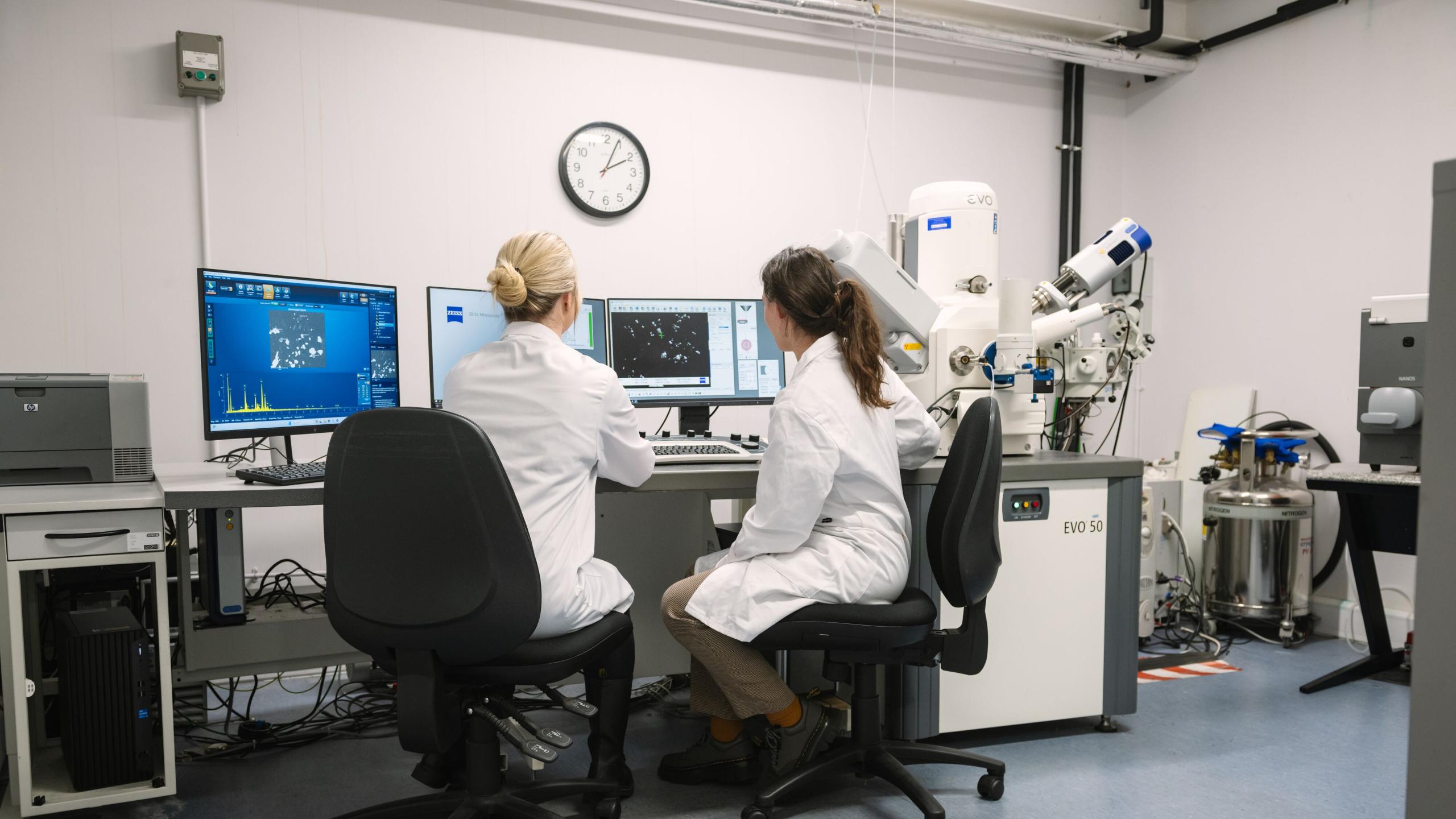
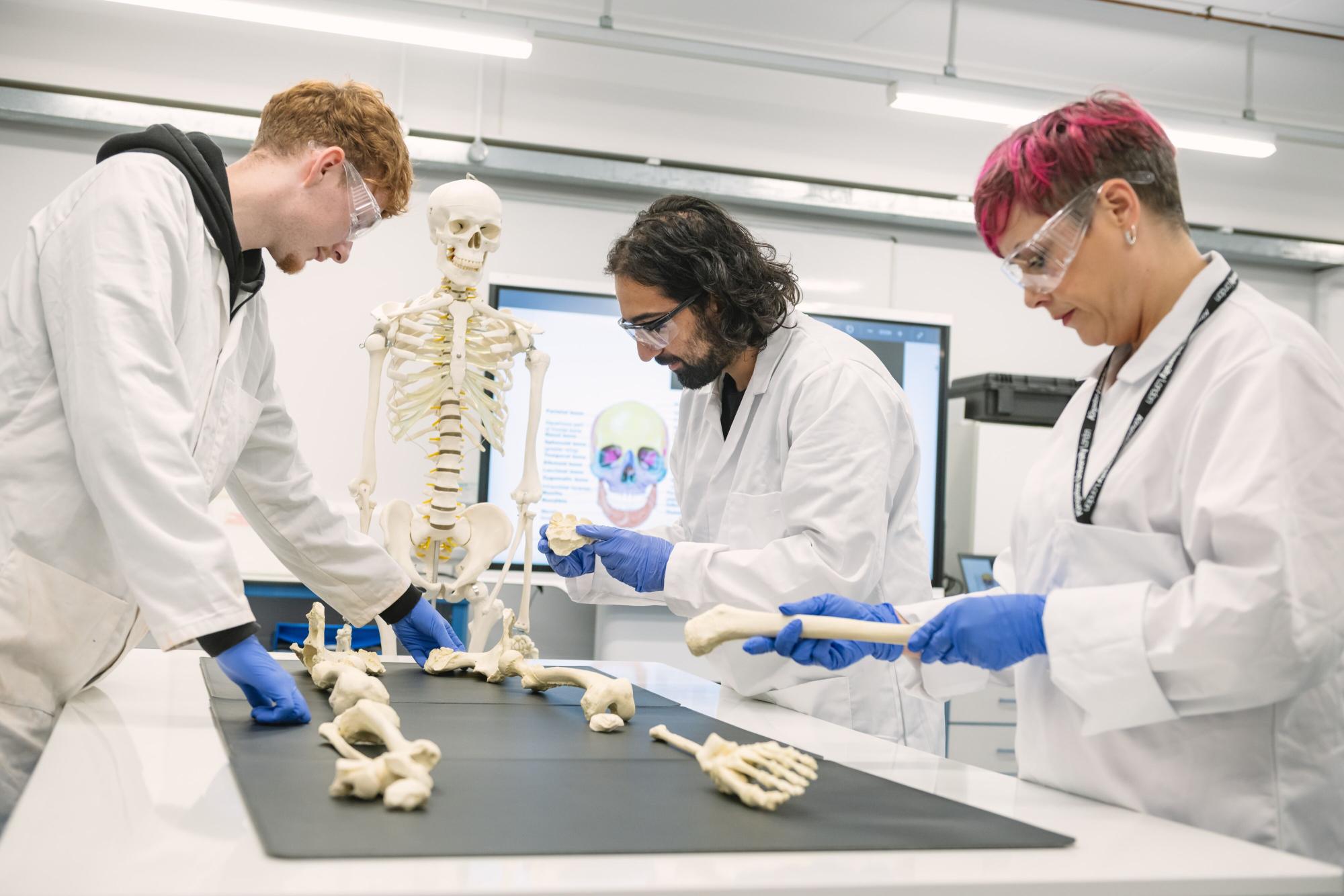
You will study and practice in our cutting-edge facilities, gaining hands-on experience in DNA analysis, archaeology, questioned documents, toxicology, and drug confirmation. You will use industry-standard equipment and instruments, mirroring those used in real-life forensic casework.
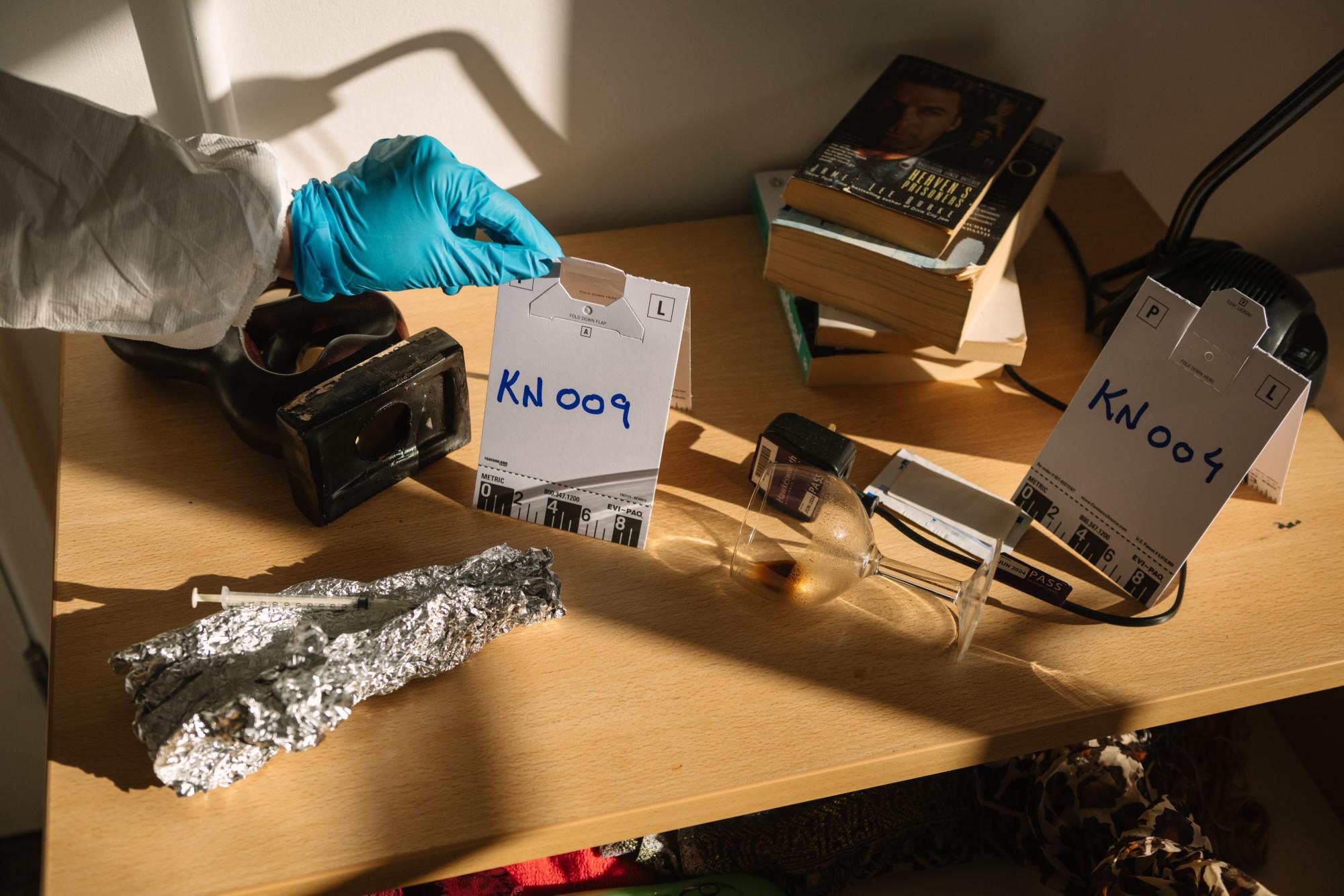
In addition, you will have access to our designated crime scene house – a real semi-detached property located on-site. Its rooms and garden feature a variety of mock crime scenes, including burglary, arson, assault, sexual crime, and murder. You will also have opportunities to participate in vehicle crime simulations and attend several mock court sessions.
Forensic science at Kingston University
Learn how our forensic science students are building their confidence with practical knowledge and theoretical skills and making their mark on industry with a degree from Kingston University.

The way Forensic Science is being taught allows you to have lots of crime scene practicals, preparing you to face real jobs and provides you with the fundamental information needed for the future.
Why choose this course
This course prepares you for a career as a forensic scientist using case studies, evidence interpretation, fieldwork and laboratory training covering all aspects of investigating criminal offences. These include crime scene processing, forensic archaeology, drugs, toxicology, DNA profiling, body fluids, entomology, fibres, fire investigation and ballistics.
You will also have an introduction to criminal law, which includes cross-examination in a Crown Court setting.
Specialist topics include blood pattern analysis (BPA), gunshot residue detection, counterfeits and forgeries, and the analysis of trace evidence. In addition, this course provides additional industry recognised certificates in BPA, forensic toxicology, and DNA profiling at no extra cost.
We have recently updated our modules to enhance student-centred teaching and align course content with industry needs, helping you become a future-proof graduate.
We’ve received three commendations from the Chartered Society of Forensic Sciences for our state-of-the-art technology, innovative student training, and enrichment activities with a strong employability focus, including guest lectures, paid placements, and collaborations with law students at mock trials.
Kingston University is No.1 in London for Forensic Science (Complete University Guide 2027).
Kingston University is No.9 in the UK for Forensic Science (The Guardian University Guide 2027).
97.1% of students thought staff supported their learning (NSS 2025).
Accreditation
The BSc Forensic Science (410) and BSc Forensic Science with Foundation Year (411) courses are accredited by the Chartered Society of Forensic Sciences for the component standards in Interpretation, Evaluation and Presentation of Evidence; Laboratory Analysis; and Crime Scene Investigation.
This course is currently accredited until March 2031, when accreditation will undergo renewal. When you graduate you are eligible to apply to be an Associate of the Chartered Society of Forensic Sciences (ACSFS post-nominals). Having completed appropriate continuing professional development in a forensic science workplace, you can also become a Professional Member (MCSFS).
Please note: the Professional Placement (412) year is not yet accredited.

The crime scene house
Our on-site crime scene house – a real semi-detached property with multiple rooms, two gardens, a vehicle, and a dedicated Bloodstain Pattern Analysis (BPA) room – provides a realistic environment for practical forensic training. You will collect and preserve evidence from a variety of simulated crime scenes, applying techniques used in real investigations. The facility supports hands-on learning across multiple disciplines, including forensic archaeology, BPA, and crime scene examination.


Course content
Year 1
Year 1 offers a broad understanding of the major branches of biology and biochemistry. You will develop key laboratory skills, be introduced to several forensic science specialised branches, and will learn about theory and practices used in modern forensic science.
Core modules
Year 2
Year 2 introduces specialist topics in forensic science. These include DNA and human identification, advanced crime-scene analysis, counterfeits and forgeries and the application of analytical techniques to the analysis of trace evidence such as fire, fibres, glass and fingerprints. You will also be introduced to criminal law and receive expert witness training. This will culminate in the cross-examination of expert witness testimony in a mock courtroom setting at Kingston Crown Court.
Core modules
Year 3
Year 3 provides you with the opportunity to expand your knowledge by studying advanced forensic topics such as body fluid analysis, advanced DNA analysis, forensic archaeology, crime scene exhibit examination, drugs, toxicology, fire investigation and ballistics.
You will also undertake an independent research project which will allow you to hone your skills in a specific area of forensic science which includes but is not limited to DNA analysis, crime scene investigation, forensic toxicology and drug analysis, GSR analysis, skeletal anatomy, analysis of fire evidence, questioned documents and document fraud.
Core modules
Science Foundation Year
If you would like to study one of our science degrees at Kingston University but are not yet ready to join the first year of a BSc (Hons) course, you can include an extra foundation year within your chosen degree. Please see the science foundation year course page for details of modules.
International students: direct application
Are you an international student? Have you decided Kingston is the place for you? If so, you can apply for this course directly, rather than having to go through UCAS.

All the lecturers have real experience in the field and share their insights with us. From analysing crime scene evidence to understanding the science behind forensic techniques, the course provided invaluable skills.
What career opportunities does this course offer?
On graduation from this course, you will be prepared to work in a range of environments, including forensic laboratories, policing, analytical chemistry laboratories, hospitals and private consultancies.
Future Skills
Our Future Skills programme is embedded within all our undergraduate courses and throughout the whole Kingston experience. These skills will help you to become a future-proof graduate by equipping you with the skills most valued by employers, such as problem-solving, digital competency and adaptability.
As you progress through your degree, you'll learn to navigate, explore and apply these graduate skills. You’ll also understand how to demonstrate and articulate to employers how these future skills give you the edge.

Teaching and assessment
Scheduled learning and teaching on this course includes timetabled activities including lectures, seminars, small group tutorials and practical sessions.
It may also include placements, project work, workshops, conferences and field trips.
The lecturers are also very friendly and approachable, something I noticed from the very start of applying when I was going to University open days. They are really good at explaining concepts to make sure they are understood.
Fees and funding
Additional course costs
Some courses may require additional costs beyond tuition fees. When planning your studies, you’ll want to consider tuition fees, living costs, and any extra costs that might relate to your area of study.
Your tuition fees include costs for teaching, assessment and university facilities. So your access to libraries, shared IT resources and various student support services are all covered. Accommodation and general living expenses are not covered by these fees.
Where applicable, additional expenses for your course may include:
Scholarships and bursaries
For students interested in studying this course at Kingston, there are several opportunities to seek funding support.

Course changes and regulations
The information on this page reflects the currently intended course structure and module details. To improve your student experience and the quality of your degree, we may review and change the material information of this course. Find out more about course changes
Specifications for this course are published ahead of each academic year.
Regulations governing this course can be found on our website.
What our students and graduates say
The diverse curriculum exposed me to a wide range of industry specialisms, and the supportive lecturers really wanted us to succeed. The crime scene house and forensic biology modules sparked a passion for crime scene investigation and DNA analysis, and ultimately encouraged me to explore these topics.
The ‘crime house’ and the laboratory practicals give me hands-on training and equip me with the skills I need for a solid foundation in science.
Studying at Kingston has solidified my passion for Forensic Science and has motivated me to pursue a career as a forensic investigator, where I can apply all the skills I have learnt to impart justice and contribute positively to society in the future.
What are the facilities like?
When you join Kingston University, you will have access to a wide range of facilities and resources designed to support your studies. Use the virtual tour below to explore some of the facilities and learning environments that students within this subject area may experience during their studies.





Key information
The scrolling banner below displays some key factual data about this course (including different course combinations or delivery modes of this course where relevant).


