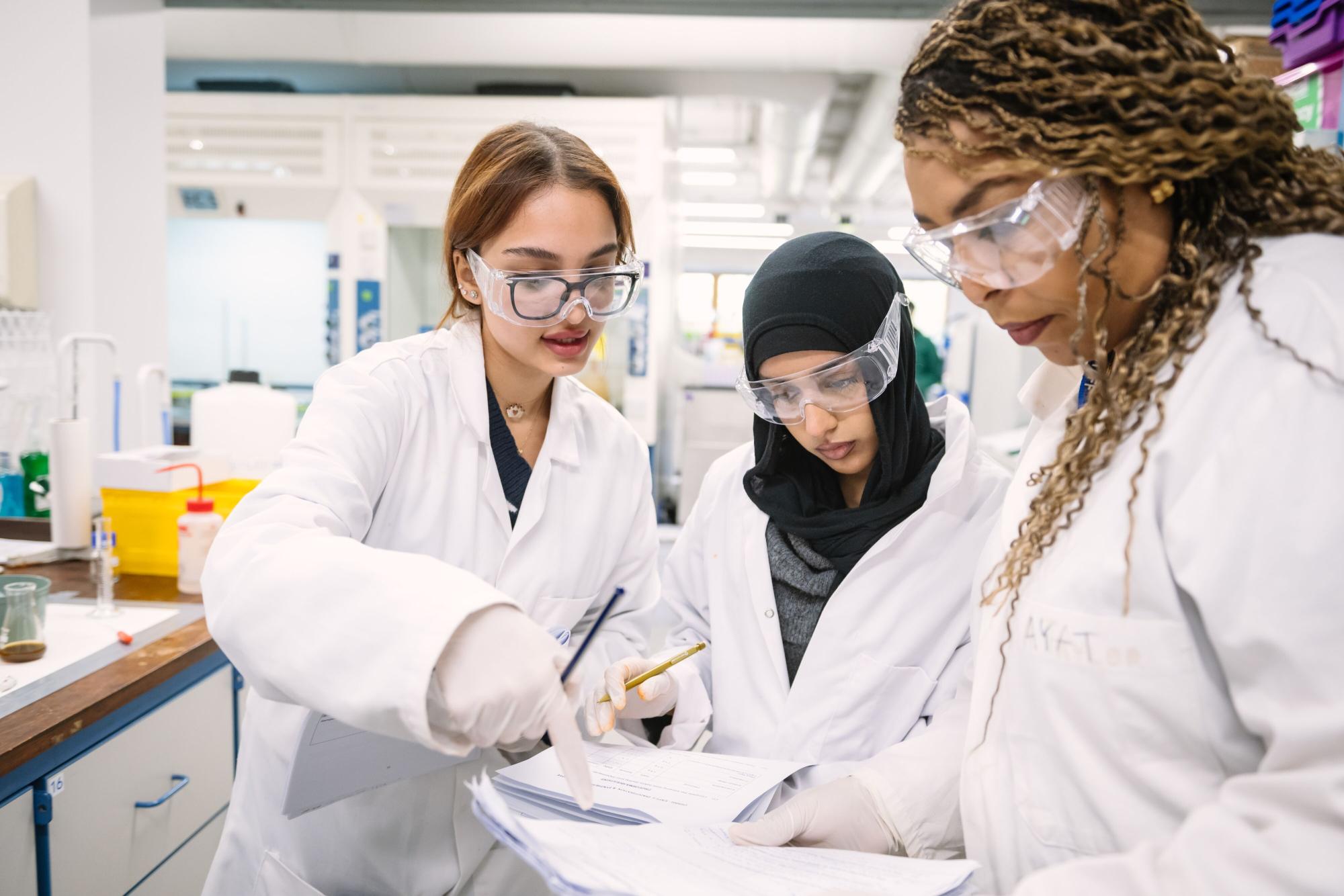
Biochemistry BSc (Hons)
Subject and course type
- Biology, biochemistry and biomedical science
- Undergraduate
Gain the skills you need to pursue your future career with a Biochemistry BSc (Hons) degree. This course from Kingston University is accredited by the Royal Society of Biology (RSB).
You are reading:
Explore the chemical properties which underpin living organisms
Do you want to contribute to work that could help solve many of life's biggest challenges?
This course will help you to understand the molecular processes that control life. From molecules (such as DNA and proteins) and cells, to the complex structures of whole organisms, discover the integral aspects of our world.
Our School of Life Sciences, Pharmacy and Chemistry offers an outstanding and diverse portfolio of undergraduate and postgraduate programmes. We've invested heavily in state-of-the-art facilities. Our £6.8 million laboratories enable students to gain practical experience with cutting-edge equipment.
Studying Biochemistry can form the first step towards a wide range of careers. Our students go on to pursue academic research, or impactful jobs in the health, food, and agriculture industries.
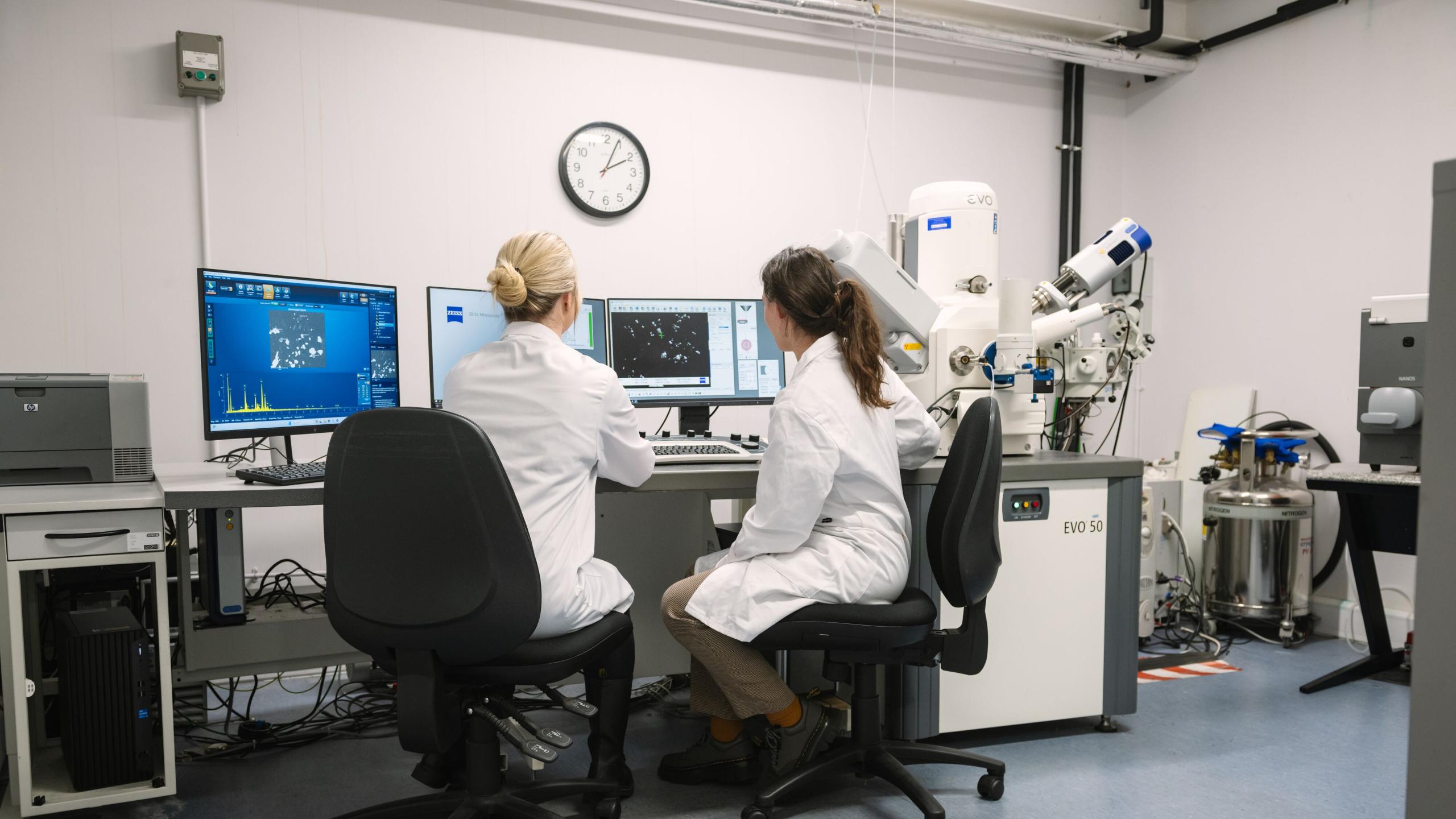
By studying Biochemistry at our Penrhyn Road campus, you will have access to a modern environment with a wide range of the latest equipment. Our expert equipment includes gas and liquid chromatography, electron and confocal microscopy, and a range of spectrometers, to survey mass, infrared and nuclear magnetic resonance. Working closely with our team of technicians, you’ll gain hands-on experience for a career in Biochemistry.
Biology, biochemistry and biomedical science at Kingston University
Biology, biochemistry and biomedical science students are getting answers to some of the world's biggest questions through their studies. Discover where their passion is taking them.
What makes a difference here is the support from the lecturers. They’re not just knowledgeable—they’re approachable, down-to-earth, and genuinely care about helping you reach your goals.
Why choose this course
Not only are we ranked Gold in the Teaching Excellence Framework, we’re also accredited by the Royal Society of Biology (RSB). What’s more, in the National Student Survey (NSS) 2024, 100% of students on our Biochemistry course were positive about how their course challenged them to achieve their best work.
Throughout the course, you'll acquire the knowledge and technical skills to work in a wide variety of roles, including those in the biotechnology and pharmaceutical industries. We encourage students to pursue further research, to contribute to our understanding of how biochemistry underpins all human life.
In your final year, you will immerse yourself in a lab setting and experience what it is like to test various clinical testing as well as studying the blood of patients. You'll also have the opportunity to work on an independent research project on a specialist topic that inspires you.
We have updated our modules to enhance student-centred teaching and align course content with industry needs, helping you become a future-proof graduate.
In the National Student Survey (NSS) 2024, 100% of students on our Biochemistry course were positive about how their course challenged them to achieve their best work.
Accreditation
This course has been accredited by the Royal Society of Biology (RSB). Kingston University graduates from this programme will receive one year's free membership of the Royal Society of Biology.
Course content
Year 1
Year 1 provides you with a firm foundation in the biological and chemical principles on which life is based. You will gain a comprehensive overview of biochemistry, from the atomic level to that of the whole body. Subject areas include the fundamentals of chemistry, cells and tissues, genetics and molecular biology. A scientific and practical skills module will also introduce you to important laboratory techniques and the necessary mathematics, statistics and IT required by biochemists.
Core modules
30 credits
Chemistry impacts many spheres of everyday life. From paints and coatings to smartphone’s electrochromic displays, small molecule drugs to the understanding of biochemical processes necessary for life.
This module will revisit chemistry topics taught at A level and build on them to ensure you become familiar with the core chemistry concepts necessary to the chemical, pharmaceutical and biochemical sciences. There is a key focus on the United Nations Sustainable Development Goals.
30 credits
This module introduces basic cell biology of prokaryotes and eukaryotes, genetics, germ layers, and tissue types in the human body, as well as various microorganisms.
You will experience practical sessions in a state-of-the-art laboratory, on microscopy, histology, cytogenetics and microbiology, enabling you to develop practical skills in the correct use of microscopes, examining and studying chromosomes, prokaryotic and eukaryotic cells, microbes and tissues, interpreting, and recording biological data, and build upon your knowledge gained from lectures.
This module provides a foundation for advanced modules in cell biology, anatomy, physiology, genetics, and microbiology.
30 credits
This module provides an understanding of how basic chemical elements are bonded to form complex biomolecules in living systems. In this module, we will explore the role and structure of proteins, carbohydrates and lipids and delve into defining their properties and functions. The module will also introduce the vital role of energy transformations in living organisms.
Core material is delivered through lectures, online resources and activities, and problem-solving workshops supported by laboratory practicals and subsequent data analysis.
On completion of the module, you will have a comprehensive grounding in the molecular basis of life from the atomic scale up to cells. This module will help you develop the skills necessary for enhancing your learning through effective note-taking and critical thinking, which will continue to help you throughout your degree.
30 credits
This module provides a firm foundation in the general scientific and laboratory skills students require to successfully complete their programmes of study.
A significant component of the module consists of the development and demonstration of core technical/practical skills through familiarity with the laboratory environment through hands-on learning.
This module will also introduce you to Future Skills through engagement with the Navigate programme introducing the key graduate attributes required in developing your professional development portfolio in the biosciences. The Future Skills concepts and activities will support you in developing and evidencing your practice, scientific analytical/problem-solving, teamworking, digital competency, practical and numeracy skills.
Year 2
Year 2 introduces some of the more-specialised aspects of biochemistry. You will gain a detailed knowledge of the following:
- protein function, structure and analysis
- the major metabolic pathways
- organisation and physiology of cells including cell signalling
- genes and their expression
- microbiology
- the application of research methods.
You will also explore a range of bioanalytical techniques employed in the pharmaceutical industry.
Core modules
30 credits
This module immerses you in the world of analytical science applied to problem solving in biochemistry, clinical chemistry, forensic analysis and pharmaceutical science applications. It develops critical thinking, helping you identify the best approaches to prepare samples, collect results and analyse data, whether it is quantitative or qualitative in various scenarios. You will build knowledge, practical skills and interpretation skills whilst implementing the analytical process model using scenario-based learning.
30 credits
This module delves into the fascinating world of microorganisms, that play a big role in health and disease. We’ll explore how our immune system responds to these microscopic agents. Through interactive lectures and workshops, we’ll examine various microbiological processes. You will learn about controlling these organisms in laboratory settings and within patients.
The second part broadens the scope to encompass the wider aspects of biochemistry, pharmacology and beyond. It focuses on developing your Future Skills by engaging with Explore, to enhance your research, problem-solving, and critical thinking abilities, and preparing you for your final year capstone project. This is further supported by tutor meetings, which helps you work on tasks to develop, articulate, and reflect on your progress and graduate attributes.
30 credits
This module builds on topics covered in your first year and explores advanced concepts in cell and molecular biology. The module provides a molecular insight into the structure and function of cells and takes an integrated approach to understand how cells respond to changes in their environment – from receptor interactions and intracellular signalling pathways through to the regulation of gene expression and changes in cellular processes.
You will discover various mechanisms of intracellular signalling in different organisms. You will gain a detailed knowledge of the processes involved in the regulation of gene expression. You will also learn about practical methods relevant to cell and molecular biology, for example fluorescence microscopy, RT-PCR.
30 credits
This module provides you with knowledge of the structure and methods of analysis of proteins, with particular emphasis on enzymes. This is followed by the study of the major catabolic and anabolic pathways and investigates how organisms obtain and use energy. These processes, and their regulation in health and disease, are considered at the molecular level, which involves many proteins including enzymes.
You will investigate how organisms obtain and utilise energy from metabolic pathways. You will gain a detailed understanding of the structure of proteins, including enzymes, and have a comprehensive knowledge of practical and graphical methods involved in the investigation of enzyme activity.
You will also develop key practical skills involved in protein biochemistry and metabolism.
Year 3
In Year 3, you will explore current concepts in biomolecular science, immerse yourself with bioinformatics and learn the functions of a hospital laboratory with clinical biochemistry and haematology. You will also undertake an independent research project, providing an opportunity to research a topic of your choice within your specialism as either a laboratory, data project or a systematic review.
Core modules
30 credits
Enormous amounts of data are generated in Life Sciences research every day with a wide range of applications such as providing insight into genetic diseases, modelling how a drug interacts with its target protein, exploring the diversity of microbes in our digestive systems, establishing changes of gene expression in cancer/disease, and tracking the spread of cancerous cells. Bioinformatics forms an interface between biological sciences and information technology. In this module, you will develop the skills necessary to write your own computer programs (using R and/or Python) and use online tools to analyse and interpret real-world biological datasets. Alongside this, you will explore genomic variability, molecular evolution and phylogenetics in the context of bioinformatics. The module introduces an area of increasing importance in many areas of bioscience research, including molecular diagnostics and drug development.
Core factual material is provided predominantly via computing workshops, supported by demonstrations of online bioinformatic resources, guided reading, and lectures. Additional resources will be placed on Canvas. You will undertake an individual bioinformatics mini-project investigating an authentic research question that integrates the learning across the module.
30 credits
Your independent project forms a very important part of your degree programme. There are several types of projects that may be offered to you: a laboratory or field-based project, data projects involving acquisition of data and information from surveys, computer simulations or bioinformatics, or a systematic review of research literature that includes the collection, analysis, and original presentation of reported research data.
Your project will include a review and critical evaluation of qualitative and quantitative information and data to address a hypothesis or research question, and the production of a written report.
30 credits
This module provides you with the opportunity to integrate the knowledge you have gained from all other modules on the course. We will use case studies to provide an overview of biomedical techniques, including the use of point of care testing (POC) and traditional laboratory diagnosis.
You will examine their applications in clinical diagnosis, prognosis, and patient management, including drug interactions and the basis of individual variation in drug responsiveness. The use of pertinent clinical cases encourages you to think 'outside the box’ and realise that when dealing with a real patient, knowledge gained from the discipline is required simultaneously to make a rational diagnosis.
The module will also examine the importance of “quality control” (QC) and “quality assurance” (QA) in clinical diagnosis enabling you to understand the importance of both QC and QA in the correct day to day running of clinical diagnostics. The Future Skills Apply learning outcomes are delivered in this module.
15 credits
This module’s primary aim is to provide you with comprehensive insights into the exploration of current innovations and technological advances within the biomolecular sciences. The module emphasises how these innovations can be effectively translated into public benefits, including through commercial exploitation, social enhancement, or environmental improvement. By the end of the module, you will have a comprehensive understanding of the processes involved in bridging the gap between scientific innovation and real-world application, preparing you for a successful career in the biosciences.
15 credits
This module gives you a dedicated opportunity to develop your Future Skills Graduate Attributes.
At the start of the module, you will be supported to self-assess your current skills profile. You will determine which attributes and skills you need to develop to support your career ambitions. In this process, you will be supported by a dedicated career coach, helping you explore a range of options that includes self-employment/freelancing, starting your own business, higher level study, and other professional graduate-level opportunities. Throughout the module, you will be given opportunities to engage with external mentors, to support reflection and to develop a professional network.
You will undertake a tailored series of activities and projects, aligned to your goals, from a menu of development options. This could include short courses, enrichment activities and experiential learning options such as micro-placements. You will also be able to reflect on activities outside the University that develop your graduate attributes, such as work or volunteering.
Science Foundation Year
If you would like to study one of our science degrees at Kingston University but are not yet ready to join the first year of a BSc (Hons) course, you can include an extra foundation year within your chosen degree. Please see the science foundation year course page for details of modules.
International students: direct application
Are you an international student? Have you decided Kingston is the place for you? If so, you can apply for this course directly, rather than having to go through UCAS.

Biochemistry at KU has a strong practical focus which means it will give you the hands-on lab experience you would need to use in the future, KU has a very supportive learning environment.
What career opportunities does this course offer?
After graduating from this course, you'll be ready for graduate entry to a career in a range of sectors and roles:
- Pharmaceuticals
- Biotechnology
- Forensics
- Graduate teaching assistants
- Research scientists
- Clinical research associates
- Data scientists
- Pharmaceutical industry
- Medical writer
- Scientific editor
- Patent law
- Medical affairs
- Medicine
- Teaching
- Business management
This degree also provides a great base if you choose to go on to further study at postgraduate level.
Future Skills
Our Future Skills programme is embedded within all our undergraduate courses and throughout the whole Kingston experience. These skills will help you to become a future-proof graduate by equipping you with the skills most valued by employers, such as problem-solving, digital competency and adaptability.
As you progress through your degree, you'll learn to navigate, explore and apply these graduate skills. You’ll also understand how to demonstrate and articulate to employers how these future skills give you the edge.

Teaching and assessment
Scheduled learning and teaching on this course includes timetabled activities including lectures, seminars, small group tutorials and practical sessions.
It may also include placements, project work, workshops, conferences and field trips.
Outside the scheduled learning and teaching hours, you will learn independently through self-study which will involve reading articles and books, working on projects, undertaking research, preparing for and completing your work for assessments. Some independent study work may need to be completed on-campus, as you may need to access campus-based facilities such as studios and labs.
Our academic support team here at Kingston University provides help in a range of areas.
When you arrive, we'll introduce you to your personal tutor. This is the member of academic staff who will provide academic guidance, be a support throughout your time at Kingston and show you how to make the best use of all the help and resources that we offer at Kingston University.
A course is made up of modules, and each module is worth a number of credits. You must pass a given number of credits in order to achieve the award you registered on, for example 360 credits for a typical undergraduate course or 180 credits for a typical postgraduate course. The number of credits you need for your award is detailed in the programme specification which you can access from the link at the bottom of this page.
One credit equates to 10 hours of study. Therefore 120 credits across a year (typical for an undergraduate course) would equate to 1,200 notional hours. These hours are split into scheduled and guided. On this course, the percentage of that time that will be scheduled learning and teaching activities is shown below for each year of study. The remainder is made up of guided independent study.
- Year 1: 24% scheduled learning and teaching
- Year 2: 26% scheduled learning and teaching
- Year 3: 17% scheduled learning and teaching
Your course will primarily be delivered in person. It may include delivery of some activities online, either in real time or recorded.
Types of assessment
- Year 1: Coursework 70%; exams 30%
- Year 2: Coursework 63%; exams 37%
- Year 3: Coursework 89%; exams 11%
We aim to provide feedback on assessments within 20 working days.
Your individualised timetable is normally available to students within 48 hours of enrolment. Whilst we make every effort to ensure timetables are as student-friendly as possible, scheduled learning and teaching can take place on any day of the week between 9am and 6pm. For undergraduate students, Wednesday afternoons are normally reserved for sports and cultural activities, but there may be occasions when this is not possible. Timetables for part-time students will depend on the modules selected.
Reflecting on the work you've personally produced was unexpectedly my favourite part. When you research your topic in such detail, you feel like a professional in your subject which is empowering.
Fees and funding
| Fee category | Annual Fee |
|---|---|
| Home (UK students) | |
| £10,050* | |
| Foundation Year: | £10,050 |
| International | |
| Year 1 (2027/28): | £To be confirmed |
| Year 2 (2028/29): | £To be confirmed |
| Year 3 (2029/30): | £To be confirmed |
| Year 4 (2030/31): | £To be confirmed |
The tuition fee you pay depends on whether you are assessed as a 'Home' (UK), 'Islands' or 'International' student.
For courses with Professional Placement, the fee for the placement year can be viewed in our Fees and Funding section. The placement fee published is for the relevant academic year stated in the table. This fee is subject to annual increases but will not increase by more than the fee caps as prescribed by the Office for Students or such other replacing body.
*For full-time programmes lasting more than one academic year, a tuition fee is payable for each academic year of the course.
Your annual tuition fee covers your first attempt at all modules required for that academic year. Any re-study or repeat of modules will incur additional charges, calculated according to the number of credits taken.
Home students (UK): Tuition fees are subject to inflation-linked increases in line with government policy. Updated fees will be confirmed in line with the maximum fee cap set by the Government or the Office for Students (OfS) for each academic year. This means your fee may increase for each academic year of study, but only up to the maximum amount permitted for that year.
Eligible UK students can apply to the Government for a tuition loan, which is paid direct to the University. This has a low interest-rate which is charged from the time the first part of the loan is paid to the University until you have repaid it.
International students: Full-time taught international student fees are subject to an annual increase, which is published in advance for the full duration of your programme.
| Fee category | Annual Fee |
|---|---|
| Home (UK students) | |
| £9,790* | |
| Foundation Year: | £9,790 |
| International | |
| Year 1 (2026/27): | £19,200 |
| Year 2 (2027/28): | £19,900 |
| Year 3 (2028/29): | £20,700 |
| Year 4 (2029/30): | £21,500 |
The tuition fee you pay depends on whether you are assessed as a 'Home' (UK), 'Islands' or 'International' student.
For courses with Professional Placement, the fee for the placement year can be viewed in our Fees and Funding section. The placement fee published is for the relevant academic year stated in the table. This fee is subject to annual increases but will not increase by more than the fee caps as prescribed by the Office for Students or such other replacing body.
*For full-time programmes lasting more than one academic year, a tuition fee is payable for each academic year of the course.
Your annual tuition fee covers your first attempt at all modules required for that academic year. Any re-study or repeat of modules will incur additional charges, calculated according to the number of credits taken.
Home students (UK): Tuition fees are subject to inflation-linked increases in line with government policy. Updated fees will be confirmed in line with the maximum fee cap set by the Government or the Office for Students (OfS) for each academic year. This means your fee may increase for each academic year of study, but only up to the maximum amount permitted for that year.
Eligible UK students can apply to the Government for a tuition loan, which is paid direct to the University. This has a low interest-rate which is charged from the time the first part of the loan is paid to the University until you have repaid it.
International students: Full-time taught international student fees are subject to an annual increase, which is published in advance for the full duration of your programme.
| Fee category | Annual Fee |
|---|---|
| Home (UK students) | |
| £9,535* | |
| Foundation Year: | £9,535 |
| International | |
| Year 1 (2025/26): | £18,500 |
| Year 2 (2026/27): | £19,200 |
| Year 3 (2027/28): | £19,900 |
| Year 4 (2028/29): | £20,700 |
The tuition fee you pay depends on whether you are assessed as a 'Home' (UK), 'Islands' or 'International' student. In 2025/26 the fees for this course are above.
For courses with Professional Placement, the fee for the placement year can be viewed in our Fees and Funding section. The placement fee published is for the relevant academic year stated in the table. This fee is subject to annual increases but will not increase by more than the fee caps as prescribed by the Office for Students or such other replacing body.
* For full-time programmes of a duration of more than one academic year, the published fee is an annual fee, payable each year, for the duration of the programme. Your annual tuition fees cover your first attempt at all of the modules necessary to complete that academic year. A re-study of any modules will incur additional charges calculated by the number of credits. Home tuition fees may be subject to annual increases but will not increase by more than the fee caps as prescribed by the Office for Students or such other replacing body. Full-time taught International fees are subject to an annual increase and are published in advance for the full duration of the programme.
Eligible UK students can apply to the Government for a tuition loan, which is paid direct to the University. This has a low interest-rate which is charged from the time the first part of the loan is paid to the University until you have repaid it.
Additional course costs
Some courses may require additional costs beyond tuition fees. When planning your studies, you’ll want to consider tuition fees, living costs, and any extra costs that might relate to your area of study.
Your tuition fees include costs for teaching, assessment and university facilities. So your access to libraries, shared IT resources and various student support services are all covered. Accommodation and general living expenses are not covered by these fees.
Where applicable, additional expenses for your course may include:
Our libraries have an extensive collection of books and journals, as well as open-access computers and laptops available to rent. However, you may want to buy your own computer or personal copies of key textbooks. Textbooks may range from £50 to £250 per year. And a personal computer can range from £100 to £3,000 depending on your course requirements.
While most coursework is submitted online, some modules may require printed copies. You may want to allocate up to £100 per year for hard-copies of your coursework. It’s worth noting that 3D printing is never compulsory. So if you choose to use our 3D printers, you’ll need to pay for the material. This ranges from 3p per gram to 40p per gram.
Kingston University will pay for all compulsory field trips. Fees for optional trips can range from £30 to £350 per trip.
Your tuition fees don’t cover travel costs. To save on travel costs, you can use our intersite bus service. This route links the campuses and halls of residence with local train stations - Surbiton, Kingston upon Thames, and Norbiton.
Courses involving placements or direct work with vulnerable groups may require a DBS check or other security checks.
Specific courses may require uniforms, specialty clothing, or specific equipment like lab coats and safety shoes. Kingston University will supply you with a lab coat and safety goggles at the start of the year.
Some courses may require professional memberships.
Scholarships and bursaries
For students interested in studying this course at Kingston, there are several opportunities to seek funding support.

Course changes and regulations
The information on this page reflects the currently intended course structure and module details. To improve your student experience and the quality of your degree, we may review and change the material information of this course. Find out more about course changes
Programme Specifications for the course are published ahead of each academic year.
Regulations governing this course can be found on our website.
What our students and graduates say
KU academic staff are one of a kind. They see you as more than just a student and really care about your success during and after university.
It pushed me to deal with cutting-edge research and think critically about emerging problems in consciousness and neurobiology. It was so rewarding to contribute to a niche area while acquiring transferable skills in data analysis, academic writing, and scientific reasoning.
I would personally say Kingston University strikes a great balance between strong academic teaching and real hands-on lab experience. Right from the first year, we were encouraged to take what we learned in lectures and apply it in practical settings. By final year, we were running our independent research in the labs.
Key information
The scrolling banner below displays some key factual data about this course (including different course combinations or delivery modes of this course where relevant).