Film Making MA
Subject and course type
- Creative arts
- Postgraduate
Maximise the potential of visual storytelling. Kingston University’s MA in Film Making will give you the techniques and knowledge to develop your practice and find your specialism. Kingston University alumni include award-winning filmmakers who have had films shown at the Cannes Film Festival, Toronto International Film Festival, Sheffield DocFest, London Short Film Festival, Tate Modern and the London Design Biennale.

You are reading:
Master the art of captivating film
You’ll examine the principles of short form film-making, the potential of visual storytelling and the importance of sound, editing, lighting, cinematography and screenplay.
Studying this masters in Film Making at Kingston University will equip you for lifelong film making and learning – whether you want to work in the film industry, go independent or pursue further study.
You’ll examine the principles of short form film-making, the potential of visual storytelling and the importance of sound, editing, lighting, cinematography and screenplay. The course takes its inspiration from forms of cultural production that have challenged conformity, including the work of artists, musicians, painters and performers, and the movements of Italian neo-realism and the cinemas of Africa, Latin America, South East Asia and the Middle East.
You'll be encouraged to synthesise your personal experience, critical knowledge and craft skills to express yourself through moving pictures and be taught film making theory and practice together. Through a blend of theoretical learning, hands-on experience and creative work, you’ll develop skills such as critical thinking, character and narrative development, and post-production.
You’ll learn to produce films independently, pragmatically and with accountability, which will boost your employability and put you in full command of your own material.
During the course, you’ll advance your visual storytelling, character building and script development skills. You’ll focus on collaborative filmmaking, share non-mainstream stories and take inspiration from conformity-challenging productions.
When you graduate, you’ll have a strong portfolio of short films that showcase your technical ability in cinematography, sound recording, editing, writing and direction. Our independent filmmaker graduates have exhibited films at the Cannes Film Festival, Toronto International Film Festival, Sheffield DocFest, London Short Film Festival, Tate Modern and the London Design Biennale, with projects commissioned by the Home Office, Tate, E4 and Film London.
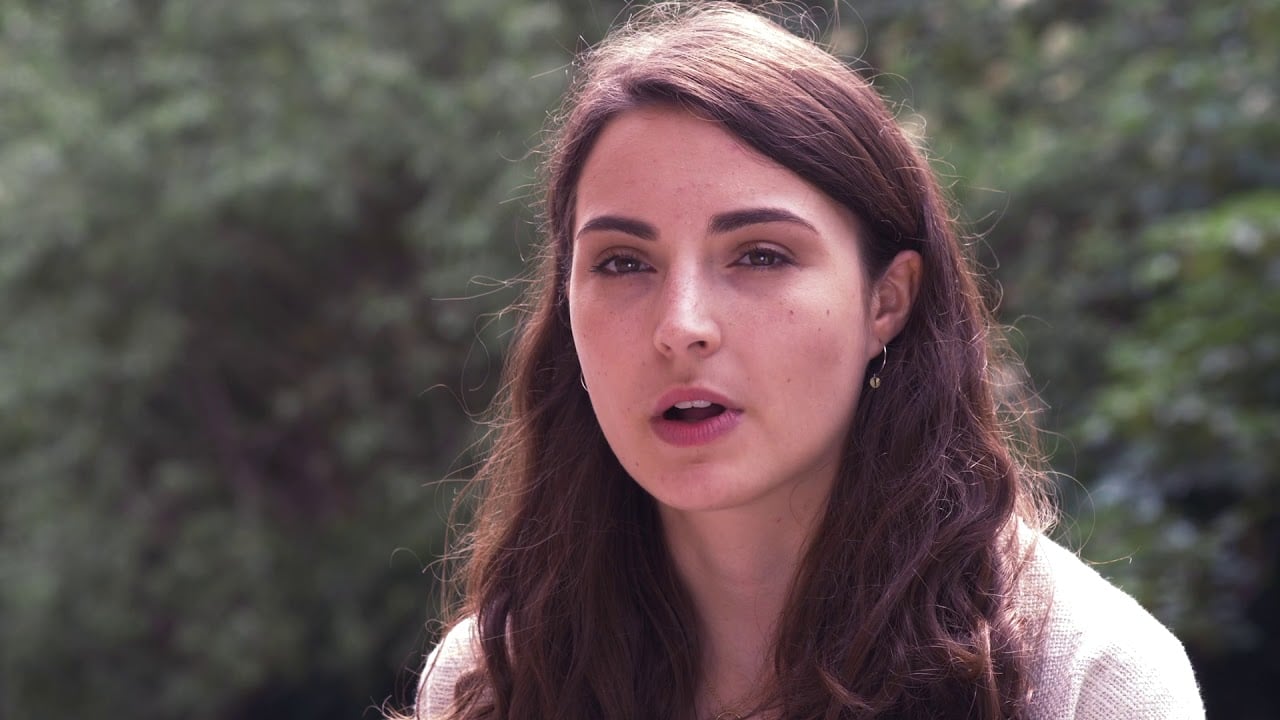
Kingston's Film Making MA is very practical. I learned so much about cinematography, lighting and directing, and it gave me opportunities to make films and develop my own style.
Student work
Why choose this course
While you study, you’ll benefit from top quality teaching at Kingston University. Not only are we ranked Gold in the Teaching Excellence Framework, our staff are practising film makers, visual artists and researchers, which keeps your learning cutting-edge.
A portion of your learning will take place at our Penrhyn Road campus, where you’ll have access to a range of modern equipment. Facilities include specialist film and media labs, which are equipped with Macs running Adobe Creative Suite and a studio base room with greenscreen. The Moving Image Workshop at our Knights Park campus features two film studios, a post-production suite and individual edit suites and grading suites and a fully equipped audio recording facility and the equipment loans room.
You’ll experience a variety of production roles, using 4K digital cinema cameras, and Macs running DaVinci Resolve, Avid and Adobe Creative Cloud. Kingston University also has 8mm and 16mm cameras for exploring analogue film and a Blackmagic Cintel film scanner.
With London just a 30-minute train journey from the University, you’ll have the opportunity to access top film resources in the capital, including:
- Specialist cinemas like the BFI Southbank and the IMAX
- Organisations like the British Film Institute (with the largest film archive in the world)
- Film festivals like the annual London Film Festival, London Short Film Festival, Raindance Film Festival, London Breeze Film Festival and Open City Docs.
Kingston is host to the Kingston International Film Festival, which has links with the MA and BA film making courses, which includes screenings and workshops on campus and offers opportunities for students to gain work experience and screen their films.
The Art School Experience
As part of Kingston School of Art, students benefit from joining a creative community where we encourage collaborative working and critical practice.
Our workshops and labs are open to all disciplines, enabling students and staff to work together, share ideas and explore multi-disciplinary making.

Course content
At the heart of the course is an emphasis on developing visual storytelling and vivid characters through script development.
You will be able to use 4K digital cinema cameras, DSLRs and Macs running DaVinci Resolve, Avid and Adobe Creative Cloud to apply classical and independent principles with contemporary technology. The course focuses on the collaborative nature of the film making process and sharing stories from communities outside the mainstream.
You'll be expected to complete 180 credits across five modules, including a film making dissertation film.
Modules
You will study the basic principles of film making, develop an understanding of the nature and potential of visual storytelling, and discover the importance of sound, lighting and the screenplay. You will also gain a sound knowledge of theories and ideas that can help in the interpretation of your own work and that of other filmmakers. You will produce a portfolio of moving-image projects to illustrate your technical ability in cinematography, sound recording, editing and writing/direction.
Core modules
30 credits
This module provides instruction in non-fiction film making techniques at an intermediate level, drawing on classical and experimental modes of documentary practice to allow students to make a short non-fiction film in small groups.
Practical demonstrations in documentary film making techniques will be accompanied by a series of lectures/seminars on the evolution and ethical dimensions of documentary practice and contemporary modes of non-fiction film making.
30 credits
Film Making 2 focuses on short fiction film making through the three phases of pre-production, production; and post-production. The module has an emphasis on visual storytelling and students can potentially use the screenplay developed in the first term of the Film Writing module. Films are made in small groups.
60 credits
This module places a direct focus upon light weight, mobile production techniques, underlining the relation between technology/budget and aesthetics. The central principle is the inherent nature of film making as a collaborative art form, providing an opportunity for the genuine expression of individual ideas and a forum for the development of unique voices.
You will apply the skills developed in previous modules to plan and produce a substantial final film project, as a culmination of the masters programme. You will be expected to synthesise your critical viewing experience, technical aptitudes, and critical faculties in writing, filming and editing to produce a film of broadcast quality. Support will be provided through production and practical problem-solving workshops, intensive editing classes. You will be encouraged to critical reflect and self-evaluate their progress throughout the project.
30 credits
This module foregrounds the critical importance of a clear understanding of the specific nature of writing for moving image productions. It develops an appreciation of the craft and art of presenting factual and fictional stories in a genuinely cinematic style and develops a facility in the technique of producing original and adapted screenplays.
By analysing the historical development of the form, an awareness of the principles of screen writing is introduced and then developed through a series of intensive group-based and individual exercises in seminars and supporting workshops. Students are taken through the various forms of screenwriting - the draft screenplay, the treatment, the step-outline, the synopsis, the script, the shooting script, the schedule and the pitch in a series of practical exercises that culminate in the submission and presentation of an original screenplay or documentary script.
30 credits
This module enables students to communicate their visual and aural ideas in a coherent manner using technology to design, capture and display sound and cinematography.
As filmmakers we produce meaning for the viewer by creating a blend of images and sounds, which generate emotional and intellectual responses. Clarity of communication and transmission of meaning are the two greatest challenges facing any filmmaker. Through combining cinematography, sound, and editing we will explore the technical and historical processes that enable us to explore and produce images that viewers can perceive and understand.
Vision – Cinematography
We will explore the theory and practice of motion picture photography. The term Photography is used in the most comprehensive sense to include the principles of stills photography, cinematography (moving images captured on film) and videography (moving images recorded electronically and stored on hard or software of various forms including tape, memory cards, and drives). As a result the module provides a grounding in the principles which inform the range of techniques applied in recording images of the actions and events that take place in the world and encourages students to learn through their own practice and experimentation supported by modular tutors.
Sound – Sound Recording & Design
We will provide practical instruction in the use of sound technology. It will encourage the application of knowledge and experience to the production of a film sound design. This will be done by foregrounding the development of skills in using sound to tell stories and create atmosphere. The module will also explore the use of music and of sound design both practically and creatively.
It is also our intention to spend time simply listening. We wish to reflect on soundscapes, found sound, chance encounters with sound; as well as developing the ability to conceptualise sound for our work as filmmakers, from script to distribution, making the visual and aural interpretations of our sound world a much richer experience. We will work intensely on Film Sound Design and by the end of this part of the module all participants will have a greater knowledge both theoretical and practical of the things that go bump in the night.
Film Making MA showreel
Career opportunities
You’ll complete this course with the skills and experience you need for a successful career in the film industry. Previous graduates have progressed to roles as everything from filmmakers and producers to assistant editors, key grips and sound recordists. Others have gone on to direct, edit and develop films and documentaries, write scripts, programme festivals and more.
- Pablo Romero-Fresco has published a book on Accessible Filmmaking, which has strong reviews from Ken Loach and Mike Dibb.
- Mariam Majid's MA graduation film, A Night with Noor Jehan, won the LGBTQ category of the Leeds International Film Festival. She is also Head of Fiction for the BIFA qualifying London Breeze Film Festival.
- Ananth Subramaniam works as a director in the TV and digital commercial sector in Malaysia. His film Beat! was the first ever invited Malaysian short film at Cannes Film Festival and was awarded the Queer Palm Award 2025.
- Annisa Adjam is the CEO of SINEMA 5, an Indonesian independent creative company that elevates genres and international collaborations to champion authentic voices.
- Jelena Lützel is the Director of the Kingston International Film Festival.
Many of our MA graduates have gone on to study PhDs in Film Making. Recent projects include:
- The Endz Game: The impact of the London 2012 Olympics on the communities of the host boroughs (Dr Mitchell Panayis)
- The Black Market: An application of the Sound System model to Independent Filmmaking (Dr Freddie Osborne)
- Floating Home: A Journey of Taiwanese Identity in the UK. (Dr Roter Su)
Kingston University’s well-established industry connections open up a range of exciting opportunities while you study. You’ll have the chance to have your work seen by eminent professionals. You'll have the chance to work on live projects, visit key sites and undertake placements in prestigious companies. We also regularly welcome industry leaders and specialists, both as guest speakers and as visitors to student shows.
We have an international cohort of alumni, with graduates coming from: America, Austria, Belgium, Brazil, Cameroon, Chile, China, Colombia, Cuba, Cyprus, Egypt, Finland, France, Germany, Greece, India, Indonesia, Iran, Iraq, Ireland, Italy, Japan, Lebanon, Mongolia, Nepal, Nigeria, Norway, Pakistan, Portugal, Romania, South Korea, Spain, Sri Lanka, Sudan, Thailand, Turkey, the UK and Venezuela.
Teaching and assessment
You'll be assessed through film projects, production portfolios, screenplays and critical analysis essays.
When not attending timetabled sessions, you will be expected to continue learning independently through self-study. This typically involves reading and analysing articles, regulations, policy documents and key texts, documenting individual projects, preparing coursework assignments and completing your PEDRs, etc.
Your independent learning is supported by a range of excellent facilities including online resources, the library and CANVAS, the University's online virtual learning platform.
At Kingston University, we know that postgraduate students have particular needs and therefore we have a range of support available to help you during your time here.
A course is made up of modules, and each module is worth a number of credits. You must pass a given number of credits in order to achieve the award you registered on, for example 360 credits for a typical undergraduate course or 180 credits for a typical postgraduate course. The number of credits you need for your award is detailed in the programme specification which you can access from the link at the bottom of this page.
One credit equates to 10 hours of study. Therefore 180 credits across a year (typical for a postgraduate course) would equate to 1,800 notional hours. These hours are split into scheduled and guided. On this course, the percentage of that time that will be scheduled learning and teaching activities is shown below. The remainder is made up of guided independent study.
- 15% scheduled learning and teaching
The exact balance between scheduled learning and teaching and guided independent study will be informed by the modules you take.
Your course will primarily be delivered in person. It may include delivery of some activities online, either in real time or recorded.
Assessment typically comprises short films with accompanying critical analysis essays and screenplays, film projects, production portfolios, critical analysis essays, and presentations.
The approximate percentage for how you will be assessed on this course is as follows:
- 100% coursework, of which 75% will be practical
We aim to provide feedback on assessments within 20 working days.
Fees and funding
| Fee category | Annual Fee |
|---|---|
| Home (UK students) | |
| Full Time | £14,000 |
| Part Time | £7,700 |
| International | |
| Full Time | £22,600 |
| Part Time | £12,430 |
| Fee category | Annual Fee |
|---|---|
| Home (UK students) | |
| Full Time | £13,500 |
| Part Time | £7,425 |
| International | |
| Full Time | £20,700 |
| Part Time | £11,385 |
Fees for future course years
Part time
If you start your second year straight after Year 1, you will pay the same fee for both years.
If you take a break before starting your second year, or if you repeat modules from Year 1 in Year 2, the fee for your second year may increase.
Funding support for postgraduate students
If you are a UK student living in England and under 60, you can apply for a loan to study for a postgraduate degree. Find out more through the government's website.

Scholarships and bursaries
Interested in studying an MA in Film Making at Kingston? The following funding support is available:
The Inspire the Future Scholarship offers a 40% reduction in fees for taught masters or postgraduate diploma courses with September start dates. 20 scholarships are available for progressing Kingston University graduates.
For more information on how to apply for this scholarship, visit the Inspire the Future Scholarship page.
International postgraduate students could receive up to £5,000 towards tuition in their first year of study.
For more information on how to apply for these scholarships, visit the International Scholarship page.
If you are a Kingston University undergraduate student progressing to a postgraduate degree (taught or research), you could get a 15% reduction in tuition fees.
For more information on how to apply for this scholarship, visit the Postgraduate Progression Scholarship page.
Kingston University offers a 10% discount on full and part-time postgraduate degree course tuition fees to our alumni.
For more information on how to apply for this discount, visit our postgraduate finance page.
Additional course costs
Some courses may require additional costs beyond tuition fees. When planning your studies, you’ll want to consider tuition fees, living costs, and any extra costs that might relate to your area of study.
Your tuition fees include costs for teaching, assessment and university facilities. So your access to libraries, shared IT resources and various student support services are all covered. Accommodation and general living expenses are not covered by these fees.
Where applicable, additional expenses for your course may include:
Our libraries have an extensive collection of books and journals, as well as open-access computers and laptops available to rent. However, you may want to buy your own computer or personal copies of key textbooks. Textbooks may range from £50 to £250 per year. And a personal computer can range from £100 to £3,000 depending on your course requirements.
While most coursework is submitted online, some modules may require printed copies. You may want to allocate up to £100 per year for hard-copies of your coursework. It’s worth noting that 3D printing is never compulsory. So if you choose to use our 3D printers, you’ll need to pay for the material. This ranges from 3p per gram to 40p per gram.
Kingston University will pay for all compulsory field trips. Fees for optional trips can range from £30 to £350 per trip.
Your tuition fees don’t cover travel costs. To save on travel costs, you can use our intersite bus service. This route links the campuses and halls of residence with local train stations - Surbiton, Kingston upon Thames, and Norbiton.
Your tuition fees don’t cover all the materials and equipment you’ll need for your studies. Here’s a list of what you’ll need to purchase, plus approximate cost estimates:
- Your own chosen art materials and equipment: £50 per year
- USB drive: £25
- Headphones (optional): £25
- Super 8 film (optional): £100
- Film production costs: £100-£500 depending on film
You will need to purchase an external hard drive for approximately £200. Your hard drive should be able to handle high definition video, have sufficient storage and be compatible with Kingston School of Art's editing environment. Make sure you have your hard drive by the second week of the course. Ask your tutors for advice if you need to.
How to apply
Before you apply
Please read the entry criteria carefully to make sure you meet all requirements before applying.
How to apply online
Use the course selector drop-down at the top of this page to choose your preferred course, start date and mode, then click 'Apply now'. You will be taken to our Online Student Information System (OSIS) where you will complete your application.
If you’re starting a new application, you’ll need to select 'new user' and set up a username and password. This will allow you to save and return to your application.
Application deadlines
We encourage you to apply as soon as possible. Applications will close when the course is full.
After you apply
If the admission tutor wants to see your portfolio, we will email asking you to upload your zipped portfolio to the OSIS portal within three weeks. If we need more information or want to invite you for an interview, we will be in touch directly. After that you will then hear whether your application has been successful.
Course changes and regulations
The information on this page reflects the currently intended course structure and module details. To improve your student experience and the quality of your degree, we may review and change the material information of this course. Find out more about course changes
Programme Specifications for the course are published ahead of each academic year.
Regulations governing this course can be found on our website.
What our students and graduates say
The course provided me with the fundamental knowledge of understanding storytelling in film making and the importance of collaboration. One of the best experiences was creating amazingly strong relationships with other students from all over the world. Having those bonds made the entire experience unforgettable.
I value Kingston's film department because I feel part of a genuine community of scholars and practitioners. I can get support and ideas from anyone in the department, not just my supervisors. Everyone is a resource, with an eclectic and invigorating range of specialist expertise.