Fashion BA (Hons)
Subject and course type
- Fashion, fashion promotion and product design
- Undergraduate
Begin your career in fashion with a Fashion BA (Hons) degree from Kingston School of Art. We are ranked Top 4 in the UK for Fashion and Textiles by the Guardian University Guide 2026. We are also one of only a handful of worldwide institutions to be awarded four badges of excellence by the Business of Fashion (for Best Overall, Best in Global Influence, Best in Learning Experience and Best in Long-term Value).
You are reading:
Shape your signature style
At its core, our Fashion BA (Hons) encourages creative freedom and exploration
You will study all aspects of the design process. Research and critical studies will underpin your design development. Having sourced inspiration from multiple sources, you’ll move on to creating garments using cut and construction.
We encourage our students and designers to carve new paths in the fashion world. Develop your own signature style, influenced by cultural, social, critical and historical studies. Or create something entirely new, from your imagination alone. Our strong industry links mean you will learn to apply creativity to the real world. Study at Kingston to become fashion industry-ready by graduation.
Fashion, promotion and product design at Kingston School of Art
Hear from our staff and students about the skills and experience you’ll gain from our fashion, promotion and product design courses.
I chose to study this course because it's very industry focused. We've had the chance to work on live projects for fashion brands, such as Asos and Tommy Hilfiger, and win paid internships.
Our students and graduates in the press
Why choose this course
We have been ranked in the top 25 Fashion Schools in the World by Fashionista - the influential and trusted source of fashion news. Kingston School of Art is one of only three fashion schools in the UK to be featured in this prestigious list.
At Kingston School of Art, you will experiment and be encouraged to push boundaries. You’ll experiment across different styles and disciplines. Explore sketch work, 2D to 3D, knitwear and digital print in our workshops and dedicated fashion design studios.
Throughout the course, you will develop your expertise in current design approaches, techniques and media. As well as in applications, including branding, editorial, and interactive design. You’ll study the necessary elements that power the fashion industry, like packaging and 3D design, advertising, information design and digital moving image. All whilst working on core topics of sustainable and experiential design.
Students here really matter and they have a strong voice. The course is the perfect combination of technology and free creativity that really teaches you how to become a fashion designer.
Our workshops and studios are open to all disciplines, enabling collaborative and multidisciplinary teamwork between students and staff. You'll also have access to our Benenden Fashion Archive, which features pieces dating from 1750 to the present day.
This course has close industry links and is acknowledged as a leader in producing industry-ready designers. Our second year students have participated in sponsored projects which have led to paid internships abroad at Ralph Lauren, Tommy Hilfiger and Zara.
In previous years, our students taking the 4-year course with a professional placement have interned at:
Chanel, Givenchy, Saint Laurent, Kenzo, Ann Demeulemeester, Alexander McQueen, Victoria Beckham, JW Anderson, Acne Studios, All Saints, ASOS, Boden, Burberry, Calvin Klein, COS, Dior, H&M, Hobbs, Hugo Boss, Jack Wills, John Lewis, John Smedley, Kilgour, Markus Lupfer, Matches, Mulberry, Net-a-Porter, Orla Kiely, Reiss Menswear, Religion, Stella McCartney, Tom Ford, Tommy Hilfiger, Topshop & Topman, Urban Outfitters and Zara.
Top 4 in the UK for Fashion and Textiles, The Guardian University Guide 2026.
The Complete University Guide 2026 ranks us in the Top 10 in the UK for Art & Design – covers Fashion, Fashion Promotion and Communication, Fine Art, Graphic Design, Illustration Animation, Interior Design, and Product and Furniture Design.
The Art School Experience
As part of Kingston School of Art, students benefit from joining a creative community where we encourage collaborative working and critical practice.
Our workshops and labs are open to all disciplines, enabling students and staff to work together, share ideas and explore multi-disciplinary making.

Course content
You will study all aspects of the design process from research and design development to creating garments using cut and construction. Critical and historical studies will underpin and inspire your studio projects.
Year 1
Year 1 introduces design process covering all the 2D aspects of fashion design, and design product covering all 3D aspects. You will explore knitted and printed textiles, fashion styling, photography, pattern cutting and draping to create shape. Our fashion illustration classes and workshops in Photoshop, Adobe, pattern cutting, knitting and sewing techniques are delivered to support studio classes.
Core modules
30 credits
Design Process will complement FN4003 - Design Product 1. Throughout the delivery of Design Process 1, there will be an emphasis on challenging traditional methods and innovation through Research Design Development and Presentation, which is continually underpinned by drawing and the realisation of 2D sketchbook work in relation to initial 3D prototypes.
30 credits
Design Product 1 will complement Design Process 1 in the realisation of a final toile and/ or knitted piece. Projects will focus on various aspects of the design resolution process leading to the making of a product using taught technical skills. Research will include studying the in-house dress archive to replicate and produce a contemporary piece.
30 credits
This module complements Design Process 1 and Design Product 1 modules and introduces broader fashion skills such as textiles, imagery through photography fashion illustration and digital design skills. The module is made up of a number of projects which focus on historical research, contemporary design and social aspects. This module introduces students to professional world skills such as time management and presentation skills.
30 credits
This module presents thematic approaches to the study of fashion as an historical subject through image-based lectures, screenings and study visits. Students will be introduced to the historical development of fashion and dress from the 1750s to the present day. Each session is intended to address particular ideas and practices that have shaped and constructed our contemporary understanding of fashion as both a productive profession and as a meaningful social and cultural activity.
Year 2
In Year 2 you will participate in live, sponsored projects and international competitions. You will experience professional practice through a careers module, including talks by concept designers, retailers, stylists and recruitment agencies, plus CV writing workshops and role playing for interviews.
You will explore trend through concept design and work in teams on a sustainable design project that is exhibited in London.
Core modules
30 credits
This module is split into different projects sponsored by different professional practitioners and industrial sponsors. Building on students' prior learning, students will continue to research and design to a given brief. The projects are two-dimensionally based and will be assessed by the submission of a portfolio including all development work and a final presentation suitable to show to external sponsors.
30 credits
This module is split into projects and covers the three-dimensional aspect of industrially sponsored projects. The designs in the two-dimensional portfolio within Design Process 2 will inform the realisation of a prototype (toile) garment or finalised outfit. The garments will either be completed in calico or in appropriate fabric depending on the project brief. The project may include knitwear as a final three-dimensional piece and be produced in the appropriate yarns.
30 credits
The aim of this module is to enable you to build on prior knowledge to assess yourself in relation to the profession of fashion design. It is expected that you will be developing a body of work as evidence of your achievements through group work, interview techniques and CV writing. You will begin to plan your professional portfolio as preparation for Professional Practice 3 module in Level 6.
30 credits
This module builds on the historical and thematic content introduced at Level 4 and emphasises the theorisation of contemporary fashion practice. A series of lectures, seminars, workshops, tutorials, screenings and visits informs and supports your own emerging research interests and the development of independent visual and academic research skills that cross history/theory and design practise. Lectures and seminars will deepen critical and theoretical engagement with contemporary issues in fashion. Seminar tasks and assessments are carefully designed to foreground projects that support the location of fashion as a discipline. Research methodologies are introduced though case studies and practical activities that reflect the issues explored through the module's contemporary content.
Optional year
At the end of Year 2, you will have the opportunity to take a year out to study abroad and gain work experience overseas.
Our Study Abroad or Erasmus programmes are located in Berlin, Amsterdam, Paris, Milan, Hong Kong, New York, Seoul and Toronto. We have a dedicated placement officer within the fashion department to support the placement programme.
Students on the placement year will receive a Certificate of Industrial Experience for satisfactory completion of the required placement module.
Final year
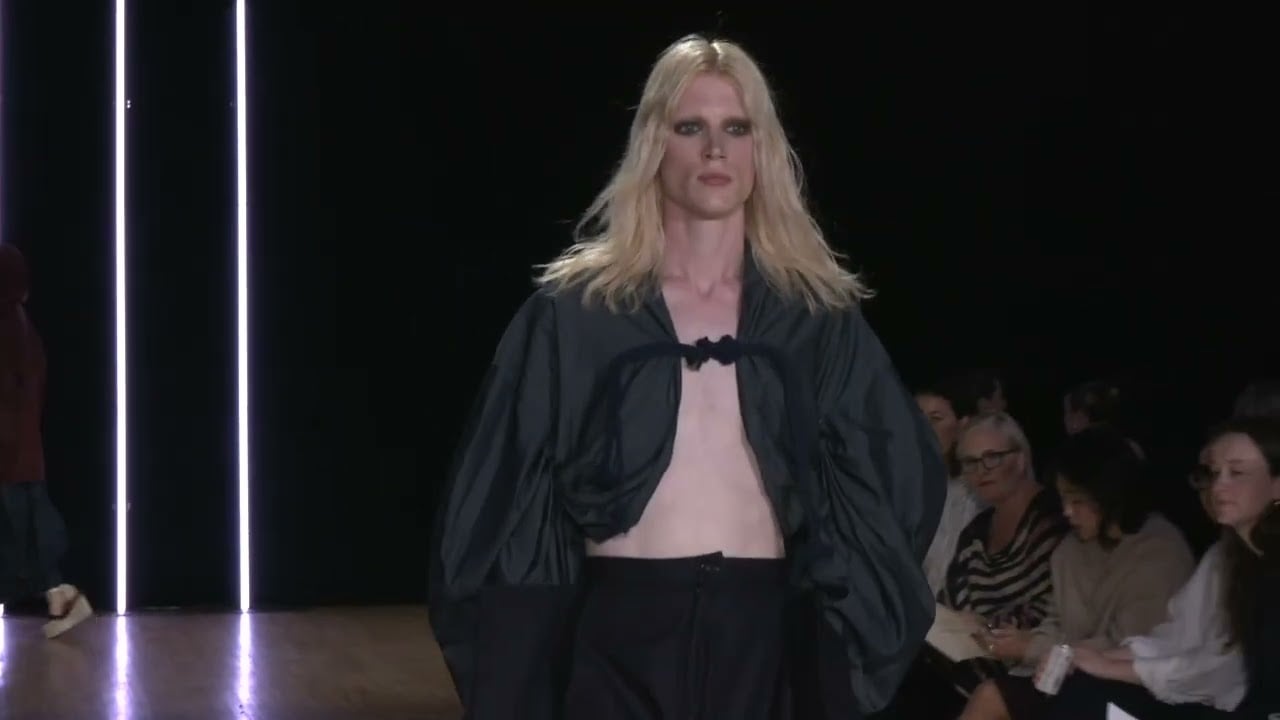
The final year is about creating your own collection and portfolio and entering the British Fashion Council competitions including Mulberry, Burberry, Pringle and Chloe. All students show at the degree fashion show in Kingston; selected students show at the London press show and exhibit at Graduate Fashion Week in London. Kingston Fashion Show hosts a pre-show reception for press and industry contacts, which has previously been sponsored by Fenwick, Brooks Brothers, Dewhirst, Overbury and Bentalls.
Core modules
30 credits
This module is a combination of a preparation for the Final Major Project in the form of a pre-collection project folder and the choice of a selected external competition.
60 credits
This module covers all 2D and 3D aspects relating to the development of the final collection and exit portfolio. It is the 'capstone' project, which is the culmination of your learning over the three years. The module will cover the three main stages of designing for fashion, research, design development and presentation. As a designer you will be supported by a design tutor and a pattern cutting tutor to realise the main body of work, this will reflect industry practice and enable you to engage with a team collaborating to create original work.
The 2D Project Folder will contain collection development, promotional package and a technical folder. Collection development within this module will support the three-dimensional outcome of a capsule collection. Through discussion with the teaching team and with formative feedback you will decide the focus of your major project (Final Project Folder), which will be either 2D or 3D focused.
15 credits
This module supports an extended research project that deepens your understanding of critical issues relevant to your practice. You’ll explore a topic of your choosing, framed by questions emerging from your own design work and informed by relevant theory, history, or cultural context. Working independently and with tutor support, you’ll undertake rigorous enquiry using appropriate research methods and sources. Through this process, you’ll build your ability to reflect critically, argue persuasively, and contribute to contemporary discourse in interaction design.
15 credits
This module gives you a dedicated opportunity to develop your Future Skills Graduate Attributes.
At the start of the module, you will be supported to self-assess your current skills profile. You will determine which attributes and skills you need to develop to support your career ambitions. In this process, you will be supported by a dedicated career coach, helping you explore a range of options that includes self-employment/freelancing, starting your own business, higher level study, and other professional graduate-level opportunities. Throughout the module, you will be given opportunities to engage with external mentors, to support reflection and to develop a professional network.
You will undertake a tailored series of activities and projects, aligned to your goals, from a menu of development options. This could include short courses, enrichment activities and experiential learning options such as micro-placements. You will also be able to reflect on activities outside the University that develop your graduate attributes, such as work or volunteering.
What career opportunities does this course offer?
Carve your own pathway in the world of design
Our graduates are renowned for their understanding of the design process and strong creative style in the fashion industry.
Kingston alumni have gone on to gain senior positions in global fashion companies, including Burberry, Calvin Klein, Paul Smith, All Saints, Alexander McQueen, Club Monaco, Margiela and Saint Laurent.
Other graduates have achieved success with their own labels, including John Richmond, Basso & Brooke, Felipe Oliveira Baptista (now design director of Lacoste), Sophie Hulme, Joshua Kane, Charli Cohen and Amy Powney, Design Director for Mother of Pearl.
Renowned alumni include Glenda Bailey, editor of Harper's Bazaar US, and Caryn Franklin MBE, who has been awarded an honorary doctorate by the University.
Through my internships at the Zara head office in Spain, Givenchy in Paris and on the sponsored trip to Shanghai, I have gained an all-round and immensely valuable experience within the fashion industry. I am now prepared for my forthcoming Erasmus study semester at ENSAD University in Paris.
Future Skills
Our Future Skills programme is embedded within all our undergraduate courses and throughout the whole Kingston experience. These skills will help you to become a future-proof graduate by equipping you with the skills most valued by employers, such as problem-solving, digital competency and adaptability.
As you progress through your degree, you'll learn to navigate, explore and apply these graduate skills. You’ll also understand how to demonstrate and articulate to employers how these future skills give you the edge.

Teaching and assessment
Scheduled learning and teaching on this course includes timetabled activities such as lectures, seminars and small group tutorials. It may also include critiques, project work, studio practice, digital labs, workshops, and placements.
Outside the scheduled learning and teaching hours, you will learn independently through self-study which will involve reading articles and books, working on projects, undertaking research, preparing for and completing your work for assessments. Some independent study work may need to be completed on-campus, as you may need to access campus-based facilities such as studios and labs.
Our academic support team here at Kingston University provides help in a range of areas.
When you arrive, we'll introduce you to your personal tutor. This is the member of academic staff who will provide academic guidance, be a support throughout your time at Kingston and show you how to make the best use of all the help and resources that we offer at Kingston University.
A course is made up of modules, and each module is worth a number of credits. You must pass a given number of credits in order to achieve the award you registered on, for example 360 credits for a typical undergraduate course or 180 credits for a typical postgraduate course. The number of credits you need for your award is detailed in the programme specification which you can access from the link at the bottom of this page.
One credit equates to 10 hours of study. Therefore 120 credits across a year (typical for an undergraduate course) would equate to 1,200 notional hours. These hours are split into scheduled and guided. On this course, the percentage of that time that will be scheduled learning and teaching activities is shown below for each year of study. The remainder is made up of guided independent study.
- Year 1: 41% scheduled learning and teaching
- Year 2: 32% scheduled learning and teaching
- Year 3: 26% scheduled learning and teaching
The exact balance between scheduled learning and teaching and guided independent study will be informed by the modules you take.
Your course will primarily be delivered in person. It may include delivery of some activities online, either in real time or recorded.
Types of assessment
- Year 1: Coursework 100%
- Year 2: Coursework 100%
- Year 3: Coursework 100%
Please note: the above breakdowns are a guide calculated on core modules only. If your course includes optional modules, this breakdown may change to reflect the modules chosen.
We aim to provide feedback on assessments within 20 working days.
Your individualised timetable is normally available to students within 48 hours of enrolment. Whilst we make every effort to ensure timetables are as student-friendly as possible, scheduled learning and teaching can take place on any day of the week between 9am and 6pm. For undergraduate students, Wednesday afternoons are normally reserved for sports and cultural activities, but there may be occasions when this is not possible. Timetables for part-time students will depend on the modules selected.
Student work
Fees and funding
| Fee category | Annual Fee |
|---|---|
| Home (UK students) | £10,050* |
| International | |
| Year 1 (2027/28): | £To be confirmed |
| Year 2 (2028/29): | £To be confirmed |
| Year 3 (2029/30): | £To be confirmed |
The tuition fee you pay depends on whether you are assessed as a 'Home' (UK), 'Islands' or 'International' student.
For courses with Professional Placement, the fee for the placement year can be viewed on the undergraduate fees table. The placement fee published is for the relevant academic year stated in the table. This fee is subject to annual increases but will not increase by more than the fee caps as prescribed by the Office for Students or such other replacing body.
*For full-time programmes lasting more than one academic year, a tuition fee is payable for each academic year of the course.
Your annual tuition fee covers your first attempt at all modules required for that academic year. Any re-study or repeat of modules will incur additional charges, calculated according to the number of credits taken.
Home students (UK):
Tuition fees are subject to inflation-linked increases in line with government policy. Updated fees will be confirmed in line with the maximum fee cap set by the Government or the Office for Students (OfS) for each academic year. This means your fee may increase for each academic year of study, but only up to the maximum amount permitted for that year.
Eligible UK students can apply to the Government for a tuition loan, which is paid direct to the University. This has a low interest rate which is charged from the time the first part of the loan is paid to the University until you have repaid it.
International students:
Full-time taught international student fees are subject to an annual increase, which is published in advance for the full duration of your programme.
| Fee category | Annual Fee |
|---|---|
| Home (UK students) | £9,790* |
| International | |
| Year 1 (2026/27): | £21,400 |
| Year 2 (2027/28): | £22,300 |
| Year 3 (2028/39): | £23,200 |
The tuition fee you pay depends on whether you are assessed as a 'Home' (UK), 'Islands' or 'International' student.
For courses with Professional Placement, the fee for the placement year can be viewed on the undergraduate fees table. The placement fee published is for the relevant academic year stated in the table. This fee is subject to annual increases but will not increase by more than the fee caps as prescribed by the Office for Students or such other replacing body.
*For full-time programmes lasting more than one academic year, a tuition fee is payable for each academic year of the course.
Your annual tuition fee covers your first attempt at all modules required for that academic year. Any re-study or repeat of modules will incur additional charges, calculated according to the number of credits taken.
Home students (UK):
Tuition fees are subject to inflation-linked increases in line with government policy. Updated fees will be confirmed in line with the maximum fee cap set by the Government or the Office for Students (OfS) for each academic year. This means your fee may increase for each academic year of study, but only up to the maximum amount permitted for that year.
Eligible UK students can apply to the Government for a tuition loan, which is paid direct to the University. This has a low interest rate which is charged from the time the first part of the loan is paid to the University until you have repaid it.
International students:
Full-time taught international student fees are subject to an annual increase, which is published in advance for the full duration of your programme.
| Fee category | Annual Fee |
|---|---|
| Home (UK students) | £9,535* |
| International | |
| Year 1 (2025/26): | £19,500 |
| Year 2 (2026/27): | £20,300 |
| Year 3 (2027/28): | £21,100 |
The tuition fee you pay depends on whether you are assessed as a 'Home' (UK), 'Islands' or 'International' student. In 2025/26 the fees for this course are above.
For courses with Professional Placement, the fee for the placement year can be viewed on the undergraduate fees table. The placement fee published is for the relevant academic year stated in the table. This fee is subject to annual increases but will not increase by more than the fee caps as prescribed by the Office for Students or such other replacing body.
*For full-time programmes lasting more than one academic year, a tuition fee is payable for each academic year of the course. Your annual tuition fees cover your first attempt at all of the modules necessary to complete that academic year. A re-study of any modules will incur additional charges calculated by the number of credits. Home tuition fees may be subject to annual increases but will not increase by more than the fee caps as prescribed by the Office for Students or such other replacing body. Full time taught International fees are subject to an annual increase and are published in advance for the full duration of the programme.
Eligible UK students can apply to the Government for a tuition loan, which is paid direct to the University. This has a low interest rate which is charged from the time the first part of the loan is paid to the University until you have repaid it.
Additional course costs
Some courses may require additional costs beyond tuition fees. When planning your studies, you’ll want to consider tuition fees, living costs, and any extra costs that might relate to your area of study.
Your tuition fees include costs for teaching, assessment and university facilities. So your access to libraries, shared IT resources and various student support services are all covered. Accommodation and general living expenses are not covered by these fees.
Where applicable, additional expenses for a Fashion BA course may include:
For this course you will be involved in the process of making as a means of exploration, experimentation and understanding your practice. You will be using a diverse range of media and materials, many of which are provided by the department or sponsored by industry.
You will be given an equipment list during Induction Week to buy essential items at a discounted price that should last you throughout the course and beyond, these include:
- pattern cutting scissors
- cloth scissors
- metre rules
- bobbins
Specialist items for knitwear and sewing are provided on loan within the department. You may be required to produce toiles and finished garments for assessment. Fabric and yarns are sponsored and calico can be purchased in the department shop.
You may also wish to purchase your own chosen art materials, which could cost between £50 and £500.
Our libraries have an extensive collection of books and journals, as well as open-access computers and laptops available to rent. However, you may want to buy your own computer or personal copies of key textbooks. Textbooks may range from £50 to £250 per year. And a personal computer can range from £100 to £3,000 depending on your course requirements.
While most coursework is submitted online, some modules may require printed copies. You may want to allocate up to £100 per year for hard-copies of your coursework. It’s worth noting that 3D printing is never compulsory. So if you choose to use our 3D printers, you’ll need to pay for the material. This ranges from 3p per gram to 40p per gram.
Kingston University will pay for all compulsory field trips. You will be required to participate in mandatory study visits, subsidised by the department. Field trips will range from £15 to £75.
There may be costs for participating in external shows and exhibitions. For example, you could incur travel costs, which will vary according to the location. There is a sponsored graduate fashion show and exhibition in London for selected students. There is also a subsidised student show for all graduates.
Your tuition fees don’t cover travel costs. To save on travel costs, you can use our intersite bus service. This route links the campuses and halls of residence with local train stations - Surbiton, Kingston upon Thames, and Norbiton.
Courses involving placements or direct work with vulnerable groups may require a DBS check or other security checks.
If you choose to do a placement year, travel costs will vary depending on your location. Sponsored projects in Level 5 may lead to paid internships, including flights and accommodation in the US and Europe.
Some courses may require professional memberships or subscriptions.
Scholarships and bursaries
For students interested in studying this course at Kingston, there are several opportunities to seek funding support.

It was an honour to intern for Ralph Lauren and to conclude the internship with presenting my work to Mr Lauren himself! A company I initially thought I'd struggle to connect with, proved to have more parallels to my own home than I could have anticipated. Faultless employees, countless opportunities and incredible experiences - it was nothing less than a dream internship.
Kingston University Graduate Fashion Show 2025
Course changes and regulations
The information on this page reflects the currently intended course structure and module details. To improve your student experience and the quality of your degree, we may review and change the material information of this course. Find out more about course changes
Programme Specifications for the course are published ahead of each academic year.
Regulations governing this course can be found on our website.
What our students and graduates say
I'm excited to take my year out to get industry experience. Winning the Anne Tyrrell award will really help me to make the most out of this next year.
For me, Kingston School of Art was the best platform to flourish in. As a non-UK mature student I knew I'd need all the support I could get whilst working in a highly demanding environment. The help and guidance I got from my tutors and technicians was priceless and played a big part in my success. Be creative, push for greatness, work hard and most importantly, trust your gut!
Winning the Tommy Hilfiger Scholarship during my second year at Kingston opened up both my creative world and professional world simultaneously. I was fully immersed into a world of runway fashion while working at the helm of a global design brand on both the womenswear and menswear design teams.
My experience at Kingston School of Art was great. I had incredible tutors who really guided and supported me throughout the three years, especially during my final collection. Skills that I learnt during the course were very transferable within the industry, as I was draping, cutting and sewing at Richard Quinn.
Key information
The scrolling banner below displays some key factual data about this course (including different course combinations or delivery modes of this course where relevant).