Aviation Operations BSc (Hons)
Subject and course type
- Engineering: aerospace, aviation and aircraft
- Undergraduate
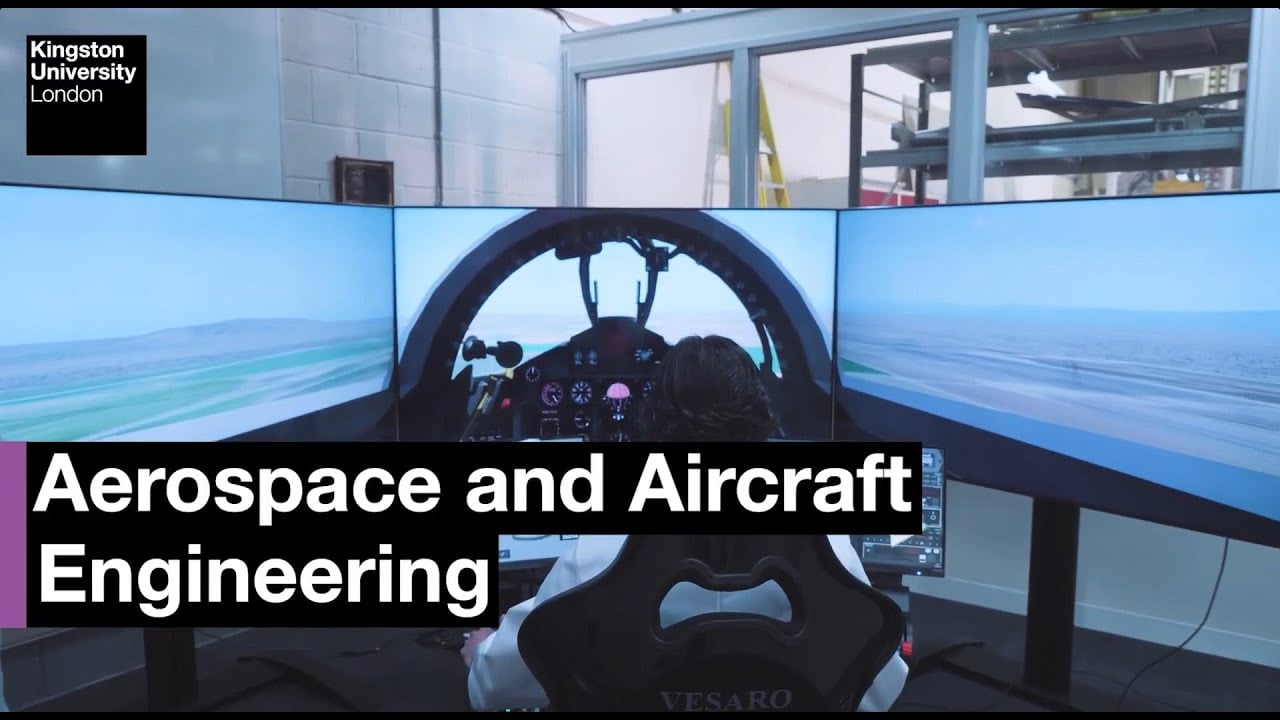
Kingston University's Aviation Operations course is crafted with input from senior aviation industry professionals. It stands out by blending core aviation principles with a comprehensive understanding of the global aviation ecosystem. Kingston is the only UK university with industry-standard flight simulators that include Airbus A320 Flight Simulator, Helicopter Simulator and Six-Degree of Freedom Motion Simulator.
You are reading:
Launch your aviation career
This course blends technical expertise and strategic management for success in the fast-paced global aviation industry.
If you're aiming for a successful career in the aviation industry, look no further. Our BSc (Hons) Aviation Operations course is the ideal choice. It concentrates on the day-to-day functions of airline and airport operations while equipping you with the skills essential for this dynamic, rapidly expanding global sector.
The aims of the degree are to:
- Provide you with a thorough understanding of aviation operations principles and practice. Ensure you are fully-prepared for the UK CAA ATPL examinations and a career as a commercial pilots or in diverse aviation operations roles.
- Give you the knowledge and practical skills necessary to gain graduate employment in the air transport industry.
- Provide you with the opportunity to develop your written and oral communication skills.
- Prepare you to undertake research, further study, and continue with lifelong learning by developing intellectual, problem-solving, and key (transferable) skills.
This dynamic degree responds directly to the international industry's call for graduates who grasp the complexities of airline and airport operation and appreciate the innovation behind aviation engineering. Bridging technical excellence with strategic management, the course offers a rare, holistic perspective on one of the world's most fast-paced and interconnected sectors.
Satisfactory completion of the BSc (Hons) Aviation Operations will give you the possibility of postgraduate study in a suitable Air Transport Management MSc course.
Why choose this course
This course is designed for aspiring professionals eager to enter the diverse and rapidly-evolving aviation industry. Delivered in a dynamic, inclusive learning environment, it welcomes individuals from a wide range of academic backgrounds, interests, and experiences. The programme uniquely equips students with both the commercial insight and technical expertise needed to thrive in various roles across the aviation sector. Students will be prepared to navigate and succeed in one of the world’s most complex and competitive industries.
What truly sets this course apart is its built-in flexibility – especially for those with ambitions to become commercial airline pilots. Students have the unique opportunity to tailor their journey by switching to the BSc (Hons) Aviation Operations with Commercial Pilot Training pathway at the end of their first year. This seamless transition empowers aspiring pilots to pursue their flying dreams without compromising on a strong academic foundation in aviation operations.
More details can be found on the webpage for BSc (Hons) Aviation Operations with Commercial Pilot Training pathway.
Students on both routes follow the same foundational modules in Year 1 and re-join in Year 3, developing strategic, operational, and research skills.
The pilot route diverges in Year 2, where students complete the training required for the UK CAA ATPL exams (all flight training is funded and arranged independently by the student). This integration allows pilot route students to gain both the academic and regulatory qualifications needed for a flying career, while also developing a wider understanding of airline and airport operations.
Finally, Aviation Operations students may still pursue pilot training separately post-graduation, having already developed a strong operational and academic grounding.
International Success Support Scholarship
If you are an international student, you may be eligible for a £2,500 International Success Support Scholarship for this course, for September 2026 start only.
Course content
Year 1
Year 1 introduces aviation and equips you with the maths and physics skills needed for Years 2 and 3.
Core modules
30 credits
This module provides a foundation in mathematics and science relevant to aviation operations and pilot training. It gives you essential analytical and problem-solving skills to apply mathematical concepts and scientific principles in an aviation context, ensuring a strong basis for future flight training and operational decision-making.
The computing component introduces you to Excel for problem-solving, data analysis, graphical representation, and visualisation.
30 credits
You will be introduced to your course learning aims and consider your anticipated learning targets from induction to graduation. You will be guided to identify and take ownership of your personal academic journey through the development and application of academic skills aligned to KU Graduate Attributes and their discipline-specific professional body learning outcomes.
You will be tutored in a range of learning-to-learn techniques, and introduced to assessment for learning and the role of feedback, reflection and feedforward as an integrated part of your learning journey. This will be supported through active engagement in KU Navigate Programme, enabling you to understand and begin to develop a design thinking approach to Future Skills development.
30 credits
This module introduces students to the principles of airline flight operations. Key topics include flight planning, air traffic control (ATC) procedures, flight dispatch, and crew resource management (CRM). The module also explores operational safety standards and abnormal situations.
30 credits
This module introduces students to the key concepts of human factors in aviation and their impact on flight safety. Topics include situational awareness, decision-making, fatigue management, and safety management systems (SMS).
Aims
- To introduce the fundamentals of human factors and aviation safety.
- To explore how human performance affects flight operations.
- To develop skills in risk assessment and safety management.
Year 2
In Year 2 you are taught the specialist modules in airworthiness, aviation operations and logistics, and problem solving using the flight simulator.
Core modules
30 credits
This module provides you with an essential understanding of the airworthiness principle applicable to civilian aircraft. The module starts by covering basic principles of airworthiness and progresses to emphasise the critical aspects of continuing airworthiness and the regulatory framework governing operations and maintenance.
Through interactive lectures, seminars and workshop sessions, you will develop an understanding of the aviation operation’s regulatory framework, and continuing airworthiness requirements. By the module's conclusion, you will have the knowledge necessary for assessing and applying the principles underpinning continuing airworthiness so that aviation operations comply with the aviation sector’s regulatory bodies.
30 credits
In this module, students explore how air carriers are adopting innovative methods and technologies to enhance cargo handling and transportation. Key topics include traceability systems, barcoding, security and screening procedures, and the safe delivery of all types of cargo.
The module also introduces the principles of multimodal transportation, emphasising the critical role of air cargo in maintaining an effective and efficient global supply chain.
In addition, students will examine a range of statistical and operational research (OR) methods used to address common logistics challenges, developing analytical skills to support data-driven decision-making in supply chain and transport operations.
30 credits
This module supports students in identifying the skills acquired during their integrated pilot licence training and the early stages of their degree. It prepares them for Level 6 study by enhancing their ability to reflect on learning, develop critical thinking, and strengthen communication skills.
Aligned with Kingston University graduate attributes, the module fosters a reflective approach to learning, an appreciation of lifelong learning, creativity, and effective communication. This mirrors industry expectations, where trainee airline pilots must reflect on their performance during training phases.
A key component involves problem-solving in flight using a flight simulator, focusing on cockpit workload mitigation. Students will apply their subject-specific knowledge, skills, and behaviours as part of an interdisciplinary team, developing solutions to flying tasks and emergencies through simulation-based learning. The teamwork project allows students to contextualise their expertise, demonstrating their ability to integrate knowledge into practical applications. This experience directly supports their preparation for the work-based project in the End-Point Assessment, equipping them with essential problem-solving and collaborative skills for professional aviation operations.
30 credits
This module supports you in identifying the skills acquired during their integrated pilot licence training and the early stages of your degree. It prepares you for Level 6 study by enhancing your ability to reflect on learning, develop critical thinking, and strengthen communication skills.
Aligned with Kingston University graduate attributes, the module fosters a reflective approach to learning, an appreciation of lifelong learning, creativity, and effective communication. This mirrors industry expectations, where trainee airline pilots must reflect on their performance during training phases.
Year 3
In Year 3, the focus is on understanding the operational and commercial nature of the airline industry. You are given the opportunity to research a topic of your choice to enhance your independent learning skills. You will also carry out a group project on airline management.
Core modules
30 credits
This module examines the strategic decision-making processes within the aviation industry. It provides you with a set of analytical tools to support long-term organisational planning. It introduces core strategic management concepts and applies modern economic and operational principles to real-world aviation scenarios.
The module covers both qualitative and quantitative tools, including scenario analysis, forecasting techniques, game theory, and linear programming. You will develop the ability to evaluate strategic options, manage uncertainty, and formulate evidence-based, data-driven strategies in airline, airport, and aviation service contexts.
30 credits
This module aims to develop students' understanding of the principles of airline and airport operations, including the interdependencies between airlines, airports, regulatory bodies, and ground service providers. It explores operational efficiency, safety, regulatory compliance, and the economic and logistical challenges that influence decision-making in the aviation industry. The module also emphasises real-world case studies, technological advancements, and sustainability in airport and airline operations.
As part of the module, flight simulator sessions will be used to reinforce operational concepts through practical, scenario-based learning. These sessions will enhance students’ situational awareness, decision-making, and problem-solving skills in realistic operational environments.
15 credits
This multidisciplinary module reflects the needs of transportation business. It explores the role of digital technology and innovation in the aviation industry, providing you with an understanding of emerging technologies, digital transformation, and their impact on operational efficiency and stakeholders experience. It covers topics such as artificial intelligence (AI), future air systems, big data analytics, digital twins, automation, and cybersecurity within aviation. The module integrates theoretical concepts with real-world applications through case studies and hands-on activities.
30 credits
This module provides you with the essential research skills and methodologies required for academic and professional investigations in aviation operations. The module will equip you with qualitative and quantitative research techniques and critical evaluation skills to conduct independent research. You will develop a research proposal and prepare for your dissertation by engaging with industry-relevant problems, ethical considerations, and data collection strategies.
15 credits
This module provides you with a dedicated opportunity to develop your Future Skills Graduate Attributes that will set you apart from other graduates and enhance your employability and confidence. At the start of the module, you will be supported to self-assess your current skills profile and determine which attributes you need to develop to support your career ambitions.
Taught sessions will give you the opportunity to have coaching conversations with students from across the University, supported and facilitated by the Module team. Outside of these taught sessions, you will engage in activities from a menu of opportunities to develop your Graduate Attributes.
The menu of opportunities allows you to self-select activities such as hackathons, masterclasses and taster sessions, short online learning courses, and study abroad. In your taught classes with students from across the University, you will be encouraged to reflect on the activities you undertake to develop your graduate attributes and work towards the final assignment, a portfolio.
Foundation Year in Engineering
Want to study on one of our engineering degrees, but don't meet our standard entry requirements?
Our Foundation Year in Engineering provides an alternative entry route.

International students: direct application
Are you an international student? Have you decided Kingston is the place for you? If so, you can apply for this course directly, rather than having to go through UCAS.

What career opportunities does this course offer?
With your degree and frozen ATPL, you'll be able to apply for initial employment as a commercial pilot with regional and short-haul airlines. For example, easyJet, Loganair, Ryanair and more.
Future Skills
Our Future Skills programme is embedded within all our undergraduate courses and throughout the whole Kingston experience. These skills will help you to become a future-proof graduate by equipping you with the skills most valued by employers, such as problem-solving, digital competency and adaptability.
As you progress through your degree, you'll learn to navigate, explore and apply these graduate skills. You’ll also understand how to demonstrate and articulate to employers how these future skills give you the edge.

Teaching and assessment
Scheduled learning and teaching on this course includes timetabled activities including lectures, seminars and small group tutorials. Most of the teaching will be classroom-based using traditional techniques.
It may also include placements, project work, workshops, workshops in computer labs, and laboratory workshops.
Outside the scheduled learning and teaching hours, you will learn independently through self-study which will involve reading articles and books, working on projects, undertaking research, preparing for and completing your work for assessments. Some independent study work may need to be completed on-campus, as you may need to access campus-based facilities such as studios and labs.
Our academic support team here at Kingston University provides help in a range of areas.
When you arrive, we'll introduce you to your personal tutor. This is the member of academic staff who will provide academic guidance, be a support throughout your time at Kingston and show you how to make the best use of all the help and resources that we offer at Kingston University.
We aim to provide feedback on assessments within 20 working days.
Your individualised timetable is normally available to students within 48 hours of enrolment. Whilst we make every effort to ensure timetables are as student-friendly as possible, scheduled learning and teaching can take place on any day of the week between 9am and 6pm. For undergraduate students, Wednesday afternoons are normally reserved for sports and cultural activities, but there may be occasions when this is not possible. Timetables for part-time students will depend on the modules selected.
Fees and funding
| Fee category | Annual Fee |
|---|---|
| Home (UK students) | |
| £10,050* | |
| Foundation Year | £10,050 |
| International | |
| Year 1 (2027/28): | £To be confirmed |
| Year 2 (2028/29): | £To be confirmed |
| Year 3 (2029/30): | £To be confirmed |
| Year 4 (2030/31): | £To be confirmed |
Plus the additional cost that involves the integrated ATPL training: around £90,000 (subject to any increase imposed by our training partner).
The tuition fee you pay depends on whether you are assessed as a 'Home' (UK), 'Islands' or 'International' student. In 2026/27 the fees for this course are above.
For courses with Professional Placement, the fee for the placement year can be viewed on the undergraduate fees table. The placement fee published is for the relevant academic year stated in the table. This fee is subject to annual increases but will not increase by more than the fee caps as prescribed by the Office for Students or such other replacing body.
*For full-time programmes lasting more than one academic year, a tuition fee is payable for each academic year of the course.
Your annual tuition fee covers your first attempt at all modules required for that academic year. Any re-study or repeat of modules will incur additional charges, calculated according to the number of credits taken.
Home students (UK): Tuition fees are subject to inflation-linked increases in line with government policy. Updated fees will be confirmed in line with the maximum fee cap set by the Government or the Office for Students (OfS) for each academic year. This means your fee may increase for each academic year of study, but only up to the maximum amount permitted for that year.
Eligible UK students can apply to the Government for a tuition loan, which is paid direct to the University. This has a low interest-rate which is charged from the time the first part of the loan is paid to the University until you have repaid it.
International students: Full-time taught international student fees are subject to an annual increase, which is published in advance for the full duration of your programme.
| Fee category | Annual Fee |
|---|---|
| Home (UK students) | £9,790* |
| International | |
| Year 1 (2026/27): | £19,200 |
| Year 2 (2027/28): | £19,900 |
| Year 3 (2028/29): | £20,700 |
Plus the additional cost that involves the integrated ATPL training: around £90,000 (subject to any increase imposed by our training partner).
The tuition fee you pay depends on whether you are assessed as a 'Home' (UK), 'Islands' or 'International' student. In 2026/27 the fees for this course are above.
For courses with Professional Placement, the fee for the placement year can be viewed on the undergraduate fees table. The placement fee published is for the relevant academic year stated in the table. This fee is subject to annual increases but will not increase by more than the fee caps as prescribed by the Office for Students or such other replacing body.
*For full-time programmes lasting more than one academic year, a tuition fee is payable for each academic year of the course.
Your annual tuition fee covers your first attempt at all modules required for that academic year. Any re-study or repeat of modules will incur additional charges, calculated according to the number of credits taken.
Home students (UK): Tuition fees are subject to inflation-linked increases in line with government policy. Updated fees will be confirmed in line with the maximum fee cap set by the Government or the Office for Students (OfS) for each academic year. This means your fee may increase for each academic year of study, but only up to the maximum amount permitted for that year.
Eligible UK students can apply to the Government for a tuition loan, which is paid direct to the University. This has a low interest-rate which is charged from the time the first part of the loan is paid to the University until you have repaid it.
International students: Full-time taught international student fees are subject to an annual increase, which is published in advance for the full duration of your programme.
| Fee category | Annual Fee |
|---|---|
| Home (UK students) | £9,535* |
| International | |
| Year 1 (2025/26): | £18,500 |
| Year 2 (2026/27): | £19,200 |
| Year 3 (2027/28): | £19,900 |
Plus the additional cost that involves the integrated ATPL training: around £90,000 (subject to any increase imposed by our training partner).
The tuition fee you pay depends on whether you are assessed as a 'Home' (UK), 'Islands' or 'International' student. In 2025/26 the fees for this course are above.
For courses with Professional Placement, the fee for the placement year can be viewed on the undergraduate fees table. The placement fee published is for the relevant academic year stated in the table. This fee is subject to annual increases but will not increase by more than the fee caps as prescribed by the Office for Students or such other replacing body.
* For full time programmes of a duration of more than one academic year, the published fee is an annual fee, payable each year, for the duration of the programme. Your annual tuition fees cover your first attempt at all of the modules necessary to complete that academic year. A re-study of any modules will incur additional charges calculated by the number of credits. Home tuition fees may be subject to annual increases but will not increase by more than the fee caps as prescribed by the Office for Students or such other replacing body. Full time taught International fees are subject to an annual increase and are published in advance for the full duration of the programme.
Eligible UK students can apply to the Government for a tuition loan, which is paid direct to the University. This has a low interest-rate which is charged from the time the first part of the loan is paid to the University until you have repaid it.
Additional course costs
Some courses may require additional costs beyond tuition fees. When planning your studies, you’ll want to consider tuition fees, living costs, and any extra costs that might relate to your area of study.
Your tuition fees include costs for teaching, assessment and university facilities. So your access to libraries, shared IT resources and various student support services are all covered. Accommodation and general living expenses are not covered by these fees.
Where applicable, additional expenses for your course may include:
Our libraries have an extensive collection of books and journals, as well as open-access computers and laptops available to rent. However, you may want to buy your own computer or personal copies of key textbooks. Textbooks may range from £50 to £250 per year. And a personal computer can range from £100 to £3,000 depending on your course requirements.
While most coursework is submitted online, some modules may require printed copies. You may want to allocate up to £100 per year for hard-copies of your coursework. It’s worth noting that 3D printing is never compulsory. So if you choose to use our 3D printers, you’ll need to pay for the material. This ranges from 3p per gram to 40p per gram.
Kingston University will pay for all compulsory field trips. Fees for optional trips can range from £30 to £350 per trip.
Your tuition fees don’t cover travel costs. To save on travel costs, you can use our intersite bus service. This route links the campuses and halls of residence with local train stations - Surbiton, Kingston upon Thames, and Norbiton.
Courses involving placements or direct work with vulnerable groups may require a DBS check or other security checks.
Specific courses may require uniforms, specialty clothing, or specific equipment like lab coats and safety shoes. Kingston University will supply you with a lab coat and safety goggles at the start of the year.
Scholarships and bursaries
For students interested in studying this course at Kingston, there are several opportunities to seek funding support.

International Success Support Scholarship
The International Success Support Scholarship provides £2,500 towards tuition fees if you are an international student starting in September 2026, on this course or selected others. Eligible undergraduate students can receive £2,500 per year for up to three years, helping to support their academic journey from day one.
You don’t need to apply separately. If you’re eligible, the scholarship will automatically be applied to your tuition fee invoice, empowering you to focus on achieving your goals at Kingston University.
For more details, please visit the International scholarships webpage.
Course changes and regulations
The information on this page reflects the currently intended course structure and module details. To improve your student experience and the quality of your degree, we may review and change the material information of this course. Find out more about course changes
Programme Specifications for the course are published ahead of each academic year.
Regulations governing this course can be found on our website.
Key information
The scrolling banner below displays some key factual data about this course (including different course combinations or delivery modes of this course where relevant).