Interaction Design BA (Hons)
Subject and course type
- Interaction and experience design
- Undergraduate
The Interaction Design BA (Hons) degree course at Kingston School of Art is the newest offering from our Illustration Animation department. Kingston University is ranked Top in London and Top 4 in the UK for Graphic Design (The Guardian University Guide 2026).
You are reading:
Shape the way you experience and interact with the world around you
A space to explore and create
At Kingston School of Art, you’ll join a creative community where collaboration and critical thinking thrive. Our workshops and studios welcome all courses, providing space for students and staff to share ideas and explore making across different disciplines.
Teaching on the course centres on understanding human experience – how we sense, act and relate – as the heart of innovative design practice. We believe students learn best through making and developing as critical practitioners who influence and shape their creative field.
The BA (Hons) Interaction Design course is based within the vibrant, well-regarded Department of Illustration Animation. We are known for nurturing successful graduates, as well as our human-centred approach to visual communication, design, and immersive storytelling. These key elements will deeply enrich your learning experience.
Within this dynamic environment, you’ll also exchange ideas and approaches which open new opportunities for growth and creativity.
Interaction and 3D design at Kingston School of Art
Interaction and 3D design students benefit from working in a studio culture at Kingston School or Art. Discover more about the world-class facilities and support our students have access to as they explore their passions.
Student work
Why choose this course
Interaction Design at Kingston School of Art explores how people connect with technology, spaces, and each other. Through interactive storytelling, immersive experiences, and inclusive human-centred design, you’ll create interactive installations, digital experiences, and new ways for people to share stories. You will learn to reach diverse audiences and develop your own creative voice.
The course is part of the Department of Illustration Animation, known for its strong focus on storytelling across many forms and for supporting graduates who go on to become leaders in creative fields. By coming to Kingston, you’ll join a vibrant creative hub where collaboration and experimentation thrive. You’ll be part of a community known for its ethos of thinking through making and its interdisciplinary spirit, working alongside students from other courses in shared workshops and learning spaces. Guided by expert practitioners and supported by world-class facilities, you’ll develop your skills, expand your professional network, and prepare for a future in the creative industries.
Top University in London and Top 4 in the UK for Graphic Design, The Guardian University Guide 2026.
The Complete University Guide 2026 ranks us in the Top 10 in the UK for Art & Design – covers Fashion, Fashion Promotion and Communication, Fine Art, Graphic Design, Illustration Animation, Interior Design, and Product and Furniture Design.
The Art School Experience
As part of Kingston School of Art, students benefit from joining a creative community where we encourage collaborative working and critical practice.
Our workshops and labs are open to all disciplines, enabling students and staff to work together, share ideas and explore multi-disciplinary making.

Course content
The BA (Hons) Interaction Design course takes you on a creative journey that starts with your own experiences, moves into the spaces and environments around you, and leads to the wider communities and networks that connect people.
In your first year, you’ll explore how people sense, move, and communicate. You will use storytelling and design thinking to turn ideas into simple interactive experiences.
In your second year, you’ll investigate how design shapes environments and shared experiences. You will work with interactive spaces, immersive media, and collaborative projects.
In your final year, you’ll design for connection—creating projects that link people, communities, and digital networks through creative technology.
Interaction Design looks at how we communicate through playful, immersive, and socially relevant experiences. You will build both creative and technical skills through hands-on making, digital tools, and critical thinking. By combining art, design, and technology, you will learn to create original interactive work.
You’ll work with the latest creative technologies, including creative coding, game design, rapid prototyping, and digital fabrication. These tools will help you bring ideas to life as interactive systems, objects, and environments.
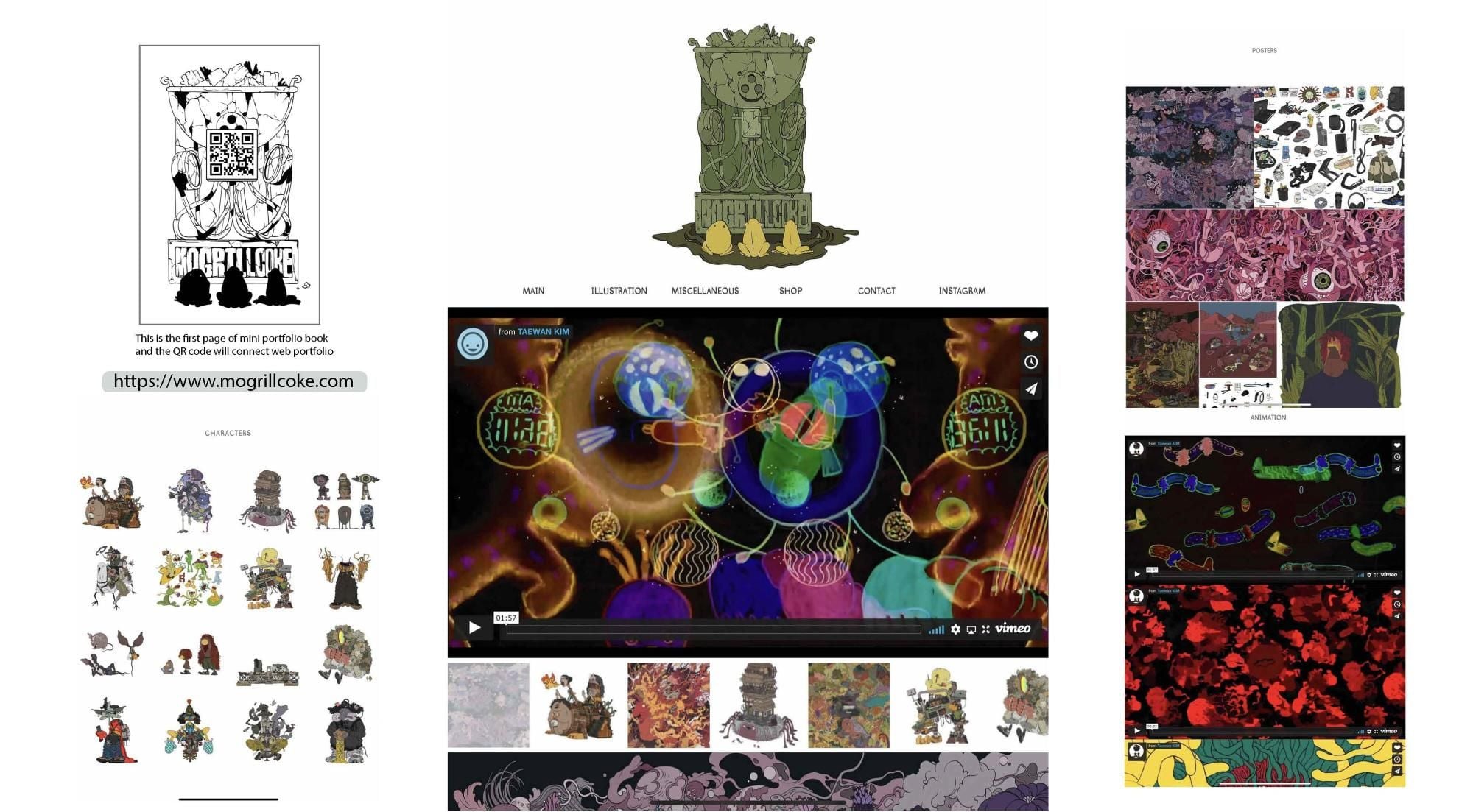
Student work covers a wide range of possibilities: playable stories, interactive objects and wearables, virtual and augmented reality, participatory installations, and responsive digital systems. Through set projects, independent research, and collaboration, you’ll apply your skills to real-world challenges, design for diverse audiences, and explore emerging industry needs.
You will graduate with a versatile, future-focused portfolio ready for professional practice.
What you’ll explore on the course:
- Using design thinking to develop and test ideas through hands-on making, prototyping, and audience engagement
- Building your creative voice by using critical thinking and reflection to tell stories that matter to you and others
- Collaborating through inclusive, participatory design to understand diverse needs and perspectives
- Designing across platforms, from screens and interactive objects to installations and immersive environments.
- Working with interactive technologies like creative coding, physical computing, and virtual or augmented reality to build responsive experiences.
- Applying your skills in real-world projects that engage audiences and address social and cultural challenges.
Year 1
You’ll be introduced to the core principles of interaction design, focusing on the body as an instrument that experiences and responds to the world around us. Through design thinking and hands-on making, you’ll develop skills to communicate clearly and thoughtfully, learning to understand and meet diverse audience needs. You’ll be introduced to human-centred design principles, exploring how empathy and observation inform creative problem-solving.
Core modules
30 credits
This module introduces the fundamentals of interaction design through sensing and storytelling, exploring how we perceive the world and share meaningful experiences. You’ll explore how the body acts as an instrument for understanding, responding to, and communicating with others. Through hands-on design thinking and inclusive research methods, you’ll develop empathetic communication skills and learn how to shape ideas for different audiences. You’ll also explore the relationship between content, form, and meaning in storytelling, building your confidence in testing ideas and presenting work through feedback and discussion with peers.
30 credits
In this module, you’ll discover how making can be a powerful way of thinking and problem-solving. Through a series of workshops and short projects, you’ll experiment with tools, processes, and technologies used in interaction design, from physical fabrication and creative computing to virtual production. Through direct experience you’ll explore how ideas take shape through iterative making. Prototyping, improvisation, and experimentation are encouraged as key creative strategies, helping you build confidence and flexibility in your design process.
30 credits
This module supports the development of your professional identity through collaboration and communication. You’ll begin to explore what it means to be a responsible designer in a global context, engaging with values such as inclusivity, sustainability, and ethical awareness. Through Kingston’s Future Skills programme and collaborative design projects, you’ll develop practical skills in teamwork, creative consultation, and presenting ideas to others. Personal development planning and reflective practice will help you track your progress and identify the skills you want to build throughout the course.
30 credits
This module introduces you to the histories of illustration, animation, and interaction design, exploring how these practices have evolved alongside others like film, graphic design, product design, and fine art. You’ll also reflect on how histories are constructed, questioning whose voices are centred and what kinds of knowledge are valued.
In the first part, you’ll examine traditional narratives and consider how to challenge Euro/Western-centric perspectives. The second part invites you to explore these fields through diverse media, themes, and theoretical approaches, developing your own critical and cultural understanding.
Year 2
In the second year, your practice will expand to consider the body in space, exploring how people interact with environments and with each other. You’ll take on immersive and collaborative projects using new technologies, deepening your critical thinking and creativity by understanding how context shapes experience.
Core modules
30 credits
This module explores how bodies interact with space, examining how movement, proximity, and environment shape experience. Through immersive storytelling, spatial design, and participatory experiences, you’ll design for environments that invite action, movement, and reflection. Projects will focus on designing for agency and access, considering diverse users and inclusive practices. You’ll expand your understanding of how context shapes meaning and engage audiences in physical, virtual, and hybrid spaces.
30 credits
In this module, you’ll take your making skills further, turning early ideas into working prototypes. You’ll learn how iterative design and testing can refine your concepts and improve audience engagement.
Workshops and projects will allow you to experiment with a wide range of media, including physical computing, virtual and augmented realities, sound design, and performance. You’ll gain hands-on experience with prototyping tools and software such as 3D modelling, game engines, sensor integration, and motion capture.
30 credits
This module supports your growing independence and understanding of professional practice. Framed through the idea of agency, your ability to act, influence, and collaborate, you’ll explore your role as a designer within different communities and creative contexts.
As part of Future Skills, you will engage in collaborative and interdisciplinary opportunities to develop your communication and teamwork skills. Personal reflection, planning, and real-world engagement will support you in defining your values, working style, and direction as a practitioner.
30 credits
This module connects your design practice to the wider world, linking interaction design to social, political, cultural, environmental, and technological contexts. You’ll explore how critical thinking and design research can help address pressing global issues, from climate change to digital inequality.
In the first half of the module, you’ll analyse real-world case studies using different theoretical perspectives. In the second half, you’ll explore research methods and approaches that support independent enquiry, preparing you for your final year research project.
Year 3
In your final year, you’ll explore how bodies connect as networks, examining how groups communicate and interact across different platforms. You’ll build story worlds and design shared experiences that engage audiences, while developing your own creative voice through independent research and professional practice tailored to your goals.
Core modules
60 credits
This module explores how we connect, communicate, and collaborate, positioning the body within wider networks of people, systems, and platforms. You’ll develop interaction design work that considers community, audience, and context. Projects may combine digital interfaces, physical installations, and online platforms, integrating tools for interactive storytelling.
You’ll define and deliver an extended self-directed project that reflects your interests, values, and creative direction. This could range from designing an interactive exhibition or social impact campaign to developing an innovative digital product or immersive storytelling experience.
Supported by research, ethics, and inclusive design strategies, you’ll consolidate your own design methodology. This project will showcase your ability to synthesise form, content, and purpose, establishing your professional identity through independent and collaborative practice.
30 credits
This module supports you in positioning yourself critically and culturally within the world of design. You’ll reflect on your practice, values, and future ambitions, exploring how designers can work ethically, sustainably, and collaboratively within global and local communities. You’ll develop your professional identity through personal development planning, goal setting, and public engagement, with opportunities to take part in outward-facing collaborative projects and live briefs that connect your work with real-world contexts.
15 credits
This module supports an extended research project that deepens your understanding of critical issues relevant to your practice. You’ll explore a topic of your choosing, framed by questions emerging from your own design work and informed by relevant theory, history, or cultural context. Working independently and with tutor support, you’ll undertake rigorous enquiry using appropriate research methods and sources. Through this process, you’ll build your ability to reflect critically, argue persuasively, and contribute to contemporary discourse in interaction design.
International students: direct application
Are you an international student? Have you decided Kingston is the place for you? If so, you can apply for this course directly, rather than having to go through UCAS.
What career opportunities does this course offer?
Students studying Interaction Design BA (Hons) can look forward to a broad range of professional opportunities and creative careers, with roles including:
- interaction designer
- exhibition designer
- experience designer
- production designer
- design researcher
- digital designer
- producer
- project manager
- art director
- creative director
- immersive storyteller
- illustrator
- animator
- graphic designer
- games designer
- artist
- performer
- educator
- community outreach facilitator
Future Skills
Our Future Skills programme is embedded within all our undergraduate courses and throughout the whole Kingston experience. These skills will help you to become a future-proof graduate by equipping you with the skills most valued by employers, such as problem-solving, digital competency and adaptability.
As you progress through your degree, you'll learn to navigate, explore and apply these graduate skills. You’ll also understand how to demonstrate and articulate to employers how these future skills give you the edge.

Student work
Teaching and assessment
The course will be delivered though workshops, lectures, seminars, individual and group tutorials, project briefs, live briefs, demonstrations, study visits, peer learning, independent learning, and study skills.
Methods of assessment for the course are by practical and written coursework.
When not attending timetabled sessions, you will be expected to continue learning independently through self-study. This typically will involve reading journal articles and books, working on individual and group projects, undertaking preparing coursework assignments and presentations, and preparing for final assignments. Your independent learning is supported by a range of excellent facilities including online resources, the library and CANVAS, the online virtual learning platform.
Our academic support team here at Kingston University provides help in a range of areas.
When you arrive, we'll introduce you to your personal tutor. This is the member of academic staff who will provide academic guidance, be a support throughout your time at Kingston and show you how to make the best use of all the help and resources that we offer at Kingston University.
Time spent in timetabled learning and teaching activity
- Year 3: 22%
Contact hours may vary depending on your modules.
Type of learning and teaching
Top-up year (Year 3)
- Scheduled learning and teaching: 267 hours
- Guided independent study (self-managed time): 933 hours
Assessment typically comprises exams (e.g. test or exam), practical (e.g. presentations, performance) and coursework (e.g. essays, reports, self-assessment, portfolios and dissertation). The approximate percentage for how you will be assessed on this course is as follows, though depends to some extent on the optional modules you choose:
- Coursework: 100%
We aim to provide feedback on assessments within 20 working days.
Your individualised timetable is normally available to students within 48 hours of enrolment. Whilst we make every effort to ensure timetables are as student-friendly as possible, scheduled learning and teaching can take place on any day of the week between 9am and 6pm. For undergraduate students, Wednesday afternoons are normally reserved for sports and cultural activities, but there may be occasions when this is not possible. Timetables for part-time students will depend on the modules selected.
Fees and funding
| Fee category | Annual Fee |
|---|---|
| Home (UK students) | £10,050* |
| International | |
| Year 1 (2027/28): | £To be confirmed |
| Year 2 (2028/29): | £To be confirmed |
| Year 3 (2029/30): | £To be confirmed |
The tuition fee you pay depends on whether you are assessed as a 'Home' (UK), 'Islands' or 'International' student.
For courses with Professional Placement, the fee for the placement year can be viewed on the undergraduate fees table. The placement fee published is for the relevant academic year stated in the table. This fee is subject to annual increases but will not increase by more than the fee caps as prescribed by the Office for Students or such other replacing body.
*For full-time programmes lasting more than one academic year, a tuition fee is payable for each academic year of the course.
Your annual tuition fee covers your first attempt at all modules required for that academic year. Any re-study or repeat of modules will incur additional charges, calculated according to the number of credits taken.
Home students (UK):
Tuition fees are subject to inflation-linked increases in line with government policy. Updated fees will be confirmed in line with the maximum fee cap set by the Government or the Office for Students (OfS) for each academic year. This means your fee may increase for each academic year of study, but only up to the maximum amount permitted for that year.
Eligible UK students can apply to the Government for a tuition loan, which is paid direct to the University. This has a low interest rate which is charged from the time the first part of the loan is paid to the University until you have repaid it.
International students:
Full-time taught international student fees are subject to an annual increase, which is published in advance for the full duration of your programme.
| Fee category | Annual Fee |
|---|---|
| Home (UK students) | £9,790* |
| International | |
| Year 1 (2026/27): | £21,400 |
| Year 2 (2027/28): | £22,300 |
| Year 3 (2028/29): | £23,200 |
The tuition fee you pay depends on whether you are assessed as a 'Home' (UK), 'Islands' or 'International' student.
For courses with Professional Placement, the fee for the placement year can be viewed on the undergraduate fees table. The placement fee published is for the relevant academic year stated in the table. This fee is subject to annual increases but will not increase by more than the fee caps as prescribed by the Office for Students or such other replacing body.
*For full-time programmes lasting more than one academic year, a tuition fee is payable for each academic year of the course.
Your annual tuition fee covers your first attempt at all modules required for that academic year. Any re-study or repeat of modules will incur additional charges, calculated according to the number of credits taken.
Home students (UK):
Tuition fees are subject to inflation-linked increases in line with government policy. Updated fees will be confirmed in line with the maximum fee cap set by the Government or the Office for Students (OfS) for each academic year. This means your fee may increase for each academic year of study, but only up to the maximum amount permitted for that year.
Eligible UK students can apply to the Government for a tuition loan, which is paid direct to the University. This has a low interest rate which is charged from the time the first part of the loan is paid to the University until you have repaid it.
International students:
Full-time taught international student fees are subject to an annual increase, which is published in advance for the full duration of your programme.
| Fee category | Annual Fee |
|---|---|
| Home (UK students) | £9,535* |
| International | |
| Year 1 (2025/26): | £19,500 |
| Year 2 (2026/27): | £20,300 |
| Year 3 (2027/28): | £21,100 |
The tuition fee you pay depends on whether you are assessed as a 'Home' (UK), 'Islands' or 'International' student. In 2025/26 the fees for this course are above.
For courses with Professional Placement, the fee for the placement year can be viewed on the undergraduate fees table. The placement fee published is for the relevant academic year stated in the table. This fee is subject to annual increases but will not increase by more than the fee caps as prescribed by the Office for Students or such other replacing body.
*For full-time programmes lasting more than one academic year, a tuition fee is payable for each academic year of the course. Your annual tuition fees cover your first attempt at all of the modules necessary to complete that academic year. A re-study of any modules will incur additional charges calculated by the number of credits. Home tuition fees may be subject to annual increases but will not increase by more than the fee caps as prescribed by the Office for Students or such other replacing body. Full time taught International fees are subject to an annual increase and are published in advance for the full duration of the programme.
Eligible UK students can apply to the Government for a tuition loan, which is paid direct to the University. This has a low interest rate which is charged from the time the first part of the loan is paid to the University until you have repaid it.
Additional course costs
Some courses may require additional costs beyond tuition fees. When planning your studies, you’ll want to consider tuition fees, living costs, and any extra costs that might relate to your area of study.
Your tuition fees include costs for teaching, assessment and university facilities. So your access to libraries, shared IT resources and various student support services are all covered. Accommodation and general living expenses are not covered by these fees.
Where applicable, additional expenses for your course may include:
Our libraries have an extensive collection of books and journals, as well as open-access computers and laptops available to rent. However, you may want to buy your own computer or personal copies of key textbooks. Textbooks may range from £50 to £250 per year. And a personal computer can range from £100 to £3,000 depending on your course requirements.
While most coursework is submitted online, some modules may require printed copies. You may want to allocate up to £100 per year for hard-copies of your coursework. It’s worth noting that 3D printing is never compulsory. So if you choose to use our 3D printers, you’ll need to pay for the material. This ranges from 3p per gram to 40p per gram.
Kingston University will pay for all compulsory field trips. Fees for optional trips can range from £30 to £350 per trip.
Your tuition fees don’t cover travel costs. To save on travel costs, you can use our intersite bus service. This route links the campuses and halls of residence with local train stations - Surbiton, Kingston upon Thames, and Norbiton.
If you choose to do a placement year, travel costs will vary depending on your location. These costs could be up to £2,000.
Scholarships and bursaries
For students interested in studying this course at Kingston, there are several opportunities to seek funding support.

Course changes and regulations
The information on this page reflects the currently intended course structure and module details. To improve your student experience and the quality of your degree, we may review and change the material information of this course. Find out more about course changes
Programme Specifications for the course are published ahead of each academic year.
Regulations governing this course can be found on our website.
Key information
The scrolling banner below displays some key factual data about this course (including different course combinations or delivery modes of this course where relevant).