Aircraft Engineering BEng (Hons) top-up
- Engineering: aerospace, aviation and aircraft
- Undergraduate
Take your engineering skills to the next level. If you have a Kingston University foundation degree or an EASA Cat B aircraft engineering licence, this one-year top-up course will give you the advanced skills you need to reach BEng level.

Manufacture and fire your own engine designs
You’ll explore the performance of fixed-wing and rotary-wing aircraft, analysing their structures and evaluating materials for aircraft applications.
Studying this Aircraft Engineering BEng top-up at Kingston University will give you strong foundations for a career for a senior engineering role in aviation. Previous graduates have gone on to work at high-profile organisations including British Airways and the Royal Navy.
Through a blend of practical work and theoretical learning, you’ll study air transport economics principles and how they affect management decision-making and project planning and mapping.
During the course, you’ll complete group and individual projects on industry-related topics. You’ll even have the opportunity to enhance your learning through an industrial placement with an approved employer.
When you graduate, you’ll have a BEng (Hons) in Aircraft Engineering – either from one year of full-time study, or two years studying part-time.
Engineering at Kingston University
Follow along as our students talk through the skills they're developing to design their future careers.

Kingston University is a wonderful place for you to learn, develop and better yourselves for the future – not only for your career but also as individuals.
Why choose this course
While you study, you’ll benefit from top quality teaching at Kingston University. Not only are we ranked Gold in the Teaching Excellence Framework, our staff are leading practitioners and researchers with strong professional networks to help you grow.
This programme aligns with the UK Standard for Professional Engineering Competence (UK-SPEC). It also meets the academic requirements for Incorporated Engineering (IEng) Membership of the Royal Aeronautical Society (RAeS).
Your learning will take place at our Roehampton Vale campus, which features a wide range of modern facilities. The fully-equipped rocket propulsion laboratory has everything you need to test and fire live rockets for data acquisition, including:
- A gaseous oxygen and propane bi-propellant engine
- A nitrous oxide and PMMA hybrid engine
- A liquid oxygen and high density polyethylene (HDPE) 300 N engine
- A fully automated and programmable firing sequence
- A blast chamber with extraction system for safety
- Thermochemistry software packages for simulation of rocket combustion
You’ll also have access to a fully equipped workshop where you can manufacture your rocket engine designs using an extensive range of equipment, including CNC machines. Other facilities include:
- A 3D rapid prototype printer
- Industry-standard test and experimental equipment for metrology, robotics, fatigue and quality control
- State-of-the-art computing facilities for CAD and other specialist software
- A mission control room with high-performance, tri-screen PCs
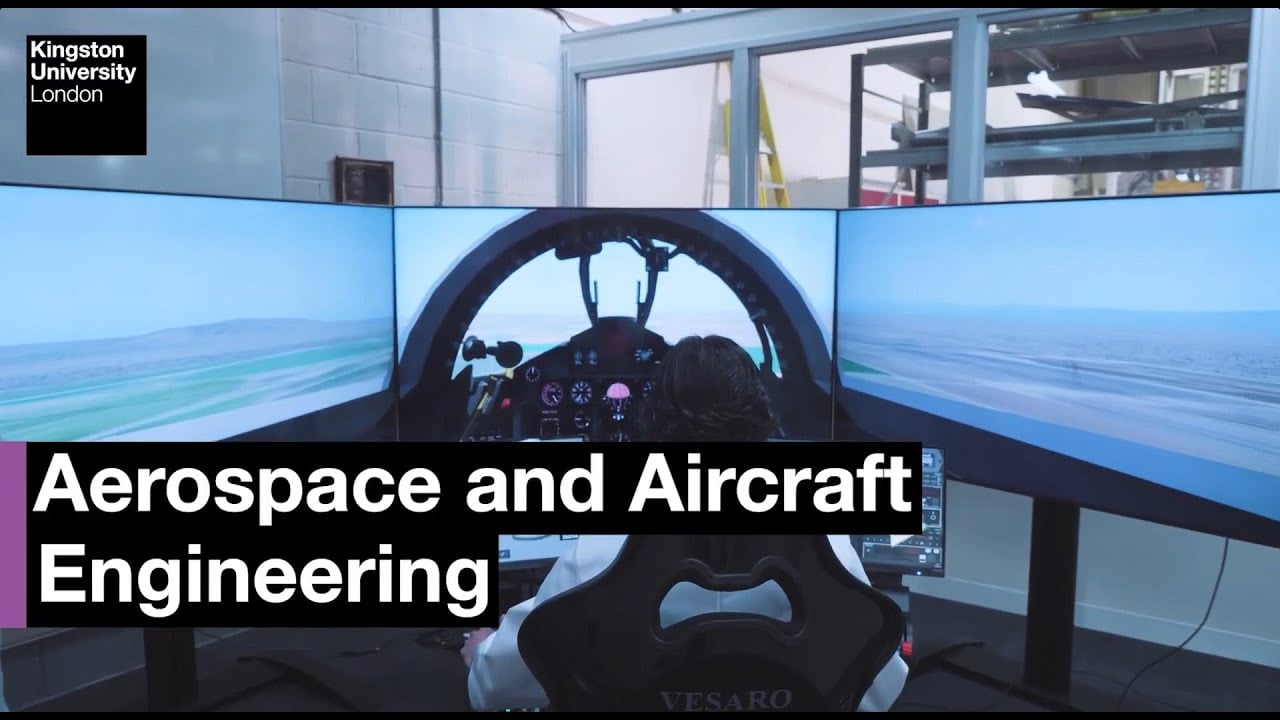
- The Merlin flight simulator
- Large-scale wind tunnels with speeds of up to 90mph
- A laser doppler anemometry system

Course content
You will study fixed-wing and rotary-wing aircraft performance and will analyse aircraft structures. You will evaluate materials for aircraft applications and the fundamental principles of air transport economics and their application to management decision-making.
You will also learn about the fundamentals of project planning and mapping, and will complete significant group and individual projects on industry-related topics.
Partner institutions
The following partners also deliver the top-up course:
- Nilai University, Malaysia. This course is currently only available to students who complete the Nilai University Diploma in Aircraft Engineering. Get in touch for further information.
- Sri Lankan Aviation College (SLAC). Get in touch for further information
Application for places on these courses must be made directly to the institute. Please note that local restrictions apply.
Modules
You will study fixed-wing and rotary-wing aircraft performance and will analyse aircraft structures. You will evaluate materials for aircraft applications and the fundamental principles of air transport economics and their application to management decision-making.
You will also learn about the fundamentals of project planning and mapping, and will complete significant group and individual projects on industry-related topics.
Core modules
Inside the Department of Aerospace and Aircraft Engineering
Hear from our students and academics as they share their experiences and talk about the facilities and opportunities available throughout your studies.
International students: direct application
Are you an international student? Have you decided Kingston is the place for you? If so, you can apply for this course directly, rather than having to go through UCAS.

What career opportunities does this course offer?
You’ll complete this course with the knowledge and skills needed for a senior engineering role. Our graduates work at British Airways, Virgin Atlantic, KLM UK Engineering, DHL, the Royal Navy, the British Army and BAES. We have a successful history of placing graduates in the aviation industry, especially around Heathrow and Gatwick airports.
Careers advice
Tap into high-quality careers and recruitment guidance from our specialist employability team. From job-seeking tips to help with CV preparation, application forms, interview techniques and finding work as an international student, it’s here to get you started after studying. The team even runs regular events to help you network with employers in an informal setting.
Future Skills
Our Future Skills programme is embedded within all our undergraduate courses and throughout the whole Kingston experience. These skills will help you to become a future-proof graduate by equipping you with the skills most valued by employers, such as problem-solving, digital competency and adaptability.
As you progress through your degree, you'll learn to navigate, explore and apply these graduate skills. You’ll also understand how to demonstrate and articulate to employers how these future skills give you the edge.

Teaching and assessment

Fees and funding
Scholarships and bursaries
For students interested in studying this course at Kingston, there are several opportunities to seek funding support.

Additional course costs
Some courses may require additional costs beyond tuition fees. When planning your studies, you’ll want to consider tuition fees, living costs, and any extra costs that might relate to your area of study.
Your tuition fees include costs for teaching, assessment and university facilities. So your access to libraries, shared IT resources and various student support services are all covered. Accommodation and general living expenses are not covered by these fees.
Where applicable, additional expenses for your course may include:

Course changes and regulations
The information on this page reflects the currently intended course structure and module details. To improve your student experience and the quality of your degree, we may review and change the material information of this course. Find out more about course changes
Programme Specifications for the course are published ahead of each academic year.
Regulations governing this course can be found on our website.
What our students and graduates say
I found that both the courses I took at Kingston University were well thought out and were designed to give students the skills demanded by industry. Another aspect that top-up students in particular appreciated was how accessible the course was; both in terms of pre-requisites where they received credit for licences and experience, and also in terms of its part-time delivery.
My career has involved many disciplines, cultures, environments and has certainly involved many challenges. The broad-based foundation I received at Kingston, together with the dedication of its faculty, contributed in no small way to my being able to achieve my goals to date, both academic and career.
What are the facilities like?
When you join Kingston University, you will have access to a wide range of facilities and resources designed to support your studies. Use the virtual tour below to explore some of the facilities and learning environments that students within this subject area may experience during their studies.