

Digital Media Technology BSc (Hons)
Subject and course type
- Digital media and gaming
- Undergraduate
Want to master the technology that defines and shapes lives? Kingston University’s BSc in Digital Media Technology will give you the skills and knowledge needed for a rewarding career in this exciting, ever-changing industry.

This course is in Clearing.
Call our Clearing line on
0800 0483 334
More about Clearing
You are reading:
Shape lives through the power of technology
Digital Media and Technology BSc at Kingston University will give you a strong foundation for a fast-paced professional future in one of today’s most influential industries.
You’ll discover the fundamentals of media, 2D and 3D computer graphics, programming, motion graphics, UX design and visual effects, as well as emerging technologies such as AI.
This course facilitates a powerful hands-on learning experience. Innovative teaching styles will give you the opportunity to create sophisticated media-based products like animations, moving graphics, composite images, 3D models, texture, lighting, interactive web content and film.
You’ll level up your skills through a blend of studio practice, project based learning and context-driven lectures. When you graduate, you’ll have a strong portfolio of projects – ready to attract a range of high-profile industry employers.
Recent graduates have gone on to work in a variety of careers in the media, games and computing sectors, at organisations such as the BBC, Framestore and Double Negative.
During the course, you’ll choose the option modules that match your interests. You’ll benefit from an invigorated, modernised programme and stay in control of your learning from day one.
Digital media at Kingston University
Hear from our students about their experiences on the course.

Student projects
-

Patrick Antczak
Made by Patrick Antczak as part of his final year project, using 3D Maya, demonstrating excellent modelling, texturing, lighting and animation skills. As a mature student he felt dissatisfied working in customer services, and decided his career lay in the creative industries, but did not know which path to peruse. Following a series of modules based on video production, 2D animation and audio production, he found his feet with computer graphics.
-
Luke Dadley
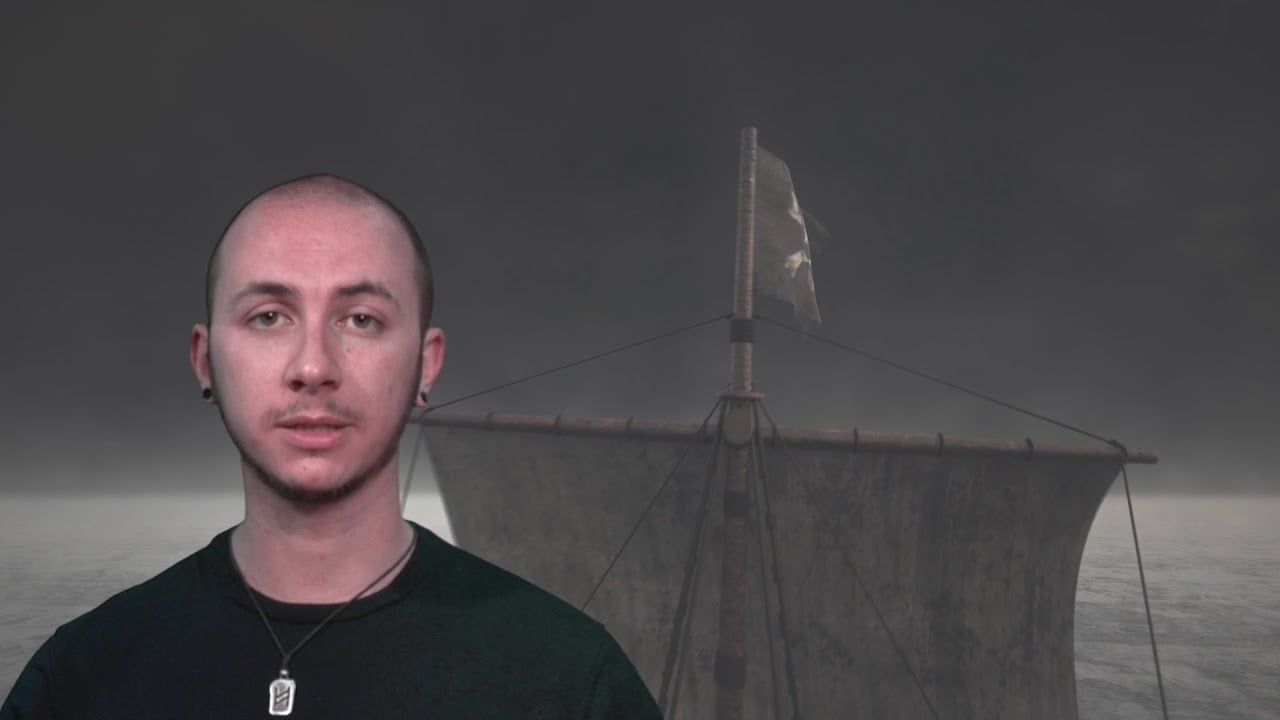
Luke applied late in the summer and was unsure what area of media he wanted to pursue, however, following a short introduction and a tour of the facilities he decided digital media was right for him. He graduated in summer 2018 with first class honours topped with a double prize for achievement and best project.
-

Ben Chellaram
Ben had immense curiosity and passion for digital design. So, while exploring his possible future career through series of assignments in the second year, he realized Motion Graphics was what was really fascinated him the most. The video shows a keen eye for animation and effects, even for a short 15-second After Effects project. He found employment straight after graduation.
-

James Bates, Jasmin Davies and Euan Muldoon
Final Year Team project comprised James Bates, Jasmin Davies and Euan Muldoon. They brainstormed their own concept, and followed the classic stages of pre-production, production and post-production for their final year VFX module. After much enjoyable experimentation, the group found their stride to render there romantic/tragic narrative as expressed through their imaginative use of Adobe Creative Suite, Maya, Nuke...and host of other contemporary technologies. The breakdown illustrates the process of constructing their work.
Why choose this course
While you study, you’ll benefit from top quality teaching at Kingston University. Not only are we ranked Gold in the Teaching Excellence Framework, we’re also No.2 in London for Animation and Game Design (The Guardian University Guide 2025).
Throughout the course, you’ll develop your skills in a range of cutting-edge facilities. You can use our media lab and film studio for blue screen VFX filming or TV programme production. Or what about our newly opened Centre for Augmented and Virtual Environments (CAVE), which features HTC Vive, Oculus Rift and Sony PlayStation VR headsets?
If you’re interested in gaming, you can refine your skills in our specialist games lab, which includes Sony PlayStation 4 consoles. There’s a whole host of software tools available too, from Unreal and Unity Pro to Visual Studio.
Outside of the University, you’ll have opportunities to visit top digital media and creative companies in central London – perfect for boosting your real-world knowledge.
BCS, The Chartered Institute for IT, has accredited this degree, which means you’ll be entitled to professional BCS membership when you graduate. This is an important part of achieving your Chartered IT Professional (CITP) status, and could give you an advantage with future employers across the globe.
This course also has BCS accreditation on behalf of the Engineering Council, which could accelerate your path towards becoming an Incorporated (IEng) or Chartered Engineer (CEng).
Kingston is ranked No.2 in London for Animation and Game Design (The Guardian University Guide 2025).
Accreditation
This degree has been accredited by BCS, The Chartered Institute for IT. Accreditation is a mark of assurance that the degree meets the standards set by BCS. An accredited degree entitles you to professional membership of BCS, which is an important part of the criteria for achieving Chartered IT Professional (CITP) status through the Institute.

Some employers recruit preferentially from accredited degrees, and an accredited degree is likely to be recognised by other countries that are signatories to international accords. This degree is accredited by BCS for the purposes of fully meeting the academic requirement for registration as a Chartered IT Professional.
This degree has been accredited by BCS, on behalf of the Engineering Council for the purposes of partially meeting the academic requirement for a Chartered Engineer (CEng). Accreditation is a mark of assurance that the degree meets the standards set by the Engineering Council in the UK Standard for Professional Engineering Competence (UK-SPEC).
An accredited degree will provide you with some or all of the underpinning knowledge, understanding and skills for eventual registration as an Incorporated (IEng) or Chartered Engineer (CEng).

Course content
Year 1
In the first year, you will delve into the fundamental elements of digital media, mastering the art of creating sophisticated still and moving images, audio, lighting, and compelling narratives. This is complemented by an exploration of coding and computer graphics, alongside opportunities for external engagement with industry professionals.
Core modules
30 credits
On this module you will learn two core aspects of contemporary digital media:
- The software applications that manipulate still and moving imagery as well as audio production using industry standard apps such as the Adobe Suite.
- How to use professional lights, cameras, audio and editing software to create high quality photos and videos. In addition to the technical skills, you'll also learn the creative process of digital media production, such as generating ideas, develop storyboards, and execute your vision.
30 credits
This module introduces students to professional 3D Computer Graphics and Animation. You will learn how to construct 3D geometric models, apply shaders using assorted textures, illuminate them and render these to create high quality images. You will also acquire underlying knowledge to make efficient use of topology for generating 'clean modelling'. At the end of the module, you will produce a portfolio of 3D CGI assets. The module also introduces the fundamental scientific concepts underpinning digitally generated imagery and animation.
30 credits
The goal of the Professional Environments module is to prepare students for professional practice. It will firstly ensure they acquire suitable employability assets and secondly equip them with an understanding of the role of a professional in society and the role of professional bodies.
While the bulk of the taught programme focuses primarily on domain knowledge, the Professional Environments module focuses on developing key skills, personal qualities (e.g. commercial awareness, reliability and punctuality, understanding the centrality of customers and clients), and professional knowledge including the need to engage with continuing professional development. With such assets, students will generate a CV, an employment portfolio, and a professional online presence.
Being a professional also means understanding the key legal, ethical and societal issues pertinent to the domain, and understanding the need for continuing professional development (CPD) especially when technology develops at such a rapid pace. The module is designed to support different domain areas and to integrate experience from other professions. The subject areas being studied demand a global perspective which encourages the inclusion of our diverse of communities and national practices.
Reflecting the fact that team working is ubiquitous in the modern workplace, a significant proportion of the assessment work on the course is based around group work. There is considerable evidence that group work promotes a much deeper engagement with taught content and the Future Skills report shows how it is embedded in working practices. It also encourages the development of diverse learning communities with computer science, cybersecurity and digital media students working in close proximity. This module will therefore introduce students to best practice in group working covering how to approach group work, how to understand yourself, how to deal with different types of people, and methods of selecting and managing groups.
30 credits
We designed this module to establish a foundation for key Programming Concepts. We do not assume prior experience of programming, as we know you will all have widely different levels of existing knowledge. The module is designed to be accessible to a beginner while still being exciting for an experienced coder.
We are excited to be able to deliver this module using Kingston's own home-grown learning environment for programming, NoobLab. NoobLab gamifies your learning, making programming enjoyable and accessible for all existing ability levels – no other university offers this platform or unique approach to learning:
You will learn a variety of programming languages. In the first few weeks, we will use visual blocks that will allow you to construct programs and focus on thinking like a programmer rather than getting bogged down in grammar and syntax. Then, with these skills established, you will learn Python, Javascript and optionally Java, solving Code Kata style programming challenges on a weekly basis. This will equip you to build a graphical card game as your capstone project for the module.
Year 2
Expanding on the skills and knowledge acquired in the first year, you will hone your craft by developing a portfolio of digital products, such as animations, motion graphics, compositing, 3D modeling, texturing, lighting, interactive web content, UX, and digital films. Industry engagement through guest speakers and visits strengthens connection to the professional world.
Please note
Optional modules only run if there is enough demand. If we have an insufficient number of students interested in an optional module, that module will not be offered for this course.
Core modules
30 credits
This module builds on the foundations of the Level 4 modules, in particular CI4001 and develops knowledge and skills in creating and manipulating motion graphics assets, managing the editing process and compositing multi layered as well as multi nodal visual effects. This includes still images, video, audio, paint, and video-based animation and effects.
These skills are further developed to a high level of appreciation, in particular for the flow of work for digital editing and contemporary composting in 2D and 3D spaces. You will acquire knowledge, develop skills and synthesis media products for self and tutor assessment. Professional level motion graphics, editing and compositing software will be employed. Furthermore, studio-based green/blue screen filming will be undertaken to create original material for visual effects project work.
30 credits
This module develops a range of skills in the creation of multimedia products, through the study and production of sophisticated content driven interactive material using industry-standard multimedia authoring software. You will also be taught to write computer code (script) to a high level using a scripting language in order to generate interactive content, animation, navigation and data storage/retrieval.
30 credits
This module is designed to encourage you to look outwards to industry and employability, and make you more confident when facing the job market upon graduation. You will develop excellent group working skills, broaden your understanding of industry and its requirements, and enhance your project management skills.
It is always exciting to watch the groups collaborating as they produce their entrepreneurial projects for Kingston University's 'Bright Ideas' scheme; students involved in this have won awards, producing fascinating artefacts for their remaining term and exploring new and different areas within their course field.
The module is an opportunity to work with many different students, working in subject areas that are innovative and unusual. Very often, a student may discover something they did not know that they could achieve. This triggers new learning and an added confidence that was not previously there. Those are the times that the learning is strongest, and our pride in the student, the greatest.
Optional modules
30 credits
Students taking this module will have already developed proficiency in the use of a professional 3D modelling and animation software application, and so will understand the principles of modelling, lighting, texturing and rendering. This module will enable them to strengthen these skills and build a portfolio of 3D computer assets and 3D animation. They will acquire additional skills such as the use of 3D sculpting software, rendering using techniques such as global illumination and image-based lighting with a high understanding and skill. Students will be able to show their modelled work as a turntable animation using different rendering techniques.
The principles of animation are introduced and students will learn how to apply these principles to 3D computer animation. This is a practical module where the majority of a student's time is spent working at a computer. Similarly, assessment is practically based with multiple choice tests to show they understand both basic and advanced theoretical techniques. Taught in common with CI5003 and cannot be taken if CI5003 has already been taken.
30 credits
This is an optional module intended for undergraduate students studying computing-related subjects.
Human-computer interaction (HCI) is the core academic discipline that examines the relationship and interface between human and computer. It informs and provides the theoretical and methodological foundation for user experience, the professional discipline which is practically applied. Although this module forms part of the user experience guided pathway it can be taken as a standalone module.
You will explore major themes in HCI from a theoretical and a practical perspective. The module establishes an understanding of key concepts within HCI theory and methods, and examines techniques for HCI design and evaluation. It offers students a practical domain in which to apply knowledge and skills, including those gained from other modules, to the design, implementation and analysis of interfaces between people and computer systems.
Optional professional placement year
Core modules
60 credits
This module is an essential course programme component for students on the sandwich route of an honours degree with professional placement. It is a key element in providing an extended period in industry gaining real world employability skills. Students are supported both before and through their placement by the Placement Team. Students that successfully complete their placement year will graduate with a four-year sandwich degree.
Year 3
Collaborative core modules like Visual Effects bring together teams to explore innovative approaches to real-world projects. Individual projects allow you to deepen your expertise in a chosen specialisation. Optional modules provide the opportunity to align your career paths with emerging trends in the field of digital media.
Core modules
30 credits
You will learn to build on your skills and knowledge to make detailed and exciting visual effects. Through interpreting client and student generated briefs you will design VFX pipeline for pre-production, production and post-production. You will also implement this through your chosen combination of 2D, 3D CGI, animation, film/video, audio and compositing tools and techniques to produce group-based work you can show to potential employers. The module also reviews the professional working practices of the film, television, visual effects, post-production and computer graphics industries and the various roles students can expect to undertake upon graduation.
30.00 credits
The Individual Project is an opportunity for you to demonstrate your skills in project management, research, analysis, critical thinking, technical skills and creativity, in relation to contemporary Media Technology.
There are a range of genres to choose from: film, motion graphics, CGI, interactive…etc. So, the Individual Project offers an ideal chance to specialize and develop in-depth knowledge and experience of a particular genre that excites you, building on your previous years of learning on the various core modules on our Media course.
The Individual Project is the capstone of your degree. Therefore, a good project will showcase your ability and aptitude for a chosen sector of the Media industry. It should form a significant part of your portfolio to impress future employers.
Optional modules
30 credits
This is an optional module intended for undergraduate students who are studying Computing-related subjects. Although it forms part of the User Experience guided pathway it can be taken as a standalone module and previous experience of UX is not assumed. This module will focus upon the skills, methods and tools required in careers such as UX Architect, UX Designer, Service Designer, Information Architect or Digital Product Designer. The curriculum is finely balanced between theory and practice. Students are directly immersed in organisational practices and skills used in industry and will make use of academic theory in this practical context.
Students will learn to develop investigative, analytical, technical, communication and advocacy skills to help them shape interactive technologies that augment people's abilities, enhance their creativity, connect them to others and protect their interests. They will also become aware of the impact of levels of digital literacy, availability of and access to technology, economic and business drivers, regulations, and regional/cultural norms. The module will also develop methods and skills required to understand current users, to investigate non-use, and to imagine future users.
30 credits
Entrepreneurship is a major driving force in creating economic growth and this module illustrates how to work in an entrepreneurial fashion. At the heart of entrepreneurship is innovation, which can come in many forms. Sometimes this can be an incremental but generally gives significant improvement to the customer. Alternatively it is a new breakthrough or transformational innovation. Incremental innovation is aimed at increasing the value of a product or service, to add more value and thereby creating new and superior value chains. Breakthrough innovation often creates new categories of product, or transforms the historical ways of doing things.
From this foundation, the module proceeds to explain how to develop a strategy, not only to satisfy the critical needs that organisations have, but also to explore the application and use of improved value chains using the concepts of corporate venturing (spin-out/intrapreneurship) and entrepreneurship (new venture creation).
However it is not simple to start a new company. Especially the tech branch is characterised by fast developments, shifts of focus and low barriers to entry, where holding back from bleeding edge is essential and is one of the important differentiating factors between Tech Entrepreneurship and other forms of entrepreneurship. This means that one can no longer count on 'good luck', and insight, understanding, knowledge and a systematic approach all have to be learnt.
This module will convey the concepts needed for roles in analysis, consultancy and management in technology environments, plus the necessary knowledge to work successfully in an innovative company, as well as providing a good background for new venture creation (Entrepreneurship) for those considering self-employment or founding new technology firms.
15 credits
This module provides an immersive, studio-based simulation of creative industry practices where you work together in teams following an agile methodology to produce a computer game or media artefact. Within a professional, collaborative environment, you will be utilising advanced design and production techniques and tools including generative AI for rapid content creation, game and media design and prototyping. You use both creative and technical skills to produce, test, and publish a fully functional game or media product. This module links with the games inKUbator, providing students with an insight into the latest developments and opportunities in the creative and games industries.
15 credits
This module gives you a dedicated opportunity to develop your Future Skills Graduate Attributes.
At the start of the module, you will be supported to self-assess your current skills profile. You will determine which attributes and skills you need to develop to support your career ambitions. In this process, you will be supported by a dedicated career coach, helping you explore a range of options that includes self-employment/freelancing, starting your own business, higher level study, and other professional graduate-level opportunities. Throughout the module, you will be given opportunities to engage with external mentors, to support reflection and to develop a professional network.
You will undertake a tailored series of activities and projects, aligned to your goals, from a menu of development options. This could include short courses, enrichment activities and experiential learning options such as micro-placements. You will also be able to reflect on activities outside the University that develop your graduate attributes, such as work or volunteering.

International students: direct application
Are you an international student? Have you decided Kingston is the place for you? If so, you can apply for this course directly, rather than having to go through UCAS.

I chose this course because I wanted to have the chance to learn different creative subjects (filming, compositing, 3D, photography) and Kingston University offered this amazing opportunity. The experience helped me to improve my skills and build up my confidence.
What career opportunities does this course offer?
This course will give you attractive skills and knowledge for a successful career in the media, games and computing industries. Graduates work as Multimedia Designers for Game of Thrones, VFX Artists on Avatar and Digital editors or Motion Graphics Artists at the BBC.
Future Skills
Our Future Skills programme is embedded within all our undergraduate courses and throughout the whole Kingston experience. These skills will help you to become a future-proof graduate by equipping you with the skills most valued by employers, such as problem-solving, digital competency and adaptability.
As you progress through your degree, you'll learn to navigate, explore and apply these graduate skills. You’ll also understand how to demonstrate and articulate to employers how these future skills give you the edge.

Teaching and assessment
Scheduled learning and teaching on this course includes timetabled activities including lectures, seminars and small group tutorials. It may also include placements, project work, workshops, workshops in computer labs, and laboratory workshops.
Outside the scheduled learning and teaching hours, you will learn independently through self-study which will involve reading articles and books, working on projects, undertaking research, preparing for and completing your work for assessments. Some independent study work may need to be completed on-campus, as you may need to access campus-based facilities such as studios and labs.
Our academic support team here at Kingston University provides help in a range of areas.
When you arrive, we'll introduce you to your personal tutor. This is the member of academic staff who will provide academic guidance, be a support throughout your time at Kingston and show you how to make the best use of all the help and resources that we offer at Kingston University.
A course is made up of modules, and each module is worth a number of credits. You must pass a given number of credits in order to achieve the award you registered on, for example 360 credits for a typical undergraduate course or 180 credits for a typical postgraduate course. The number of credits you need for your award is detailed in the programme specification which you can access from the link at the bottom of this page.
One credit equates to 10 hours of study. Therefore 120 credits across a year (typical for an undergraduate course) would equate to 1,200 notional hours. These hours are split into scheduled and guided. On this course, the percentage of that time that will be scheduled learning and teaching activities is shown below for each year of study. The remainder is made up of guided independent study.
- Year 1: 32% scheduled learning and teaching
- Year 2: 33% scheduled learning and teaching
- Year 3: 28% scheduled learning and teaching
The exact balance between scheduled learning and teaching and guided independent study will be informed by the modules you take.
Your course will primarily be delivered in person. It may include delivery of some activities online, either in real time or recorded.
Types of assessment
- Year 1: Coursework 80%; practical 10%; exams 10%
- Year 2: Coursework 73%; practical 13%; exams 14%
- Year 3: Coursework 90%; exams 10%
Please note: the above breakdowns are a guide calculated on core modules only. If your course includes optional modules, this breakdown may change to reflect the modules chosen.
We aim to provide feedback on assessments within 20 working days.
Your individualised timetable is normally available to students within 48 hours of enrolment. Whilst we make every effort to ensure timetables are as student-friendly as possible, scheduled learning and teaching can take place on any day of the week between 9am and 6pm. For undergraduate students, Wednesday afternoons are normally reserved for sports and cultural activities, but there may be occasions when this is not possible. Timetables for part-time students will depend on the modules selected.
My time at Kingston University has been valuable in gaining experiences in the career I wanted to pursue.
Fees and funding
| Fee category | Annual Fee |
|---|---|
| Home (UK students) | |
| £10,050* | |
| Foundation Year: | £10,050 |
| International | |
| Year 1 (2027/28): | £20,500 |
| Year 2 (2028/29): | £21,300 |
| Year 3 (2029/30): | £22,100 |
| Year 4 (2030/31): | £22,900 |
The tuition fee you pay depends on whether you are assessed as a 'Home' (UK), 'Islands' or 'International' student.
For courses with Professional Placement, the fee for the placement year can be viewed in our Fees and Funding section. The placement fee published is for the relevant academic year stated in the table. This fee is subject to annual increases but will not increase by more than the fee caps as prescribed by the Office for Students or such other replacing body.
*For full-time programmes lasting more than one academic year, a tuition fee is payable for each academic year of the course.
Your annual tuition fee covers your first attempt at all modules required for that academic year. Any re-study or repeat of modules will incur additional charges, calculated according to the number of credits taken.
Home students (UK): Tuition fees are subject to inflation-linked increases in line with government policy. Updated fees will be confirmed in line with the maximum fee cap set by the Government or the Office for Students (OfS) for each academic year. This means your fee may increase for each academic year of study, but only up to the maximum amount permitted for that year.
Eligible UK students can apply to the Government for a tuition loan, which is paid direct to the University. This has a low interest-rate which is charged from the time the first part of the loan is paid to the University until you have repaid it.
International students: Full-time taught international student fees are subject to an annual increase, which is published in advance for the full duration of your programme.
| Fee category | Annual Fee |
|---|---|
| Home (UK students) | |
| £9,790* | |
| Foundation Year: | £9,790 |
| International | |
| Year 1 (2026/27): | £19,200 |
| Year 2 (2027/28): | £19,900 |
| Year 3 (2028/29): | £20,700 |
| Year 4 (2029/30): | £21,500 |
The tuition fee you pay depends on whether you are assessed as a 'Home' (UK), 'Islands' or 'International' student.
For courses with Professional Placement, the fee for the placement year can be viewed in our Fees and Funding section. The placement fee published is for the relevant academic year stated in the table. This fee is subject to annual increases but will not increase by more than the fee caps as prescribed by the Office for Students or such other replacing body.
*For full-time programmes lasting more than one academic year, a tuition fee is payable for each academic year of the course.
Your annual tuition fee covers your first attempt at all modules required for that academic year. Any re-study or repeat of modules will incur additional charges, calculated according to the number of credits taken.
Home students (UK): Tuition fees are subject to inflation-linked increases in line with government policy. Updated fees will be confirmed in line with the maximum fee cap set by the Government or the Office for Students (OfS) for each academic year. This means your fee may increase for each academic year of study, but only up to the maximum amount permitted for that year.
Eligible UK students can apply to the Government for a tuition loan, which is paid direct to the University. This has a low interest-rate which is charged from the time the first part of the loan is paid to the University until you have repaid it.
International students: Full-time taught international student fees are subject to an annual increase, which is published in advance for the full duration of your programme.
| Fee category | Annual Fee |
|---|---|
| Home (UK students) | |
| £9,535* | |
| Foundation Year: | £9,535 |
| International | |
| Year 1 (2025/26): | £18,500 |
| Year 2 (2026/27): | £19,200 |
| Year 3 (2027/28): | £19,900 |
| Year 4 (2028/29): | £20,700 |
The tuition fee you pay depends on whether you are assessed as a 'Home' (UK), 'Islands' or 'International' student. In 2025/26 the fees for this course are above.
For courses with Professional Placement, the fee for the placement year can be viewed in our Fees and Funding section. The placement fee published is for the relevant academic year stated in the table. This fee is subject to annual increases but will not increase by more than the fee caps as prescribed by the Office for Students or such other replacing body.
*For full-time programmes lasting more than one academic year, a tuition fee is payable for each academic year of the course. Your annual tuition fees cover your first attempt at all of the modules necessary to complete that academic year. A re-study of any modules will incur additional charges calculated by the number of credits. Home tuition fees may be subject to annual increases but will not increase by more than the fee caps as prescribed by the Office for Students or such other replacing body. Full-time taught International fees are subject to an annual increase and are published in advance for the full duration of the programme.
Eligible UK students can apply to the Government for a tuition loan, which is paid direct to the University. This has a low interest-rate which is charged from the time the first part of the loan is paid to the University until you have repaid it.
Additional course costs
Some courses may require additional costs beyond tuition fees. When planning your studies, you’ll want to consider tuition fees, living costs, and any extra costs that might relate to your area of study.
Your tuition fees include costs for teaching, assessment and university facilities. So your access to libraries, shared IT resources and various student support services are all covered. Accommodation and general living expenses are not covered by these fees.
Where applicable, additional expenses for your course may include:
Our libraries have an extensive collection of books and journals, as well as open-access computers and laptops available to rent. However, you may want to buy your own computer or personal copies of key textbooks. Textbooks may range from £50 to £250 per year. And a personal computer can range from £100 to £3,000 depending on your course requirements.
While most coursework is submitted online, some modules may require printed copies. You may want to allocate up to £100 per year for hard-copies of your coursework. It’s worth noting that 3D printing is never compulsory. So if you choose to use our 3D printers, you’ll need to pay for the material. This ranges from 3p per gram to 40p per gram.
Kingston University will pay for all compulsory field trips. Fees for optional trips can range from £30 to £350 per trip.
Your tuition fees don’t cover travel costs. To save on travel costs, you can use our intersite bus service. This route links the campuses and halls of residence with local train stations - Surbiton, Kingston upon Thames, and Norbiton.
If you choose to do a placement year, travel costs will vary depending on your location. These costs could be up to £2,000.
Scholarships and bursaries
For students interested in studying this course at Kingston, there are several opportunities to seek funding support.


Course changes and regulations
The information on this page reflects the currently intended course structure and module details. To improve your student experience and the quality of your degree, we may review and change the material information of this course. Find out more about course changes
Programme Specifications for the course are published ahead of each academic year.
Regulations governing this course can be found on our website.
What our graduates say
I'm a freelancer now and pursuing my dream! My role is Content Creator. I'm a videographer, photographer, editor, creative director and digital artist. I travel the world creating content for brands and companies. I have begun a working relationship with a sport and travel company called SurfWeek and my life in the past months has completely changed.
Taking the Media Technology course helped me to explore the different sides of the media industry ranging from the technical aspects to the creative side of things. Since graduating in 2016 I have had a number of job opportunities which led me to a career in the TV broadcast industry.
What are the facilities like?
When you join Kingston University, you will have access to a wide range of facilities and resources designed to support your studies. Use the virtual tour below to explore some of the facilities you will use as part of your course.


Key information
The scrolling banner below displays some key factual data about this course (including different course combinations or delivery modes of this course where relevant).


